

Kirjahaku
Etsi kirjoja tekijän nimen, kirjan nimen tai ISBN:n perusteella.
1000 tulosta hakusanalla S. Gamble

Anne of Green Gables (Royal Collector's Edition) (Case Laminate Hardcover with Jacket)
L M Montgomery
Royal Classics
2020
sidottu
Anne of Green Gables recounts the adventures of Anne Shirley, an 11-year-old orphan girl who is mistakenly sent to Matthew and Marilla Cuthbert, a middle-aged brother and sister who had intended to adopt a boy to help them on their farm in Prince Edward Island. The novel recounts how Anne makes her way with the Cuthberts, in school, and within the town.Since publication, Anne of Green Gables has sold more than 50 million copies and has been translated into 20 languages. Written for all ages, it has been considered a children's novel since the mid-twentieth century. It has been adapted as film, made-for-television movies, animated and live-action television series and is taught to students around the world.This case laminate collector's edition includes a Victorian inspired dust-jacket.
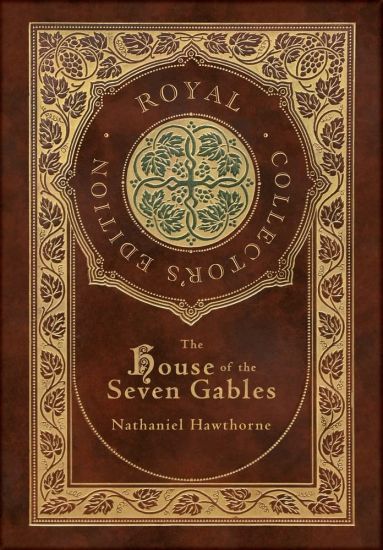
The House of the Seven Gables (Royal Collector's Edition) (Case Laminate Hardcover with Jacket)
Nathaniel Hawthorne
Engage Books
2021
sidottu
Haunted since its construction by fraudulent dealings, accusations of witchcraft, and sudden death, the House of the Seven Gables is now home to shop-keeper Hepzibah Pyncheon and her brother Clifford, who has just completed a thirty-year sentence for murder. Their wealthy but unpleasant cousin, Judge Pyncheon, arrives for a visit, hoping to find the deed to the house, but his plans fall apart when someone is murdered.The House of the Seven Gables is a Gothic novel written in the mid-1850s. Hawthorne explores themes of guilt, retribution, and atonement, and colors the tale with suggestions of the supernatural and witchcraft. The book was well received upon publication and later had a strong influence on the work of H. P. Lovecraft. It has been adapted several times for film and television.This case laminate collector's edition includes a Victorian inspired dust-jacket.
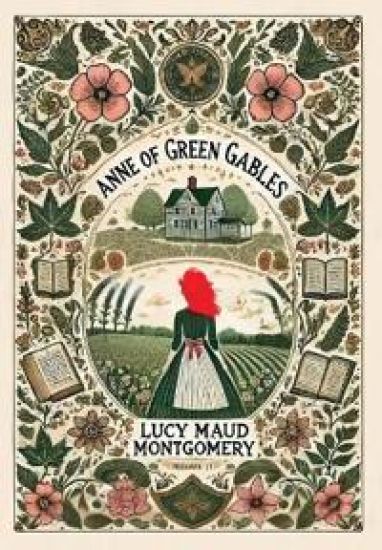
Anne of Green Gables (Collector's Edition) (Laminated Hardback with Jacket)
Lucy Maud Montgomery
Revive Classics
2024
sidottu

Anne of Green Gables (Grand Type Collector's Edition) (Laminated Hardback with Jacket) Large Print
Lucy Maud Montgomery
Revive Classics
2025
sidottu
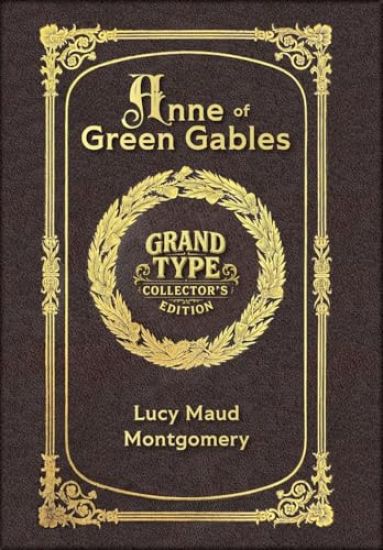
Large Print - Anne of Green Gables - Grand Type Collector's Edition - Matte Hardcover with Dust Jacket
Lucy Maud Montgomery
Grand Type Classics
2025
sidottu
Experience timeless classics like never before in this Grand Type Collector's Edition With clear, easy-to-read formatting, this edition is designed for readers who prefer or require larger text without sacrificing the excitement of the original.Large Print Features: 18-point font: Generously sized text for maximum readability and comfort. Sans-serif font: Clean, modern typeface designed to reduce visual strain. Italics are bolded: Important emphasis is maintained without thin, hard-to-see lettering. Easy-to-read line lengths: Shorter rows of text (under 45 characters per line) make reading smoother and less tiring. Anne Shirley, a spirited and imaginative orphan, is mistakenly sent to live with Marilla and Matthew Cuthbert on Prince Edward Island. Expecting a boy to help with farm work, the siblings are at first reluctant, but Anne's vibrant personality soon transforms their quiet lives. As she navigates school, friendships, and the joys and missteps of growing up, her bold dreams and boundless creativity leave a lasting impression on everyone she meets. Her misadventures bring both laughter and lessons in this heartwarming coming-of-age story. First published in 1908, L. M. Montgomery's Anne of Green Gables captured the experiences of a strong, imaginative heroine in a rural Canadian setting. With its rich depictions of Prince Edward Island life, the novel offered readers a window into both simplicity and deep emotion. By challenging traditional gender roles and celebrating independence and intellectual curiosity, the book became a groundbreaking classic. Its enduring appeal has inspired countless adaptations and generations of readers worldwide.


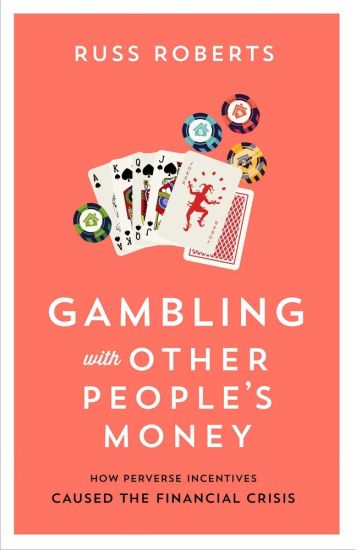
What caused the Financial Crisis of 2008? While government mandates and private sector mistakes did contribute to the crisis and can be blamed at least in part for what happened, this book takes a different approach. Russ Roberts argues that the true underlying cause of the mess was the past bailouts of large financial institutions that allowed these institutions to gamble carelessly because they were effectively using other people's money. The author warns that despite the passage of Dodd-Frank, it is widely believed that we have done nothing to eliminate 'Too Big to Fail.' That perception allows the largest financial institutions to continue to gamble with taxpayer money.
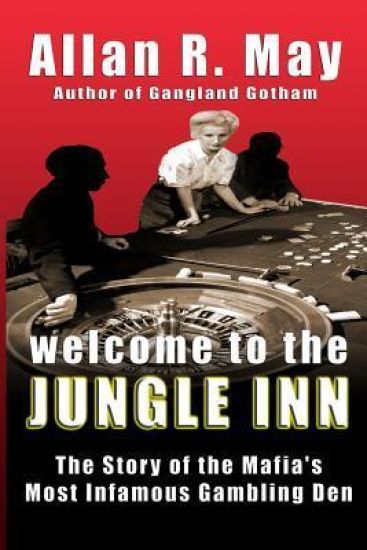
Welcome to the Jungle Inn: The Story of the Mafia's Most Infamous Gambling Den
Allan R. May
Conallan Press LLC
2013
nidottu
A history of organized crime in the city of Warren and Trumbull County, Ohio, featuring stories about the infamous Jungle Inn gambling den, local ganglord Jimmy Munsene, the notorious Farah brothers, Detroit mobster-transplant Frank Cammarata, one-time Cleveland Mafia underboss Anthony "Tony Dope" Delsanter, and others.

Clark Gable & Carole Lombard: The Golden Era of Hollywood's Star-Crossed Couple
Charles River
Createspace Independent Publishing Platform
2013
nidottu
*Includes pictures. *Includes Lombard and Gable's quotes about their lives and careers. *Comprehensively analyzes their film careers. *Includes a bibliography for further reading. "The only reason they come to see me is that I know that life is great - and they know I know it." - Clark Gable "Carole Lombard's tragic death means that something of gaiety and beauty have been taken from the world at a time they are needed most." - Errol Flynn The 1930s were also a time in which Hollywood boasted an unprecedented array of famous leading men. Gary Cooper, Cary Grant, James Stewart, and Fred Astaire were just a handful of the A-list stars of the decade, and it is in this context that the achievements of Clark Gable are particularly remarkable. Best known for his role in Gone With the Wind (1939), Gable reached the ranks of the Hollywood elite well before the end of the decade through acting in films such as It Happened One Night (1934) and Mutiny on the Bounty (1935). Gable had a unique appeal that captivated Depression-era audiences; while Cary Grant offered a sophisticated charm and Fred Astaire was tied to the musical genre, Gable brought an air of sophistication that was less comical than that of Grant and appealed to both genders, unlike Astaire. At a time when so many Americans were financially destitute, Gable managed to appear classy without coming across as snobbish. At the same time, his virile masculinity was not overly macho or misogynist. For these reasons, Gable was able to captivate male and female viewers alike, and his mass appeal was a driving force behind the commercial success of Gone With the Wind, possibly the most beloved Hollywood film ever made. As iconic director John Huston once stated, "Clark Gable was the only real he-man I've ever known, of all the actors I've met." Even if Gable is perhaps less widely-known than Grant or Astaire among 21st century audiences, examining the effect he had on viewers during the 1930s and 1940s allows a better understanding of Hollywood during its Golden Age. In conjunction with that, his career served as a sort of response to his upbringing and cultural background. In fact, there was a significant gap between his glamorous roles on the movie screen and the real-life adversity he faced from an early age. Gable faced great challenges throughout his entire career, from the death of his biological mother to the death of wife Carol Lombard in 1942. As with any famous actor, he was the recipient of great fortune, yet it is important to recognize that his many opportunities did not preclude him from experiencing great pain and tragedy. On January 16, 1942, just a few weeks after Pearl Harbor brought the United States into World War II, the nation suffered what were considered the first civilian deaths of the war when a plane crashed into the side of a mountain southwest of Las Vegas. Aboard the plane were 15 servicemen, but the plane was also carrying one of Hollywood's biggest stars: actress Carole Lombard. Although Lombard's death and her marriage to Gone With the Wind star Clark Gable have overshadowed her career, her untimely death in 1942 cut short the life of one of Hollywood's most prominent stars at the time. In fact, Lombard's platinum look and her unique mannerisms had helped her become the biggest star of the screwball genre by the end of the 1930s, and her movies were so successful that she was the highest paid actress in Hollywood by the start of the 1940s. As English critic Graham Greene said of her, "Platinum blonde, with a heart-shaped face, delicate, impish features and a figure made to be swathed in silver lam , Lombard wriggled expressively through such classics of hysteria as Twentieth Century and My Man Godfrey." Indeed, despite dying at the age of 33, the American Film Institute recognized her as one of the biggest film icons of the 20th century.
Anne of Green Gables (1908) by: Lucy Maud Montgomery ( children's NOVEL )
Lucy Maud Montgomery
Createspace Independent Publishing Platform
2017
nidottu

Clark Gable & Carole Lombard: The Golden Era of Hollywood's Star-Crossed Couple
Charles River
Createspace Independent Publishing Platform
2017
nidottu
*Includes pictures. *Includes Lombard and Gable's quotes about their lives and careers. *Comprehensively analyzes their film careers. *Includes a bibliography for further reading. "The only reason they come to see me is that I know that life is great - and they know I know it." - Clark Gable "Carole Lombard's tragic death means that something of gaiety and beauty have been taken from the world at a time they are needed most." - Errol Flynn The 1930s were also a time in which Hollywood boasted an unprecedented array of famous leading men. Gary Cooper, Cary Grant, James Stewart, and Fred Astaire were just a handful of the A-list stars of the decade, and it is in this context that the achievements of Clark Gable are particularly remarkable. Best known for his role in Gone With the Wind (1939), Gable reached the ranks of the Hollywood elite well before the end of the decade through acting in films such as It Happened One Night (1934) and Mutiny on the Bounty (1935). Gable had a unique appeal that captivated Depression-era audiences; while Cary Grant offered a sophisticated charm and Fred Astaire was tied to the musical genre, Gable brought an air of sophistication that was less comical than that of Grant and appealed to both genders, unlike Astaire. At a time when so many Americans were financially destitute, Gable managed to appear classy without coming across as snobbish. At the same time, his virile masculinity was not overly macho or misogynist. For these reasons, Gable was able to captivate male and female viewers alike, and his mass appeal was a driving force behind the commercial success of Gone With the Wind, possibly the most beloved Hollywood film ever made. As iconic director John Huston once stated, "Clark Gable was the only real he-man I've ever known, of all the actors I've met." Even if Gable is perhaps less widely-known than Grant or Astaire among 21st century audiences, examining the effect he had on viewers during the 1930s and 1940s allows a better understanding of Hollywood during its Golden Age. In conjunction with that, his career served as a sort of response to his upbringing and cultural background. In fact, there was a significant gap between his glamorous roles on the movie screen and the real-life adversity he faced from an early age. Gable faced great challenges throughout his entire career, from the death of his biological mother to the death of wife Carol Lombard in 1942. As with any famous actor, he was the recipient of great fortune, yet it is important to recognize that his many opportunities did not preclude him from experiencing great pain and tragedy. On January 16, 1942, just a few weeks after Pearl Harbor brought the United States into World War II, the nation suffered what were considered the first civilian deaths of the war when a plane crashed into the side of a mountain southwest of Las Vegas. Aboard the plane were 15 servicemen, but the plane was also carrying one of Hollywood's biggest stars: actress Carole Lombard. Although Lombard's death and her marriage to Gone With the Wind star Clark Gable have overshadowed her career, her untimely death in 1942 cut short the life of one of Hollywood's most prominent stars at the time. In fact, Lombard's platinum look and her unique mannerisms had helped her become the biggest star of the screwball genre by the end of the 1930s, and her movies were so successful that she was the highest paid actress in Hollywood by the start of the 1940s. As English critic Graham Greene said of her, "Platinum blonde, with a heart-shaped face, delicate, impish features and a figure made to be swathed in silver lam , Lombard wriggled expressively through such classics of hysteria as Twentieth Century and My Man Godfrey." Indeed, despite dying at the age of 33, the American Film Institute recognized her as one of the biggest film icons of the 20th century.
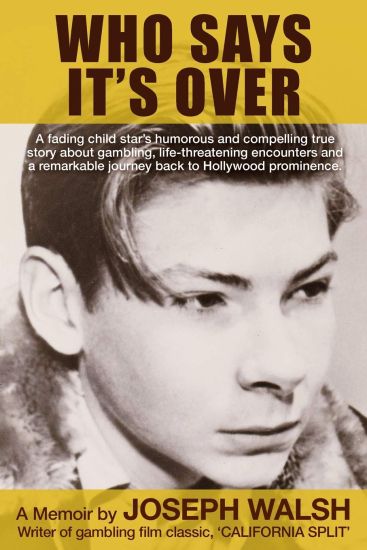
Who Says It's Over: A fading child star's humorous and compelling true story about gambling, life-threatening encounters and a remarkable
Joseph Walsh
Joseph Walsh
2020
nidottu
"...admire the good humor and gusto with which Walsh narrates his rocky path through the entertainment world." - Publishers Weekly"Joseph Walsh wrote the best gambling movie ever, California Split, and now he's out with a spectacularly entertaining Hollywood memoir..." - Ben Mankiewicz, Film critic/ host of TCMWalsh's wonderfully funny memoir of showbiz, gambling and the Hollywood elite, is one exciting roller coaster ride - whether dealing with hostile bookmakers looking to break legs - disastrous theatrical auditions - or a harrowing, near-death encounter with a bottle-slashing thug. From New York's #1 child star in early TV, to 'has-been' by 18, back to 'Hollywood somebody', this true-life adventure will keep you smiling, then holding your breath, then laughing out loud.Undaunted by a fading career, Walsh's love of 'action' would intensify, giving rise to the obsessional belief that he was the greatest football handicapper known to man. Tapping his childhood friend, Elliott Gould, for his last 60 bucks, they would go on to destroy their first bookmaker for thousands, on a once-in-a-lifetime winning streak. Little did Walsh know it would lead him to the brink of death, and into 'escape from New York' mode. Arriving in Hollywood with hopes of cashing in on earlier fame, he quickly discovered Tinseltown had no interest in the kid who had starred with Danny Kaye in Hans Christian Andersen and Kirk Douglas in The Juggler.Hanging tough, this never-say-die street kid would go on to eventually shine again - working with such notables as Steven Spielberg, Robert Altman, Elliott Gould, George Segal, Jack Nicholson, Robert Mitchum, Frank Sinatra, Gregory Peck, including memorable encounters with John Huston and Elvis Presley.His destiny would be fulfilled when he turned his life experiences into the gambling film classic California Split. Anyone looking for an awesome comeback story, guided by grit and grace, is in for a real treat "Quite a life. It's laugh-out-loud funny, riveting and just so damn good I was sorry it came to an end." Alan Ladd, Jr. / Former President of 20th Century Fox Pictures and Chairman & CEO of MGM Pictures, Academy Award Winning Producer of Braveheart & Chariots of Fire."It's extremely entertaining. Walsh has led an incredible life." Peter Gethers / Penguin Random House"...a gold mine about a one of a kind human being and indefatigable spirit you gotta love." Elliott Gould / Actor

Poker Wisdom: Master the Art and Science of the Most Complicated Gambling Game in the World: Texas Hold'em the Common Player's Guide
Garry D. Crain
Big Stack Books, LLC
2018
nidottu
Master the Art and Science of the Most Complicated Gambling Game in the World: Texas Hold'em.
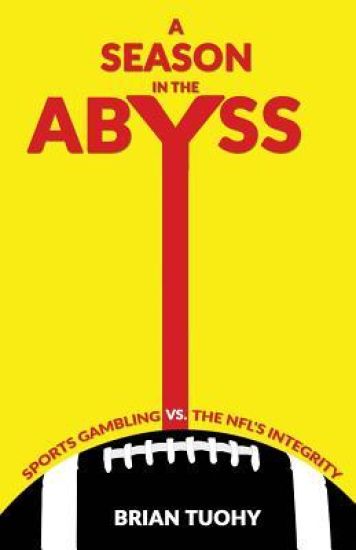
A Season in the Abyss: Sports Gambling vs. the NFL's Integrity
Brian Tuohy
Mofo Press LLC
2015
nidottu
Football and gambling. The two activities are inseparable. Yet the National Football League states it does not want fans to bet on its games. The league even fought against the state of New Jersey to keep sports gambling illegal. If wagering threatens the league's integrity as it claims, then why does the NFL openly embrace the gambling taking place in fantasy football, and why does it allow teams to license their logos to state lotteries? Is the league clandestinely working with legal and illegal bookies? Are its athletes gambling as well? Why are referees constantly making calls that seem to benefit Las Vegas? And what role do the NFL's broadcast partners play in all of this?Controversial author Brian Tuohy spent the 2014 NFL season doing exactly what it is the league doesn't want its fans doing -- gambling on its sport in all its forms -- to learn the true relationship between the NFL and gambling. No football fan should watch another game without realizing the impact these two entities have on each other.

Hollywood's 10 Greatest Actors: Humphrey Bogart, Cary Grant, Jimmy Stewart, Marlon Brando, Fred Astaire, Henry Fonda, Clark Gable, James Cagney, Spenc
Charles River
Createspace Independent Publishing Platform
2013
nidottu
*Includes pictures. *Includes actors' quotes about their careers. *Includes bibliographies. In 1999, the American Film Institute released its list of the 50 greatest Hollywood stars of the 20th century, and selecting the 10 best actors out of the bunch was certainly a tall task. The competition was so stacked that men like Gary Cooper and John Wayne were not even among the Top 10. So who were the Top 10 men selected by the AFI? One man has long been considered the greatest male star. From the time he first became a leading man, Humphrey Bogart's screen image has resonated with viewers more than perhaps any other actor. His persona as a tough guy who manages to maintain his sense of virtue no matter how compromising the situation features in some of the most famous films ever made, including Casablanca (1942), The Maltese Falcon (1941), and Key Largo (1949). Movie stars are revered for their ability to captivate audiences, and perhaps no actor has done it as well as Cary Grant, the epitome of the suave, debonair actor who may have been rivaled only by dancer extraordinaire Fred Astaire. Grant offered a version of the male actor that stood in stark contrast with the gangster heroes and hard-boiled film noir detectives that populated the screen throughout his career. If the list was reconstructed today, it is entirely possible that Stewart would rank first. Not only have movies such as It's a Wonderful Life (1946) and Vertigo (1958) continued to gain in popularity even into the 21st century, but Stewart has come to embody an accessible image of American values that is easy for everyone to embrace. Over the course of his long, prolific career, Marlon Brando was considered perhaps the greatest actor of the 20th century as well as one of the most complicated and misunderstood. Uniquely able to be both emotionally charged and technically constrained in the same performance, he single-handedly changed the direction of not only the American style of acting, influencing successors such as Robert De Niro, Al Pacino and even Johnny Depp, but the acting profession on a global scale. Virtually all famous actors are regaled by the public, but even still, Fred Astaire occupies a privileged position in American pop culture. The specific films in which Astaire acted may not be especially famous in their own right, but Astaire's dancing prowess invariably creates a lasting impact on viewers. Among all of Hollywood's iconic leading men, arguably none proved as versatile at acting as Henry Fonda, whose career spanned six decades and earned him Academy Awards for roles in various genres. A lot of Fonda's success could be attributed to the fact that he could convincingly play the all-American man that everybody in the nation adored and/or wanted to be. Best known for his role in Gone with the Wind (1939), Clark Gable had a unique appeal that captivated Depression-era audiences; while Cary Grant offered a sophisticated charm and Fred Astaire was tied to the musical genre, Gable brought an air of sophistication that was less comical than that of Grant and appealed to both genders, unlike Astaire. Ultimately, it was portraying tough guys and gangsters in the 1930s that turned James Cagney into a massive Hollywood star. In movies like The Public Enemy (which included the infamous "grapefruit scene") and White Heat, Cagney convincingly played criminals that brought Warner to the forefront of Hollywood After joining MGM in 1935, Tracy catapulted to fame with one of the most impressive runs in Hollywood history, winning Oscars for Best Actor in 1938 and 1939 after already being nominated in 1937. Charlie Chaplin was the first true film star, and he managed to do so even when films were still silent. He has been honored with too many awards to count, and the fact that his name remains instantly recognizable nearly a century after his first film is a testament to his influence
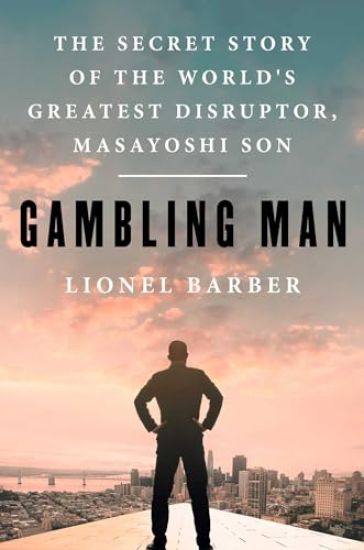
Gambling Man: The Secret Story of the World's Greatest Disruptor, Masayoshi Son
Lionel Barber
Atria/One Signal Publishers
2025
sidottu
The former editor of the Financial Times delivers, "with literary flair and stunning revelations" (Steve Coll, Pulitzer Prize winner), the unputdownable first Western biography of SoftBank CEO Masayoshi Son, financial disruptor and personification of the 21st century's addiction to instant wealth. As Wall Street swooned and boomed through the last decade, our livelihoods have--now more than ever--come to rely upon the good sense and risk appetites of a few standout investors. And amidst the BlackRocks, Vanguards, and Berkshire Hathaways stands arguably the most iconoclastic of them all: SoftBank's Masayoshi Son. In this "meticulously researched, balance, thoroughly readable" (Booklist, starred review) biography, we go behind the scenes of the world's most monied halls of power in New York, Tokyo, Silicon Valley, Saudi Arabia, and beyond to see how Son's firm SoftBank has defied conventional wisdom and imposing odds to push global tech and commerce into the future. From the dizzying highs of Uber, DoorDash, and Slack to the epic lows of WeWork and tech-infused dog-walking app Wag, Son and SoftBank have been at the center of cutting-edge capitalism's absolute peaks and valleys. In the process, Son, son of a pachinko kingpin who grew up in a slum in Japan, has been a hero, a villain, and even a meme-ified hero to the internet tech- and finance-bro set all at once. Based on in-depth research and eye-opening interviews, Gambling Man is "not only a first-rate biography of an elusive billionaire" (Bloomberg), it's also an alarming true story of 21st-century commerce that will stick with you long after you turn the final page.
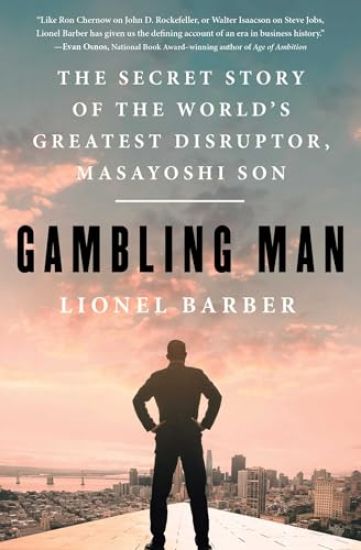
Gambling Man: The Secret Story of the World's Greatest Disruptor, Masayoshi Son
Lionel Barber
Atria/One Signal Publishers
2026
nidottu
The former editor of the Financial Times delivers, "with literary flair and stunning revelations" (Steve Coll, Pulitzer Prize winner), the unputdownable first Western biography of SoftBank CEO Masayoshi Son, financial disruptor and personification of the 21st century's addiction to instant wealth. As Wall Street swooned and boomed through the last decade, our livelihoods have--now more than ever--come to rely upon the good sense and risk appetites of a few standout investors. And amidst the BlackRocks, Vanguards, and Berkshire Hathaways stands arguably the most iconoclastic of them all: SoftBank's Masayoshi Son. In this "meticulously researched, balance, thoroughly readable" (Booklist, starred review) biography, we go behind the scenes of the world's most monied halls of power in New York, Tokyo, Silicon Valley, Saudi Arabia, and beyond to see how Son's firm SoftBank has defied conventional wisdom and imposing odds to push global tech and commerce into the future. From the dizzying highs of Uber, DoorDash, and Slack to the epic lows of WeWork and tech-infused dog-walking app Wag, Son and SoftBank have been at the center of cutting-edge capitalism's absolute peaks and valleys. In the process, Son, son of a pachinko kingpin who grew up in a slum in Japan, has been a hero, a villain, and even a meme-ified hero to the internet tech- and finance-bro set all at once. Based on in-depth research and eye-opening interviews, Gambling Man is "not only a first-rate biography of an elusive billionaire" (Bloomberg), it's also an alarming true story of 21st-century commerce that will stick with you long after you turn the final page.

Gambling Man: The Secret Story of the World's Greatest Disruptor, Masayoshi Son
Lionel Barber
Simon Schuster Audio
2025
cd
The unputdownable first Western biography of SoftBank CEO Masayoshi Son, financial disruptor and personification of the 21st century's addiction to instant wealth, from the former editor of the Financial Times. As Wall Street swooned and boomed through the last decade, our livelihoods have--now more than ever--come to rely upon the good sense and risk appetites of a few standout investors. And amidst the BlackRocks, Vanguards, and Berkshire Hathaways stands arguably the most iconoclastic of them all: SoftBank's Masayoshi Son. In Gambling Man, the first Western biography of Son, the self-professed unicorn hunter, we go behind the scenes of the world's most monied halls of power in New York, Tokyo, Silicon Valley, Saudi Arabia, and beyond to see how Son's firm SoftBank has defied conventional wisdom and imposing odds to push global tech and commerce into the future. From the dizzying highs of Uber, DoorDash, and Slack to the epic lows of WeWork and tech-infused dogwalking app Wag Son and SoftBank have been at the center of cutting-edge capitalism's absolute peaks and valleys. In the process, Son, son of a pachinko kingpin who grew up in a slum in Japan, has been a hero, a villain, and even a meme-ified hero to the internet tech- and finance-bro set all at once. Based on in-depth research and eye-opening interviews, Gambling Man is an unforgettable character study and alarming true story of twenty-first-century commerce that will stick with you long after you turn the final page.