Kirjahaku
Etsi kirjoja tekijän nimen, kirjan nimen tai ISBN:n perusteella.
1000 tulosta hakusanalla Stephen G Perry
Almost all of the problems studied in this book are motivated by an overriding foundational question: What are the appropriate axioms for mathematics? Through a series of case studies, these axioms are examined to prove particular theorems in core mathematical areas such as algebra, analysis, and topology, focusing on the language of second-order arithmetic, the weakest language rich enough to express and develop the bulk of mathematics. In many cases, if a mathematical theorem is proved from appropriately weak set existence axioms, then the axioms will be logically equivalent to the theorem. Furthermore, only a few specific set existence axioms arise repeatedly in this context, which in turn correspond to classical foundational programs. This is the theme of reverse mathematics, which dominates the first half of the book. The second part focuses on models of these and other subsystems of second-order arithmetic.
Stephen Rabe's timely book examines President Dwight D. Eisenhower's Latin American policy and assesses the president's actions in light of recent ""Eisenhower revisionism."" During his first term, Eisenhower paid little attention to Latin America but his objective there was clear: to prevent communism from gaining a foothold. The Eisenhower administration was prepared to cooperate with authoritarian military regimes, but not to fund developmental aid or vigorously promote political democracy. Two events in the second administration convinced Eisenhower that he had underestimated the extent of popular unrest--and thus the potential for Communist inroads: the stoning of Vice-President Richard M. Nixon in Caracas and the radicalization of the Cuban Revolution. He then began to support trade agreements, soft loans, and more strident measures that led to CIA involvement in the Bay of Pigs invasion and plots to assassinate Fidel Castro and Rafael Trujillo. In portraying Eisenhower as a virulent anti-Communist and cold warrior, Rabe challenges the Eisenhower revisionists who view the president as a model of diplomatic restraint.
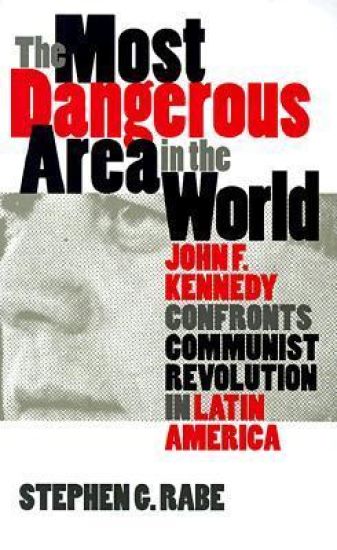
The Most Dangerous Area in the World
Rabe Stephen G.
The University of North Carolina Press
1999
nidottu
In March 1961, President John F. Kennedy announced the formation of the Alliance for Progress, a programme dedicated to creating prosperous, socially-just, democratic societies throughout Latin America. Despite spending $20 billion in pursuit of the Alliance's goals, Latin American economies barely grew, Latin American societies remained inequitable, and 16 extra-constitutional changes of government rocked the region. In this analysis, the author aims to explain why Kennedy's grand plan for Latin America proved to be such a policy failure. He investigates the nature of Kennedy's intense anti-Communist crusade and explores the convictions that drove him to fight the Cold War throughout the Caribbean and Latin America, a region he repeatedly referred to as ""the most dangerous area in the world"".
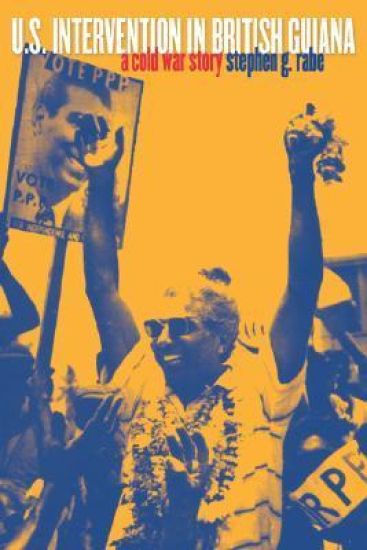
U.S. Intervention in British Guiana
Rabe Stephen G.
The University of North Carolina Press
2005
nidottu
The United States installs a leader in a South American country in the first published account of the massive U.S. covert intervention in British Guiana between 1953 and 1969. Stephen G. Rabe uncovers a Cold War story of imperialism, gender bias, and racism. When the South American colony, now known as Guyana, was due to gain independence from Britain in the 1960s, U.S. officials in the Kennedy and Johnson administrations feared it would become a communist nation under the leadership of Cheddi Jagan, a Marxist who was very popular among the South Asian (mostly Indian) majority. Although to this day the CIA refuses to confirm or deny involvement, Rabe presents evidence that CIA funding, through a program run by the AFL-CIO, helped foment the labor unrest, race riots, and general chaos that led to Jagan's replacement in 1964. The political leader preferred by the United States, Forbes Burnham, went on to lead a twenty-year dictatorship in which he persecuted the majority Indian population. Considering race, gender, religion, and ethnicity along with traditional approaches to diplomatic history, Rabe's analysis of this Cold War tragedy serves as a needed corrective to interpretations that depict the Cold War as an unsullied U.S. triumph.
This book reconstructs a lost milieu of historical writing. The civil rights and black power movements expanded popular awareness of the history and culture of African Americans. But, as Stephen Hall notes, African American authors, intellectuals, ministers, and abolitionists had been writing the history of the black experience since the 1800s. With this book, Hall recaptures and reconstructs a rich but largely overlooked tradition of historical writing by African Americans. Hall charts the origins, meanings, methods, evolution, and maturation of African American historical writing from the period of the Early Republic to the twentieth-century professionalization of the larger field of historical study. He demonstrates how these works borrowed from and engaged with ideological and intellectual constructs from mainstream intellectual movements including the Englightenment, Romanticism, Realism, and Modernism. Hall also explores the creation of discursive spaces that simultaneously reinforced and offered counternarratives to more mainstream historical discourse. He sheds fresh light on the influence of the African diaspora on the development of historical study. In so doing, he provides a holistic portrait of African American history informed by developments within and outside the African American community.
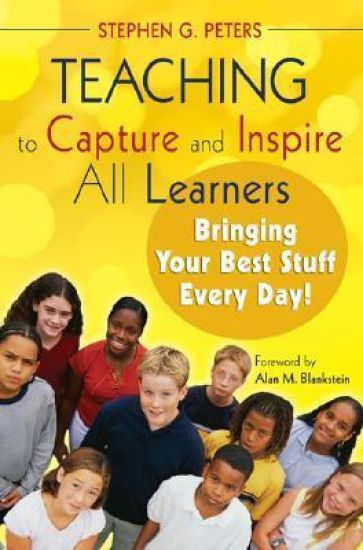
Motivate educators in a collaborative endeavor to bring about real change in schools and classrooms! This resource provides practical guidelines for influencing school culture to inspire higher student performance levels based on understanding today's learners. The book provides strategies and tested techniques that have transformed struggling schools into national and state blue-ribbon winners. The author eloquently illustrates the immediate need for improvement in our schools and examines: the expanded roles for teachers and principals leading the change process; the reasons why many students do not perform well; practical, specific tips that can turn a school's vision for change into a school's reality.
Though the current political climate might lead one to suspect that religion and medicine make for uncomfortable bedfellows, the two institutions have a long history of alliance. From religious healers and religious hospitals to religiously informed bioethics and research studies on the impact of religious and spiritual beliefs on physical and mental well-being, religion and medicine have encountered one another from antiquity through the present day. In Religion and Medicine, Dr. Jeff Levin outlines this longstanding history and the multifaceted interconnections between these two institutions. The first book to cover the full breadth of this subject, it documents religion-medicine alliances across religious traditions, throughout the world, and over the course of history. Levin summarizes a wide range of material in the most comprehensive introduction to this emerging field of scholarship to date.
Physiology of Woody Plants
Ulo Niinemets; Stephen G. Pallardy
ELSEVIER SCIENCE TECHNOLOGY
2025
nidottu
Physiology of Woody Plants, Fourth Edition has been fully revised and updated to include the significant progress that has been made in multiple fields of tree physiology, including woody plant responses to globally changing environments, the role of woody plants in biosphere-atmosphere interactions, and generalized trait-function relationships, including the multiple specialized and insightful contributions on individual facets of tree functioning and rich genetic information that has become available since the publication of the third edition. This reference is appropriate for undergraduate and graduate students, as well as practitioners and researchers seeking to learn about different aspects of tree functioning. This fourth edition includes both the classical concepts and recent developments in the field of tree physiology, and addresses a broad audience interested in gaining a basic understanding of woody plant functioning, as well as those wanting to refresh their knowledge of developments at the forefront of tree physiology. The book offers novel insight into the functioning of multiple physiological processes in woody plants, providing a basic interdisciplinary understanding of the controls of climatic and biotic factors responsible for tree growth in current and future climates.
Left for Dead (Movie Tie-In Edition): My Journey Home from Everest
Beck Weathers; Stephen G. Michaud
BANTAM
2015
nidottu
Anyone who has read Jon Krakauer's famous account of the 1996 Everest disaster, INTO THIN AIR, will remember the story of Beck Weathers: the gregarious Texan climber who went snow-blind in the Death Zone below the summit and who spent a night out in the open during a blizzard that took the lives of a dozen colleagues and friends. Even as he staggered back into Camp 4 the next morning, Beck's condition was such that the other survivors assumed he would not make it back down the mountain. He was effectively left for dead, but drawing upon reserves of determination and courage he didn't know he had - as well as the extraordinary selflessness and bravery of a Nepalese helicopter pilot he'd never met - he finally made it to safety. Only then could a new battle begin: to rebuild his life with a family he'd taken for granted for too long. Heartstoppingly exciting and ultimately very moving, LEFT FOR DEAD is a terrific read.
Introduction to Fluorescence Spectroscopy
Ashutosh Sharma; Stephen G. Schulman
John Wiley Sons Inc
1999
sidottu
An accessible guide to all aspects of molecular fluorescence spectroscopy This book introduces the uninitiated reader to the growing body of analytical methods based on molecular fluorescence. Geared to practitioners with no particular training or exposure to the field, it highlights fluorescence spectroscopys tremendous appeal in present-day pharmaceutical, biomedical, and environmental analysis. Written by two highly respected experts in the field, Introduction to Fluorescence Spectroscopy covers all aspects of the technologyphysical fundamentals, instrumentation, methods, and applications. The information is offered at 0a very practical level and addresses a broad range of chemical, physical, biological, and geological problems. The authors incorporate recent advances in commercially available instrumentation as well as fluorescent derivatizing agents, provide many examples of state-of-the-art applications, and discuss future trends. Concise, accessible, up-to-date, Introduction to Fluorescence Spectroscopy is an indispensable reference and an invaluable primer for those involved in the field of analytical science and other professionals interested in this fast-evolving analytical technique.
Optical Physics
Lipson Ariel; Lipson Stephen G.; Henry Lipson
Cambridge University Press
2010
sidottu
This fourth edition of a well-established textbook takes students from fundamental ideas to the most modern developments in optics. Illustrated with 400 figures, it contains numerous practical examples, many from student laboratory experiments and lecture demonstrations. Aimed at undergraduate and advanced courses on modern optics, it is ideal for scientists and engineers. The book covers the principles of geometrical and physical optics, leading into quantum optics, using mainly Fourier transforms and linear algebra. Chapters are supplemented with advanced topics and up-to-date applications, exposing readers to key research themes, including negative refractive index, surface plasmon resonance, phase retrieval in crystal diffraction and the Hubble telescope, photonic crystals, super-resolved imaging in biology, electromagnetically induced transparency, slow light and superluminal propagation, entangled photons and solar energy collectors. Solutions to the problems, simulation programs, key figures and further discussions of several topics are available at www.cambridge.org/lipson.
The personal story of a Los Angeles Times editor discusses his experiences with Parkinson's disease, from its physical to its psychological challenges, and provides additional information about how the disease works, how it is treated, and the outlook for its cure.
"I'm flat on my back on a couch that's too short in a windowless room in the bureau. I can't even sit at a computer, much less make a keyboard work. My arms and legs are shaking uncontrollably. Although I am only 53 years old, I have already been struggling with Parkinson's disease for seven years. And right now the disease is winning." So begins Joel Havemann's account of the insidious disease that is Parkinson's. Into his own story, Havemann weaves accessible explanations of how Parkinson's disrupts the brain's circuitry, how symptoms are managed through drugs and surgery, and how people cope with the disease's psychological challenges. The paperback edition brings the discussion of treatment options and research thoroughly up to date.
Developing Cognitive-Behavioural Counselling
Michael J Scott; Stephen G Stradling; Windy Dryden
SAGE Publications Ltd
1995
sidottu
Seminars by Professor Windy Dryden. See the man live and in action. To find out more and to book your place go to www.cityminds.com ________________________________________ `[This book has] many useful insights for other therapists... make a copy of the competency checklist: if we all scored highly and consistently, there would be no need for talk of "national registration" ' - The Therapist In this volume the authors develop the cognitive-behavioural counselling approach by offering newer conceptualizations of many common client problems. It is suggested that effective interventions will often need to take account of early maladaptive interpretations of situations and of the presence of personality disorders. The specifics of tackling problems as diverse as surviving in a family with a personality disordered member and post-traumatic stress disorder are elaborated, and recent developments in the counselling of clients with anxiety and depression are also incorporated. Hitherto neglected issues such as the use of groups and the assessment of counsellor competence are also highlighted.
Developing Cognitive-Behavioural Counselling
Michael J Scott; Stephen G Stradling; Windy Dryden
SAGE Publications Ltd
1995
nidottu
Seminars by Professor Windy Dryden. See the man live and in action. To find out more and to book your place go to www.cityminds.com ________________________________________ `[This book has] many useful insights for other therapists... make a copy of the competency checklist: if we all scored highly and consistently, there would be no need for talk of "national registration" ' - The Therapist In this volume the authors develop the cognitive-behavioural counselling approach by offering newer conceptualizations of many common client problems. It is suggested that effective interventions will often need to take account of early maladaptive interpretations of situations and of the presence of personality disorders. The specifics of tackling problems as diverse as surviving in a family with a personality disordered member and post-traumatic stress disorder are elaborated, and recent developments in the counselling of clients with anxiety and depression are also incorporated. Hitherto neglected issues such as the use of groups and the assessment of counsellor competence are also highlighted.
Linear and Nonlinear Optimization
Igor Griva; Stephen G. Nash; Ariela Sofer
Society for Industrial Applied Mathematics,U.S.
2012
sidottu
Introduces the applications, theory, and algorithms of linear and nonlinear optimization, with an emphasis on the practical aspects of the material. Its unique modular structure provides flexibility to accommodate the varying needs of instructors, students, and practitioners with different levels of sophistication in these topics. The succinct style of this second edition is punctuated with numerous real-life examples and exercises, and the authors include accessible explanations of topics that are not often mentioned in textbooks, such as duality in nonlinear optimization, primal-dual methods for nonlinear optimization, filter methods, and applications such as support-vector machines. Part I provides fundamentals that can be taught in whole or in part at the beginning of a course on either topic and then referred to as needed. Part II on linear programming and Part III on unconstrained optimization can be used together or separately, and Part IV on nonlinear optimization can be taught without having studied the material in Part II.In the preface the authors suggest course outlines that can be adjusted to the requirements of a particular course on both linear and nonlinear optimization, or to separate courses on these topics. Three appendices provide information on linear algebra, other fundamentals, and software packages for optimization problems. A supplemental website offers auxiliary data sets that are necessary for some of the exercises.
Role Theory and Role Conflict in U.S.-Iran Relations
Akan Malici; Stephen G. Walker
Routledge
2016
sidottu
U.S.-Iran relations continue to be an international security problem in the Middle East. These two countries could have been friends, but instead they have become enemies. Stating this thesis raises the following questions: Why are the United States and Iran enemies? How and when did this relationship come to be? When the relationship began to deteriorate, could it have been reversed? What lessons can be learned from an analysis of past U.S.-Iranian relations and what are the implications for their present and future relations? Akan Malici and Stephen G. Walker argue that the dynamics of U.S.-Iran relations are based on role conflicts. Iran has long desired to enact roles of active independence and national sovereignty in world politics. However, it continued to be cast by others into client or rebel roles of national inferiority. In this book the authors examine these role conflicts during three crucial episodes in U.S.-Iran relations: the oil nationalization crisis and the ensuing clandestine coup aided by the CIA to overthrow the Iranian regime in 1950 to 1953; the Iranian revolution followed by the hostage crisis in 1979 to 1981; the reformist years pre- and post- 9/11 under Mohammad Khatami from 1997 to 2002. Their application of role theory is theoretically and methodologically progressive and innovative in illuminating aspects of U.S.-Iran relations. It allows for a better understanding of the past, navigating the present, and anticipating the future in order to avoid foreign policy mistakes. Role Theory and Role Conflict in U.S.-Iran Relations is a useful resource for international relations and foreign policy scholars who want to learn more about progress in international relations theory and U.S. relations with Iran.
Role Theory and Role Conflict in U.S.-Iran Relations
Akan Malici; Stephen G. Walker
Routledge
2016
nidottu
U.S.-Iran relations continue to be an international security problem in the Middle East. These two countries could have been friends, but instead they have become enemies. Stating this thesis raises the following questions: Why are the United States and Iran enemies? How and when did this relationship come to be? When the relationship began to deteriorate, could it have been reversed? What lessons can be learned from an analysis of past U.S.-Iranian relations and what are the implications for their present and future relations? Akan Malici and Stephen G. Walker argue that the dynamics of U.S.-Iran relations are based on role conflicts. Iran has long desired to enact roles of active independence and national sovereignty in world politics. However, it continued to be cast by others into client or rebel roles of national inferiority. In this book the authors examine these role conflicts during three crucial episodes in U.S.-Iran relations: the oil nationalization crisis and the ensuing clandestine coup aided by the CIA to overthrow the Iranian regime in 1950 to 1953; the Iranian revolution followed by the hostage crisis in 1979 to 1981; the reformist years pre- and post- 9/11 under Mohammad Khatami from 1997 to 2002. Their application of role theory is theoretically and methodologically progressive and innovative in illuminating aspects of U.S.-Iran relations. It allows for a better understanding of the past, navigating the present, and anticipating the future in order to avoid foreign policy mistakes. Role Theory and Role Conflict in U.S.-Iran Relations is a useful resource for international relations and foreign policy scholars who want to learn more about progress in international relations theory and U.S. relations with Iran.
This trusted textbook returns in its 4th edition with even more exercises to help consolidate understanding - and a companion website featuring additional materials, including a solutions manual for instructors. Offering a unique blend of theory and practical application, it provides ideal preparation for doing applied econometric work as it takes students from a basic level up to an advanced understanding in an intuitive, step-by-step fashion. Clear presentation of economic tests and methods of estimation is paired with practical guidance on using several types of software packages. Using real world data throughout, the authors place emphasis upon the interpretation of results, and the conclusions to be drawn from them in econometric work. This book will be essential reading for economics undergraduate and master’s students taking a course in applied econometrics. Its practical nature makes it ideal for modules requiring a research project. New to this Edition:- Additional practical exercises throughout to help consolidate understanding- A freshly-updated companion website featuring a new solutions manual for instructors
Counselling for Post-traumatic Stress Disorder
Michael J Scott; Stephen G Stradling
SAGE Publications Inc
2006
sidottu
Counselling for Post-traumatic Stress Disorder, Third Edition addresses the specifics of counselling clients who have suffered major trauma, whether recently or in the past, and includes 18 detailed case examples together with transcripts of sessions. The authors' cognitive contextual approach translates the psychobiology of trauma responses into clinically useful analogies and simple drawings that guide the therapist and client. The book is unique in covering the diagnosis and treatment of the full spectrum of post-traumatic states. In this fully updated Third Edition the needs of special populations - children/adolescents, refugees and those in pain - are also addressed. Additional material includes a new PTSD screening inventory and a counselling competence scale. Counselling for Post-traumatic Stress Disorder, Third Edition is an invaluable, comprehensive aid for both the experienced and novice therapist working with trauma victims. Michael J. Scott is a Consultant Psychologist and External Examiner for the MSc Cognitive and Behavioural Psychotherapies Programme at the University of Chester. Stephen G. Stradling is Professor of Transport Psychology at Napier University.