Stuart Dodds; David J Parnell; Hélène Russell; Peter Lane Secor; Rupert Hawke; Paige Keith; Manish Khandelwal; Ariela Tannenbaum; Katherine Thomas; Srinivas Vadali; Thomas Van Der Moere; Zev J Eigen
The legal profession, like so many other fields, has continued to reel from the deep-reaching and significant impact of the 2008 financial crisis. In the years following the crash, a general downward turn in the demand for legal services compelled firms to tighten their belts, make tough decisions, and come up with innovative strategies in order to survive. One of these was an increased focus on profitability and different means of managing and improving it, a relatively new development for the legal industry. However, in recent years there have been small but positive signs of improvement, manifested in a gradual pick-up in client engagement, as global economies continue to slowly but steadily recover from the crash. It is definitely a better time to be a lawyer, as latent demand begins to manifest in parallel with growing client confidence in a stabilizing market, fast-paced disruptive technological innovations, and significant changes in laws and regulations. However, this does not mean that firms can afford to be complacent. The legal landscape continues to be in flux, and improvement is slow. Increased revenue and client demand does not come to firms that do not proactively seek it, nor is it achieved by those who are not applying innovative and cutting-edge techniques and strategies to the management of their firm. Of course, delivering the best service to clients should always be a top priority; however, there should also be an emphasis on running the firm like a business, which includes intensive scrutiny of expenditure and coming up with new and inventive ways to generate profit. Managing and growing a firm's profitability should not just be an exercise for difficult economic periods, but instead must be a priority at all times. Rather than being perceived as an irksome bolt-on, it is necessary to see it as a great opportunity in these times of increased business. Existing and persistent cultural norms amongst lawyers, however, means that the reform of current business practices does not always come naturally. Nor is it necessarily easy to find the right practical advice that can carry a firm through the transition. Emerging Approaches to Law Firm Profitability aims to be the ideal tool to assist with implementation, providing essential guidance for those seeking new means of maximizing their firm's capacity. Featuring advice and reflections from a wide variety of contributors, ranging from business and finance professionals to thought leaders and consultants, this book offers in-depth, intensive insight into the challenges generated by today's dynamic and hypercompetitive legal landscape. Most importantly, Emerging Approaches to Law Firm Profitability moves past the identification of these obstacles and supplies original, innovative ways of tackling them. Expert guidance is complemented by compelling case studies and effective real-world examples, supplying principles that can be applied to firms of any size or capacity.

Neural electrodes enable the recording and stimulation of bioelectrical activity in the nervous system. This technology provides neuroscientists with the means to probe the functionality of neural circuitry in both health and disease. In addition, neural electrodes can deliver therapeutic stimulation for the relief of debilitating symptoms associated with neurological disorders such as Parkinson's disease and may serve as the basis for the restoration of sensory perception through peripheral nerve and brain regions after disease or injury. Lastly, microscale neural electrodes recording signals associated with volitional movement in paralyzed individuals can be decoded for controlling external devices and prosthetic limbs or driving the stimulation of paralyzed muscles for functional movements. In spite of the promise of neural electrodes for a range of applications, chronic performance remains a goal for long-term basic science studies, as well as clinical applications. New perspectives and opportunities from fields including tissue biomechanics, materials science, and biological mechanisms of inflammation and neurodegeneration are critical to advances in neural electrode technology. This Special Issue will address the state-of-the-art knowledge and emerging opportunities for the development and demonstration of advanced neural electrodes.
COVID Chaos is a book about the 2019 SARS-CoV-2 Pandemic that was written real time, spanning the time from March 31, 2020 through December 31, 2021, by two Emeritus Professors of Infectious Diseases (Adult - RJS, Pediatrics - JSA). RJS's and JSA's careers began with the HIV pandemic, involved collaboration with the 2009 Influenza pandemic, and now are finishing up with the Coronavirus pandemic. The authors have broad experience with outbreaks, from the local level (RJS had career long responsibilities for controlling outbreaks at medical school hospitals and worked taking care of COVID-19 patients during the pandemic), all the way up to the pandemic level (JSA wrote a book about the 2009 Influenza pandemic and has worked with the WHO for the past 10 years.The aim of the book is to give the reader some insight into the global impact of the SARS-CoV-2 outbreak during the first two years, from multiple perspectives (patient, healthcare provider, global citizen, public health, economic, geopolitical). An attempt was also made to understand how SARS-CoV-2 caused disease, both its pathogenesis at the individual patient level, and globally, as to how it was so successful at causing a pandemic and how it compares with other organisms capable of causing outbreaks, epidemics and pandemics. It is written to be of interest to anyone who likes to read and wants to know more about what happened during the COVID-19 pandemic and why.COVID Chaos was written by two infectious disease physicians, who each have over 35 years of experience caring for patients with a large variety of infectious diseases. Additionally, both did research in understanding the pathogenesis of infectious diseases, and collectively have many years of experience handling outbreaks at the local level, have been involved with guideline documents making recommendations for reducing infections at the national level, and have global experience managing international infectious diseases.The book begins with three first person accounts from physicians involved in COVID-19 care during the early pandemic, when it was overwhelming hospitals.It then tracks its course from Wuhan, China, to other parts of the world, while comparing and contrasting public health interventions, both at the hospital and local community level, all the way up to country level.The book attempts to understand the broad spectrum of COVID-19 disease, both clinically and pathophysiologically, as well as its global collateral damage. It explores in depth SARS-CoV-2 vaccine development, testing and the geopolitical problems with vaccine deployment, and attempts to understand the origin of SARS-CoV-2 and its place in the pantheon of other organisms causing pandemics.The book concludes with some late breaking pandemic events at the end of 2021 (Omicron variant, etc.) and a global photo essay about the pandemic.
A bold new way to help anyone change Why is it so hard to change problem behavior--in our kids, our colleagues, and even ourselves? Conventional methods often backfire, creating a downward spiral of resentment and frustration, and a missed opportunity for growth. What if the thinking behind these old methods is wrong? What if people don't misbehave because they want to, but because they lack the skills to do better? Or as renowned psychologist J. Stuart Ablon asks, what if changing problem behavior is a matter of skill, not will? Based on more than twenty-five years of clinical work with juvenile offenders as well training parents, teachers, counselors and law enforcement, and supported by research in neuroscience, Changeable presents a radical new way of thinking about challenging and unwanted behavior -- Collaborative Problem Solving -- that builds empathy, helps others reach their full potential, and most of all really works. With illuminating scientific evidence, remarkable success stories, and actionable insights, Changeable gives parents, teachers, CEOs and anyone interested in learning about why we behave the way we do a roadmap for helping people grow. *Includes a Bonus PDF with charts and graphs.
Here Stuart Anderson offers a completely fresh interpretation of the manner in which the concepts found in the 1925 property legislation were formed by debates about law reform beginning in the 1840s. Examining the texts of the statutes with a historian's eye, he explains how the statutes were enacted, by whom, and for what reasons. The result is both a work of legal history and a commentary on modern English land law.
Challenging students lack the skill—not the will—to behave. The authors’ evidence-based approach allows teachers to dramatically reduce challenging classroom behaviours while helping even the most disruptive students gain the skills they need to succeed inside and outside the classroom. Step-by-step guidance and exercises are provided to help K– 12 educators implement the CPS model in both general and special-education settings.
When will Christ return? This question was asked by Christ's disciples before his crucifixion, and it is still asked today. In this important but neglected nineteenth-century classic, now back in print, J. Stuart Russell offers a viewpoint few today have heard. A new foreword by R. C. Sproul has been added. Russell contends that Christ's parousia (second coming) was "the nucleus and center of a cluster of great events," including the close of the Jewish economy, the judgment of Israel, the destruction of Jerusalem, and the resurrection of the dead. He concludes that the parousia took place, as Christ predicted, later in the first century when Jerusalem was destroyed.
First published in 1909, at the midpoint of British occupation, this volume sought to provide the first popular history of Burma (now Myanmar) for British businessmen and visitors otherwise put off by difficulties of translation and understanding. Having lived in Burma for forty years, arriving between the second and third Anglo-Burmese wars, J. Stuart sought to rectify the reduction of Burmese history to barbarism, comparing the struggle for supremacy between historical Burmese factions to the combined history of France, England and Scotland up to James I. To that end, this volume contains a detailed, chronological history from A.D. 639 until 1900 along with 15 illustrations.
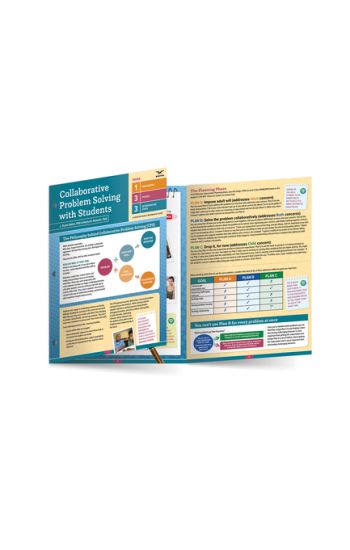
When students miss class, forget homework and misbehave, they lack the skill rather than the will to succeed. With this philosophy in mind, this Guide provides a clear framework for working with students to address challenging behaviour. This Guide offers proven steps for solving a problem collaboratively with a student: Empathise: Clarify the student's concernShare your concernCollaborate: Brainstorm, assess and choose a solution to try From youth psychology experts J. Stuart Ablon and Alisha R. Pollastri, this easy-to-follow Guide is an essential tool for tackling challenging student behaviour effectively, collaboratively and compassionately. Each 8.5" x 11" multi-panel guide is laminated for extra durability and 3-hole-punched for binder storage.
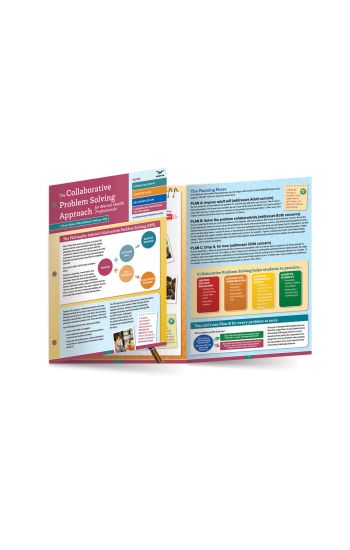
J. Stuart Ablon and Alisha R. Pollastri, authors of The School Discipline Fix, present this Quick Reference Guide to their Collaborative Problem Solving (CPS) approach for changing child behaviour in mental health and home settings. This must-have resource distills the multistep approach into six easy-to-follow panels, in the convenient form of an 8.5"×11" laminated card for in-the-moment reference. Here, clinical staff, parents, guardians and other CPS trainees will find crucial information about the guiding philosophy of the approach; the cognitive skills that contribute to children’s behaviour; the key aspects of a CPS assessment; information on planning and prioritising the treatment; and step-by-step instructions for completing CPS itself.
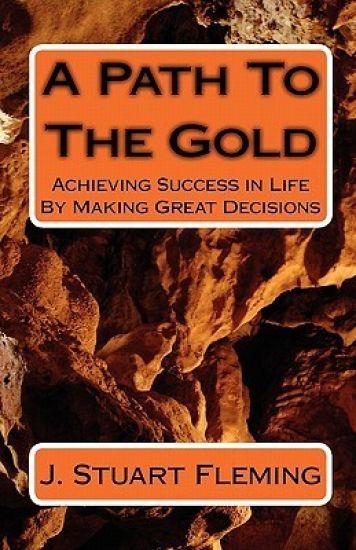
The ability to consistently make one's best possible decisions can be a major factor in achieving success in life. A systematic process for accomplishing this goal, along with relevant examples are described. In addition, important background material on goal setting, the nature of information, related aspects of human nature and key perspectives of time and space are discussed. Applying the process to forming rational opinions in such areas as religion and politics is also addressed. The semi-quantitative process that the author calls "Probabilistic Rationalism" is derived from more formal decision theory methodology routinely used by management in making crucial business decisions, especially in situation possessing a significant degree of uncertainty. Applying this useful technique to situations frequently encountered in every-day life can help achieve a "gold medal" in that most important game, "the game of life".
In these days of such momentous event, the hearts of many are anxiously seeking for some clear setting forth of the place of current happenings in the scheme of the Prophetic Word. The best answer to this longing is not in any speculative theories, but in a calm survey of the Word of God in regard to His declared and unchanging Will. For its history unfolds the persistent purpose which was from the beginning; and its prophecy, both in its fulfilled and yet unfulfilled aspects, ' declares the ultimate triumph of that purpose over all that still exalts itself against the knowledge of God. Therein is the secure peace of His people. Dr. Graham Scroggie has done an invaluable service to the "plain man" in presenting the following Studies. They afford a comprehensive and well-balanced view of Truth which cannot fail to confirm and to inspire hope. For they show clearly and convincingly that the Coming of the Lord Jesus Christ is the necessary and imminent completion of the circle of Grace; supporting this contention by the clear teaching of Revelation, and unerringly pointing out the implicates of this purifying hope to the Church of God. This is a book whose value is altogether out of proportion to its size, and for which many will be profoundly grateful
Since 1870, mining disasters have claimed the lives of over 30,000 men and boys who toiled underground in the anthracite mines of Pennsylvania. The constant threat of fire, explosion, collapsed rock and deadly gas brought miners face to face with death on a daily basis. Sometimes they survived; many times they did not. Through original journal and newspaper accounts, J. Stuart Richards s Death in the Mines revisits Pennsylvania s most notorious mining accidents and rescue attempts from 1869 to 1943. From the fire at Avondale Colliery that resulted in the first law for regulation and inspection of mines, to the gas explosion at Lytle Mine in Primrose that killed fourteen men, Richards reveals multiple facets of Pennsylvania s most perilous profession. Richards, whose family has worked in the mines since 1870, offers a startling yet sensitive tribute to an industry and occupation that is often overlooked and underappreciated"