

Kirjahaku
Etsi kirjoja tekijän nimen, kirjan nimen tai ISBN:n perusteella.
1000 tulosta hakusanalla Torrence Davis



Some Early Scots in Maritime Canada. Volume I
Terrence Michael Punch
Genealogical Publishing Company
2011
pokkari

Some Early Scots in Maritime Canada. Volume II
Terrence M. Punch
Genealogical Publishing Company
2011
pokkari

Some Early Scots in Maritime Canada. Volume III
Terrence M Punch
Genealogical Publishing Company
2012
pokkari

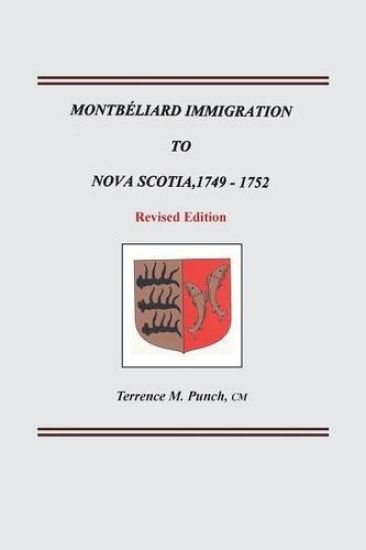
Montbeliard Immigration to Nova Scotia, 1749-1752. Revised Edition
Terrence M Punch
Genealogical Publishing Company
2014
pokkari

In Furiously Funny, Tucker finds that comic rage developed from black oral tradition and first shows up in literature by George Schuyler and Ralph Ellison shortly after World War II. He examines its role in novels and plays, following the growth of the expression to comics and stand-up comedy and film, where Richard Pryor, Spike Lee, Whoopi Goldberg, and Chris Rock have all used the technique. Connecting through humor to what is familiar in both mainstream and African American culture, works of comic rage are at the center of American racial dialogue. The simultaneous expression of comedy and militancy enables artists to reject white stereotypes of blackness and also to confront white audiences with America’s legacy of racial oppression. Tucker shows how this important art form continues to expand in new ways in the twenty-first century.
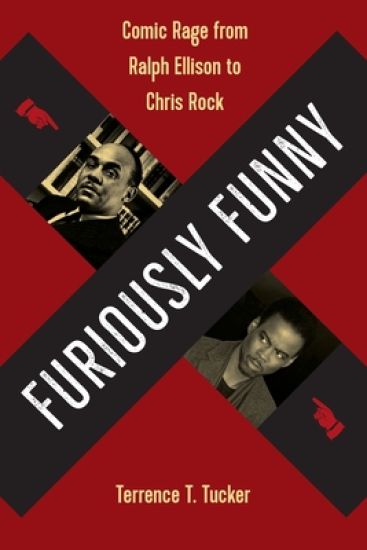
A combustible mix of fury and radicalism, pathos and pain, wit and love--Terrence Tucker calls it "comic rage," and he shows how it has been used by African American artists to aggressively critique America's racial divide.In Furiously Funny, Tucker finds that comic rage developed from black oral tradition and first shows up in literature by George Schuyler and Ralph Ellison shortly after World War II. He examines its role in novels and plays, following the growth of the expression into comics and stand-up comedy and film, where Richard Pryor, Spike Lee, Whoopi Goldberg, and Chris Rock have all used the technique.Their work, Tucker argues, shares a comic vision that centralizes the African American experience and realigns racial discourse through an unequivocal frustration at white perceptions of blackness. They perpetuate images of black culture that run the risk of confirming stereotypes as a means to ridicule whites for allowing those destructive depictions to reinforce racist hierarchies. At the center of comic rage, then, is a full-throated embrace of African American folk life and cultural traditions that have emerged in defiance of white hegemony's attempts to devalue, exploit, or distort those traditions. The simultaneous expression of comedy and militancy enables artists to reject the mainstream perspective by confronting white audiences with America's legacy of racial oppression.Tucker shows how this important art form continues to expand in new ways in the twenty-first century and how it acts as a form of resistance where audiences can engage in subjects that are otherwise taboo.
CUA Press is proud to announce the CUA Studies in Canon Law. In conjunction with the School of Canon Law of the Catholic University of America, we are making available, both digitally and in print, more than 400 canon law dissertations from the 1920s to 1960s, many of which have long been unavailable.These volumes are rich in historical content, yet remain relevant to canon lawyers today. Topics covered include such issues as abortion, excommunication, and infertility. Several studies are devoted to marriage and the annulment process; the acquiring and disposal of church property, including the union of parishes; the role and function of priests, vicars general, bishops, and cardinals; and juridical procedures within the church.For those who seek to understand current ecclesial practices in light of established canon law, these books will be an invaluable resource.
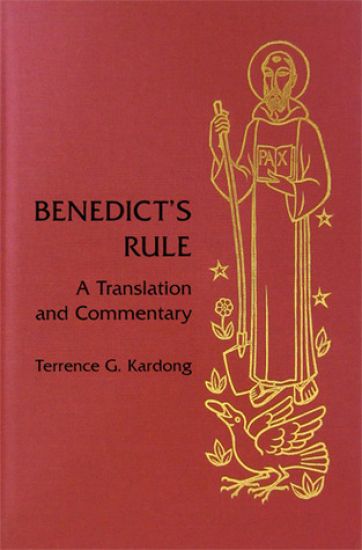
Benedict's Rule: A Translation and Commentary is the first line-by-line exegesis of the entire Rule of Benedict written originally in English. This full commentary - predominately a literary and historical criticism - is based on and includes a new translation and is accompanied by essays on Benedict's spiritual doctrine.A monk who has striven to live according to the Rule of Benedict for thirty-five years, Father Kardong relates it to modern monastic life while examining the sources (Cassian, Augustine, and Basil) Benedict used to establish his Rule. Overviews - summaries of notes, source criticism, or structural criticism - follow some chapters, and a large bibliography of the current scholarship and source references are also included. Benedict's Rule: A Translation and Commentary also includes the Latin text of the Regula Benedicti. This reference work is invaluable to libraries and to those who are called to interpret the Rule. It will be opened again and again. Indexed.

Reflecting on years of living the Benedictine life and of scholarly work on the Rule of Saint Benedict, monk and priest Terrence Kardong offers his wisdom in Day by Day with Saint Benedict. These short, daily reflections on quotations from the Rule are accessible to lay people and religious alike and they will help the reader to incorporate Benedictine values in his or her own life. Day by Day with Saint Benedict includes 366 meditations, one for each day of the year. Those interested in a great religious classic will find here a way to apply the Rule to their own daily life. In some of the meditations Kardong shares true stories told from his long experience of Benedictine community life that show how he has applied the Rule to his own life and how he has seen it incorporated in the lives of those around him. Terrence G. Kardong, OSB, (1936–2019), was a monk of Assumption Abbey, Richardton, North Dakota. He served as the editor of The American BenedictineReview, and was the author of many books and articles.
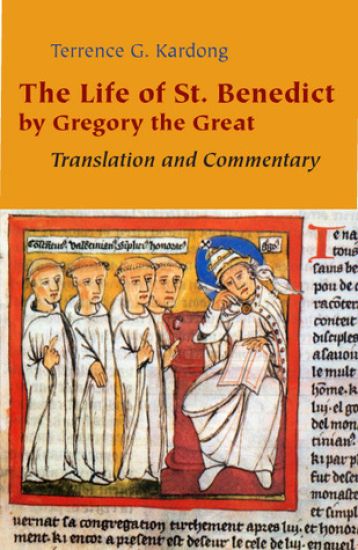
In his classic Second Book of Dialogues, Pope Gregory the Great lionizes Saint Benedict as hero and casts him predominantly in the role of miracle worker. Yet in his Rule, Benedict comes across more as a practical community organizer and premier spiritual father. In this volume, Terrence Kardong offers a fresh take on Gregory the Great's classic. He alternates between translated sections of the Diablo's and his own commentary. Crisp and direct, and infused with his wry and ever-present sense of humor, Kardong's writings sure to build up the spiritual life of readers and, equally important, to make them love St. Benedict..

The Rule of Saint Benedict meets contemporary culture-the connection points and the sticking points between the two are the focus of Conversation with Saint Benedict. Renowned Benedictine scholar Terrence Kardong considers various aspects of modern culture that he considers worrisome and the light that Benedict's Rule might shed on them for Christians today. He also takes up specific aspects of the Rule itself that he finds difficult to deal with. This book, then, offers a rich interplay that does not shrink from recognizing both strengths and weaknesses in our culture as well as in Benedict's own ideas.Among the many topics that Kardong tackles are:laughter and tearssecurityworkeconomicsmonastic garbcell phoneszealhierarchychannel surfingTerrence G. Kardong, OSB, has been a monk of Assumption Abbey in Richardton, North Dakota, since 1956. Since 1982, he has served as editor of the American Benedictine Review. His many books include Pillars of Community: Four Rules of Pre-Benedictine Monastic Life and Day by Day with Saint Benedict. He has also produced highly regarded translations and commentaries on the Rule of Saint Benedict and St. Gregory the Great's Life of Saint Benedict.

In Benedict Backwards, Terrence Kardong builds the case that the Rule of Benedict is best read “backwards,” that is, with emphasis on the last chapters, not the first ones. Benedict starts out dependent on the Rule of the Master, but he ends on a much more self-assured note, revealing more about his own thoughts on matters of monastic life. Kardong shows the final chapters of the Rule are primarily about community, and they provide insight into Benedict’s vision for his monks.
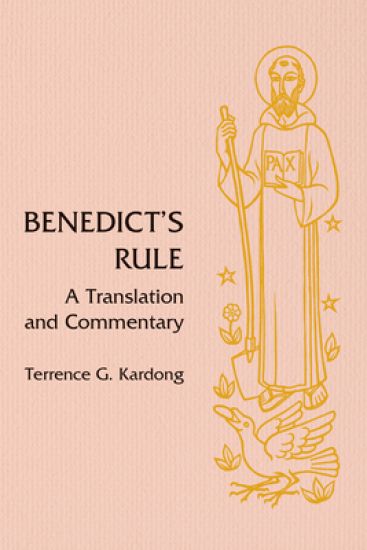
Benedict's Rule: A Translation and Commentary is the first line-by-line exegesis of the entire Rule of Benedict written originally in English. This full commentary - predominately a literary and historical criticism - is based on and includes a new translation and is accompanied by essays on Benedict's spiritual doctrine.A monk who has striven to live according to the Rule of Benedict for thirty-five years, Father Kardong relates it to modern monastic life while examining the sources (Cassian, Augustine, and Basil) Benedict used to establish his Rule. Overviews - summaries of notes, source criticism, or structural criticism - follow some chapters, and a large bibliography of the current scholarship and source references are also included. Benedict's Rule: A Translation and Commentary also includes the Latin text of the Regula Benedicti. This reference work is invaluable to libraries and to those who are called to interpret the Rule. It will be opened again and again. Indexed.
"The multilateral military intervention in Somalia was one of the international community's first major attempts to respond to a dangerous new challenge in the post-cold war era—the problem of state collapse and social disintegration. Catastrophes such as Somalia reach public attention as humanitarian emergencies, but the underlying causes are the disintegration of political institutions and the resulting chaos and insecurity. Given the challenges inherent in such political crises, can the international community respond effectively to encourage political reconciliation and the rehabilitation of governing institutions?This book suggests that the international community ignored clear warning signs in Somalia and missed several opportunities to use diplomacy to prevent state collapse. As a result, the destruction of the state became more complete and the difficulties in rebuilding a viable system more demanding. When the United States and the United Nations finally intervened militarily in 1992, they focused on the humanitarian aspects of the emergency, thereby limiting their ability to act on the core political and security dimensions.This book shows how lessons learned in Somalia will shape international responses in future cases. It details the deep- rooted social, political, and economic processes that led to the decomposition of the state in the early 1990s; analyzes the attempts by the international community to encourage political reconciliation; and offers guidelines for policymakers. "

"Elections have been used as a mechanism to institutionalize a new political order following internal conflict in Cambodia, El Salvador, Angola, Mozambique, Bosnia, and now Liberia. This book analyzes the Liberian transition and the July 1997 elections in order to better understand the relationship between war termination and transitions to democracy and the role post-conflict elections play in promoting both of these goals. The Liberian elections represented the final stage of a seven-year, West African-led peace process. An overwhelming majority voted for former factional leader Charles Taylor in the belief that if Taylor did not win, war would erupt again. The Liberian transition demonstrates that post-conflict elections may play an important role in a process of war termination. In many cases, it may be necessary to move forward with war termination and ""imperfect"" elections in the short run and pursue goals relating to democratization after the new government has been put in place. This study uses a detailed examination of the difficult Liberian case to highlight the more general challenges of helping countries make the transition from civil conflict and authoritarian rule to peace and democracy. Studies in Foreign Policy"
An Introduction to Riemann Surfaces
Terrence Napier; Mohan Ramachandran
Birkhauser Boston Inc
2011
sidottu
This textbook presents a unified approach to compact and noncompact Riemann surfaces from the point of view of the so-called L2 $\bar{\delta}$-method. This method is a powerful technique from the theory of several complex variables, and provides for a unique approach to the fundamentally different characteristics of compact and noncompact Riemann surfaces.The inclusion of continuing exercises running throughout the book, which lead to generalizations of the main theorems, as well as the exercises included in each chapter make this text ideal for a one- or two-semester graduate course. The prerequisites are a working knowledge of standard topics in graduate level real and complex analysis, and some familiarity of manifolds and differential forms.