Kirjojen hintavertailu. Mukana 11 627 220 kirjaa ja 12 kauppaa.

Kirjahaku

Etsi kirjoja tekijän nimen, kirjan nimen tai ISBN:n perusteella.

1000 tulosta hakusanalla Wauter Mannaert

Walter Benjamin and Architecture
The essays compiled in this book explore aspects of Walter Benjamin’s discourse that have contributed to the formation of contemporary architectural theories. Issues such as technology and history have been considered central to the very modernity of architecture, but Benjamin’s reflection on these subjects has elevated the discussion to a critical level. The contributors in this book consider Walter Benjamin's ideas in the context of digitalization of architecture where it is the very technique itself that determines the processes of design and the final form. This book was published as a special issue of Architectural Theory Review.
Water and Urban Development Paradigms
Communication across and integration of disciplines in the urban-water sector seems today more imperative than ever before. Water is a strategic and shrinking resource. It is probably the world's most valuable resource and clean water has even been touted as the 'next oil'. Control of water - from access to management - has always been a highly politicised affair. The complexities that surround it are proving to be major challenges as the world continues to urbanise and human habits of mass consumption and pollution deplete natural resources and destroy natural eco-systems. Water issues are increasingly high on the international agenda – particularly in desert, tropical and sub-tropical regions. Water and Urban Development Paradigms includes the papers presented at the International Conference on Water and Urban Development Paradigms: Towards an Integration of Engineering, Design and Management Approaches (Leuven, Belgium, 15-19 September 2008), and intends to bridge the gap between the disciplines of water management, ecology and the approaches of engineering, urban design and spatial planning. The volume explores a number of themes, discussing the historical relationship between water systems and human settlements, and related management problems regarding urban floods, water use and water sanitation.The aim of Water and Urban Development Paradigms is to contribute to the better integration of approaches currently considered in the separate disciplines of water management, water engineering, urban planning and design, and aquatic ecology - and lead to the emergence of new, more effective water and urban development paradigms. The book will be of special interest to scientists and professionals in the fields of architecture, urban planning, water resources engineering, water supply and sanitation, flood protection, among related fields; to public and non-governmental organizations active in urban planning and the water sector, and to university teachers and students in architecture, urbanism and planning, water and sanitation engineering.
Water in a Dry Land

Water in a Dry Land

Margaret Somerville

Routledge
2013
sidottu
Water in a Dry Land is a story of research about water as a source of personal and cultural meaning. The site of this exploration is the iconic river system which forms the networks of natural and human landscapes of the Murray-Darling Basin, Australia. In the current geological era of human induced climate change, the desperate plight of the system of waterways has become an international phenomenon, a symbol of the unsustainable ways we relate to water globally. The Murray-Darling Basin extends west of the Great Dividing Range that separates the densely populated east coast of Australia from the sparsely populated inland. Aboriginal peoples continue to inhabit the waterways of the great artesian basin and pass on their cultural stories and practices of water, albeit in changing forms. A key question informing the book is: What can we learn about water from the oldest continuing culture inhabiting the world’s driest continent? In the process of responding to this question a team of Indigenous and non-Indigenous researchers formed to work together in a contact zone of cultural difference within an emergent arts-based ethnography.Photo essays of the artworks and their landscapes offer a visual accompaniment to the text on the Routledge Innovative Ethnography Series website, http://www.innovativeethnographies.net/. This book is perfect for courses in environmental sociology, environmental anthropology, and qualitative methods.
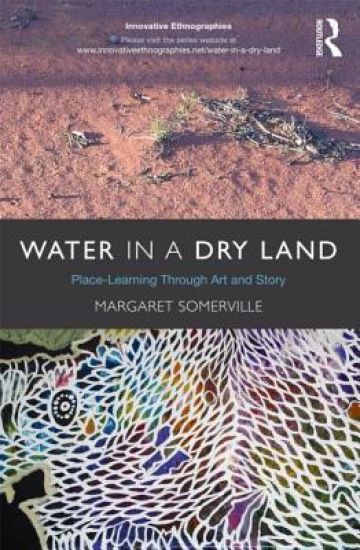
Water in a Dry Land

Water in a Dry Land

Margaret Somerville

Routledge
2013
nidottu
Water in a Dry Land is a story of research about water as a source of personal and cultural meaning. The site of this exploration is the iconic river system which forms the networks of natural and human landscapes of the Murray-Darling Basin, Australia. In the current geological era of human induced climate change, the desperate plight of the system of waterways has become an international phenomenon, a symbol of the unsustainable ways we relate to water globally. The Murray-Darling Basin extends west of the Great Dividing Range that separates the densely populated east coast of Australia from the sparsely populated inland. Aboriginal peoples continue to inhabit the waterways of the great artesian basin and pass on their cultural stories and practices of water, albeit in changing forms. A key question informing the book is: What can we learn about water from the oldest continuing culture inhabiting the world’s driest continent? In the process of responding to this question a team of Indigenous and non-Indigenous researchers formed to work together in a contact zone of cultural difference within an emergent arts-based ethnography.Photo essays of the artworks and their landscapes offer a visual accompaniment to the text on the Routledge Innovative Ethnography Series website, http://www.innovativeethnographies.net/. This book is perfect for courses in environmental sociology, environmental anthropology, and qualitative methods.
Water and Sanitation Services
Substantially reducing the number of human beings who lack access to clean water and safe sanitation is one of the key Millennium Development Goals. This book argues and demonstrates that this can only be achieved by a better integration of the technical and social science approaches in the search for improved organization and delivery of these essential services. It presents a historical analysis of the development of water and sanitation services in both developed and developing countries, which provides valuable lessons for overcoming the obstacles facing the universalization of these services. Among the key lessons emerging from the historical analysis are the organizational and institutional diversity characterizing the development of water and sanitation internationally, and the central role played by the public sector, particularly local authorities, in such development. It also explores the historical role played by cooperatives and other non-profit institutions in reaching rural and peri-urban areas, as well as the emergence of new forms of organization and provision, particularly in poor countries, where aid and development agencies have been promoting the self-organization of water systems by local communities. The book provides a critical exploration of these different institutional options, including the interaction between the public and private sectors, and the irreplaceable role of public funding as a condition for success. The book is divided into two parts: the first reviews theoretical and conceptual issues such as the political economy of water services, financing, the interfaces between water and sanitation services and public health, and the systemic conditions that influence the provision of these services, including the diversity of organizational and institutional options characterizing the governance and management of water and sanitation services. The second section presents a number of country or regional case studies, each one chosen to highlight a particular problem, approach or strategy. These case studies are drawn from Africa, the Americas, Asia and Europe, covering a wide range of socio-economic and political contexts. The book will be of great interest to advanced students, researchers, professionals and NGOs in many disciplines, including public policy and planning, environmental sciences, environmental sociology, history of technology, civil and environmental engineering, public health and development studies.
Water Security
The purpose of this book is to present an overview of the latest research, policy, practitioner, academic and international thinking on water security—an issue that, like water governance a few years ago, has developed much policy awareness and momentum with a wide range of stakeholders. As a concept it is open to multiple interpretations, and the authors here set out the various approaches to the topic from different perspectives. Key themes addressed include: Water security as a foreign policy issue The interconnected variables of water, food, and human security Dimensions other than military and international relations concerns around water security Water security theory and methods, tools and audits. The book is loosely based on a masters level degree plus a short professional course on water security both given at the University of East Anglia, delivered by international authorities on their subjects. It should serve as an introductory textbook as well as be of value to professionals, NGOs, and policy-makers.
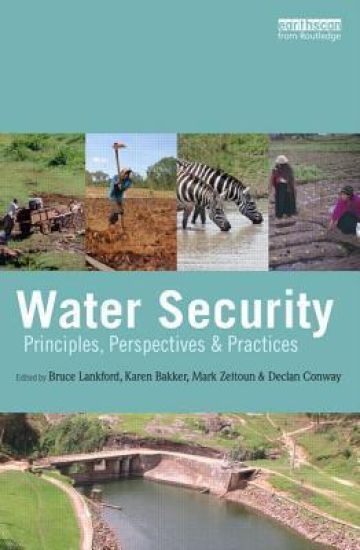
Water Security
The purpose of this book is to present an overview of the latest research, policy, practitioner, academic and international thinking on water security—an issue that, like water governance a few years ago, has developed much policy awareness and momentum with a wide range of stakeholders. As a concept it is open to multiple interpretations, and the authors here set out the various approaches to the topic from different perspectives. Key themes addressed include: Water security as a foreign policy issue The interconnected variables of water, food, and human security Dimensions other than military and international relations concerns around water security Water security theory and methods, tools and audits. The book is loosely based on a masters level degree plus a short professional course on water security both given at the University of East Anglia, delivered by international authorities on their subjects. It should serve as an introductory textbook as well as be of value to professionals, NGOs, and policy-makers.
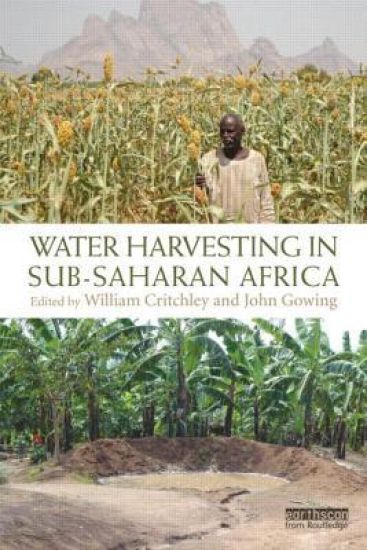
Water Harvesting in Sub-Saharan Africa
Agriculture in Sub-Saharan Africa is constrained by highly variable rainfall, frequent drought and low water productivity. There is an urgent need, heightened by climate change, for appropriate technologies to address this problem through managing and increasing the quantity of water on farmers’ fields – water harvesting. This book defines water harvesting as a set of approaches which occupy an intermediate position along the water-management spectrum extending from in situ moisture conservation to irrigated agriculture. They generally comprise small-scale systems that induce, collect, store and make use of local surface runoff for agriculture. The authors review development experience and set out the state of the art of water harvesting for crop production and other benefits in Sub-Saharan Africa. This includes an assessment of water harvesting schemes that were initiated two or three decades ago when interest was stimulated by the droughts of the 1970s and 1980s. These provide lessons to promote sustainable development of dryland agriculture in the face of changing environmental conditions. Case studies from eight countries across Sub-Saharan Africa provide the evidence base. Each follows a similar format and is based on assessments conducted in collaboration with in-country partners, with a focus on attempts to promote adoption of water harvesting, both horizontally (spread) and vertically (institutionalization). Introductory cross-cutting chapters as well as an analytical conclusion are also included.
Water Harvesting in Sub-Saharan Africa
Agriculture in Sub-Saharan Africa is constrained by highly variable rainfall, frequent drought and low water productivity. There is an urgent need, heightened by climate change, for appropriate technologies to address this problem through managing and increasing the quantity of water on farmers’ fields – water harvesting. This book defines water harvesting as a set of approaches which occupy an intermediate position along the water-management spectrum extending from in situ moisture conservation to irrigated agriculture. They generally comprise small-scale systems that induce, collect, store and make use of local surface runoff for agriculture. The authors review development experience and set out the state of the art of water harvesting for crop production and other benefits in Sub-Saharan Africa. This includes an assessment of water harvesting schemes that were initiated two or three decades ago when interest was stimulated by the droughts of the 1970s and 1980s. These provide lessons to promote sustainable development of dryland agriculture in the face of changing environmental conditions. Case studies from eight countries across Sub-Saharan Africa provide the evidence base. Each follows a similar format and is based on assessments conducted in collaboration with in-country partners, with a focus on attempts to promote adoption of water harvesting, both horizontally (spread) and vertically (institutionalization). Introductory cross-cutting chapters as well as an analytical conclusion are also included.
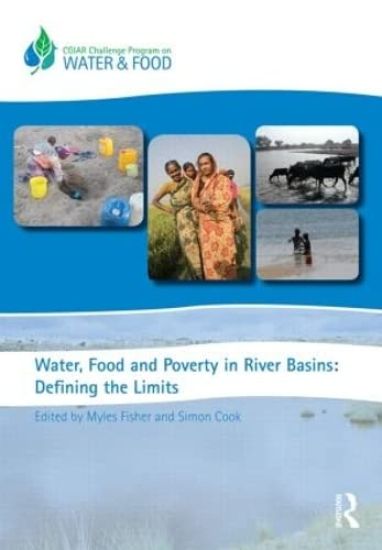
Water, Food and Poverty in River Basins
Conventional wisdom says that the world is heading for a major water crisis. By 2050, global population will increase from 7 billion to a staggering 9.5 billion and the demands this will place on food and water systems will inevitably push river basins over the edge.The findings from this book present a different picture. While it is convenient to visualize an inevitable global water and food crisis in which increasing demands result in increasing poverty, food insecurity and conflict, the reality is far more nuanced and revolves around the politics of equitable and sustainable development of resources. The first part of this book provides detailed insight into conditions of water flows within nine river basins. In the second part, authors summarize and re-analyze the outcome of the nine basins, providing a coherent global picture of water, water productivity and development. They assess the impacts of variations of these attributes on development and approaches for poverty alleviation, and explore the institutional factors that support or obstruct change. How people will manage river systems while protecting vital ecosystem functions will make the difference between catastrophe and survival. As Prof Asit Biswas points out, "... the world is facing a water crisis not because of physical scarcity of water but because of poor management practices in nearly all countries of the world."The book is based on the four years (2006-2010) of extensive research into the state of ten of the world’s major river basins carried out under the CGIAR Challenge Program for Water and Food’s Basin Focal Project.This book was published as a special issue of Water International.
Water Resources Management in the People's Republic of China
Chinese water resource managers face a challenge that is both immense and unique. They must balance limited water supplies against the needs of the world’s largest population; demands for rapid economic growth with calls for improved environmental management; and the desire for a market-based approach to the allocation of water with a history of State ownership and strict government control of all resources.In China, changes are occurring in water resources management that are representative of many of the fundamental changes occurring within Chinese society, on issues such as property rights, community participation, improved environmental management, and the shift towards market-based decision making.This book describes the development of a water rights system in the People’s Republic of China. It covers different aspects of water resources management in China – including water planning, the provision of environmental flows, urban water management, and irrigation district management – and examines how these are being addressed through a rights-based approach. The book includes several detailed examples of the Chinese application of water rights as they address the diverse challenges of different basins across China. This book previously appeared as a special issue of the International Journal of Water Resources Development.
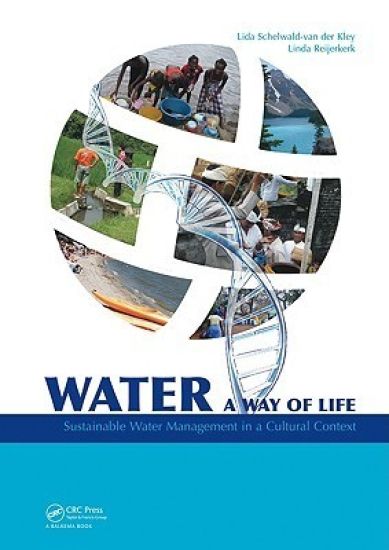
Water: A way of life

Water: A way of life

A.J.M. (Lida) Schelwald-van der Kley; Linda Reijerkerk

CRC Press
2009
sidottu
Why do many water management projects, begun with the best of intentions, still fail? How is it that large infrastructural water works often encounter opposition? Is it perhaps, among other things, the lack of attention for the cultural context? These and other intriguing questions are dealt with in this book. The authors, having 20 years of experience on water and sanitation in an international context, have investigated the relationship between water and culture world-wide in order to find new keys to successful and sustainable water management. This book is based on extensive research and is intended to form a cultural road towards new sustainable water management practices. "Water: a way of life" takes the reader on a water journey through time and across the world’s continents. Along the way it explains the past and present ways in which different cultures around the world, both traditional and modern, view and manage water in response to the distinct environment they inhabit. As beliefs and values are at the heart of any culture, it also highlights the views of the main world religions on water and its use. A better understanding of cultural water beliefs and practices may lead to new concepts for future sustainable water management - from flood management to water supply, sanitation and irrigation management.The book will be useful to water professionals exporting knowledge and technologies to foreign countries where the challenge is to create sustainable solutions for water management by taking into account local, cultural factors. It is also intended to encourage world leaders, politicians and decision-makers responsible for water management to use their power, knowledge and influence to really make a change for the benefit of the people they represent. In this way, water can become a source of cooperation rather than a source of conflict. The authors trust that this book, about water and culture, intended for a truly international audience, will be a source of inspiration.
Water and the City

Water and the City

Iain White

Routledge
2010
sidottu
As a vital human need, water has been absolutely critical to decisions as to where cities originate, how much they grow and the standard of living of the inhabitants. The relationship is complex however; we need both continual availability and protection from its potential impacts. Over recent decades flooding and scarcity episodes have become commonplace in even the most advanced countries – and these events cannot be disassociated from the socio-economic context within which they occur; being directly related to how we live, where we live and how we govern.This book draws together information on a host of connected subjects from population growth to water scarcity to the relationship between humanity and nature, then demonstrates how utilizing notions of risk and resilience could help improve the relationship between the city and its most precious resource. Combining discussions of risk, water and spatial planning it provides an invaluable text for planning, geography and urban studies students on how to address urban water problems within a rapidly changing world.
Water and the City

Water and the City

Iain White

Routledge
2010
nidottu
As a vital human need, water has been absolutely critical to decisions as to where cities originate, how much they grow and the standard of living of the inhabitants. The relationship is complex however; we need both continual availability and protection from its potential impacts. Over recent decades flooding and scarcity episodes have become commonplace in even the most advanced countries – and these events cannot be disassociated from the socio-economic context within which they occur; being directly related to how we live, where we live and how we govern.This book draws together information on a host of connected subjects from population growth to water scarcity to the relationship between humanity and nature, then demonstrates how utilizing notions of risk and resilience could help improve the relationship between the city and its most precious resource. Combining discussions of risk, water and spatial planning it provides an invaluable text for planning, geography and urban studies students on how to address urban water problems within a rapidly changing world.
Water Policy in Spain
Though the modern Spanish State was formed in the mid Fifteenth Century, historical records show that water works, statues, and the utilization of water dates back to centuries BC. As a semi-arid country, the effort to control, store and assure water supplies to cities and fields is present in numerous historical and political landmarks.Water policy in Spain has been the focus of Spanish-speaking scholars for decades, yet a comprehensive treatment of the subject has never before been published in English. Water Policy in Spain fills this gap by providing readers with a comprehensive, detailed account of the history of water policy in Spain from the beginnings of the 20th century to the present day.Part one presents a synopsis of the physical, economic, environmental and climatic bases of Spain, also covering corresponding political topics. Part two reviews the major constraints and opportunities that are relevant to face major water policy challenges. And part three is an in-depth account of water policy in the country. The issues closely examined include the way in which old water laws and institutions have been able to adapt to new sentimental and institutional challenges, including the significant change in the last decade to comply with the European Union’s Water Framework Directive (WFD). Like many semi-arid countries, climate change, drought risks and water pollution are cause for growing concerns in Spain and the country is still struggling to define a consistent and widely accepted set of policies to combat these threats. Spain’s current water policy is unique because it entails a complete tour de force with respect to what the country has been doing on water matters for centuries. As the WFD must be enforced in 27 States (representing 500 million Europeans), the lessons that can be learnt from the Spanish experience should catch the attention of water practitioners around the world.
Water Management in Megacities
Efficient and equitable water, wastewater and stormwater management for the megacities is becoming an increasingly complex task. The special issue will focus on water management in its totality for megacities, including their technical, social, economic, legal, institutional and environmental dimensions through a series of specially invited case studies from different megacities of the world.At present, around one out of two of the earth’s 6.3 billion people live in urban areas. Each year, the world population grows by around 80 millions. Practically all of this growth is urban, primarily due to migration. World’s urban population is expected to reach 5 billion by 2030, which is nearly 2/3rd more than in 2000, and would mean that 60% of world’s population will live in urban areas.The case studies analysed include some of the most interesting and challenging megacities of this planet, Dhaka, Istanbul, Jakarta, Johannesburg, México City, Riyadh and São Paulo. They assess different aspects of how water is intermingled in the overall development milleau. The book considers the magnitudes, nature and extent of the present and future challenges and how these could be meet in socially acceptable and cost-effective ways. The contributors are all acknowledged water experts from different parts of the world.This book was previously published as a special issue of the International Journal of Water Resources Development.
Walter Ullmann on Medieval Political Theory - 3 Volumes (Routledge Revivals)
Celebrated Austrian-Jewish scholar Walter Ullmann (1910-1983) was a leading authority in the field of medieval political thought, and in particular legal theory. He settled in the United Kingdom after leaving Austria in the late 1930s and went on to hold positions at the University of Leeds and Trinity College, Cambridge as Professor of Medieval History. Featured in this Routledge Revivals collection are the works: The Medieval Idea of Law as Represented by Lucas de Penna (1946), The Principles of Government and Politics in the Middle Ages (1961), The Individual and Society in the Middle Ages (1966) and The Carolingian Renaissance and the Idea of Kingship (1969).
Water and Agricultural Sustainability Strategies
According to the United Nations, 77 million people are expected to face water shortage by 2025, if people continue to use water at the current rate. More water than available would be needed to grow the world’s food during the next decade. As a result of scarcity of water, global annual food production losses could reach 350 million tons by 2025.Divided into six main sections, this volume outlines strategies to conserve soil and water resources to help ensure both water and food security:- Challenges to ensure water and agricultural sustainability- Sustainable strategies for managing water and soil resources and groundwater recharge technologies- Soil-quality issues- Water-quality issues, with special reference to groundwater pollution with arsenic- Management in different agroclimatic environments, with particular reference to rainfed agriculture- Biotechnological applications for drought-tolerant crop varieties with improved water use efficiency, water conservation strategies, and sustainable agronomic alternatives.This guide on agricultural sustainability is intended for scientists and advanced students in agronomy, soil science, agricultural engineering, agricultural economics, plant breeding, plant genetics, plant biotechnology, water resources, hydrology, geography, and other agriculture-related fields.
Water, Food and Poverty in River Basins
Conventional wisdom says that the world is heading for a major water crisis. By 2050, global population will increase from 7 billion to a staggering 9.5 billion and the demands this will place on food and water systems will inevitably push river basins over the edge.The findings from this book present a different picture. While it is convenient to visualize an inevitable global water and food crisis in which increasing demands result in increasing poverty, food insecurity and conflict, the reality is far more nuanced and revolves around the politics of equitable and sustainable development of resources. The first part of this book provides detailed insight into conditions of water flows within nine river basins. In the second part, authors summarize and re-analyze the outcome of the nine basins, providing a coherent global picture of water, water productivity and development. They assess the impacts of variations of these attributes on development and approaches for poverty alleviation, and explore the institutional factors that support or obstruct change. How people will manage river systems while protecting vital ecosystem functions will make the difference between catastrophe and survival. As Prof Asit Biswas points out, "... the world is facing a water crisis not because of physical scarcity of water but because of poor management practices in nearly all countries of the world."The book is based on the four years (2006-2010) of extensive research into the state of ten of the world’s major river basins carried out under the CGIAR Challenge Program for Water and Food’s Basin Focal Project.This book was published as a special issue of Water International.
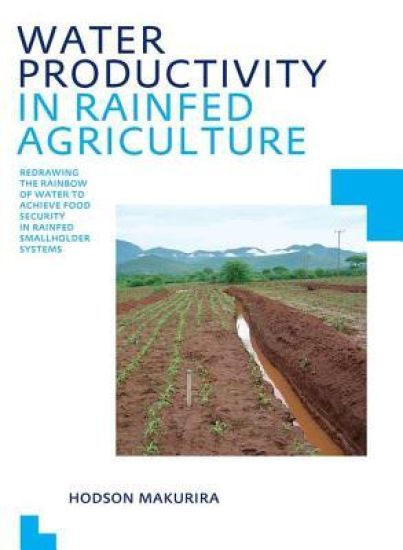
Water Productivity in Rainfed Agriculture
The challenge of water scarcity as a result of insufficient seasonal rainfall and dry spell occurrences during cropping seasons is compounded by inefficient agricultural practices by smallholder farmers where insignificant soil and water conservation efforts are applied. The hypothesis of this research is that many of the past research efforts have taken a fragmented approach to deal with the challenges facing subsistence farmers in rainfed systems. The research has been conducted in the semi-arid Makanya catchment of northern Tanzania and has successfully applied different analytical techniques to better understand soil and water interactions at field scale. It has been demonstrated that there is indeed scope to increase crop water productivity provided the local farmers adopt more efficient cultivation techniques. Substantial yield increases occur as a result of diverting runoff and these further improve when other techniques such as ripping, application of manure and cover cropping are introduced. This confirms that no single solution exists to solve the problem of low yields in rainfed farming systems. However, even with these promising results, the research has shown that there is room to further improve the efficiency of crop water use through improvement in research approaches and exploration of better techniques.