Kirjojen hintavertailu. Mukana 12 016 292 kirjaa ja 12 kauppaa.

Kirjahaku

Etsi kirjoja tekijän nimen, kirjan nimen tai ISBN:n perusteella.

1000 tulosta hakusanalla "PRISCILLA"

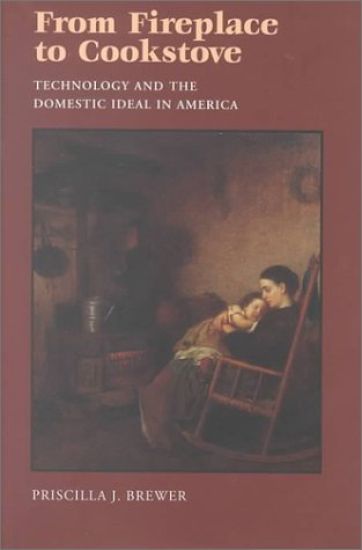
From Fireplace To Cookstove

From Fireplace To Cookstove

Priscilla J Brewer

Syracuse University Press
2000
sidottu
An examination of the development of the first American appliance - the cast iron stove. The stove created a quiet but culturally contested transform of domestic life and sparked important debates about women, industrialization, the definition of social class and the consumer economy.
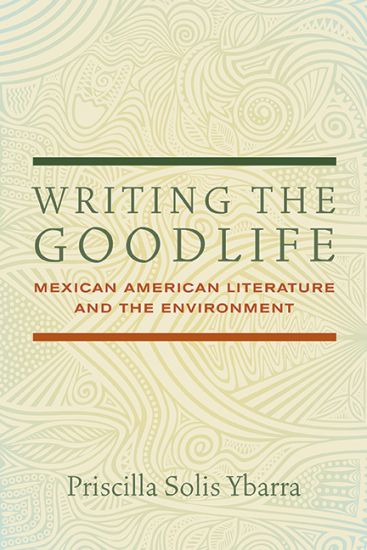
Writing the Goodlife

Writing the Goodlife

Priscilla Solis Ybarra

University of Arizona Press
2016
nidottu
Mexican American literature brings a much-needed approach to the increasingly urgent challenges of climate change and environmental injustice. Although current environmental studies work to develop new concepts, Writing the Goodlife looks to long-established traditions of thought that have existed in Mexican American literary history for the past century and a half. During that time period, Mexican American writing consistently shifts the focus from the environmentally destructive settler values of individualism, domination, and excess toward the more beneficial refrains of community, non-possessiveness, and humility. The decolonial approaches found in these writings provide rich examples of mutually respectful relations between humans and nature, an approach that Priscilla Solis Ybarra calls ""goodlife"" writing. Goodlife writing has existed for at least the past century, Ybarra contends, but Chicana/o literary history's emphasis on justice and civil rights eclipsed this tradition and hidden it from the general public's view. Likewise, in ecocriticism, the voices of people of color most often appear in deliberations about environmental justice. The quiet power of goodlife writing certainly challenges injustice, to be sure, but it also brings to light the decolonial environmentalism heretofore obscured in both Chicana/o literary history and environmental literary studies. Ybarra's book takes on two of today's most discussed topics—the worsening environmental crisis and the rising Latino population in the United States—and puts them in literary-historical context from the U.S.-Mexico War up to today's controversial policies regarding climate change, immigration, and ethnic studies. This book uncovers 150 years' worth of Mexican American and Chicana/o knowledge and practices that inspire hope in the face of some of today's biggest challenges.
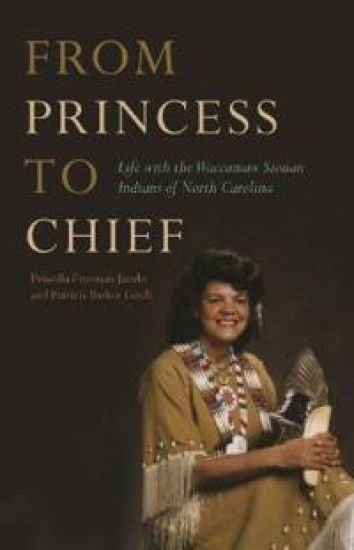
From Princess to Chief

From Princess to Chief

Priscilla Freeman Jacobs; Patricia Barker Lerch

The University of Alabama Press
2013
sidottu
A collaborative life history of Priscilla Freeman Jacobs, From Princess to Chief tells the story of the first female chief (from 1986 to 2005) of the state-recognised Waccamaw Siouan Indian Tribe of North Carolina. In From Princess to Chief, Priscilla Freeman Jacobs and Patricia Barker Lerch detail Jacobs’s birth and childhood, coming of age, education, young adulthood, marriage and family, Indian activism, and spiritual life. Jacobs is descended from a family of Indian leaders whose activism dates back to the early twentieth century. Her ancestors pressured the local county and state governments to fund their Indian schools, led the drive for the Waccamaw Sioux to be recognised as Indians in state and federal legislation, and finally succeeded in opening the long-awaited Indian schools in the 1930s. Jacobs’s lasting legacies to her community include the many initiatives on which she collaborated with her father, Clifton Freeman, including the acquisition of common land for the tribe, initiation of a tribal board of directors, incorporation of a development association, and the establishment of a day care and many other social and educational programs. In the 1970s Jacobs served on the North Carolina Commission of Indian Affairs and was active in the Coalition of Eastern Native Americans.Introducing the powwow as a way for young people to learn about the traditions of Indian people throughout the state of North Carolina, Jacobs taught many children how to dance and wear Indian regalia with pride and dignity. Throughout her life, Priscilla Jacobs has worked hard to preserve the traditional customs of her people and to teach others about the folk culture that shaped and moulded her as a person.Told from the point of view of an eyewitness to the community’s effort to win federal recognition in 1950 and their lives since, From Princess to Chief helps preserve the story of Jacobs’s Indian community.
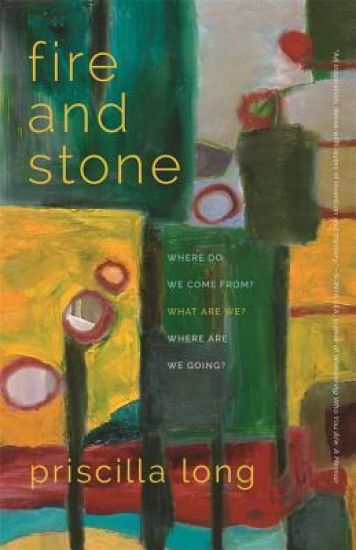
Fire and Stone

Fire and Stone

Priscilla Long

University of Georgia Press
2016
pokkari
The questions that drive Priscilla Long’s Fire and Stone are the questions asked by the painter Paul Gauguin in the title of his 1897 painting: Where Do We Come From? What Are We? Where Are We Going? These questions look beyond everyday trivialities to ponder the essence of our origins.Using her own story as a touchstone, Long explores our human roots and how they shape who we are today. Her personal history encompasses childhood as an identical twin on a dairy farm on the Eastern Shore of Maryland; the turmoil, social change, and music of the 1960s; the suicide of a sister; and a life in art in the Pacific Northwest. Here, memoir extends the threads of the writer’s individual and very personal life to science, to history, and to ancestors, both literary and genetic, back to the Neanderthals.Long uses profoundly poetic personal essays to draw larger connections and to ask compelling questions about identity. Framed by four distinctive sections, Fire and Stone transcends genre and evolves into a sweeping elegy on what it means to be human.
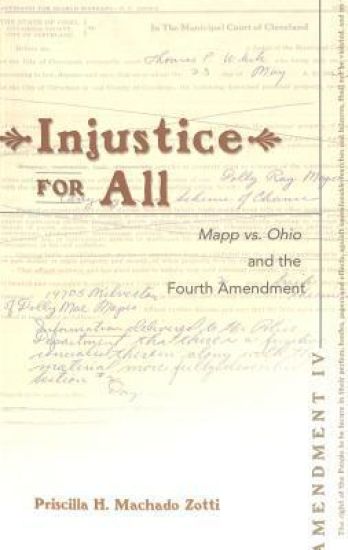
Injustice for All

Injustice for All

Priscilla H. Machado Zotti

Peter Lang Publishing Inc
2005
nidottu
With its original documents and extensive interviews, "Injustice for All" is an authentic voice for civil liberties and change and the consequences that result. The book details the historical, legal, and political significance of the famous search-and-seizure case "Mapp v. Ohio." From the underworld of gambling in 1960s Cleveland to the chambers of the Warren Court justices, the obscenity case becomes the vehicle for implementing the exclusionary rule. Dollree Mapp, the police who searched her, and all the major participants are followed throughout the investigation. The private papers of the justices reveal the inner workings of the nation's highest court. This book is essential for anyone interested in civil liberties and the processes of government as well as students of criminal justice and constitutional law.
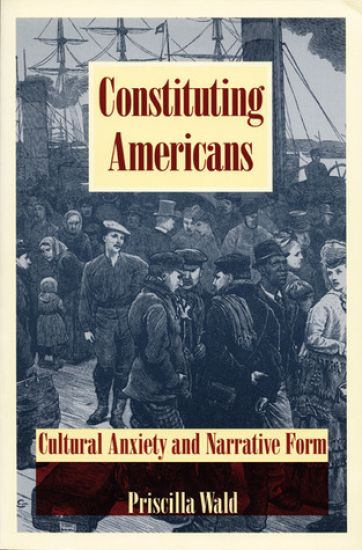
Constituting Americans

Constituting Americans

Priscilla Wald

Duke University Press
1994
pokkari
Ever since the founders drafted "We the People," "we" have been at pains to work out the contradictions in their formulation, to fix in words precisely what it means to be American. Constituting Americans rethinks the way that certain writers of the mid-nineteenth and early twentieth century contributed to this project; in doing so, it revises the traditional narrative of U.S. literary history, restoring an essential chapter to the story of an emerging American cultural identity. In diverse ways, very different writers-including Frederick Douglass, Herman Melville, Harriet Wilson, W. E. B. Du Bois, and Gertrude Stein-participated in the construction and dissemination of an American identity, but none was entirely at ease in the culture they all helped to define. Evident in their work is a haunting sense of their telling someone else’s story, a discomfort that Priscilla Wald reads in the context of legal and political debates about citizenship and personhood that marked the emergence of the United States as a nation and a world power.From early-nineteenth-century Supreme Court cases to turn-of-the-century Jim Crow and immigration legislation, from the political speeches of Abraham Lincoln to the historical work of Woodrow Wilson, nation-builders addressed the legal, political, and historical paradoxes of American identity. Against the backdrop of their efforts, Wald shows how works such as Douglass’s autobiographical narratives, Melville’s Pierre, Wilson’s Our Nig, Du Bois’s The Souls of Black Folks, and Stein’s The Making of Americans responded, through formal innovations, to the aggressive demands for literary participation in the building of that nation. The conversation that emerges among these literary works challenges the definitions and genres that largely determine not only what works are read, but also how they are read in classrooms in the United States today.Offering insight into the relationship of storytelling to national identity, Constituting Americans will compel the attention of those with an interest in American literature, American studies, and cultural studies.
Constituting Americans

Constituting Americans

Priscilla Wald

Duke University Press
1994
sidottu
Ever since the founders drafted "We the People," "we" have been at pains to work out the contradictions in their formulation, to fix in words precisely what it means to be American. Constituting Americans rethinks the way that certain writers of the mid-nineteenth and early twentieth century contributed to this project; in doing so, it revises the traditional narrative of U.S. literary history, restoring an essential chapter to the story of an emerging American cultural identity. In diverse ways, very different writers-including Frederick Douglass, Herman Melville, Harriet Wilson, W. E. B. Du Bois, and Gertrude Stein-participated in the construction and dissemination of an American identity, but none was entirely at ease in the culture they all helped to define. Evident in their work is a haunting sense of their telling someone else’s story, a discomfort that Priscilla Wald reads in the context of legal and political debates about citizenship and personhood that marked the emergence of the United States as a nation and a world power.From early-nineteenth-century Supreme Court cases to turn-of-the-century Jim Crow and immigration legislation, from the political speeches of Abraham Lincoln to the historical work of Woodrow Wilson, nation-builders addressed the legal, political, and historical paradoxes of American identity. Against the backdrop of their efforts, Wald shows how works such as Douglass’s autobiographical narratives, Melville’s Pierre, Wilson’s Our Nig, Du Bois’s The Souls of Black Folks, and Stein’s The Making of Americans responded, through formal innovations, to the aggressive demands for literary participation in the building of that nation. The conversation that emerges among these literary works challenges the definitions and genres that largely determine not only what works are read, but also how they are read in classrooms in the United States today.Offering insight into the relationship of storytelling to national identity, Constituting Americans will compel the attention of those with an interest in American literature, American studies, and cultural studies.
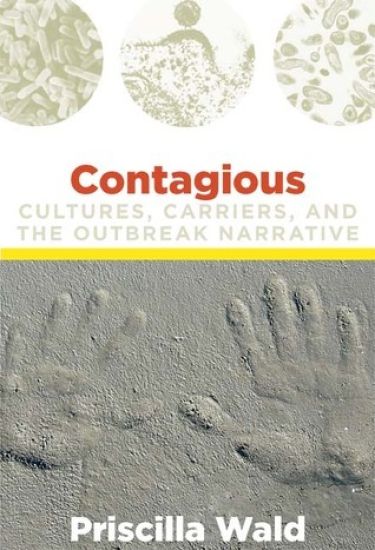
Contagious

Contagious

Priscilla Wald

Duke University Press
2008
sidottu
How should we understand the fear and fascination elicited by the accounts of communicable disease outbreaks that proliferated, following the emergence of HIV, in scientific publications and the mainstream media? The repetition of particular characters, images, and story lines-of Patients Zero and superspreaders, hot zones and tenacious microbes-produced a formulaic narrative as they circulated through the media and were amplified in popular fiction and film. The “outbreak narrative” begins with the identification of an emerging infection, follows it through the global networks of contact and contagion, and ends with the epidemiological work that contains it. Priscilla Wald argues that we need to understand the appeal and persistence of the outbreak narrative because the stories we tell about disease emergence have consequences. As they disseminate information, they affect survival rates and contagion routes. They upset economies. They promote or mitigate the stigmatizing of individuals, groups, locales, behaviors, and lifestyles. Wald traces how changing ideas about disease emergence and social interaction coalesced in the outbreak narrative. She returns to the early years of microbiology-to the identification of microbes and “Typhoid Mary,” the first known healthy human carrier of typhoid in the United States-to highlight the intertwined production of sociological theories of group formation (“social contagion”) and medical theories of bacteriological infection at the turn of the twentieth century. Following the evolution of these ideas, Wald shows how they were affected by-or reflected in-the advent of virology, Cold War ideas about “alien” infiltration, science-fiction stories of brainwashing and body snatchers, and the HIV/AIDS pandemic. Contagious is a cautionary tale about how the stories we tell circumscribe our thinking about global health and human interactions as the world imagines-or refuses to imagine-the next Great Plague.
Contagious

Contagious

Priscilla Wald

Duke University Press
2008
pokkari
How should we understand the fear and fascination elicited by the accounts of communicable disease outbreaks that proliferated, following the emergence of HIV, in scientific publications and the mainstream media? The repetition of particular characters, images, and story lines-of Patients Zero and superspreaders, hot zones and tenacious microbes-produced a formulaic narrative as they circulated through the media and were amplified in popular fiction and film. The “outbreak narrative” begins with the identification of an emerging infection, follows it through the global networks of contact and contagion, and ends with the epidemiological work that contains it. Priscilla Wald argues that we need to understand the appeal and persistence of the outbreak narrative because the stories we tell about disease emergence have consequences. As they disseminate information, they affect survival rates and contagion routes. They upset economies. They promote or mitigate the stigmatizing of individuals, groups, locales, behaviors, and lifestyles. Wald traces how changing ideas about disease emergence and social interaction coalesced in the outbreak narrative. She returns to the early years of microbiology-to the identification of microbes and “Typhoid Mary,” the first known healthy human carrier of typhoid in the United States-to highlight the intertwined production of sociological theories of group formation (“social contagion”) and medical theories of bacteriological infection at the turn of the twentieth century. Following the evolution of these ideas, Wald shows how they were affected by-or reflected in-the advent of virology, Cold War ideas about “alien” infiltration, science-fiction stories of brainwashing and body snatchers, and the HIV/AIDS pandemic. Contagious is a cautionary tale about how the stories we tell circumscribe our thinking about global health and human interactions as the world imagines-or refuses to imagine-the next Great Plague.
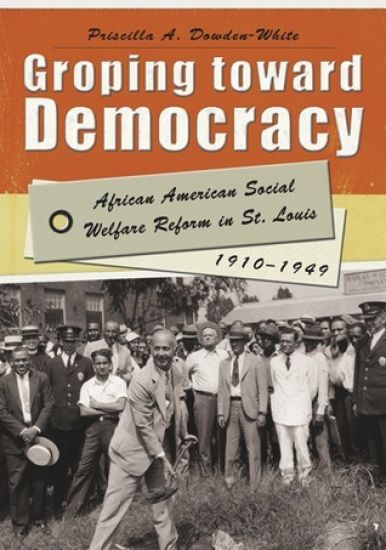
Groping Toward Democracy

Groping Toward Democracy

Priscilla Dowden-White

University of Missouri Press
2011
sidottu
Decades before the 1960s, social reformers began planting the seeds for the Modern Civil Rights era. During the period spanning World Wars I and II, St. Louis, Missouri, was home to a dynamic group of African American social welfare reformers. The city's history and culture were shaped both by those who would construct it as a southern city and by the heirs of New England abolitionism. Allying with white liberals to promote the era's new emphasis on 'the common good,' black reformers confronted racial segregation and its consequences of inequality and, in doing so, helped to determine the gradual change in public policy that led to a more inclusive social order. In Groping toward Democracy: African American Social Welfare Reform in St. Louis, 1910-1949, historian Priscilla A. Dowden-White presents an on-the-ground view of local institution building and community organizing campaigns initiated by African American social welfare reformers. Through extensive research, the author places African American social welfare reform efforts within the vanguard of interwar community and neighborhood organization, reaching beyond the 'racial uplift' and 'behavior' models of the studies preceding hers. She explores one of the era's chief organizing principles, the 'community as a whole' idea, and deliberates on its relationship to segregation and the St. Louis black community's methods of reform. Groping toward Democracy depicts the dilemmas organizers faced in this segregated time, explaining how they pursued the goal of full, uncontested black citizenship while still seeking to maximize the benefits available to African Americans in segregated institutions. The book's nuanced mapping of the terrain of social welfare offers an unparalleled view of the progress brought forth by the early-twentieth-century crusade for democracy and equality. By delving into interrelated developments in health care, education, labor, and city planning, Dowden-White deftly examines St. Louis's African American interwar history. Her in-depth archival research fills a void in the scholarship of St. Louis's social development, and her compelling arguments will be of great interest to scholars and teachers of American urban studies and social welfare history.
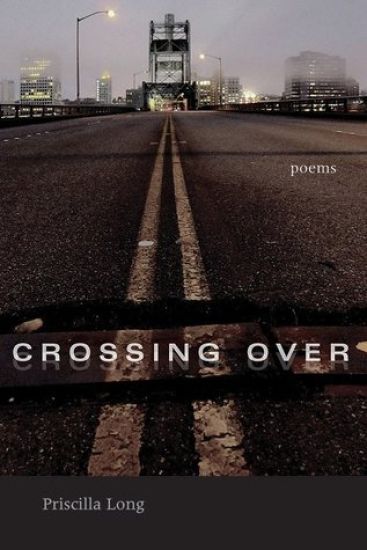
Crossing Over

Crossing Over

Priscilla Long

University of New Mexico Press
2015
nidottu
Long’s work begs to be read aloud in order to savor the rich language and rhythm she instills in each poem. She explores the beauty of specific bridges while employing them as a metaphor for crossings to death (a sister’s suicide), eros, and art. Part elegy, the book also explores living, remembering, and celebrating.
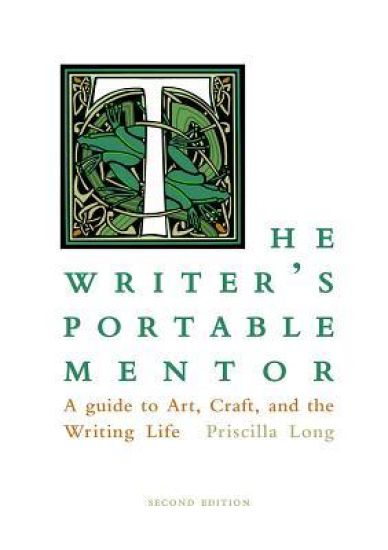
The Writer's Portable Mentor

The Writer's Portable Mentor

Priscilla Long

University of New Mexico Press
2018
nidottu
Designed to mentor writers at all levels, from beginning to quite advanced, The Writer's Portable Mentor offers a wealth of insight and crafting models from the author's twenty-plus years of teaching and creative thought. The book provides tools for structuring a book, story, or essay. It trains writers in observation and in developing a poet's ear for sound in prose. It scrutinizes the sentence strategies of the masters and offers advice on how to publish. This second edition is updated to account for changes in the publishing industry and provides hundreds of new craft models to inspire, guide, and develop every writer's work.
Metadata Fundamentals for All Librarians

Metadata Fundamentals for All Librarians

Priscilla Caplan

ALA Editions
2003
nidottu
Metadata, or ""data about data"", is used to organize and access information in an effective way. From cataloguing to organizing archives, metadata helps front-line librarians provide customers with a direct path to information. In this text, Priscilla Caplan presents a comprehensive description of the various forms of metadata, its applications, and how librarians can put it to work. Both descriptive and nondescriptive forms of metadata are defined (including the TEI Header, the Dublin Core, EAD, GILS, ONIX and the Data Documentation Initiative) and applied to actual library functions. Illustrations show how different forms of metadata look, the advantages and disadvantages, and where they're best applied in the library. Caplan seeks to provide an unbiased analysis of metadata forms, emerging forms, and current and future applications. She answers questions such as: how does using metadata enhance access?; how can metadata be used to organize and describe a variety of information formats, especially digital resources?; what are the different ways you can use metadata in your library?; and which form of metadata will be most appropriate for your collection?
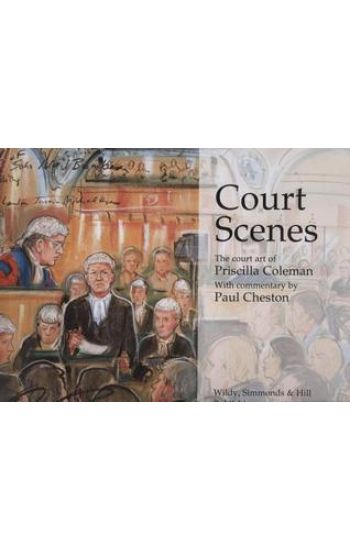
Court Scenes

Court Scenes

Priscilla Coleman; Paul Cheston

Wildy, Simmonds And Hill Publi
2010
sidottu
Priscilla Coleman has been drawing court scenes for over 20 years. The pictures collected here mark many of the most important trials of that period.
Chadwick’s Wedding

Chadwick’s Wedding

Priscilla Cummings

Schiffer Publishing Ltd
2009
sidottu
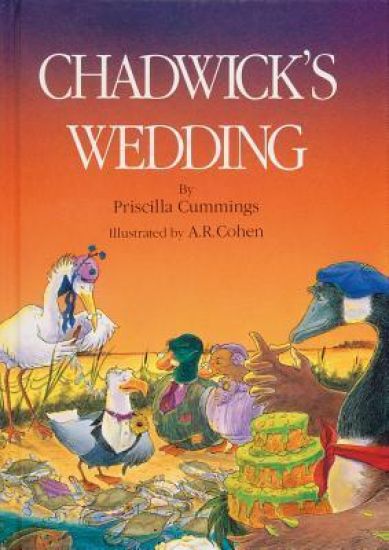
A blue crab is getting married in this rhyming story, and discovers the scope of his love after his bride disappears. Wedding shells are ringing! Chadwick the Crab is getting married, and everyone is preparing for the big event! Esmerelda is choosing her bridesmaids. Baron von Heron is writing the ceremony (in rhyme, of course). Toulouse, the gourmet goose, is baking a corn and eelgrass cake. Then Chadwick begins to have second thoughts about marriage, and as if that weren’t bad enough, Esmerelda disappears! Suddenly, the wedding is off and the search is on. Only then does Chadwick realize how much he loves the prettiest girl crab in all of Shady Creek.
Chesapeake 1-2-3

Chesapeake 1-2-3

Priscilla Cummings

Schiffer Publishing Ltd
2009
sidottu
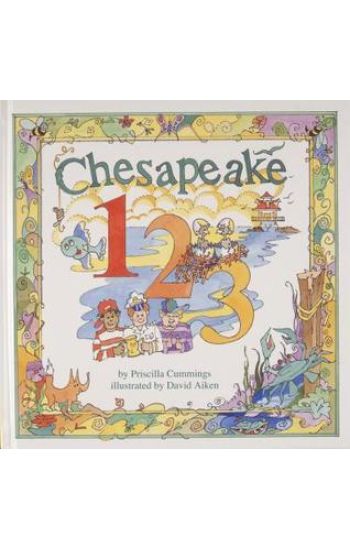
In Chesapeake 1-2-3, companion book to Chesapeake ABC, the bay comes alive for preschoolers and toddlers learning to count. Pages and scenes grow more crowded as readers approach "ten," then see all the numbers once again. One girl went out to fish; two ospreys fly up high; three sails are on each boat; learn to count--the Chesapeake Way! This book will delight youngsters with its clever rhymes and whimsical drawings. Picture book–ages 0-6.
Beetle Boddiker

Beetle Boddiker

Priscilla Cummings

Schiffer Publishing Ltd
2009
sidottu
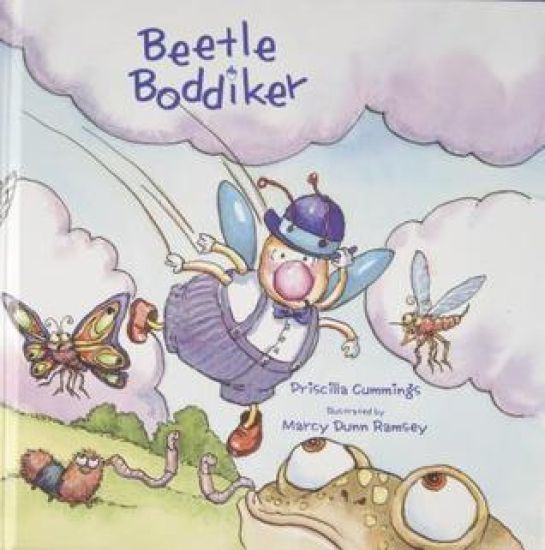
Beneath the back steps, by a rock in the shade, Beetle Boddiker lives in the house that he made. A jumble of sticks and a tumble of leaves, It’s a simple bug house. But don’t step on it, please! Beetle Boddiker is a tiny beetle who rarely leaves home. But one day he needs to be brave and venture forth across the great jungle of a lawn and the ocean of rocks in the driveway to visit his brother, Nevins, who lives in a rusty tin can across the street. Join Beetle Boddiker on an adventure that is not to be missed. Early reader–ages 5-8.
Autumn Journey

Autumn Journey

Priscilla Cummings

Schiffer Publishing Ltd
2009
nidottu
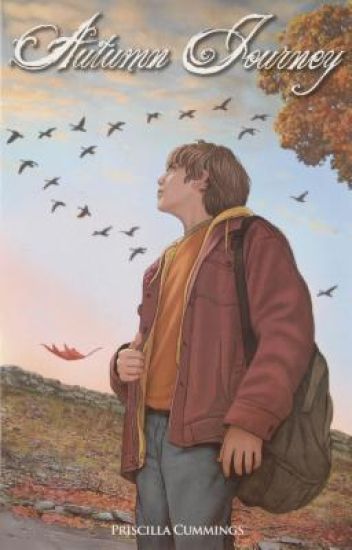
When Will Newcomb’s father loses his job at the Port of Baltimore things at home start falling apart. The family moves to Grampa’s farm in Pennsylvania for a new beginning, but his father’s depression is taking a toll on the family—especially Will. When Grampa suggests a hunting trip early one morning, Will is eager to go along, especially since he believes it might help him win back his father’s attention. Only later, while hiding beneath the bushes and waiting for the birds to see the decoys, does Will realize how torn inside he is about actually killing a beautiful Canada goose. This is one hunting trip that does not end the way anyone hopes or expects. Autumn Journey is the story of several journeys, not just that of a Canada goose or a young boy. It is the tale of love keeping a struggling family together in the face of hard times. Middle grades–ages 10-13.
Mariner's Guide to Nautical Information

Mariner's Guide to Nautical Information

Priscilla Travis

Schiffer Publishing Ltd
2011
sidottu
This alphabetically arranged reference work puts over 2,000 modern nautical topics and terms at your fingertips, with enough explanatory advice to be truly useful. Topics ranging from the Navigation Rules, cruising under sail and power, electronics, and communication, to safety, weather, technical topics, and commonly-used spoken nautical language make this book a comprehensive resource. The Topic Index helps you test your knowledge and learn more about a subject, and the extensive annotated bibliography identifies hundreds of relevant publications and Internet resources. These terms are illustrated with 190color photographs and 9 line drawings. If you are thinking about getting started on the water this book is for you. If you are already out there and dreaming about distant horizons, there is a wealth of information to help you become more competent, confident, and comfortable afloat. International emphasis is also incorporated for readers in Canada and across the pond.