Kirjojen hintavertailu. Mukana 12 074 993 kirjaa ja 12 kauppaa.

Kirjahaku

Etsi kirjoja tekijän nimen, kirjan nimen tai ISBN:n perusteella.

1000 tulosta hakusanalla ART WIEDERHOLD

Art and Essence

Art and Essence

Stephen Davies; Ananta C. Sukla

Praeger Publishers Inc
2003
sidottu
This exceptional new collection comprises 13 new essays on the nature and definability of art. Presenting a wide offering of contemporary philosophical perspectives—including theoretical, historical, cross-cultural, and evolutionary—Art and Essence offers thorough critical discussion on the extensive contemporary philosophical literature on the subject. The work here contrasts the idea of theorizing about why we make and consume art with that of defining it; furthermore, the authors consider the possibility that art has no definable essence and discusses differences and connections between art and nature. More historical chapters focus on ancient and medieval approaches to art, while others discuss the work of philosophers such as Hume, Kant, and Nietzsche. Non-Western cultures cultivated their own, distinctive art practices and philosophies, as discussed in chapters on India and Japan, and contemporary philosophers have added their own unique perspectives. The authors are among the leading philosophers on the subjects they cover, making Art and Essence an invaluable tool for scholars of a wide variety of fields.
Art of Biblical Prayer

Art of Biblical Prayer

J.W. Rogerson

SPCK Publishing
2011
nidottu
Written by an internationally respected biblical scholar, this book shows how the Bible speaks of prayer as a way of living in connection with God. It is full of fresh biblical insights and down-to-earth advice, and contains an illuminating chapter on the meaning of the Lord's Prayer. There are also helpful summaries and points for reflection or discussion at the ends of chapters. 'Prayer' is a word that is used in a number of different ways. This book aims to show that prayer should be understood as inseparable from Christianity, in the sense that to practise Christianity is to practise prayer and vice versa.Written by an internationally respected biblical scholar, this book shows how the Bible speaks of prayer as a way of living in connection with God. It is full of fresh biblical insights and down-to-earth advice, and contains an illuminating chapter on the meaning of the Lord's Prayer. There are also helpful summaries and points for reflection or discussion at the ends of chapters. 'Prayer' is a word that is used in a number of different ways. This book aims to show that prayer should be understood as inseparable from Christianity, in the sense that to practise Christianity is to practise prayer and vice versa.Written by an internationally respected biblical scholar, this book shows how the Bible speaks of prayer as a way of living in connection with God. It is full of fresh biblical insights and down-to-earth advice, and contains an illuminating chapter on the meaning of the Lord's Prayer. There are also helpful summaries and points for reflection or discussion at the ends of chapters. 'Prayer' is a word that is used in a number of different ways. This book aims to show that prayer should be understood as inseparable from Christianity, in the sense that to practise Christianity is to practise prayer and vice versa.Written by an internationally respected biblical scholar, this book shows how the Bible speaks of prayer as a way of living in connection with God. It is full of fresh biblical insights and down-to-earth advice, and contains an illuminating chapter on the meaning of the Lord's Prayer. There are also helpful summaries and points for reflection or discussion at the ends of chapters. 'Prayer' is a word that is used in a number of different ways. This book aims to show that prayer should be understood as inseparable from Christianity, in the sense that to practise Christianity is to practise prayer and vice versa.
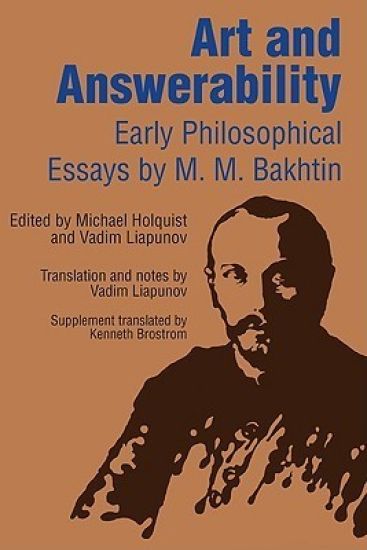
Art and Answerability

Art and Answerability

M. M. Bakhtin

University of Texas Press
1990
pokkari
Art and Answerability contains three of Mikhail Bakhtin's early essays from the years following the Russian Revolution, when Bakhtin and other intellectuals eagerly participated in the debates, lectures, demonstrations, and manifesto writing of the period. Because they predate works that have already been translated, these essays-"Art and Answerability," "Author and Hero in Aesthetic Activity," and "The Problem of Content, Material, and Form in Verbal Art"-are essential to a comprehensive understanding of Bakhtin's later works. A superb introduction by Michael Holquist sets out the major themes and concerns of the three essays and identifies their place in the canon of Bakhtin's work and in intellectual history. The introduction, together with Vadim Liapunov's scholarly gloss, makes these essays accessible to students as well as scholars.
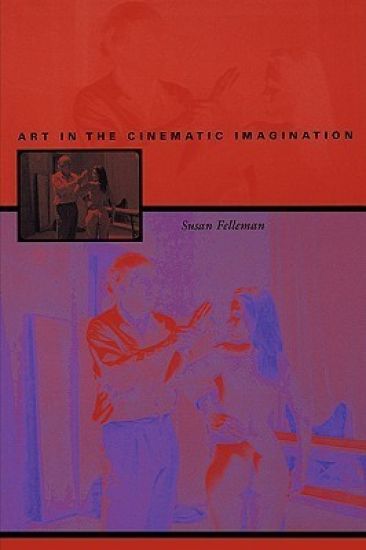
Art in the Cinematic Imagination

Art in the Cinematic Imagination

Susan Felleman

University of Texas Press
2006
pokkari
Bringing an art historical perspective to the realm of American and European film, Art in the Cinematic Imagination examines the ways in which films have used works of art and artists themselves as cinematic and narrative motifs. From the use of portraits in Vertigo to the cinematic depiction of women artists in Artemisia and Camille Claudel, Susan Felleman incorporates feminist and psychoanalytic criticism to reveal individual and collective perspectives on sex, gender, identity, commerce, and class. Probing more than twenty films from the postwar era through contemporary times, Art in the Cinematic Imagination considers a range of structurally significant art objects, artist characters, and art-world settings to explore how the medium of film can amplify, reinvent, or recontextualize the other visual arts. Fluently speaking across disciplines, Felleman's study brings a broad array of methodologies to bear on questions such as the evolution of the "Hollywood Love Goddess" and the pairing of the feminine with death on screen. A persuasive approach to an engaging body of films, Art in the Cinematic Imagination illuminates a compelling and significant facet of the cinematic experience.
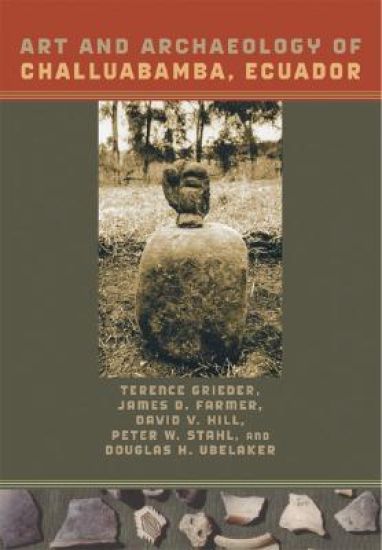
Art and Archaeology of Challuabamba, Ecuador

Art and Archaeology of Challuabamba, Ecuador

Terence Grieder; James D. Farmer; David V. Hill; Peter W. Stahl; Douglas H. Ubelaker

University of Texas Press
2009
sidottu
Challuabamba (chi-wa-bamba)-now a developing suburb of Cuenca, the principal city in the southern highlands of Ecuador-has been known for a century as an ancient site that produced exceptionally fine pottery in great quantities. Suspecting that Challuabamban ceramics might provide a link between earlier, preceramic culture and later, highly developed Formative period art, Terence Grieder led an archaeological investigation of the site between 1995 and 2001. In this book, he and the team of art historians and archaeologists who excavated at Challuabamba present their findings, which establish the community's importance as a center in a network of trade and artistic influence that extended to the Amazon River basin and the Pacific Coast.Art and Archaeology of Challuabamba, Ecuador presents an extensive analysis of ceramics dating to 2100-1100 BC, along with descriptions of stamps and seals, stone and shell artifacts, burials and their offerings, human remains, and zooarchaeology. Grieder and his coauthors demonstrate that the pottery of Challuabamba fills a gap between early and late Formative styles and also has a definite connection with later highland styles in Peru. They draw on all the material remains to reconstruct the first clear picture of Challuabamba's prehistory, including agriculture and health, interregional contacts and exchange, red-banded incised ware and ceramic production, and shamanism and cosmology.Because southern Ecuador has received relatively little archaeological study, Art and Archaeology of Challuabamba, Ecuador offers important baseline data for what promises to be a key sector of the prehistoric Andean region.
Art, Nature, and Religion in the Central Andes

Art, Nature, and Religion in the Central Andes

Mary Strong

University of Texas Press
2012
nidottu
From prehistory to the present, the Indigenous peoples of the Andes have used a visual symbol system-that is, art-to express their sense of the sacred and its immanence in the natural world. Many visual motifs that originated prior to the Incas still appear in Andean art today, despite the onslaught of cultural disruption that native Andeans have endured over several centuries. Indeed, art has always been a unifying power through which Andeans maintain their spirituality, pride, and culture while resisting the oppression of the dominant society.In this book, Mary Strong takes a significantly new approach to Andean art that links prehistoric to contemporary forms through an ethnographic understanding of Indigenous Andean culture. In the first part of the book, she provides a broad historical survey of Andean art that explores how Andean religious concepts have been expressed in art and how artists have responded to cultural encounters and impositions, ranging from invasion and conquest to international labor migration and the internet. In the second part, Strong looks at eight contemporary art types-the scissors dance (danza de tijeras), home altars (retablos), carved gourds (mates), ceramics (ceramica), painted boards (tablas), weavings (textiles), tinware (hojalateria), and Huamanga stone carvings (piedra de Huamanga). She includes prehistoric and historic information about each art form, its religious meaning, the natural environment and sociopolitical processes that help to shape its expression, and how it is constructed or performed by today’s artists, many of whom are quoted in the book.
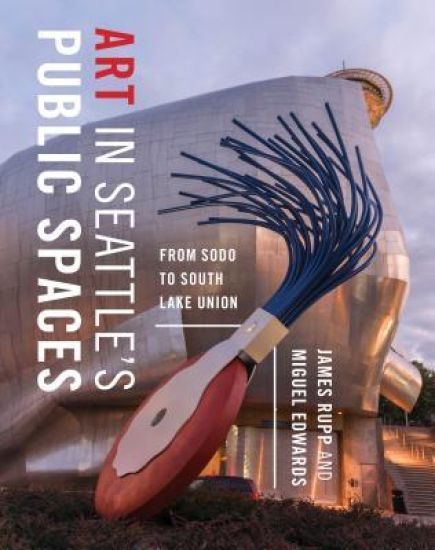
Art in Seattle's Public Spaces

Art in Seattle's Public Spaces

James M. Rupp

University of Washington Press
2018
pokkari
From cedar totem poles to high-tech video installations, downtown Seattle sparkles with hundreds of artworks adorning plazas, lobbies, parks, and waterfront piers and paths. This impressive collection, comprising works by artists with regional or international reputations (and often both), has expanded rapidly as Seattle's urban core has grown.The explosive development of South Lake Union in recent years has brought major works by Jaume Plensa, Julie Speidel, Annie Han and Daniel Mihalyo, Buster Simpson, Jenny Heishman, and more. The Seattle Art Museum's ten-year-old Olympic Sculpture Park provides a breathtaking setting for Richard Serra's monumental Wake and Beverly Pepper's ever-changing Perre's Ventaglio III, and links the downtown waterfront to Myrtle Edwards Park, which features Michael Heizer's once-maligned and now beloved Adjacent, Against, Upon.To tell the lively stories of those who commissioned and created these artworks, James Rupp interviewed and corresponded with more than ninety artists, also drawing from newspaper reviews, books, catalogs, and artist statements. Photographs by Miguel Edwards, all new to this book, showcase the pieces' street-level presentation and help the reader understand the larger impact of each work in its neighborhood context. This comprehensive guide offers detailed information about the individual works of art, organized by downtown neighborhood, and featuring:More than 350 artworksOver 300 color photographs9 detailed area maps for self-guided toursUnique descriptions of each artworkBiographies of all the artistsPerfect for art and architecture lovers, as well as visitors and newcomers to the city, Art in Seattle's Public Spaces showcases the wealth of urban art to be freely enjoyed by all.A Michael J. Repass Book
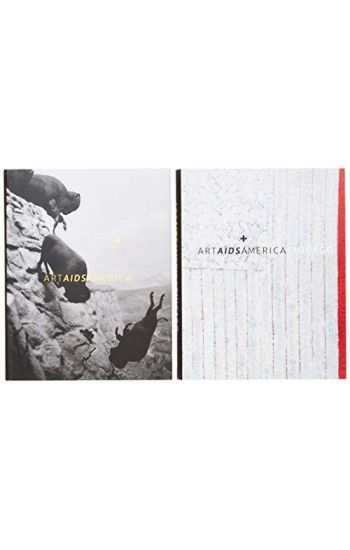
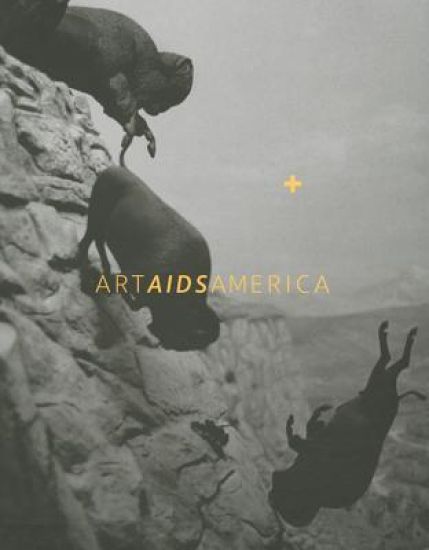
Art AIDS America / Art AIDS America Chicago Boxed Set

Art AIDS America / Art AIDS America Chicago Boxed Set

Jonathan David Katz; Rock Hushka; Staci Boris

University of Washington Press
2018
sidottu
This slipcased boxed set contains the two volumes: Art AIDS America, published in 2015 to coincide with the original exhibit at the Tacoma Art Museum, and the new book Art AIDS America Chicago. Art AIDS America included work by Keith Haring, David Wojnarowicz, Peter Hujar, Robert Mapplethorpe, among many others. Taken together, these two volumes are a stunning overview of the artistic response over the last thirty years to the AIDS epidemic in America, with voices from every community impacted by the crisis.
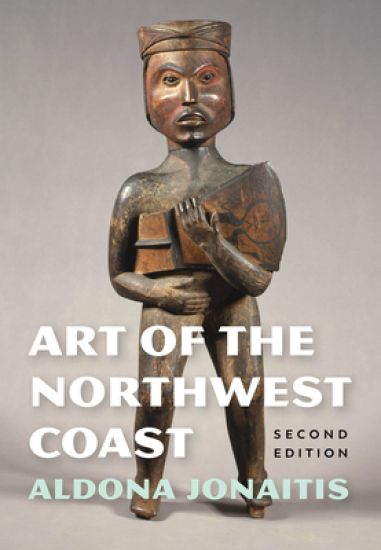
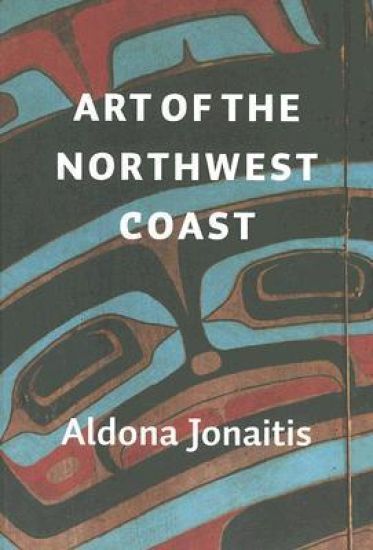
Art of the Northwest Coast

Art of the Northwest Coast

Aldona Jonaitis

UNIVERSITY OF WASHINGTON PRESS
2021
pokkari
Essential reading for anyone interested in the art of Native culturesOriginally published in 2006, Art of the Northwest Coast offers an expansive history of this great tradition, from the earliest known works to those made at the beginning of the twenty-first century. Although non-Natives often claimed that First Nations cultures were disappearing, Northwest Coast Native people continued to make art during the painful era of colonization, often subtly expressing resistance to their oppressors and demonstrating the resilience of their heritage. Integrating the art's development with historical events following contact with Euro-Americans sheds light on the creativity of artists as they appropriated and transformed foreign elements into uniquely Indigenous statements. A new chapter discusses contemporary artists, including Marianne Nicholson, Nicholas Galanin, Lawrence Paul Yuxweluptun, and Sonny Assu, who address pressing issues ranging from Indigenous sovereignty and destruction of the environment to the power of Native women and efforts to work with non-Natives to heal the wounds of racism and discrimination.
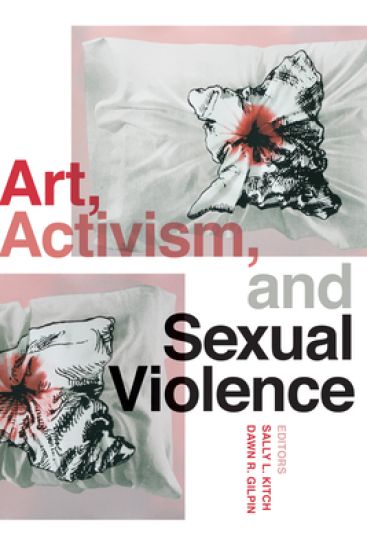
Art, Activism, and Sexual Violence

Art, Activism, and Sexual Violence

UNIVERSITY OF WASHINGTON PRESS
2024
pokkari
Highlights the role of creative expression in exposing, preventing, and combatting sexual violenceSince 2017 the #MeToo movement has expanded cultural awareness of the pervasiveness of sexual assault and tacit support for rape culture in the United States and beyond. Despite its ubiquity, sexual assault is one of the most underreported crimes in the world in part because of the mistreatment and misunderstanding survivors often face from their communities and the legal system.Art, Activism, and Sexual Violence brings together creative work, in multiple genres, with analyses of the historical and cultural contexts of sexual violence from intersectional feminist perspectives. Together, contributors illuminate the power of artists—as victims, survivors, and allies—to combat sexual violence through creative expression in partnership with historians, anthropologists, sociologists, journalists, and gender scholars. Showcasing dance, textile arts, painting, new media images, drama, and other creative forms, this volume embraces artistic expression's transformative potential and inspires readers to action, mutual recognition, resistance, and resilience.
Art of the Northwest Coast

Art of the Northwest Coast

Aldona Jonaitis

University of Washington Press
2006
pokkari
Art of the Northwest Coast is a comprehensive survey of the Native arts of the Pacific Northwest Coast, from Puget Sound to Alaska and from prehistoric times to the present. Incorporating the region's social history with the observations of anthropologists, historians of art, and Native peoples, this groundbreaking volume examines how the upheavals of European contact affected the development of a powerful traditional art. By exploring the distinct origins of each of the area's linguistic groups and their histories, mythologies, and art forms, art historian Aldona Jonaitis reveals how a complex web of factors informed these groups' varied responses to the changes and challenges brought about by contact with Europeans. The post-contact period has often been considered a time of decline for Native artistic traditions and techniques, but Jonaitis convincingly argues against this assumption. The traditions were not lost, she asserts, but rather were expressed in different ways.Forms such as tourist art - made expressly for sale rather than for community use - were for some the only outlets available in the trying, repressive years when Natives were deprived of their land, rights, and essential cultural expressions. While art made for community use was often judged "inferior" in quality to nineteenth-century creations, it still expressed the strong aesthetics of a surviving Native culture. Since the 1960s, Native artistic activity has flourished and is increasingly recognized as fine art rather than anthropological artifact. Repatriation of Native works of art from museums, a strong market for collectors and dealers, and a reaffirmation of traditional culture and heritage among Native communities all contribute to a vibrant field in which Native artists reflect their enduring cultures in works that explore many contemporary directions. Compellingly written and beautifully illustrated, Art of the Northwest Coast is a cornerstone addition to any library and essential reading for anyone interested in the art of Native cultures.
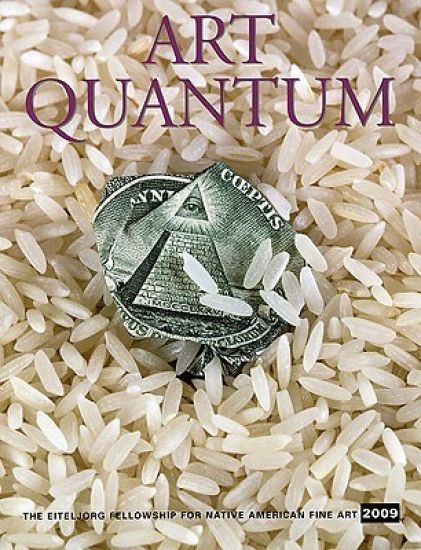
Art Quantum

Art Quantum

University of Washington Press
2009
pokkari
While blood quantum laws have been used to determine an individual's inclusion in a Native group, Eiteljorg fellowship artists have instead come to view themselves as belonging to the "Art Tribe," through the universal process of art creation and collaboration. Art Quantum presents a selection of the extraordinary work created by the five artists selected for the 2009 Eiteljorg Fellowship. In his essay on the long career of Edward Poitras (Gordon First Nation), Alfred Young Man (Cree) places Poitras's installations in the context of Métis and Indian identity as well as the White art establishment in Canada. Gail Tremblay (Onondaga / Micmac) illuminates the work of Jim Denomie (Ojibwa), reading his narrative paintings and intimately scaled portraits through their complex and humorous references to history, art history, and current events. Jimmie Durham (Cherokee) uses the analogy of music to explore the language of abstraction in sculptural and two-dimensional works by Jeffrey Gibson (Mississippi Band of Choctaw / Cherokee), while the subtle and often monochromatic sculptural installations of Faye HeavyShield (Kainai-Blood) are sensitively interpreted by Lee-Ann Martin (Mohawk). The volume closes with Polly Nordstrand's (Hopi / Norwegian) reflection on the themes of longing/not belonging and placement/displacement that Wendy Red Star (Crow) documents in her photographs and appliquéd dance shawls.It is the goal of the Eiteljorg Fellowship to be a starting point and a platform for exploration of Native identity and artistic expression beyond the concepts of blood quantum laws. Essays by James Nottage, Jennifer Complo McNutt, Ashley Holland (Cherokee), and Paul Chaat Smith (Comanche) help to situate the larger issue of Native identity in the contemporary art world.
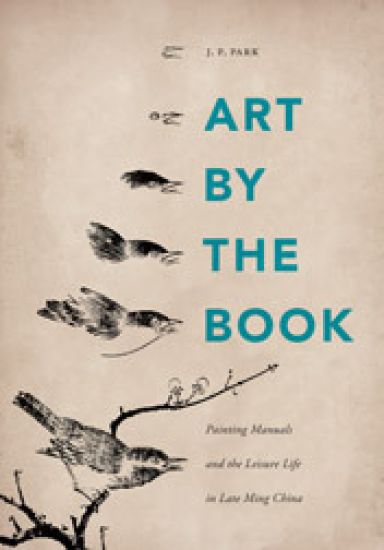
Art by the Book

Art by the Book

J. P. Park

University of Washington Press
2012
sidottu
Sometime before 1579, Zhou Lujing, a professional writer living in a bustling commercial town in southeastern China, published a series of lavishly illustrated books, which constituted the first multigenre painting manuals in Chinese history. Their popularity was immediate and their contents and format were widely reprinted and disseminated in a number of contemporary publications. Focusing on Zhou's work, Art by the Book describes how such publications accommodated the cultural taste and demands of the general public, and shows how painting manuals functioned as a form in which everything from icons of popular culture to graphic or literary cliche was presented to both gratify and shape the sensibilities of a growing reading public. As a special commodity of early modern China, when cultural standing was measured by a person's command of literati taste and lore, painting manuals provided nonelite readers with a device for enhancing social capital.
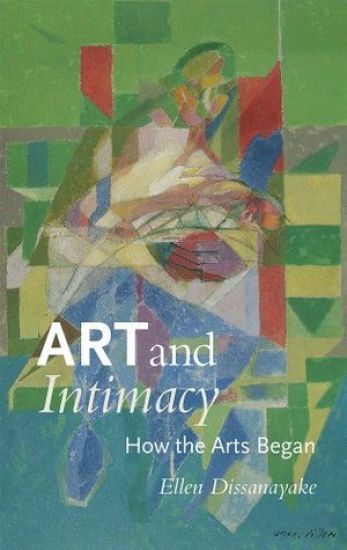
Art and Intimacy

Art and Intimacy

Ellen Dissanayake

University of Washington Press
2012
pokkari
To Ellen Dissanayake, the arts are biologically evolved propensities of human nature: their fundamental features helped early humans adapt to their environment and reproduce themselves successfully over generations. In Art and Intimacy she argues for the joint evolutionary origin of art and intimacy, what we commonly call love.It all begins with the human trait of birthing immature and helpless infants. To ensure that mothers find their demanding babies worth caring for, humans evolved to be lovable and to attune themselves to others from the moment of birth. The ways in which mother and infant respond to each other are rhythmically patterned vocalizations and exaggerated face and body movements that Dissanayake calls rhythms and sensory modes.Rhythms and modes also give rise to the arts. Because humans are born predisposed to respond to and use rhythmic-modal signals, societies everywhere have elaborated them further as music, mime, dance, and display, in rituals which instill and reinforce valued cultural beliefs. Just as rhythms and modes coordinate and unify the mother-infant pair, in ceremonies they coordinate and unify members of a group.Today we humans live in environments very different from those of our ancestors. They used ceremonies (the arts) to address matters of serious concern, such as health, prosperity, and fecundity, that affected their survival. Now we tend to dismiss the arts, to see them as superfluous, only for an elite. But if we are biologically predisposed to participate in artlike behavior, then we actually need the arts. Even -- or perhaps especially -- in our fast-paced, sophisticated modern lives, the arts encourage us to show that we care about important things.
Art AIDS America

Art AIDS America

Jonathan David Katz; Rock Hushka

University of Washington Press
2015
sidottu
Art AIDS America is the first comprehensive overview and reconsideration of 30 years of art made in response to the AIDS epidemic in the United States. This book foregrounds the role of HIV/AIDS in shifting the development of American art away from the cool conceptual foundations of postmodernism and toward a new, more insistently political and autobiographical voice. Art AIDS America surveys more than 100 works of American art from the early 1980s to the present, reintroducing and exploring the whole spectrum of artistic responses to HIV/AIDS, from in-your-face activism to quiet elegy.
Art and Intimacy

Art and Intimacy

Ellen Dissanayake

University of Washington Press
2015
sidottu
To Ellen Dissanayake, the arts are biologically evolved propensities of human nature: their fundamental features helped early humans adapt to their environment and reproduce themselves successfully over generations. In Art and Intimacy she argues for the joint evolutionary origin of art and intimacy, what we commonly call love.It all begins with the human trait of birthing immature and helpless infants. To ensure that mothers find their demanding babies worth caring for, humans evolved to be lovable and to attune themselves to others from the moment of birth. The ways in which mother and infant respond to each other are rhythmically patterned vocalizations and exaggerated face and body movements that Dissanayake calls rhythms and sensory modes.Rhythms and modes also give rise to the arts. Because humans are born predisposed to respond to and use rhythmic-modal signals, societies everywhere have elaborated them further as music, mime, dance, and display, in rituals which instill and reinforce valued cultural beliefs. Just as rhythms and modes coordinate and unify the mother-infant pair, in ceremonies they coordinate and unify members of a group.Today we humans live in environments very different from those of our ancestors. They used ceremonies (the arts) to address matters of serious concern, such as health, prosperity, and fecundity, that affected their survival. Now we tend to dismiss the arts, to see them as superfluous, only for an elite. But if we are biologically predisposed to participate in artlike behavior, then we actually need the arts. Even -- or perhaps especially -- in our fast-paced, sophisticated modern lives, the arts encourage us to show that we care about important things.
Art and Psyche

Art and Psyche

Ellen Handler Spitz

Yale University Press
1989
pokkari
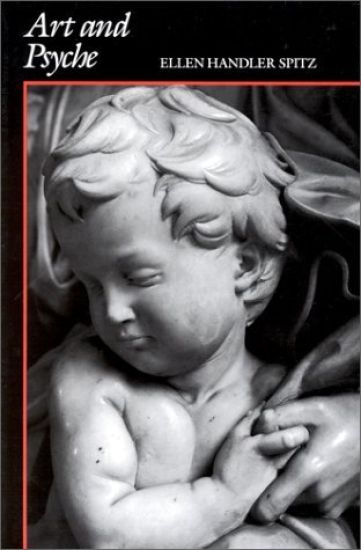
In this provocative, closely argued book, Ellen Handler Spitz explores three principal psychoanalytic approaches to art. The first considers the relations between an artist’s life and work; the second focuses on the work of art itself; and the third encompasses the intricate relations between a work of art and its audience or beholders. To illustrate her theoretical discussion, Spitz draws on a variety of art forms, including painting, sculpture, literature, music, and dance. “No one who is concerned with the psychoanalytic study of art can afford to neglect [this book]; no one who cares about the art of psychoanalysis should ignore it.”—Aaron H. Esman, M.D., Journal of the American Psychoanalytic Association “This book … should prove fascinating to all who are concerned with works of art as expressions of the human mind and heart.”—Shehira Davezac, Hospital and Community Psychiatry “This book is highly recommended to all who enjoy the multiple applications of analytic thought to extend our senses.”—Jay Lefer, Journal of the American Academy of Psychoanalysis Ellen Handler Spitz holds degrees in art history, aesthetics, and education from Barnard College, Harvard University, and Columbia University. She was trained as a special candidate at the Center for Psychoanalytic Training and Research, Columbia University.
Art and Commerce in the Dutch Golden Age

Art and Commerce in the Dutch Golden Age

Michael North

Yale University Press
1999
pokkari
During the seventeenth century, the Netherlands—a small country with just two million inhabitants and virtually no natural resources—enjoyed a "Golden Age" of economic success, world power, and tremendous artistic output. In this book Michael North examines the Dutch Golden Age, when Dutch society boasted Europe's greatest number of cities and highest literacy rate, unusually large numbers of publicly and privately owned art works, religious tolerance, and a highly structured and wide-ranging social network. He explores the reasons for the country's success in trade and industry as it emerged from the Eighty Years' War against Spain, and the ways that art played a role in the innovative climate of the times. North looks at the practical aspects of this Golden Age—the banking system, demographic changes, and what made such industries as textiles and shipbuilding so successful. In this period commercialization not only had far-reaching effects on the economic life of the Netherlands, it also affected art, as market forces proved more powerful than patronage for the first time in Europe. With fascinating information about many artists, including Vermeer, Frans Hals, and Pieter de Hooch, North considers painting as a profession, the exhibitions and sales of art works (including the Dutch lottery system), auctions, and the prices that were paid for art. He compares the prices of different artistic genres and studies patterns of picture ownership. Through a close analysis of the private collection of Rembrandt's money lender, Harman Becker, North reveals the function served by works of art in Dutch households. This rich, in-depth view of the Dutch Golden Age will intrigue all readers with an interest in social, economic, or art history.
Art and Beauty in the Middle Ages

Art and Beauty in the Middle Ages

Umberto Eco

Yale University Press
2002
pokkari
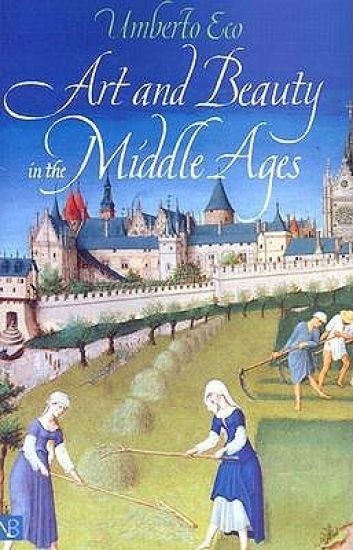
In this authoritative, lively book, the celebrated Italian novelist and philosopher Umberto Eco presents a learned summary of medieval aesthetic ideas. Juxtaposing theology and science, poetry and mysticism, Eco explores the relationship that existed between the aesthetic theories and the artistic experience and practice of medieval culture. “[A] delightful study. . . . [Eco’s] remarkably lucid and readable essay is full of contemporary relevance and informed by the energies of a man in love with his subject.” —Robert Taylor, Boston Globe “The book lays out so many exciting ideas and interesting facts that readers will find it gripping.” —Washington Post Book World “A lively introduction to the subject.” —Michael Camille, The Burlington Magazine “If you want to become acquainted with medieval aesthetics, you will not find a more scrupulously researched, better written (or better translated), intelligent and illuminating introduction than Eco’s short volume.” —D. C. Barrett, Art Monthly