Kirjojen hintavertailu. Mukana 12 016 292 kirjaa ja 12 kauppaa.

Kirjahaku

Etsi kirjoja tekijän nimen, kirjan nimen tai ISBN:n perusteella.

1000 tulosta hakusanalla Alastair Cook

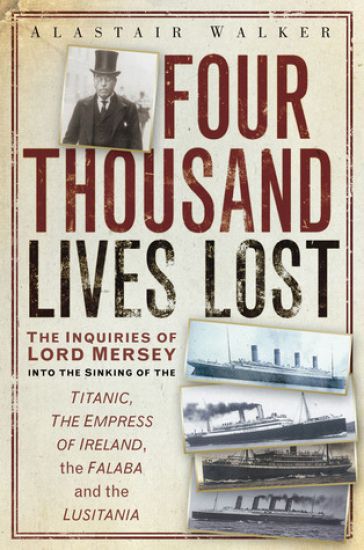
Four Thousand Lives Lost

Four Thousand Lives Lost

Alastair Walker

The History Press Ltd
2012
nidottu
Over four years, four ships were lost under different circumstances and 4,000 lives with them — but one thing linked them all: it was John Charles Bigham, Lord Mersey, who was appointed to head the inquiries into each disaster. Mersey is often referred to as a ‘company man’, or a government stooge. But is this the whole truth? Everyone has heard of Titanic and Lusitania but more passengers died when the Empress of Ireland sank in May 1914. That inquiry turned into a head-to-head between an American lawyer and a British one. Did Mersey let the right man win? Was he fair to Captain Lord of the Californian when he blamed him for the loss of so many lives on Titanic? The U-Boat that sank the Falaba with the loss of 104 lives behaved very differently to the one that torpedoed the Lusitania just six weeks later. Did Mersey reflect that in his findings or was he more interested in propaganda than truth?

They Spread Their Wings

They Spread Their Wings

Alastair Goodrum

The History Press Ltd
2013
nidottu
What turns an ordinary man into an extraordinary one? The answer lies in the stories of six teenage volunteers for Second World War aircrew who exchanged school uniform for Air Force Blue and took a giant step into the unknown. Based on original research from flying log books, diaries and family archives, this collection of true tales describes the men’s training for those coveted ‘Wings’; the nervous excitement of that first sortie over enemy territory; and flying into the hell of an enemy flak barrage and fighters. From the skies over Europe to jungles and deserts, all endured hardship, adventure and danger. They experienced action under enemy fire, wounds, burns and crash-landings, escape and evasion in occupied territory, and the privations of life as a POW. Seventy years on and these brushes with death are by any measure hair-raising encounters that turned adolescents into men – some of whom survived the war, while others paid the ultimate price.
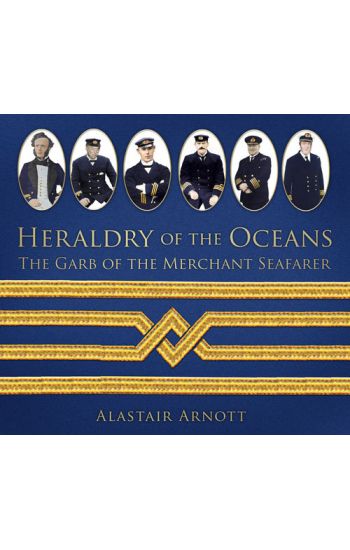
Heraldry of the Oceans

Heraldry of the Oceans

Alastair Arnott

The History Press Ltd
2015
nidottu
Throughout history, Britain's merchant seafarers have formed a mighty force, explanding throughout the nineteenth century and reaching its peak in the 1960s. Though seemingly one body, it comprised many individual companies, each with its own traditions and identity. However, the rapid diminution of the British-flagged fleet in recent years has all but extinguished this structure, and those who had intimate experience of it are now ageing and their memories fading. Heraldry of the Oceans is a celebration of the British and Commonwealth merchant seafarer and chronicles the characteristics that give the industry both corporate identity and an element of individuality. Featuring original colour artwork depicting uniforms, medals and badges, and enhanced by a detailed history and compendium of shipping companies, Alastair Arnott seeks to redress the balance of this largely unrecorded aspect of maritime history.
Constructing Musicology

Constructing Musicology

Alastair Williams

Ashgate Publishing Limited
2001
nidottu
This title was first published in 2001: Unlike many other academic disciplines, musicology has been somewhat reluctant to explore the possibilities that critical theory might offer to our understanding of music and the ways in which we study it. In recent years, however, both the general impact of theory on humanities research and the wider repertoires now studied on music degree courses have urged a paradigm shift in musicology. Looking at both these trends, Alastair Williams examines and explains the theoretical issues raised by different musics, including the Western canon, popular music, folk music and music by women. A theoretically informed musicology, he argues, can reflect on its own procedures and create strategies for particular problems as they arise. In this sense the book offers a musicology under construction. To appreciate how theoretical discourses function and the interests they serve, it is important to understand their roots. Chapter One begins with a presentation of traditional musicology in the context of Joseph Kerman's call for a shift from fact-finding to critical interpretation. Discussion then moves to the scrutiny of the bourgeois tradition by Adorno and Dahlhaus. Chapter Two explores Kerman's critique of structural analysis, together with the impact of poststructuralism on musicology. Awareness of new repertoire and its consequences becomes evident as the book unfolds, with Chapter Three considering music by women and examining how gender is constructed in music. Chapter Four extends this discussion to the field of popular music and the ways in which this genre negotiates identity. Challenges to the dominant values are further explored as Chapter Five looks at how non-European cultures are presented in European music and reflects on perceptions of self and other in ethnomusicology. Chapter Six charts the emergence of modern subjectivity and its formations in music, arguing that musicology should not lose sight of modernity's critical resources.
Dissident Identities in the Early Modern Low Countries

Dissident Identities in the Early Modern Low Countries

Alastair Duke; Andrew Spicer

Ashgate Publishing Limited
2009
sidottu
Alastair Duke has long been recognized as one of the leading scholars of the early modern Netherlands, known internationally for his important work on the impact of religious change on political events which was the focus of his Reformation and Revolt in the Low Countries (1990). Bringing together an updated selection of his previously published essays - together with one entirely new chapter and two that appear in English here for the first time - this volume explores the emergence of new political and religious identities in the early modern Netherlands. Firstly it analyses the emergence of a common identity amongst the amorphous collection of states in north-western Europe that were united first under the rule of the Valois Dukes of Burgundy and later the Habsburg princes, and traces the fortunes of this notion during the political and religious conflicts that divided the Low Countries during the second half of the sixteenth century. A second group of essays considers the emergence of dissidence and opposition to the regime, and explores how this was expressed and disseminated through popular culture. Finally, the volume shows how in the age of confessionalisation and civil war, challenging issues of identity presented themselves to both dissenting groups and individuals. Taken together these essays demonstrate how these dissident identities shaped and contributed to the development of the Netherlands during the early modern period.
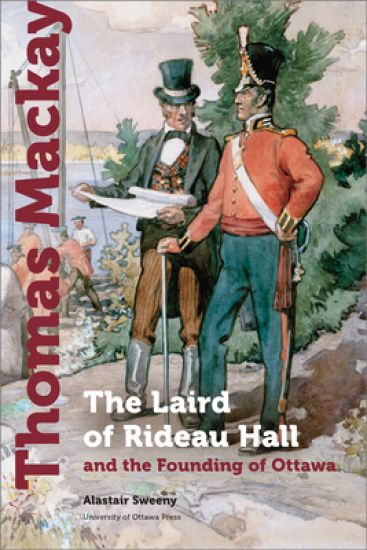
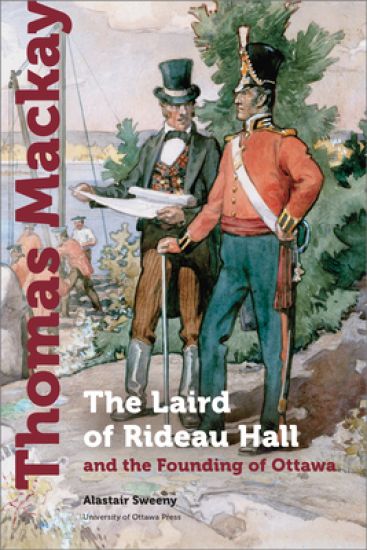
Thomas Mackay

Thomas Mackay

Alastair Sweeny

University of Ottawa Press
2022
pokkari
Thomas Mackay: The Laird of Rideau Hall and the Founding of Ottawa explores the life and times of Thomas Mackay, the chief founder of Bytown/Ottawa.Born and raised in Perth, Scotland, Mackay and his family emigrated to Montreal in 1817. Partnering with fellow mason John Redpath, he built the locks of the first Lachine Canal, did military construction work at Fort Lennox and St. Helen’s Island, and supplied stone for Montreal’s Notre Dame Basilica. Engaged by Colonel By of the Royal Engineers to build the Ottawa and Hartwell Locks of the Rideau Canal, Mackay used his profits to found the village of New Edinburgh and build a mill complex at Rideau Falls, as well as the residence his daughter named Rideau Hall. With his hefty canal profits—paid in Spanish silver pieces of eight—Mackay was a major financier of the Ottawa and Prescott Railway, and chief promoter of Ottawa as the capital of Canada. He served as Colonel of the Russell and Carleton militias, was MLA for Russell for seven years, and a member of the Legislative Council of Canada for fifteen.After Mackay’s death in 1855, his son-in-law and estate manager Thomas Keefer sold Rideau Hall to the government to serve as a residence for Canada’s Governor General. Keefer also developed a tract of land owned by the estate into the village of Rockcliffe Park, today home to over 70 diplomatic residences.
Thomas Mackay

Thomas Mackay

Alastair Sweeny

University of Ottawa Press
2022
sidottu
The Laird of Rideau Hall explores the life and times of Thomas Mackay, the chief founder of Bytown/Ottawa.Born and raised in Perth, Scotland, Mackay and his family emigrated to Montreal in 1817. Partnering with fellow mason John Redpath, he built the locks of the first Lachine Canal, did military construction work at Fort Lennox and St. Helen’s Island, and supplied stone for Montreal’s Notre Dame Basilica. Engaged by Colonel By of the Royal Engineers to build the Ottawa and Hartwell Locks of the Rideau Canal, Mackay used his profits to found the village of New Edinburgh and build a mill complex at Rideau Falls, as well as the residence his daughter named Rideau Hall. With his hefty canal profits—paid in Spanish silver pieces of eight—Mackay was a major financier of the Ottawa and Prescott Railway, and chief promoter of Ottawa as the capital of Canada. He served as Colonel of the Russell and Carleton militias, was MLA for Russell for seven years, and a member of the Legislative Council of Canada for fifteen. After Mackay’s death in 1855, his son-in-law and estate manager Thomas Keefer sold Rideau Hall to the government to serve as a residence for Canada’s Governor General. Keefer also developed a tract of land owned by the estate into the village of Rockcliffe Park, today home to over 70 diplomatic residences.
Creating Training Miracles

Creating Training Miracles

Alastair Rylatt; Kevin Lohan

Jossey-Bass Inc.,U.S.
1997
sidottu
Create your own training miracles! Discover training techniques that produce extraordinary results--training miracles! With the right tools and training, everyone has the ability to learn. And to be a successful trainer, you yourself need to continue learning. Explore emerging trAnds in training such as globalization, competency-based training, and high-tech delivery of training.Each chapter introduces you to a different training method, and opens with a story to actually demonstrate how the technique works. Learn all about: *Getting Training Results in the Workplace*Competency-Based Training*Self-Directed Learning*Using Icebreakers and Energizers to Warm Up Learners*Neurolinguistic Programming*The Power of Accelerative Learning*Successful Role-Playing Techniques*Designing and Using Classic Case Studies*Organizing Outdoor Learning Programs*Facilitation . . . and more! Select only the topics that interest you. Want to learn more about a particular training technique? Every chapter contains a summary and list of references for further reading and research.Discover cutting-edge, exciting techniques and create training programs that produce amazing results!
The A to Z of Denmark

The A to Z of Denmark

Alastair H. Thomas

Scarecrow Press
2010
nidottu
Denmark is the oldest monarchy in Europe. At different points in its history, Denmark's boundaries have encompassed England, Sweden, West Africa, India, and the West Indies. Despite its changing and relatively small boundaries, Denmark has played a much larger part in the politics of Europe than might be expected. Additionally, through its territories (Faroe Islands and Greenland), Denmark has managed to retain an important presence in the North Atlantic. Today, democratic Denmark, with its thriving capital Copenhagen, is peaceful, prosperous, and progressive. Within NATO, Denmark has contributed to peace-keeping in the Persian Gulf and Bosnia. The "Danish Model" of welfare gives Danes a real sense of social security and presents many naysayers with a provocative example of a successfully managed welfare state. Danes have a reputation for inventiveness and good design, whether in architecture, furniture, or industrial design. The A to Z of Denmark relates the history of this successful country through a chronology, an introductory essay, appendixes, a bibliography, and hundreds of cross-referenced dictionary entries on kings, politicians, officials, explorers, authors, architects, composers, painters, astronomers, educationists, reformers, political parties, social movements, and other aspects of Danish society.
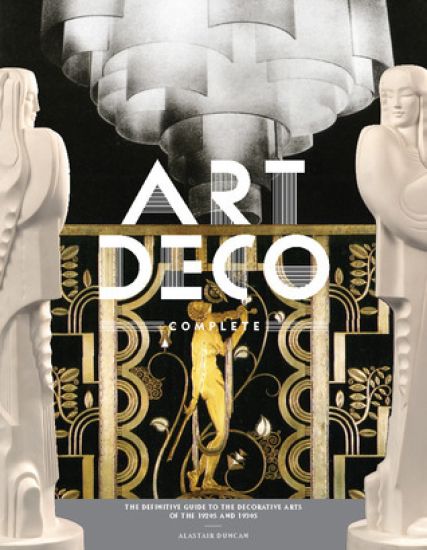
Art Deco Complete: The Definitive Guide to the Decorative Arts of the 1920s and 1930s
This beautiful, gift-ready oversize volume is the definitive last word in Art Deco, the most glamorous decorative arts style. This 544-page book includes more than 1,000 color images of classic Art Deco objects and spaces. Its author is the colorful and experienced Alastair Duncan, who was for many years the expert who ran the 20th-century decorative arts department at Christie's in New York. It includes the work of all of the important Art Deco designers, from high-style French furniture makers to the creators of the popular "Streamline Moderne" style. And it is, in the spirit of Art Deco, a lavish and attractive book, as well as authoritative and thorough. This gorgeous coffee table book stands as a unique monument to Art Deco, one that every graphic designer, architect, interior designer, artist, and jeweler will want to own, display, and refer to again and again. Opinions vary as to what constitutes the best of Art Deco, whether it was the highly colorful and playful geometric style which ruled the Paris Salons in the immediate post-WWI years--the chevrons, arcs, sunbursts, maidens, fountains, floral abstractions, and ubiquitous biche (doe)--or that of the crisp angular patterns of the American modernistic impulses--including zig-zag, jazz-age, machine-age, and streamlined aesthetics, to which architects were drawn toward in the 1930s and to which its supporters believe the Deco label most appropriately applies. In the end, the argument does not matter, only the timeless designs do. Here you will find: Furniture and interior decorationSculpturePaintings, graphics, posters BookbindingGlass and ceramicsTextilesMetal workJewelryAnd much more
It's Getting Later All the Time

It's Getting Later All the Time

Alastair (TRN) McEwen

New Directions Publishing Corporation
2006
pokkari
An epistolary tale told through a series of seventeen letters by men describes their affairs and desperate entreaties for replies that may never come, in a work that culminates in a single, eighteenth letter by a distant, implacable woman who sympathetically answers their pleas. Original.
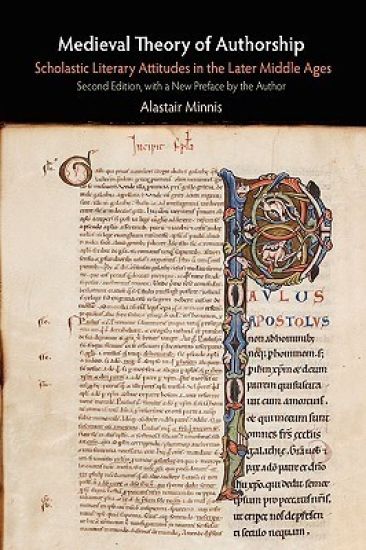
Medieval Theory of Authorship

Medieval Theory of Authorship

Alastair Minnis

University of Pennsylvania Press
2010
pokkari
It has often been held that scholasticism destroyed the literary theory that was emerging during the twelfth-century Renaissance, and hence discussion of late medieval literary works has tended to derive its critical vocabulary from modern, not medieval, theory. In Medieval Theory of Authorship, now reissued with a new preface by the author, Alastair Minnis asks, "Is it not better to search again for a conceptual equipment which is at once historically valid and theoretically illuminating?" Minnis has found such writings in the glosses and commentaries on the authoritative Latin writers studied in schools and universities between 1100 and 1400. The prologues to these commentaries provide valuable insight into the medieval theory of authorship. Of special significance is scriptural exegesis, for medieval scholars found the Bible the most difficult text to describe appropriately and accurately.
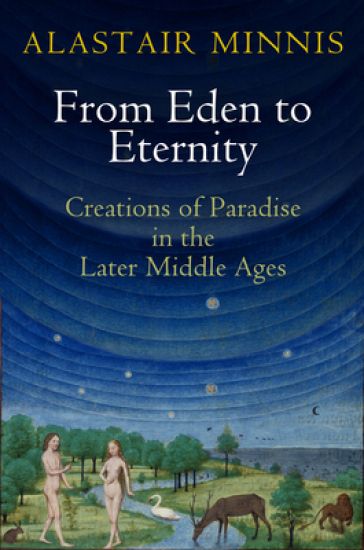
From Eden to Eternity

From Eden to Eternity

Alastair Minnis

University of Pennsylvania Press
2020
pokkari
An impressively learned and beautifully illustrated review of medieval ideas about Paradise Did Adam and Eve need to eat in Eden in order to live? If so, did human beings urinate and defecate in paradise? And since people had no need for clothing, transportation, or food, what purpose did animals serve? Would carnivorous animals have preyed on other creatures? These were but a few of the questions that plagued medieval scholars for whom the idea of Eden proved an endless source of contemplation. As theologians attempted to reconcile their own experiences with the realities of the prelapsarian paradise, they crafted complex answers that included explanations of God's interaction with creation, the existence of death, and man's dominion over nature. In From Eden to Eternity, Alastair Minnis examines accounts of the origins of the human body and soul to illustrate the ways in which the schoolmen thought their way back to Eden to discover fundamental truths about humanity. He demonstrates how theologians sought certainty in matters of orthodox Christian thought and also engaged in speculation about matters that, they freely admitted, were not susceptible to firm proof. Moreover, From Eden to Eternity argues that the preoccupation with paradise belonged not only to the schools but to society as a whole, and it traces how lay writers and artists also attempted to interpret the origins of human society. Eden transcended human understanding, yet it afforded an extraordinary amount of creative space to late medieval theologians, painters, and poets as they tried to understand the place that God had deemed worthy of the creature made in His image.
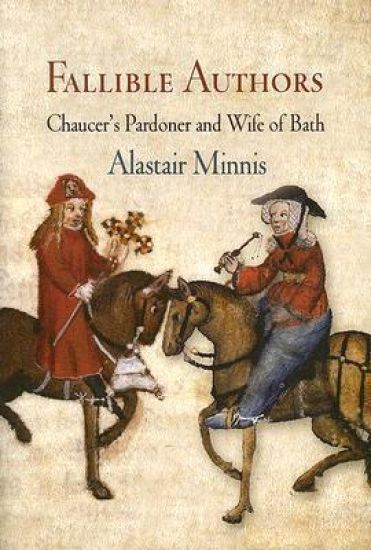
Fallible Authors

Fallible Authors

Alastair Minnis

University of Pennsylvania Press
2007
sidottu
Can an outrageously immoral man or a scandalous woman teach morality or lead people to virtue? Does personal fallibility devalue one's words and deeds? Is it possible to separate the private from the public, to segregate individual failing from official function? Chaucer addressed these perennial issues through two problematic authority figures, the Pardoner and the Wife of Bath. The Pardoner dares to assume official roles to which he has no legal claim and for which he is quite unsuited. We are faced with the shocking consequences of the belief, standard for the time, that immorality is not necessarily a bar to effective ministry. Even more subversively, the Wife of Bath, who represents one of the most despised stereotypes in medieval literature, the sexually rapacious widow, dispenses wisdom of the highest order. This innovative book places these "fallible authors" within the full intellectual context that gave them meaning. Alastair Minnis magisterially examines the impact of Aristotelian thought on preaching theory, the controversial practice of granting indulgences, religious and medical categorizations of deviant bodies, theological attempts to rationalize sex within marriage, Wycliffite doctrine that made authority dependent on individual grace and raised the specter of Donatism, and heretical speculation concerning the possibility of female teachers. Chaucer's Pardoner and Wife of Bath are revealed as interconnected aspects of a single radical experiment wherein the relationship between objective authority and subjective fallibility is confronted as never before.
From Eden to Eternity

From Eden to Eternity

Alastair Minnis

University of Pennsylvania Press
2015
sidottu
An impressively learned and beautifully illustrated review of medieval ideas about Paradise Did Adam and Eve need to eat in Eden in order to live? If so, did human beings urinate and defecate in paradise? And since people had no need for clothing, transportation, or food, what purpose did animals serve? Would carnivorous animals have preyed on other creatures? These were but a few of the questions that plagued medieval scholars for whom the idea of Eden proved an endless source of contemplation. As theologians attempted to reconcile their own experiences with the realities of the prelapsarian paradise, they crafted complex answers that included explanations of God's interaction with creation, the existence of death, and man's dominion over nature. In From Eden to Eternity, Alastair Minnis examines accounts of the origins of the human body and soul to illustrate the ways in which the schoolmen thought their way back to Eden to discover fundamental truths about humanity. He demonstrates how theologians sought certainty in matters of orthodox Christian thought and also engaged in speculation about matters that, they freely admitted, were not susceptible to firm proof. Moreover, From Eden to Eternity argues that the preoccupation with paradise belonged not only to the schools but to society as a whole, and it traces how lay writers and artists also attempted to interpret the origins of human society. Eden transcended human understanding, yet it afforded an extraordinary amount of creative space to late medieval theologians, painters, and poets as they tried to understand the place that God had deemed worthy of the creature made in His image.
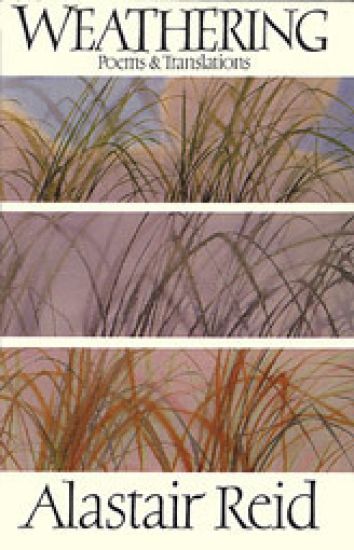
Weathering

Weathering

Alastair Reid

University of Georgia Press
1988
pokkari
Alastair Reid began publishing poetry in the New Yorker in 1951 and has since contributed reviews, translations, stories, and reportage as well. Having lived variously in Scotland, the United States, Spain, France, Greece, Switzerland, Central and South America, Reid has until recently called Magazine his only permanent address.Many of the poems in Weathering arise from Reid’s itinerant life. Chosen by the poet from previous books published on both sides of the Atlantic since the 1950s, they range from the windowed corridors of New York city to Isla Negra, Chile, where the poet sits 'with the Pacific between my toes.'Whether lyric or narrative, whether moved by wit, irony, or humor, all Reid’s poems test the strength of language to ‘summon the moment when amazement ran through the senses like a flame’ and gauge the power of words to catch fire in an instant of realization. Including translations of poems by Pablo Neruda, Jorge Luis Borges, and Jose Emilio Pacheco, Weathering displays the diverse talents of the poet, the recurring preoccupations of the itinerant traveler, seeking to encompass the world with words.
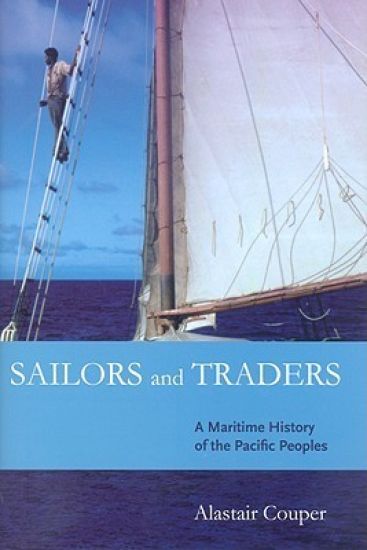
Sailors and Traders

Sailors and Traders

Alastair Couper

University of Hawai'i Press
2008
sidottu
Written by a senior scholar and master mariner, ""Sailors and Traders"" is the first comprehensive account of the maritime peoples of the Pacific. It focuses on the sailors who led the exploration and settlement of the islands and New Zealand and their seagoing descendants, providing along the way new material and unique observations on traditional and commercial seagoing against the background of major periods in Pacific history. The book begins by detailing the traditions of sailors, a group whose way of life sets them apart. The period of prehistoric seafaring is discussed using archaeological data, interpretations from inter island exchanges, experimental voyaging, and recent DNA analysis. Sections on the arrival of foreign exploring ships centuries later concentrate on relations between visiting sailors and maritime communities. The successes and failures of Polynesian chiefs who entered into trading with European-type ships are recounted as neglected aspects of Pacific history. As foreign-owned commercial ships expanded in the region so did colonialism, which was accompanied by an increase in the number of sailors from metropolitan countries and a decrease in the employment of Pacific islanders on foreign ships. Eventually small-scale island entrepreneurs expanded inter-island shipping, and in 1978 the regional Pacific Forum Line was created by newly independent states. This was welcomed as a symbolic return to indigenous Pacific ocean linkages. The book's final sections detail the life of the modern Pacific seafarer.
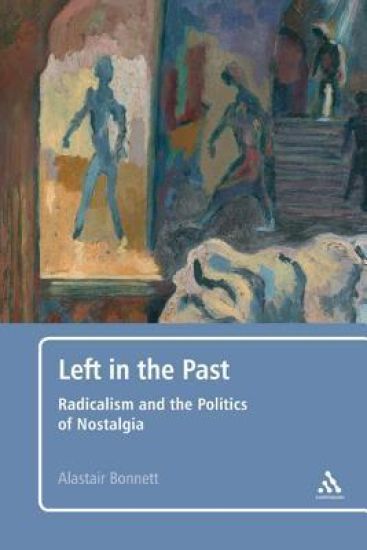
Left in the Past

Left in the Past

Alastair Bonnett

Continuum Publishing Corporation
2010
nidottu
This title looks at the role nostalgia plays in the radical imagination to offer a new guide to the history and politics of the left. In "Left in the Past", Bonnett re-assesses the place of nostalgia within radical politics and, in doing so, provides a new introduction to the history and politics of the left. Bonnett argues that nostalgia has been a chronic, but repressed, aspect of the socialist imagination. "Left in the Past" is premised on the idea that, in our 'post-socialist era', the relationship between radicalism and a sense of loss, and the ambivalent position of socialism in and against modernity, can be viewed with greater clarity. In section one of the book, Bonnett shows the centrality and repression of nostalgia in both 19th-century radicalism and anticolonial radicalism. In section two, he explores the consequences of this inheritance by way of 20th century and contemporary studies of revolutionary intellectuals and intellectual culture. Bonnett's unique approach in how to understand the left in an age of post-socialism will make book a needed resource for anyone interested in the history and politics of the left and radicalism.
Adorno's Concept of Life

Adorno's Concept of Life

Alastair Morgan

Continuum International Publishing Group Ltd.
2007
sidottu
In this important and engaging new book, Alastair Morgan offers a detailed examination of the concept of life in Adorno's philosophy. He relates Adorno's thought in this context to a number of key thinkers in the history of Continental philosophy, including Marx, Hegel, Heidegger and Agamben, and provides an argument for the relevance and importance of Adorno's critical philosophy of life at the beginning of the 21st century. Crucially, Morgan offers a new framework for understanding the relation between concepts of life and a critical philosophy. The concept of life has previously received little attention in Adorno scholarship. However, the concept of life is a constant theme and problem running throughout Adorno's work, from his early critiques of life-philosophies to his late philosophy of metaphysical experience as the possibility of life. The idea that Adorno's philosophy is in need of or lacking in a fundamental ontology has been the subject of a great deal of critical attention, but this has rarely been examined through an analysis of the concept of life. Furthermore, philosophies of life have seen a resurgence in recent years (particularly with a renewed interest in Bergson's philosophy via the critical reception of Deleuze's philosophy). "Adorno's Concept of Life" is therefore a necessary and timely study that offers a distinctive interpretation of Adorno's philosophy, and will be of central interest to everyone working on Adorno. Furthermore, it provides a powerful interpretation of the critical force of Adorno's philosophy, that will contribute to the renewed interest in the concept of life within contemporary philosophy.
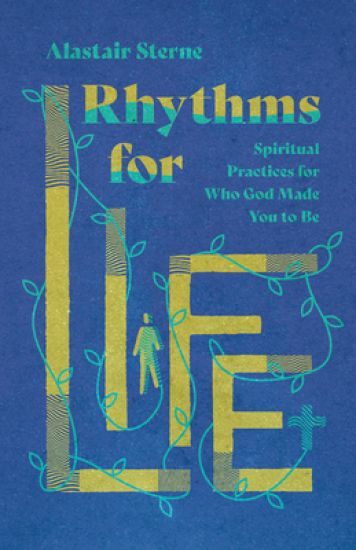
Rhythms for Life – Spiritual Practices for Who God Made You to Be
Who are you becoming? And how will you get there? Spiritual transformation is not a one-size-fits-all journey. Each of us has a particular identity, gifts, values, roles, and purpose. Thus we each need distinct spiritual rhythms that are designed to help us live out that vocation and calling. In this practical book Alastair Sterne shows how we can craft a life of more intentionality, becoming Christlike in ways that fit who we are. First we discover who God made us to be, in all our distinctiveness. Then we enter into spiritual practices that flow out of that particular sense of identity, with fourfold rhythms that point us upward to God, inward to self, withward in community, and outward in mission. Our vocation is our identity uniquely lived out before God, bringing our being and doing together. You can live a life that is more aligned with who you are meant to be. Discover spiritual rhythms that move at the pace of grace, and align you with your unique identity and calling in Christ.