This Missal is designed for Liturgical usage especially for Priests who travel. The second edition of this work has included the four early Post-Sanctus prayers that exist within our Liturgy. The full Agnus Dei for use within the Requiem Liturgy has been included. This is a further example of the Romanization of the Ambrosian Liturgy. There has been a general consensus that the Roman blessing at the end of the Liturgy be dropped in favor of the more ancient Ambrosian blessing. The Ambrosian blessing gained greater acceptance over time and it has been now introduced as the official final blessing for Liturgical usage. This blessing is Gallican in its origin and bears a remarkable similarity to the final blessing used within the Liturgy of St John Chrysostom. It is a well known fact that St Ambrose and St John Chrysostom were friends and that the Penitential Litanies we call the Divinae Pacis and the Dicamus Omnes came directly from John to his friend Ambrose. The Creed rightly retains its place after the offertory and does not include the filioque clause thus conforming to the original Nicene Creed. The Liturgy is a lesson in theology. It was Ambrose's good friend Augustine who stated that, "we pray as we believe". The heavy Christological emphasis was deliberately placed there against Arianism. In medieval depictions, St Ambrose carries a whip in his hand to fight heresy and to beat down heretics. We pray for St Ambrose's intercession today to help us fight our modern day heresies which attack the Church from all sides.......especially from within. Finally, the Litany for Persecuted Christians has been added to be said after the Liturgy has concluded. This Litany is extra Liturgical and of modern penmanship. St Ambrose, pray for us
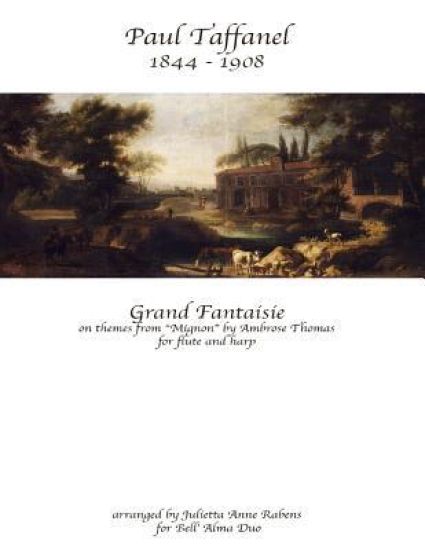
Grand Fantaisie by Paul Taffanel: on themes from "Mignon" by Ambrose ThomasThis arrangement for flute and harp was originally created for the beautiful "Bell' Alma Duo" with Michele Frisch and Kathy Kienzle of the Minnesota orchestra. A recording is available on their "la belle vie" CD. This score is designed for the advanced player.
"Oil", says St. Augustine, "signifies something great." Through the ages and in many a land it has always played a mystical and religious part. Soothing and restoring by its very nature, it symbolizes the healing wrought by the Holy Spirit (Extreme Unction); a source of light, it denotes the graces of the Holy Spirit which enlighten the heart; flowing and penetrating it represents the infusion of the Holy Spirit into souls (Baptism, Confirmation); softening in its effects, it shows forth the action of the Holy Spirit, who bends our rebellious wills and arms us against the enemies of our salvation. The Holy Spirit is especially represented by the olive oil, according to the Blessings of Oil and of Palms, because the dove, a symbol of the Holy Spirit carried an olive branch in his beak; because the Holy Spirit came down upon Christ the anointed One; and because the olive branches cast by the Jews in our Lord's path foreshadowed the outpouring of the Holy Spirit which was to be given to the Apostles at Pentecost. The balm which is added to the oil to make the sacred Chrism signifies by its sweet perfume the good odor of all Christian virtues. Also it preserves from corruption; another respect in which it is a symbol of supernatural graces that protects us from the contagion of sin. This Missal is the sixth in a series on the revised Ambrosian Rite. It is designed to be used by priests who directly participate in the Chrism Liturgy. The ritual prayers are extremely ancient and pre-date the 8th century. There is a great amount of Gallican influence in the blessing and consecration of the Holy Oils. Because the Liturgy is done in the evening, the Lucernarium ceremony is included with its most ancient prayer "Phos Hilarion". This prayer has been dated back to the early second century. This volume will also be of great interest to Liturgical Scholars and those who wish to better aquaint themselves with the more ancient Ambrosian Liturgy in its revised modern form.