
Kirjahaku
Etsi kirjoja tekijän nimen, kirjan nimen tai ISBN:n perusteella.
1000 tulosta hakusanalla Blake Butler
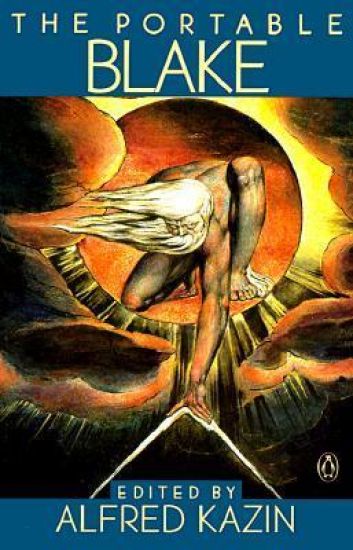
'SONGS OF INNOCENCE' AND 'SONGS OF EXPERIENCE', COMPLETE SELECTION FROM THE 'PROPHETIC BOOKS' AND FROM OTHER WORKS OF POETRY AND PROSE. THE COMPLETE DRAWINGS OF "THE BOOK OF JOB" 'AN INSPIRED SELECTION' - THE NEW YORK TIMES. "BLAKE IS NOWHERE BETTER PRESENTED FOR THE GENERAL READER. THE INTRODUCTION IS .. PROBABLY THE BEST ESSAY YET COMPOSED ON THE SUBJECT " - SATURDAY REVIEW.
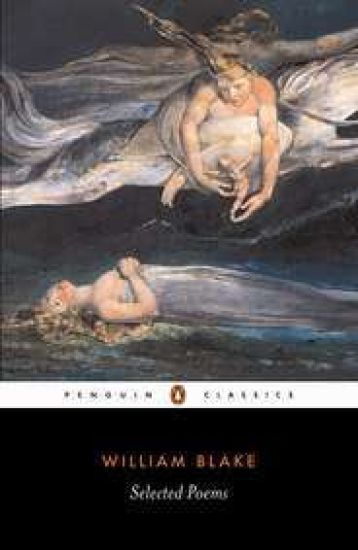
Writer and religious rebel, William Blake ((1757-1827) sowed the seeds for Romanticism in his innovative poems concerning faith and the visions that inspired him throughout his life. Whether describing his own spirituality, the innocence of youth or the corruption caused by mankind, his writings depict a world in which spirits dominate and the mind is the gateway to Heaven. This collection of his greatest works spans his entire poetic life from the early, exquisite lyrics of Poetic Sketches to his Songs of Innocence and Experience - a compelling exploration of good and evil. Together, they illuminate a self-made realm that has fascinated artists and poets as diverse as Wordsworth, Coleridge, Yeats and Ginsberg.
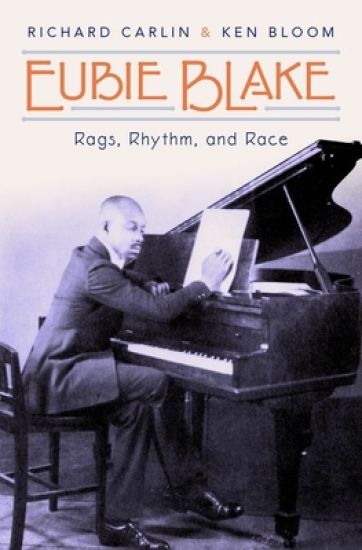
A new biography of one of the key composers of 20th-century American popular song and jazz,Eubie Blake: Rags, Rhythm and Race illuminates Blake's little-known impact on over 100 years of American culture. A gifted musician, Blake rose from performing in dance halls and bordellos of his native Baltimore to the heights of Broadway. In 1921, together with performer and lyricist Noble Sissle, Blake created Shuffle Along which became a sleeper smash on Broadway eventually becoming one of the top ten musical shows of the 1920s. Despite many obstacles Shuffle Along integrated Broadway and the road and introduced such stars as Josephine Baker, Lottie Gee, Florence Mills, and Fredi Washington. It also proved that black shows were viable on Broadway and subsequent productions gave a voice to great songwriters, performers, and spoke to a previously disenfranchised black audience. As successful as Shuffle Along was, racism and bad luck hampered Blake's career. Remarkably, the third act of Blake's life found him heraldedin his 90s at major jazz festivals, in Broadway shows, and on television and recordings. Tracing not only Blake's extraordinary life and accomplishments, Broadway and popular music authorities Richard Carlin and Ken Bloom examine the professional and societal barriers confronted by black artists from the turn of the century through the 1980s. Drawing from a wealth of personal archives and interviews with Blake, his friends, and other scholars,Eubie Blake: Rags, Rhythm and Race offers an incisive portrait of the man and the musical world he inhabited.
William Blake
Oxford University Press
2022
nidottu
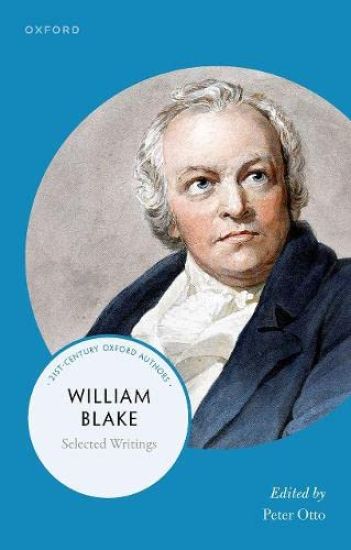
This volume in the 21st Century Oxford Authors series offers students and readers a comprehensive selection of the work of William Blake (1757-1827). Accompanied by full scholarly apparatus, this authoritative edition enables students to explore Blake's poetry, illuminated poetry, and prose alongside selections from his letters, manuscripts, notebook, advertising pamphlets, marginalia, and works he printed in conventional letterpress. The edition arranges Blake's works in chronological order, according to the date when they were first printed or, in the case of unpublished works, the years in which they were composed. With the help of editorial headnotes and annotations, this arrangement brings to the foreground Blake's material and intellectual labours as a poet, painter, prophet, and non-academic philosopher; the networks of acquaintances, friends, patrons, and enemies who helped support or provoke this work; and the tumultuous historical events he responded to, which included the beginning of modern feminism, the agricultural and industrial revolutions, the American and French Revolutions, William Pitt's so-called 'Reign of Terror' in Britain, an attempted revolution in Ireland (1798), a successful slave rebellion in Haiti (1791-1804), and the French revolutionary and Napoleonic wars. Some editions attempt to sanitize Blake, by hiding from view the most startling elements of his thought; but in this edition Blake's sexual, political, religious, and poetic heterodoxy comes into full view. At the same time, this edition foregrounds the dynamics of Blake's composite art, with equal weight given to its verbal and visual dimensions; makes visible the chief lines of force that structure his oeuvre; and highlights his developing thought on sapphism, sodomy, the body, relations between the sexes, the roots of violence, and the politics of imagination. This is a Blake whose dialogue with his own time anticipates much later developments, including modern depth psychologies; analyses of the social and psychological dynamics of war and peace; interest in the body, sexuality, and gender; and experiments in the relation between actual and virtual realities—a Blake who is provocative, unsettling, exhilarating, and somehow our contemporary. Explanatory notes and commentary are included, to enhance the study, understanding, and enjoyment of these works, and the edition includes an Introduction to the life and works of Blake, and a Chronology.
Ten Blake Songs
Oxford University Press
2004
muu
These songs for tenor or soprano and oboe were composed for the film The Vision of William Blake, in which all except the second and third songs of the set were used alongside music from Job to form the soundtrack. The settings richly conjure the moods and sentiments of Blake's poems, the first nine of which are from Songs of Innocence and of Experience, with the final song setting words from his poem Auguries of Experience. The oboe part may alternatively be played on the violin or on B-flat clarinet, though the composer stated that oboe was preferable.

Volume 1 and 2 of a two-volume scholarly edition of the writings of William Blake. The edition presents an authoritative text, together with an introduction, commentary notes, and scholarly apparatus.

'To see a World in a Grain of Sand 'And a Heaven in a Wild Flower Hold Infinity in the palm of your hand And Eternity in an hour' William Blake wrote some of the most moving and memorable verse in the English language. Deeply committed to visionary and imaginative experience, yet also fiercely engaged with the turbulent politics of his era, he is now recognised as a major contributor to the Romantic Movement. This edition presents Blake's poems in their literary categories and genres to which they belong: his much-loved lyrics, ballads, comic and satirical verse, descriptive and discursive poems, verse epistles, and, finally, his remarkable 'prophetic' poems, including the whole of his two diffuse epics, Milton and Jerusalem. Blake's poetry is intellectually challenging as well as formally inventive, and this edition has a substantial critical introduction which places his ideas in the contemporary context of the Enlightenment and the artistic reaction against its key assumptions.
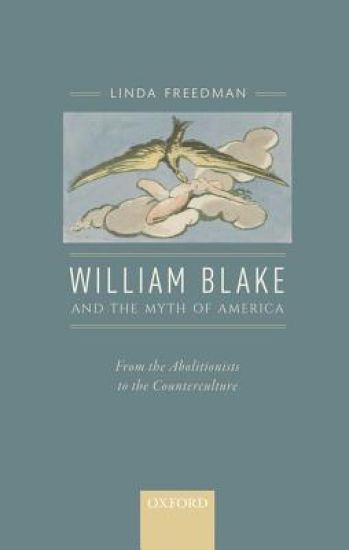
This volume tells the story of William Blake's literary reception in America and suggests that ideas about Blake's poetry and personality helped shape mythopoeic visions of America from the Abolitionists to the counterculture. It links high and low culture and covers poetry, music, theology, and the novel. American writers have turned to Blake to rediscover the symbolic meaning of their country in times of cataclysmic change, terror, and hope. Blake entered American society when slavery was rife and civil war threatened the fragile experiment of democracy. He found his moment in the mid twentieth-century counterculture as left-wing Americans took refuge in the arts at a time of increasingly reactionary conservatism, vicious racism, pervasive sexism, dangerous nuclear competition, and an increasingly unpopular war in Vietnam, the fires of Orc raging against the systems of Urizen. Blake's America, as a symbol of cyclical hope and despair, influenced many Americans who saw themselves as continuing the task of prophecy and vision. Blakean forms of bardic song, aphorism, prophecy, and lament became particularly relevant to a literary tradition which centralised the relationship between aspiration and experience. His interrogations of power and privilege, freedom and form resonated with Americans who repeatedly wrestled with the deep ironies of new world symbolism and sought to renew a Whitmanesque ideal of democracy through affection and openness towards alterity.
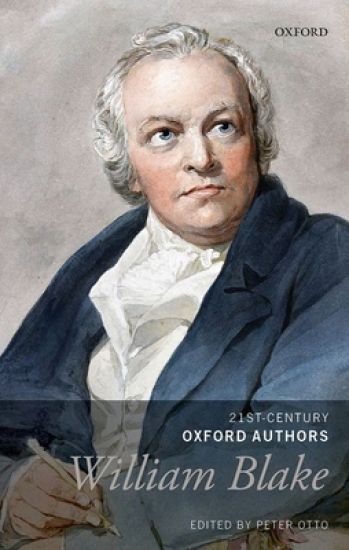
William Blake
Oxford University Press
2018
sidottu
This volume in the 21st Century Oxford Authors series offers students and readers a comprehensive selection of the work of William Blake (1757-1827). Accompanied by full scholarly apparatus, this authoritative edition enables students to explore Blake's poetry, illuminated poetry, and prose alongside selections from his letters, manuscripts, notebook, advertising pamphlets, marginalia, and works he printed in conventional letterpress. The edition arranges Blake's works in chronological order, according to the date when they were first printed or, in the case of unpublished works, the years in which they were composed. With the help of editorial headnotes and annotations, this arrangement brings to the foreground Blake's material and intellectual labours as a poet, painter, prophet, and non-academic philosopher; the networks of acquaintances, friends, patrons, and enemies who helped support or provoke this work; and the tumultuous historical events he responded to, which included the beginning of modern feminism, the agricultural and industrial revolutions, the American and French Revolutions, William Pitt's so-called 'Reign of Terror' in Britain, an attempted revolution in Ireland (1798), a successful slave rebellion in Haiti (1791-1804), and the French revolutionary and Napoleonic wars. Some editions attempt to sanitize Blake, by hiding from view the most startling elements of his thought; but in this edition Blake's sexual, political, religious, and poetic heterodoxy comes into full view. At the same time, this edition foregrounds the dynamics of Blake's composite art, with equal weight given to its verbal and visual dimensions; makes visible the chief lines of force that structure his oeuvre; and highlights his developing thought on sapphism, sodomy, the body, relations between the sexes, the roots of violence, and the politics of imagination. This is a Blake whose dialogue with his own time anticipates much later developments, including modern depth psychologies; analyses of the social and psychological dynamics of war and peace; interest in the body, sexuality, and gender; and experiments in the relation between actual and virtual realities--a Blake who is provocative, unsettling, exhilarating, and somehow our contemporary. Explanatory notes and commentary are included, to enhance the study, understanding, and enjoyment of these works, and the edition includes an Introduction to the life and works of Blake, and a Chronology.
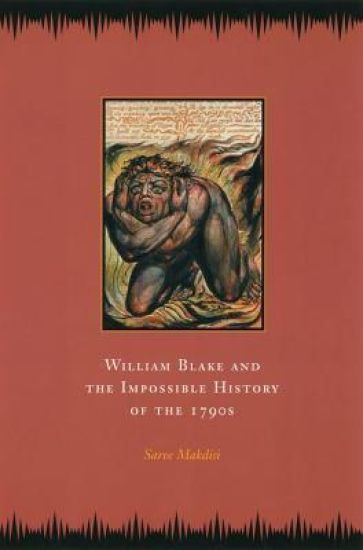
William Blake and the Impossible History of the 1790s
Saree Makdisi
University of Chicago Press
2002
sidottu
Modern scholars often find it difficult to account for the profound eccentricities in the work of William Blake, dismissing them as either ahistorical or simply meaningless. But with this pioneering study, Saree Makdisi develops a reliable and comprehensive framework for understanding these peculiarities. According to Makdisi, Blake's poetry and drawings should compel us to seriously reconsider ths history of the 1790s - the turbulent and revolutionary decade in which they first emerged. Taking into account the poet's unique brand of literary and artistic production, Makdisi challenges the idea that to understand Blake historically one must assimilate him within the radical struggle against the order of the Old Regime. Tracing for the first time the many links among economics, politics and religion in his work, Makdisi shows how Blake questioned and even subverted the commercial, consumerist and political liberties that his contemporaries championed, all while developing his own radical aesthetic. "William Blake and the Impossible History of the 1790s" should immediately take its place as a valuable study of one of English Romanticism's most popular figures.
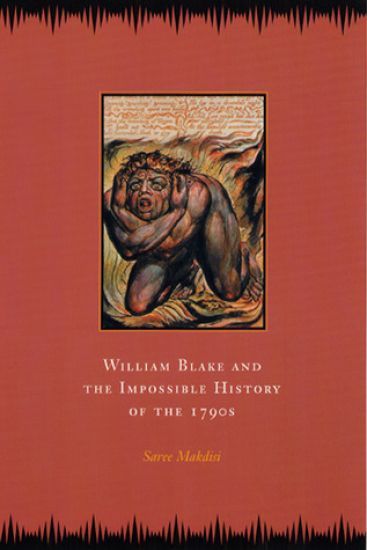
William Blake and the Impossible History of the 1790s
Saree Makdisi
University of Chicago Press
2002
nidottu
Modern scholars often find it difficult to account for the profound eccentricities in the work of William Blake, dismissing them as either ahistorical or simply meaningless. But with this pioneering study, Saree Makdisi develops a reliable and comprehensive framework for understanding these peculiarities. According to Makdisi, Blake's poetry and drawings should compel us to seriously reconsider ths history of the 1790s - the turbulent and revolutionary decade in which they first emerged. Taking into account the poet's unique brand of literary and artistic production, Makdisi challenges the idea that to understand Blake historically one must assimilate him within the radical struggle against the order of the Old Regime. Tracing for the first time the many links among economics, politics and religion in his work, Makdisi shows how Blake questioned and even subverted the commercial, consumerist and political liberties that his contemporaries championed, all while developing his own radical aesthetic. "William Blake and the Impossible History of the 1790s" should immediately take its place as a valuable study of one of English Romanticism's most popular figures.
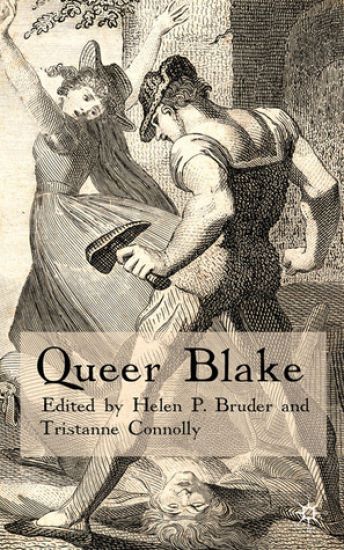
Queer Blake
Palgrave Macmillan
2010
sidottu
Numerous claims have been made for a sexual Blake, from post-lapsarian pessimist to free-loving hippie. Queer Blake raises a flag for the weird, perverse, camp and gay directions of the artist's life and work. The contributors occupy diverse positions, illustrating what fresh interpretations result when heterosexuality is ditched as an ideal.
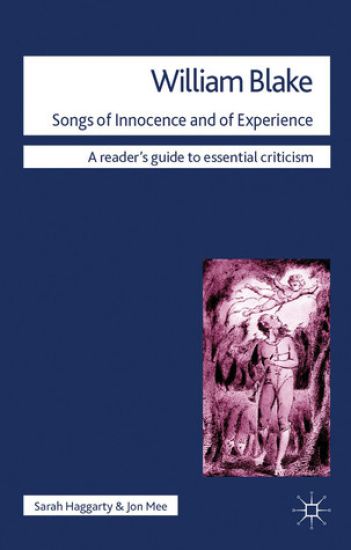
William Blake - Songs of Innocence and of Experience
Sarah Haggarty; Jon A Mee
Red Globe Press
2013
nidottu
Songs of Innocence and of Experience (1794) is William Blake's best-known work, containing such familiar poems as 'London', 'Sick Rose' and 'The Tyger'. Evolving over the author's lifetime, the collection was printed by Blake himself on his own press.This Reader's Guide:• explains the unique development of Songs as an illuminated book• considers the earliest reactions to the text during Blake's lifetime, and his gathering posthumous reputation in the nineteenth century • explores modern critical approaches and recent debates• discusses key topics that have been of abiding interest to critics, including the relationship between text and image in Blake's 'composite art'.Insightful and stimulating, this introductory guide is an invaluable resource for anyone who is seeking to navigate their way through the mass of criticism surrounding Blake's most widely-studied work.
William Blake was ignored in his own time. Now, however, his Songs of Innocence and Experience and 'prophetic books' are widely admired and studied.The second edition of this successful introductory text:- Leads the reader into the Songs and 'prophetic books' via detailed analysis of individual poems and extracts, and now features additional insightful analyses- Provides useful sections on 'Methods of Analysis' and 'Suggested Work' to aid independent study- Offers expanded historical and cultural context, and an extended sample of critical views that includes discussion of the work of recent critics- Provides up-to-date suggestions for further readingWilliam Blake: The Poems is ideal for students who are encountering the work of this major English poet for the first time. Nicholas Marsh encourages you to enjoy and explore the power and beauty of Blake's poems for yourself.
William Blake was ignored in his own time. Now, however, his Songs of Innocence and Experience and 'prophetic books' are widely admired and studied.The second edition of this successful introductory text:- Leads the reader into the Songs and 'prophetic books' via detailed analysis of individual poems and extracts, and now features additional insightful analyses- Provides useful sections on 'Methods of Analysis' and 'Suggested Work' to aid independent study- Offers expanded historical and cultural context, and an extended sample of critical views that includes discussion of the work of recent critics- Provides up-to-date suggestions for further readingWilliam Blake: The Poems is ideal for students who are encountering the work of this major English poet for the first time. Nicholas Marsh encourages you to enjoy and explore the power and beauty of Blake's poems for yourself.

This volume on Blake follows the writer's life and combines biography and critical analysis. Covering Blake's early career, his major works and his work as a visual artist, this new study will be a must for all Blake scholars and enthusiasts. Recent discoveries concerning Blake's forebears and their religion make this new study additionally timely.
Bim Blake’s Hot Takes: My Pencil Case Doesn’t Define Me
Tolá Okogwu
Penguin Random House Children's UK
2026
pokkari
From the bestselling author of Onyeka and the Academy of the Sun comes the first in a brand-new tween slice-of-life series. Relatable, humorous and highly illustrated, Bím Blake's Hot Takes is perfect for fans of Dork Diaries and Geek Girl. Hi bestie! My name’s Bím Blake. I've just started high school and here’s my hot take on it: Year Seven is a LOT harder than I thought! I’ve realised my school skirt is way too long, my pencil case is way too uncool, my boobs are way too big and the new boy (who’s the son of popstar parents!!!) is way too cute for my liking . . . If that wasn’t bad enough, tell me why my dad has been acting weirder than usual. He’s been making TikToks (cringe!), experimenting in the kitchen (I call it attempted murder!) and he’s even started exercising . . . It must be tough being over forty! Add into the mix a trio of annoying older brothers (yes, I have three – pray for me!), a duo of feuding aunts, one friend mishap and a huge helping of drama and you have a recipe for chaos. Welcome to my life!
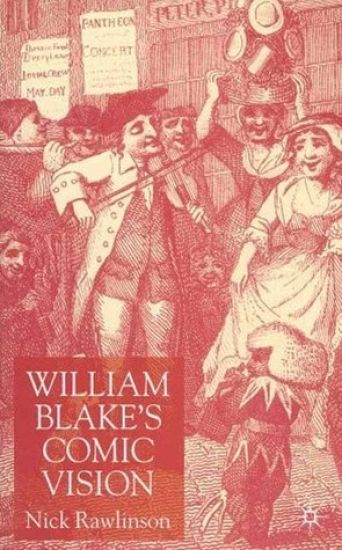
Blake's comic brilliance has been variously dismissed as the nervous ramblings of a neglected genius, the tomfool doodles of a distracted youngster, or a crude tool for destabilizing textual authority. But, for the eighteenth century, comedy played a pivotal role in debates on aesthetics, education, spirituality and morality. This exciting new study blends a close reading of Blake's early work with fascinating historical research to demonstrate that the comic was an essential component of Blake's artistic Vision.