This book is about hope and a call to action to make the world the kind of place we want to live in. Our hope is to provoke conversation, and gently challenge possibly long-held views, beliefs, and ideologies about the way the world works and the people in that world.Written by eminent researchers and experienced practitioners, the book explores the principles that underpin living well, and gives examples of how this can be achieved not just in our own lives, but across communities and the planet we share. Chapters cover the stages of life from childhood to ageing, the foundations of everyday flourishing, including health and relationships, and finally wellbeing in the wider world, addressing issues such as economics, politics and the environment. Based in the scientific evidence of what works and supported by illustrations of good practice, this book is both ambitious and aspirational. The book is designed for a wide audience – anyone seeking to create positive change in the world, their institutions or communities. www.creatingtheworldwewanttolivein.org
This book looks at the rich and complex history of broadcasting and community broadcasting in the multicultural and multilingual milieu in India. It explores the world of community radio and how community radio broadcasters hear and speak to their audiences under the overarching theme of polyphony.The book discusses the socio-historical contexts which allowed community radio to thrive in India. It highlights its potential to create alternative spaces of representation, and opportunity and its importance in preserving and disseminating local knowledge and traditions. The author weaves together ethnographic research and literature, as well as personal narratives and stories of those involved in the field. Further, the monograph critically examines the impact of development agendas on community projects and processes, discussing in detail the pervasiveness of the development discourse in every aspect of community radio and how it manifests on air. It also illustrates the limitations of community radio, within the context of its participation in the “spectacle of development”.Accessible and deeply insightful, this book will be of interest to researchers and students of cultural studies, sociology, social anthropology, media and communication studies, and South Asian studies.
Offender-focused prosecution concentrates attention to the actions, decisions, choices, and motivations of the offender. Crimes of intimate violence tend to compel investigators, prosecutors, and defense attorneys to fixate on the victim’s behavior to prove or disprove a case. Prosecutors can become helpless when faced with uncooperative victims, challenging facts, or attacks on the victims’ credibility. However, when the prosecution can rely on evidence and offender-focused interviewing, investigation, and case construction, there is a greater chance of success.This book will offer investigators and prosecutors concrete information and techniques to construct and present offender-focused cases in crimes of intimate violence. First, we will challenge the reader’s biases and assumptions about intimate violence, providing information that will dispel pervasive myths and misinformation we maintain. We will explain the motivations and techniques that offenders use on their victims to ensure the victims’ silence, compliance, and resistance to prosecution. The second section will address specific steps that investigators and prosecutors can take for offender-focused prosecution, including interviewing practices, conducting evidence-based investigations, selecting and preparing a jury, and building an offender-focused prosecution through the case. The reader will be offered practical and attainable practices and skills.This book will be primarily intended for investigators or prosecutors. However, it will be accessible to paralegals, victim advocates, judges, and others involved in the criminal justice system to utilize.
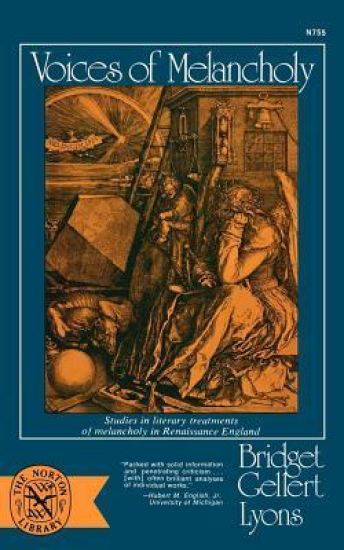
This book begins with a background on expository books about melancholy in the Renaissance with chapters on the literary uses of melancholy, Marston and melancholy, Melancholy and Hamlet, and the anatomy of melancholy as literature. When Shakespeare, Burton and other Renaissance writers gave melancholy the complex meanings and associations it has in their work, they were drawing on a tradition that had been developing throughout classical antiquity and the Middle Ages, and whose diverse origins made it an especially fruitful subject for literature.
This text provides an understanding of current professional practice in social and health care, examining abuse of vulnerable adults and the ways in which social policy, welfare services and practitioners may compound or alleviate vulnerability. Working with Vulnerable Adults develops a sound basis for understanding issues of risk, vulnerability and protection and investigates how agency policies and procedures may, often unintentionally, lead to the voice of service users being marginalised or unheard. Drawing on recent and established research about the protection of vulnerable adults, the book covers:· Social work, social care settings and vulnerable adults· The concept of abuse and adult protection· Using the law in adult protection· Professional and quality assurance issues · Assessment in social work with vulnerable adults · Dealing with and managing vulnerability, risk and abuse · Adults with mental health difficulties, long-term conditions and learning disabilities · Community abuse and asylum seekers Much contemporary social and health care practice with adults is concerned with issues of risk and protection. Working with Vulnerable Adults provides information and knowledge for students and practitioners who are interested in finding out more about this important field.
This unique study investigates the ways in which the staging convention of direct address - talking to the audience - can construct selfhood, for Shakespeare's characters. By focusing specifically on the relationship between performer and audience, Talking to the Audience examines what happens when the audience are in the presence of a dramatic figure who knows they are there. It is a book concerned with theatrical illusion; with the pleasures and disturbances of seeing 'characters' produced in the moment of performance.Through analysis of contemporary productions Talking to the Audience serves to demonstrate how the study of recent performance helps us to understand both Shakespeare's cultural moment and our own. Its exploration of how theory and practice can inform each other make this essential reading for all those studying Shakespeare in either a literary or theatrical context.
Drawing together a wide range of literature, this original book combines social theory with elements from the built environment disciplines to provide insight into how and why we build places and dwell in spaces that are at once contradictory, confining, liberating and illuminating.This groundbreaking book deals with topical issues, which are helpfully divided into two parts. The first presents a conceptual framework examining how the built environment derives from a variety of influences: structural, institutional, textual, and action-orientated.Using illustrated case study examples, the second part covers new build schemes, including urban villages, gated communities, foyers, retirement homes and televillages, as well as refurbishment projects, such as mental hospitals and tower blocks.Multidisciplinary in its focus, Housing Transformations will appeal to academics, students and professionals in the fields of housing, planning, architecture and urban design, as well as to social scientists with an interest in housing.
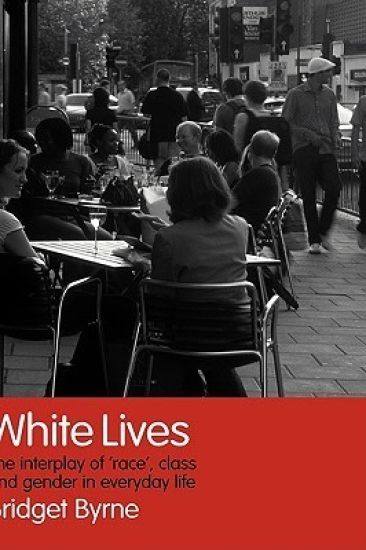
This revealing book explores the processes of racialization, class and gender, and examines how these processes play out in the everyday lives of white women living in London with young children. Bridget Byrne analyzes the flexibility of racialized discourse in everyday life, whilst simultaneously arguing for a radical deconstruction of the notions of race these discourses create.Byrne focuses on the experience of white mothers and their children, as a key site in the reproduction of class, race and gender subjectivities, offering a compelling account of both the experience of motherhood and ideas of white identity. Byrne's research is unique in its approach of exploring whiteness in the context of practices of mothering. She adopts a broad perspective, and her approach provides a suggestive framework for analyzing the racialization of everyday life. The book’s multi-layered analysis shifts expertly from intimate acts to those which engage with local and national discourses in more public spaces. Reconsidering white identities through white experiences of race, White Lives encompasses many disciplines, making valuable reading for those studying sociology, anthropology, race and ethnicity, and cultural studies. Winner of the BSA Philip Abrams Memorial Prize 2007
The first serious academic study of obituaries, this book focuses on how societies remember. Bridget Fowler makes great use of the theories of Pierre Bordieu, arguing that obituaries are one important component in society's collective memory. This book, the first of its kind, will find a place on every serious sociology scholar's bookshelves.
Bridget Somekh draws on her experience of researching the introduction of ICT into education to look at ICT development over the last twenty years. The book provides a fascinating, in-depth analysis of the nature of learning, ICT pedagogies and the processes of change for teachers, schools and education systems. It covers the key issues relating to the innovation of ICT that have arisen over this period, including:the process of change educational vision for ICT teacher motivation and engagement the phenomenon of ‘fit’ to existing practices systemic constraints policy and evaluation of its implementation students’ motivation and engagement the penetration of ICT into the home online learning and the ‘disembodied’ teacher.
When it was first published in 1984, this book filled an acknowledged gap in the social history of the period and made available hitherto inaccessible sources. The work draws on newspapers and journals, memoirs, diaries, courtesy books, county surveys and records, but also on the literature of the period, its novels, poetry and plays. It examines the role assigned to women in eighteenth-century society and the education thought fitting to perform it. It looks at attitudes to courtship and marriage, chastity and sexual passion. It explores the role of women as wives and mothers, as spinsters and widows, and focuses on the living and working experience of women whether in the home, agriculture, industry or domestic service. It contrasts the expectations of the rich and the poor, the leisured lady and the underpaid female agricultural labourer, the unmarried mother and the prostitute.
Screenwriting: Creative Labor and Professional Practice analyzes the histories, practices, identities and subjects which form and shape the daily working lives of screenwriters.Author Bridget Conor considers the ways in which contemporary screenwriters navigate and make sense of the labor markets in which they are immersed. Chapters explore areas including: Screenwriting histories and myths of the profession Screenwriting as creative labor Screenwriters’ working lives Screenwriting work and the how-to genre Screenwriting work and inequalitiesDrawing on historical and critical perspectives of mainstream screenwriting in the USA and UK, as well as valuable interviews with working screenwriters, this book presents a highly original and multi-faceted study of screenwriting as creative labor and professional practice.The Open Access version of this book, available at www.taylorandfrancis.com, has been made available under a Creative Commons Attribution-NonCommercial-No Derivatives 4.0 license.https://www.taylorfrancis.com/books/9780203080771