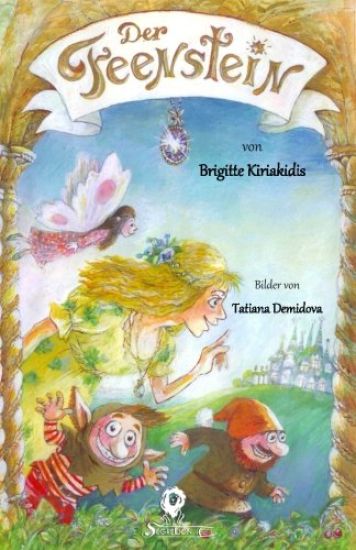
Die friedvolle Welt der Kr uterfeen und Elfen ist in Gefahr, als der R uberhauptmann Ottokar von der Halskette einer jungen Fee erf hrt, deren Edelstein alle Farben des Universums spiegelt. Von Habgier erf llt bereitet er einen berfall vor. Wie werden die Feen reagieren, um der Welt der Menschen, die von Bosheit, Geiz und Gier beherrscht wird, entgegenzutreten? In diesem M rchen stehen sich gegen ber die friedvolle Welt der Kr uterfeen mit ihren schillernden Elfen, witzigen Kobolden und bizarren Gnomen und die Welt der Menschen, die von Bosheit, Geiz und Gier regiert wird. So kommt es, dass R uberhauptmann Ottokar durch redselige Wanderer, die sich ins Feenreich verirrt hatten, von einer Fee erf hrt, an deren Halskette ein Edelstein in allen Farben des Universums blitzen und glitzern soll. Von Habgier erf llt, schickt Ottokar seinen Sohn Albin und drei seiner R ubergesellen auf die Suche, um die Grenze zum Reich der Feen zu erkunden und dort einen berfall vorzubereiten. Wie werden die Feen angesichts dieser drohenden Gefahr reagieren? Denn sie allein wissen, dass der Edelstein, den jede Kr uterfee am Halse tr gt, die Kraft der Erkenntnis und Weisheit wie auch der Liebe und Heilung in sich birgt, aber in den H nden boshafter Menschen unheilbringende finstere Kr fte entfesselt.
Ginger the fox can't wait to see Sylvester the Wild Cat, who puts on daring shows across the forest. Neither can her badger siblings, Grub, Bristle, and Berry. But when Ginger tries some fancy tricks herself, Sylvester says hurtful things. He even teases her about living with badgers. The Wild Cat's mean words make Ginger wonder if she's a true fox. She sets out to find other animals like her. But she's about to learn that there's nothing better than being who you are . . .
This book is a funny and heartwarming story about a little girl who loses her favorite blanket. During her search, she has mishaps and accidents in her natural environment, which is the yard. She gets minor booboos, and she gets upset. She handles the mishaps, and eventually all is well that ends well.
Life is an exciting journey. It is with great pleasure that I share my adventures with you, the reader. Within these pages, you will find nostalgic, faith inspired, and funny works of poetry and nonfiction short stories. Writing reveals your deepest emotions and secrets. At the end of the book, there is a section just for you personally. On these blank pages, I invite you to jot down your inspired thoughts and reactions to my selections. You looked into my soul by reading my words. Sharing secret thoughts through writing is powerful. At the end of this book, you will find empty pages for you to write on. The title of this book is a deliberate encouragement for you to contribute your memories and secrets to keep on your bookshelf.
Life is an exciting journey. It is with great pleasure that I share my adventures with you, the reader. Within these pages, you will find nostalgic, faith inspired, and funny works of poetry and nonfiction short stories. Writing reveals your deepest emotions and secrets. At the end of the book, there is a section just for you personally. On these blank pages, I invite you to jot down your inspired thoughts and reactions to my selections. You looked into my soul by reading my words. Sharing secret thoughts through writing is powerful. At the end of this book, you will find empty pages for you to write on. The title of this book is a deliberate encouragement for you to contribute your memories and secrets to keep on your bookshelf.
Today's healthcare system routinely sells your private details for remarkable sums of money. It is grounded in our current, inherently flawed web2 world of corporately owned services. In a web3 world, your privacy and health data are yours alone. Wealthcare is your window into that tomorrow.Crypto, decentralized blockchains, NFTs, and the ownership economy of web3 hold the future of healthcare. Discover how the metaverse provides innovative business models that are poised to revolutionize the way society approaches health. Wealthcare envisions what healthcare and wellness may look like when accidental wellness is a thing of the past.As web3 technology reshapes finance, supply chain, social media, and other industries, Wealthcare presents a clear case for including healthcare privacy and innovation within this new reality. It explores areas where future transformation is possible and shines a light in places where it is already happening.
Today's healthcare system routinely sells your private details for remarkable sums of money. It is grounded in our current, inherently flawed web2 world of corporately owned services. In a web3 world, your privacy and health data are yours alone. Wealthcare is your window into that tomorrow.Crypto, decentralized blockchains, NFTs, and the ownership economy of web3 hold the future of healthcare. Discover how the metaverse provides innovative business models that are poised to revolutionize the way society approaches health. Wealthcare envisions what healthcare and wellness may look like when accidental wellness is a thing of the past.As web3 technology reshapes finance, supply chain, social media, and other industries, Wealthcare presents a clear case for including healthcare privacy and innovation within this new reality. It explores areas where future transformation is possible and shines a light in places where it is already happening.
There are many jobs a parent may do throughout his or her day. A parent may be a chef (someone has to make the meals to eat), a teacher (learning doesn't happen only at school), and a driver (for all those places where walking would take way too long). But parents aren't the only ones with these jobs - preschoolers may do them, too Join a busy preschooler as she experiences many jobs throughout her day. Is it work, or is it play?- Received a Readers' Favorite Five Star Review"The story is engaging and interesting and children will be able to relate to the activities of the preschooler in the story...It is a good book for educators and parents, as it gives them ideas on how to keep children busy and occupied doing things that are informative, interactive, fun, and educational." -Mamta Madhavan for Readers' FavoriteFree coloring pages and activity ideas go along with this book are available on www.brigittebrulz.com.
A young boy who really likes pickles wants to grow pickles in his garden, but he is surprised by what he discovers-there are no bread and butter pickle plants or dill pickle trees. He learns a lot as he and his mom transform seeds from the store into yummy pickles to enjoy on everything from hot dogs to ice cream. Well, maybe not ice cream Received a Readers' Favorite Five Stars ReviewChosen for 2019 Read Across Connecticut ProgramRecommended for ages 38. Children will have fun reciting "Pickles, Pickles, I Like Pickles" as they learn about the process of turning seeds bought at a store into pickles to enjoy at home.FREE coloring pages, activity ideas, and a teacher's guide to go along with this book are available on www.brigittebrulz.com.
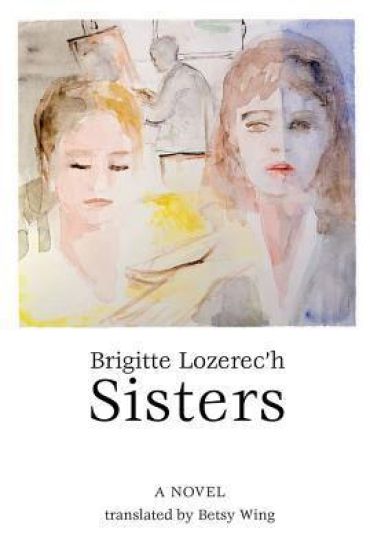
Mathilde Lewly--a female painter at the dawn of the twentieth century--has achieved notoriety among the Parisian avant-garde. She and her husband, also a talented young artist, pursue their separate visions side by side in a Clichy atelier, galvanized by the artistic ferment that surrounds them. But the couple are threatened by the shadow of Mathilde's little sister, Eug?nie: since the two girls' sudden departure from their native England, Eug?nie has been determined to vault the eight years separating her from Mathilde. Now, devoured by envy and haunted by a past she never actually experienced, the "little one" hurls herself into the artistic and personal life of her elder sister. It is the birth of a fierce rivalry, an emotional tug-of-war, played out against the bohemian riot of the last century's wildest years. But will the First World War's sudden and brutal eruption allow Mathilde to escape this intimate conflict and achieve her destiny?
In quick-study format, this book profiles 45 common herbs with extraordinary healing potential. Each profile outlines the herb's major constituents, physiological effects, traditional applications, contraindications, and flavor, as well as its growth habits both in the wild and in the garden.
Explains how this remarkable healing method sends energy through the hands of the practitioner into the body of a receiver. Contains resources for learning more about Reiki training, a reference section and an index. There are drawings, photographs and a number of testimonials from those who have been successfully treated with Reiki.
Herbal medicine is the most time-tested healing tradition in the world, having evolved over hundreds of thousands of years in disparate regions and diverse cultures. In this second edition of THE DESKTOP GUIDE TO HERBAL MEDICINE renowned herbalist, Brigitte Mars, draws from healing traditions around the world to offer a concise, comprehensive, eclectic guide to the vast array of medicinal herbs commonly available. You'll find detailed monographs of more than 180 herbs, from the commonplace tea and raspberry to the weedy dandelion and goldenrod to the more exotic ho shou wu and zedoary. Each monograph gives a broad range of information about the herb, from its physiological effects and constituents to its energetics, historical and current medicinal uses, edible properties and natural range - all in a quick-study format that allows readers to access the information they need swiftly and simply. When we welcome herbs into our lives and learn to use them safely, effectively and confidently, we empower ourselves to take charge of our own health. This one-stop reference is an invaluable companion in that pursuit: the study, prescription and use of herbs to achieve vibrant health, mitigate illness and correct physiological imbalances. As she does in her many other books, Mars writes with the goal of guiding readers toward the safe and effective use of plants as healing and preventative medicine. Her forthright tone, pragmatic advice and gentle humour shine here, inviting readers to use THE DESKTOP GUIDE TO HERBAL MEDICINE as both a study aid and a wide-ranging exploration of the plant realm.
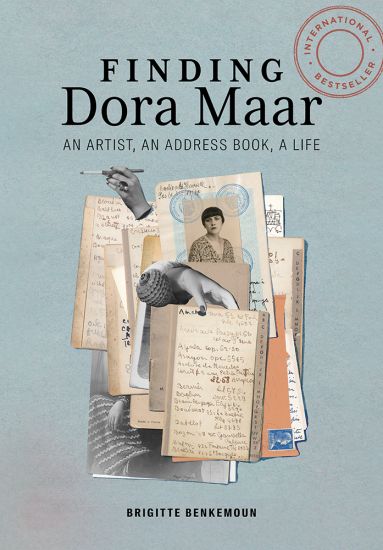
Merging biography, memoir, and cultural history, this compelling book, a bestseller in France, traces the life of Dora Maar (1907-1997) through a serendipitous encounter with the artist's address book In search of a replacement for his lost Hermes agenda, Brigitte Benkemoun's husband buys a vintage diary on eBay. When it arrives, she opens it and finds inside private notes dating back to 1951-twenty pages of phone numbers and addresses for Balthus, Brassai, Andre Breton, Jean Cocteau, Paul Eluard, Leonor Fini, Jacqueline Lamba, and other artistic luminaries of the European avant-garde. After realizing that the address book belonged to Dora Maar-Picasso's famous "Weeping Woman" and a brilliant artist in her own right-Benkemoun embarks on a two-year voyage of discovery to learn more about this provocative, passionate, and enigmatic woman, and the role that each of these figures played in her life. Longlisted for the prestigious literary award Prix Renaudot, Finding Dora Maar is a fascinating and breathtaking portrait of the artist. "Beautifully written and fascinating."-Paris Match "One of the happy surprises of the end of the literary season."-Livres Hebdo "A highly moving portrait of the artist."-Elle (France)
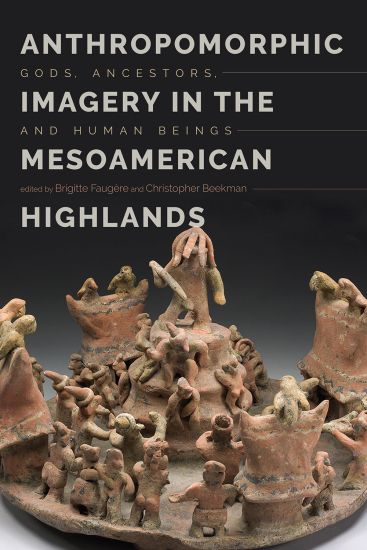
In Anthropomorphic Imagery in the Mesoamerican Highlands, Latin American, North American, and European researchers explore the meanings and functions of two- and three-dimensional human representations in the Precolumbian communities of the Mexican highlands. Reading these anthropomorphic representations from an ontological perspective, the contributors demonstrate the rich potential of anthropomorphic imagery to elucidate personhood, conceptions of the body, and the relationship of human beings to other entities, nature, and the cosmos. Using case studies covering a broad span of highlands prehistory—Classic Teotihuacan divine iconography, ceramic figures in Late Formative West Mexico, Epiclassic Puebla-Tlaxcala costumed figurines, earth sculptures in Prehispanic Oaxaca, Early Postclassic Tula symbolic burials, Late Postclassic representations of Aztec Kings, and more—contributors examine both Mesoamerican representations of the body in changing social, political, and economic conditions and the multivalent emic meanings of these representations. They explore the technology of artifact production, the body’s place in social structures and rituals, the language of the body as expressed in postures and gestures, hybrid and transformative combinations of human and animal bodies, bodily representations of social categories, body modification, and the significance of portable and fixed representations. Anthropomorphic Imagery in the Mesoamerican Highlands provides a wide range of insights into Mesoamerican concepts of personhood and identity, the constitution of the human body, and human relationships with gods and ancestors. It will be of great value to students and scholars of the archaeology and art history of Mexico. Contributors: Claire Billard, Danièle Dehouve, Cynthia Kristan-Graham, Melissa Logan, Sylvie Peperstraete, Patricia Plunket, Mari Carmen Serra Puche, Juliette Testard, Andrew Turner, Gabriela Uruñuela, Marcus Winter
Cayenne pepper can stop bleeding. Garlic helps alleviate a toothache. Honey soothes a burn. When an emergency situation arises, simple home remedies can play a vital role in easing symptoms and providing immediate help. Become an effective first responder with a combination of best first-aid practices, herbs, and standard homeopathic applications. This quick-reference handbook spells out hundreds of life-saving techniques, commonsense tips, and time-tested herbal remedies that everyone should know. From how to perform basic CPR and the Heimlich Maneuver to the best immediate response to natural disasters, you’ll find the most practical, effective actions to take to ensure survival.
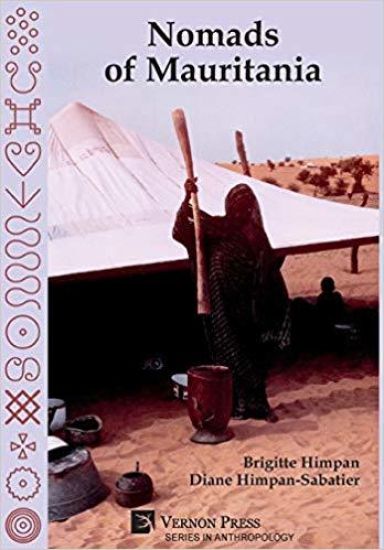
Nomads of Mauritania aims at understanding the cultural identity (religious beliefs, language, values, relationships with others) of the Mauritanian nomads through their geographical environment, an original history, their lifestyle, caste system, diet, housing and crafts and how it is revealed by their art, materially expressed on the everyday objects and the body and defined for the first time as geometrical-abstract and respectively as ephemeral usual art and ephemeral living art. Furthermore, what has become of the nomads of Mauritania with the climate warming and the economic and cultural globalization and to what extent are they still the pillars and heart of the Mauritanian society of today?















![Nomads of Mauritania [B&W]](/covers/9781622734566.jpg)