Kirjojen hintavertailu. Mukana 11 244 527 kirjaa ja 12 kauppaa.

Kirjahaku

Etsi kirjoja tekijän nimen, kirjan nimen tai ISBN:n perusteella.

1000 tulosta hakusanalla Bruce Harding

Bruce W. Talamon. Soul. R&B. Funk. Photographs 1972–1982
Talamon saw it all during the golden age of soul, R&B, and funk. Throughout the 1970s and early 1980s, this young African American photographer from Los Angeles found himself backstage with an all-access pass to the heart of the music scene. He caught his first big break landing a position as a staff photographer at SOUL Newspaper in LA in the early 1970s, just as soul, R&B, and funk were becoming part of the mainstream. He captured the rehearsals and sound checks, recording sessions and costume fittings, the quiet reflective moments and life on the road, and, of course, the wild photo shoots and memorable performances. These photographs define an era famed for its glamour, fabulous fashions, and utter devotion to the groove. Including close to 300 photographs from 1972 to 1982, the extensive Talamon archives are presented in full detail for the first time. Whether you’re a diehard soul fan or a thrilled newcomer to the aesthetic magic of the 1970s, the collection exudes the infectious spirit of an exuberant age. Featuring icons such as Earth, Wind & Fire; Marvin Gaye; Diana Ross; Parliament-Funkadelic; Al Green; Gil Scott-Heron; James Brown; Barry White; Rick James; Aretha Franklin; the Jackson Five; Donna Summer; and Chaka Khan and many others; there are also several stops at the legendary Soul Train studios. Talamon documented a visual period in black music that lasted way past the midnight hour and will never come again.This release is an affordable, compact version of our Art Edition, limited to 500 copies and featuring a portfolio of four prints signed by Bruce W. Talamon.
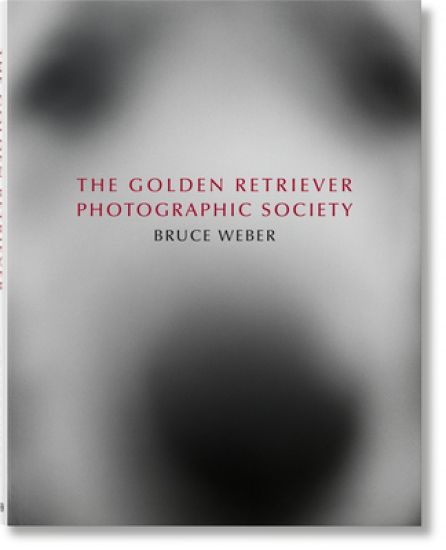
Bruce Weber. The Golden Retriever Photographic Society
The photographer and filmmaker Bruce Weber is associated with a wide array of imagery: humanist portraits of artists, actors, and athletes; fashion spreads charged with emotion, irreverence, and nostalgia; lyrical tributes to eroticism and an arcadian vision of the American landscape. All these things—and golden retrievers, too. Since the very beginning, Weber has been accompanied on his travels by a pack of these benevolent canines, who have populated his photographs for fashion campaigns, prominent magazines, and the pages of his personal scrapbooks in equal measure. The Golden Retriever Photographic Society is Weber’s first career-spanning collection of these photographs, one he describes as his most personal. In the introduction to the monograph, Weber remarks, “People sometimes say to me, ‘In my next life, I want to come back as one of your dogs.’” Paging through this volume, we understand the sentiment. For five decades, these golden retrievers have been foils for Weber’s imagination, storybook characters in the expansive life he has created with wife, Nan Bush. This book celebrates the human-animal bond, illuminating how connection to one’s pets can fuel creativity, provide companionship, and foster an abundance of joy.
Bruce Weber. My Education
My Education provides a revealing look into the life, work and creative journey of one of our era’s preeminent image-makers, Bruce Weber. Through a collection of his most iconic images as well as previously unpublished and lesser-known photographs the volume provides a profound exploration of his oeuvre. Rather than following a simple chronological order, it is organized thematically, reflecting how key ideas like family, creativity, physicality, humanism, sexuality, and expression have fueled Weber’s lifelong curiosity. This approach offers an unparalleled view of his photographic evolution. The book showcases the fashion photography and portraiture Weber is renowned for, unforgettable images for major fashion magazines, including Vogue, GQ, W Magazine, and Vanity Fair. It also highlights rare editorial selections and previously unseen reportage photographs. Beyond the realm of fashion, Weber has immortalized some of the most influential cultural and political figures of our time. From Anselm Kiefer to Kim Kardashian, Louise Bourgeois to Leonardo DiCaprio—Weber’s unique ability to capture the essence of each subject, whether in intimate portraits or dynamic editorial shots, has made him one of the most revered image-makers of his generation.This volume is more than just a visual journey—it’s a personal tribute to the spirit of collaboration, mutual inspiration, and the pursuit of creative expression. Punctuated by a collection of personal narratives and texts by Charles Bukowski, Rupert Brooke, John Steinbeck and many others, this volume celebrates the teachers, friends, collaborators and influences that shaped Bruce Weber’s singularly impactful approach to photography and filmmaking. In deeply personal anecdotes about close collaborators like Grace Coddington, Dennis Freedman or Stella Tennant, Weber reminisces about bonds that go deeper than mere professional collaboration.
Bruce Davidson: England / Scotland 1960

Bruce Davidson: England / Scotland 1960

Bruce Davidson; Mark Haworth-Booth

Steidl Verlag
2016
sidottu
In 1960, after an intense year photographing the notorious Brooklyn street gang The Jokers, Bruce Davidson decided to remove himself from the tension and depression of that work. He received an assignment to photograph Marilyn Monroe during the making of John Houston's The Misfits in the Nevada desert, and then travelled to London on commission for Queen magazine. Published by Jocelyn Stevens, Queen was devoted to British lifestyle and Davidson was charged, with no specific agenda, to spend a couple of months touring England and Scotland to create a visual portrait of the two countries. England / Scotland 1960 offers a poetic insight into the heart of English and Scottish cultures. Reflecting a postwar era in which the revolutions of the 1960s had not quite yet entered the mainstream, Davidson's photographs reveal societies driven by difference--the extremes of city and country life, of the landed gentry and the common people. Published for the first time in its entirety in 2005, this new edition has a larger ideal format chosen by Davidson initially for his book Black & White (2012), and now the standard size for his future publications with Steidl.
Bruce Davidson

Bruce Davidson

Bruce Davidson

Steidl Verlag
2014
sidottu
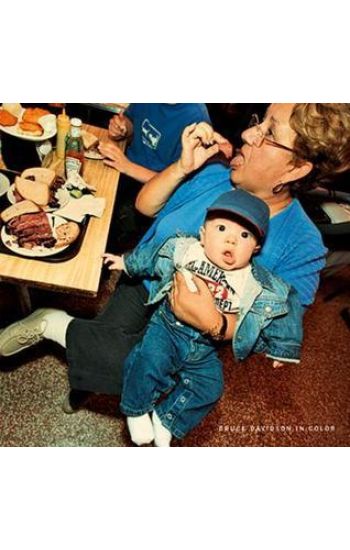
This volume presents Bruce Davidson's personal selections from his lesser-known color archive, from a period of nearly 60 years. Assignments from various magazines including Vogue, National Geographic and Life, as well as commercial projects led Davidson to photograph subjects as diverse as fashion (in the early 1960s), the Shah of Iran with his family (1964), keepers of French monuments (1988), the supermodel Kylie Bax (1997) and college cheerleaders (1989). He photographed in India and China, but also at home in New York, in Chicago and along the Pacific Coast Highway. In 1968, Michelangelo Antonioni invited Davidson to document the making of his film Zabriskie Point. Davidson also continued to pursue personal projects, such as photographing the Yiddish writer and Nobel Prize laureate Isaac Bashevis Singer (1972-75), the New York City subway (1980) and Katz's Delicatessen (2004). Often staying on in a country after an official assignment, Davidson documented Welsh coalfields, family holidays in Martha's Vineyard and travelled through Patagonia and Mexico.
Bruce Davidson: Circus
One of the world's most influential photographers, Bruce Davidson takes readers inside three midcentury big tops in images that are poetic, realistic and profound. He reveals not only the swiftly vanishing cultural phenomenon of the circus, but what might be called the eternal human circus. At a three-ring show in 1958 he climbed to the top of the tent to view the performances of the famous liontamer Clyde Beatty and human cannonball Hugo Zacchini. His deeper interest lay in the daily lives of circus performers and producers--the roustabouts and riggers, and the pretty girl who rode an elephant in what was called the "spec." He also made an intimate series of a dwarf clown. In 1965 at a huge multi-ring coliseum show, Davidson took a more critical look at performances under a steel-and-concrete environment; continuing behind the scenes, his vision became sharper and more surreal. And in 1967, Davidson caught the elegant exuberance of an Irish one-ring circus. He photographed the kinds of performances that are the essence of the medium, including a face-to-face encounter with an exceptional trapeze artist. Most of these pictures are published here for the first time.
Bruce Davidson: Lesser Known

Bruce Davidson: Lesser Known

Bruce Davidson

Steidl Verlag
2024
sidottu
A deep dive into the Davidson archiveLesser Known presents 130 photos by Bruce Davidson, made between 1955 and 1993, that have been overlooked until now. The book is the result of a year long undertaking by the photographer and his studio to examine 60 years of contact sheets and edit individual images into a singular work that plots his professional and personal growth.Lesser Known showcases Davidson's perpetual versatility and adaptability as a photographer through a focus on early assignments, the intimate documentation of his family life and smaller series such as unpublished color photographs from major bodies of work including East 100th Street and Campers.Born in Chicago in 1933, Bruce Davidson began photographing at the age of ten in Oak Park, Illinois. Davidson studied at the Rochester Institute of Technology and Yale University before being drafted into the army. After leaving military service in 1957, he freelanced for Life and in 1958 became a member of Magnum Photos. Davidson's solo exhibitions include those at The Museum of Modern Art, the Smithsonian American Art Museum and the Walker Art Center, and his awards include a Guggenheim Fellowship and the first NEA Grant in Photography. In 2011 he was awarded an honorary doctorate from the Corcoran College of Art and Design. Davidson's books include Outside Inside (2010), Subway (2011), Black & White (2012) and England / Scotland 1960 (2014).
Bruce, O Pênis Telepata

Bruce, O Pênis Telepata

Anderson M B

Camara Brasileira Do Livro, Sp, Brasil
2021
pokkari
"Colher s o fruto da felicidade e, como a primeira grande ave, tu ser s a minha Eva Ent o prepara-te para o voo, chegou a hora de tirar o bico da lama... Al ar s o voo perfeito, olhar s para mim l do alto, s para dizer que me ama " Um homem, uma rvore, um p nis telepata... Embarque nessa viagem emocionante, voc vai se surpreender
Bruce Baillie: Somewhere from Here to Heaven
A scrapbook on Baillie's life and career, with stills, ephemera and writings by filmmakers across generationsThis is the first book on the West Coast avant-garde filmmaker Bruce Baillie (1931-2020), famed for the films Mass for the Dakota Sioux (1964), Castro Street (1966) and All My Life (1966) and for his influence on directors such as George Lucas (one of Lucas' charitable foundations helped fund the digital transfer of Baillie's films) and Apichatpong Weerasethakul. Alongside stills from Baillie's films, the book fosters a dialogue between Baillie and filmmakers and writers across several generations, including experimental filmmaker Peter Hutton, filmmaker and anthropologist J.P. Sniadecki and Jonas Mekas, along with suites of images by the Thai director Apichatpong Weerasethakul, British artist and experimental filmmaker Ben Rivers and Brazilian artist and filmmaker Ana Vaz, among others. Reproductions of correspondence and other ephemera are also included.
Bruce Der Karate Hund

Bruce Der Karate Hund

Bjørn Rasmussen

Books on Demand
2012
pokkari
Pacos bester Freund ist sein Hund ´Bruce´. Bruce war auf einen Klassenkameraden zugestürmt, der versuchte Paco zu ärgern. Bruce hatte den anderen Jungen in den Finger gebissen. Es floss kein Blut, aber der Junge erzählte es seinen Eltern. Die Eltern beschwerten sich bei Pacos Vater und Mutter.Sie sagten, dass der Hund gefährlich sei, und dass der Vorfall bei der Polizei angezeigt werden müsste, so dass der Hund eingeschläfert werden könnte. Was sollten sie tun? Das Problem war riesengroß.