Kirjojen hintavertailu. Mukana 12 390 323 kirjaa ja 12 kauppaa.

Kirjahaku

Etsi kirjoja tekijän nimen, kirjan nimen tai ISBN:n perusteella.

1000 tulosta hakusanalla C. David Heymann

David Crockett

David Crockett

John S. C. Abbott

Double 9 Books LLP
2023
nidottu
David Crockett: His life and adventures written by John S. C. Abbott have the story of a poor man by the name of Crockett who sailed from Ireland to the New World on an emigrant ship a little over a century ago. He was in the lowest possible position in life. But aside from the devastating end of his career, very little is known about it. His wife and three or four kids made up his family. A son was born just before he set sail, or during the Atlantic crossing, and he gave him the name John. The family most likely arrived in Philadelphia and spent a year or two living someplace in Pennsylvania in one of those slab shanties, which are known to everyone as the homes of the poorest class of Irish immigrants. After a few years, Crockett traveled across the very impassable Alleghanies with his small family. The only ways to get food, shelter, and even clothing were with the hatchet and the rifle. A cozy camp that would shield them from the wind and rain could be built with the hatchet in about an hour.
L'autre, c'est soi-même: l'identité postcoloniale dans un siècle de guerre
Cette tude examine la relation entre la guerre et l'identit postcoloniale dans diverses oeuvres litt raires africaines et am ricaines. Elle se concentre sur la litt rature de l'auteur d plac du XXe si cle, telle qu'elle s'exprime dans des oeuvres de fiction qui montrent comment les traumatismes personnels refl tent l'exp rience collective. Cette tude explore la mani re dont un certain nombre d' crivains postcoloniaux embl matiques ont pr sent les cons quences psychologiques et politiques des traumatismes de l'apr s-guerre travers les g n rations. Elle soutient que la Premi re et la Seconde Guerre mondiale ont eu un impact profond sur le mode de vie, comme en t moignent les oeuvres d' crivains africains tels que Chinua Achebe, J.M. Coetzee, Nadine Gordimer et Doris Lessing, et d' crivains am ricains tels que Saul Bellow, Don DeLillo, Cormac McCarthy, Philip Roth, Leslie Marmon Silko et John Edgar Wideman. L'argument propose une m thode de lecture des textes canoniques des crivains postcoloniaux comme des r cits de protestation, de transgression et de r g n ration.
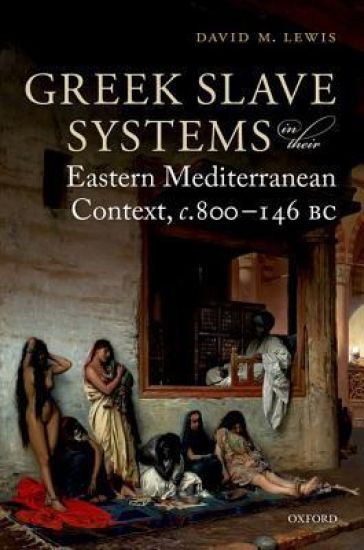
Greek Slave Systems in their Eastern Mediterranean Context, c.800-146 BC
The orthodox view of slavery in the ancient Mediterranean holds that Greece and Rome were its only 'genuine slave societies', that is, societies in which slave labour contributed significantly to the economy and underpinned the wealth of elites. Other societies, traditionally labelled 'societies with slaves', are thought to have made little use of slave labour and therefore have been largely ignored in recent scholarship. This volume presents a radically different view of the ancient Eastern Mediterranean world, showing that elite exploitation of slave labour in Greece and the Near East shared some fundamental similarities, although the degree of elite dependence on slaves varied from region to region. Whilst slavery was indeed particularly highly developed in Greece and Rome, it was also economically entrenched in Carthage, and played a not insignificant role in the affairs of elites in Israel, Assyria, Babylonia, and Persia. The differing degrees to which Eastern Mediterranean elites exploited slave labour represents the outcome of a complex interplay between cultural, economic, political, geographical, and demographic factors. Proceeding on a regional basis, this book tracks the ways in which local conditions shaped a wide variety of Greek and Near Eastern slave systems, and how the legal architecture of slavery in individual regions was altered and adapted to accommodate these needs. The result is a nuanced exploration of the economic underpinnings of Greek elite culture that sets its reliance on slavery within a broader historical context and sheds light on the complex circumstances from which it emerged.
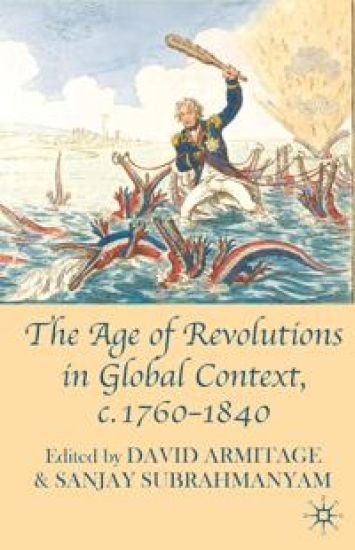
The Age of Revolutions in Global Context, c. 1760-1840

The Age of Revolutions in Global Context, c. 1760-1840

David Armitage; Sanjay Subrahmanyam

Red Globe Press
2009
sidottu
A distinguished international team of historians examines the dynamics of global and regional change in the late eighteenth and nineteenth centuries. Providing uniquely broad coverage, encompassing North and South America, the Caribbean, Europe, Africa, the Middle East, South and Southeast Asia, and China, the chapters shed new light on this pivotal period of world history. Offering fresh perspectives on:• the American, French, and Haitian Revolutions• the break-up of the Iberian empires• the Napoleonic Wars. The volume also presents ground-breaking treatments of world history from an African perspective, of South Asia's age of revolutions, and of stability and instability in China. The first truly global account of the causes and consequences of the transformative 'Age of Revolutions', this collection presents a strikingly novel and comprehensive view of the revolutionary era as well as rich examples of global history in practice.
The Age of Revolutions in Global Context, c. 1760-1840

The Age of Revolutions in Global Context, c. 1760-1840

David Armitage; Sanjay Subrahmanyam

Red Globe Press
2009
nidottu
A distinguished international team of historians examines the dynamics of global and regional change in the late eighteenth and nineteenth centuries. Providing uniquely broad coverage, encompassing North and South America, the Caribbean, Europe, Africa, the Middle East, South and Southeast Asia, and China, the chapters shed new light on this pivotal period of world history. Offering fresh perspectives on:• the American, French, and Haitian Revolutions• the break-up of the Iberian empires• the Napoleonic Wars. The volume also presents ground-breaking treatments of world history from an African perspective, of South Asia's age of revolutions, and of stability and instability in China. The first truly global account of the causes and consequences of the transformative 'Age of Revolutions', this collection presents a strikingly novel and comprehensive view of the revolutionary era as well as rich examples of global history in practice.
The Anchor Yale Bible Dictionary, A-C

The Anchor Yale Bible Dictionary, A-C

David Noel Freedman

Yale University Press
1992
sidottu
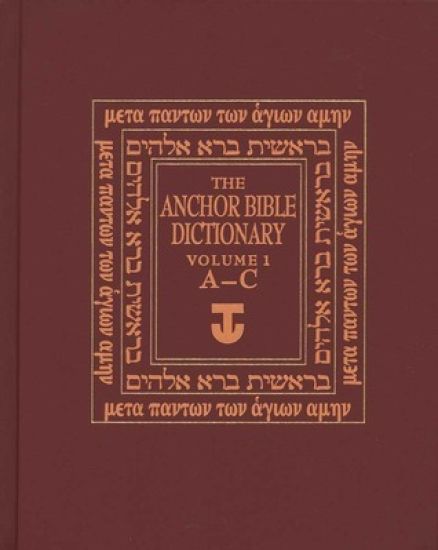
The most extensive Bible dictionary ever created:- The first major Bible dictionary to be published in America in 30 years- 6 volumes of approximately 1,200 pages each- More than 6,000 entries- More than 7,000,000 words- Nearly 1,000 contributors —all the biggest names from around the world- Multicultural and interdisciplinary in scope- An unprecedented interfaith exploration of the Bible- Illustrated throughout with easy-to-find references- Endpaper maps of the Near Eastern world keyed to text for quick location of archaeological and biblical sites- Extensively cross-referenced for comprehensive coverage of topics- Easy-to-read article and chapter headings for speedy location of material- Full bibliographic references following all major entries Inside you’ll find:- Exciting articles on pseudepigraphic and apocryphal texts, Nag Hammadi tractates, and individual dead Sea Scrolls—including the very latest on the most recently published sectarian Dead Sea Scrolls- “Minor entries” on personal and place-names that go well beyond the one- or two-sentence descriptions found in other Bible dictionaries- Outstanding summaries of the latest research on the historical Jesus- Fascinating new articles discussing the growing reappraisal of early Christianity’s relationship with Judaism (was Christianity an “offspring” or “sibling” of rabbinic Judaism?)- Many articles illustrating the literary artistry of the biblical text- Intriguing discussions of everyday life in Bible lands—including articles that help us to understand health and disease, the role of animals and plants in the ancient ecosystem, and the demographics of human settlement in ancient Palestine- A richness of information unequaled in the history of biblical studies Edited by David Noel FreedmanEditorial Consultants: Hans Dieter Betz—Greco-Roman Religin James H. Charlesworth—Apocrypha and Pseudepigrapha Frank More Cross—Old Testament William G. Dever—ArchaeologyA. Kirk Grayson—Mesopotamia and AssyriologyPeter Machinist—Bible and Ancient Near EastAbraham J. Malherbe—New TestamentBirger A. Pearson—Early ChristianityJack M. Sassoon—Bible and Ancient Near EastWilliam R. Schoedel—Early Christian Literature
Youth Culture in Modern Britain, c.1920-c.1970
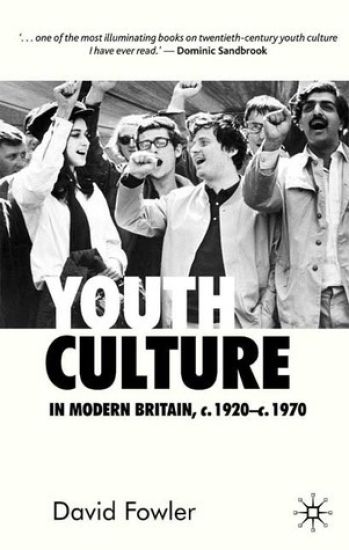
This book traces the history of youth culture from its origins among the student communities of inter-war Britain to the more familiar world of youth communities and pop culture. Grounded in extensive original research, it explores the individuals, institutions and ideas that have shaped youth culture over much of the twentieth century.
Youth Culture in Modern Britain, c.1920-c.1970
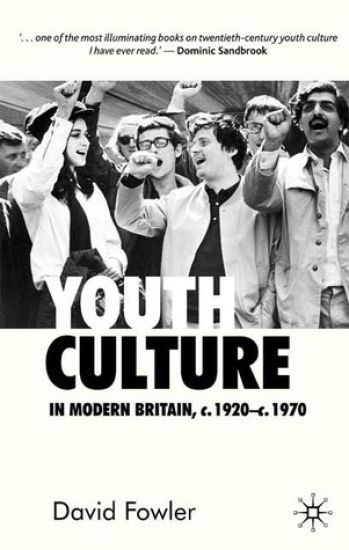
This book traces the history of youth culture from its origins among the student communities of inter-war Britain to the more familiar world of youth communities and pop culture. Grounded in extensive original research, it explores the individuals, institutions and ideas that have shaped youth culture over much of the twentieth century.
Data Structures and Algorithms in C++

Data Structures and Algorithms in C++

Michael T. Goodrich; Roberto Tamassia; David M. Mount

John Wiley Sons Inc
2011
nidottu
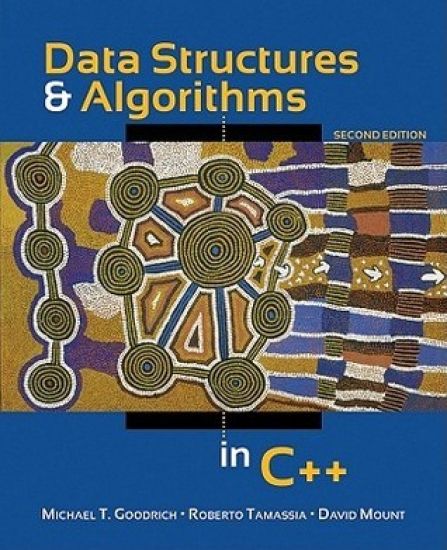
This second edition of Data Structures and Algorithms in C++ is designed to provide an introduction to data structures and algorithms, including their design, analysis, and implementation. The authors offer an introduction to object-oriented design with C++ and design patterns, including the use of class inheritance and generic programming through class and function templates, and retain a consistent object-oriented viewpoint throughout the book. This is a “sister” book to Goodrich & Tamassia’s Data Structures and Algorithms in Java, but uses C++ as the basis language instead of Java. This C++ version retains the same pedagogical approach and general structure as the Java version so schools that teach data structures in both C++ and Java can share the same core syllabus. In terms of curricula based on the IEEE/ACM 2001 Computing Curriculum, this book is appropriate for use in the courses CS102 (I/O/B versions), CS103 (I/O/B versions), CS111 (A version), and CS112 (A/I/O/F/H versions).
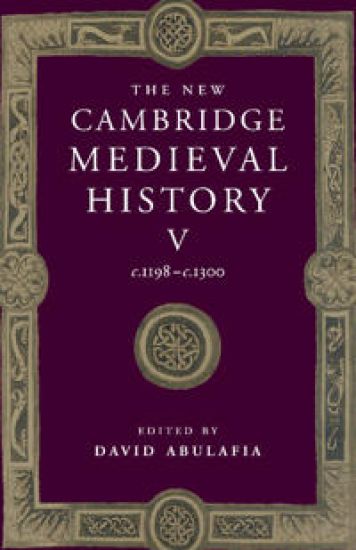
The New Cambridge Medieval History: Volume 5, c.1198–c.1300

The New Cambridge Medieval History: Volume 5, c.1198–c.1300

David Abulafia

Cambridge University Press
1999
sidottu
The fifth volume of The New Cambridge Medieval History brings together studies of the political, religious, social and economic history of the whole of Europe and of the Mediterranean world between about 1198 and 1300. Comprehensive coverage of the developments in western Europe is balanced by attention to the east of Europe, including the Byzantine world, and the Islamic lands in Spain, north Africa and the Levant. Thematic articles look at the fine arts, the vernacular, communications and other aspects of a period in which the frontiers of Latin Christendom were expanding vigorously outwards; and attention is paid to the frontier societies that emerged in Spain, the Baltic and the Mediterranean islands.
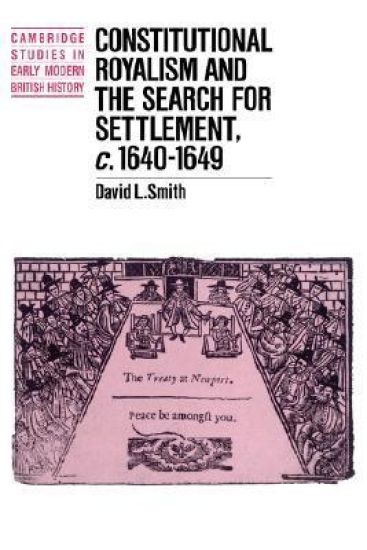
Constitutional Royalism and the Search for Settlement, c.1640–1649
‘Constitutional royalism’ is one of the most familiar yet least often examined of all the political labels found in the historiography of the English Revolution. This book fills a gap by investigating the leading Constitutional royalists who rallied to King Charles I in 1642 while consistently urging him to reach an ‘accommodation’ with Parliament. These royalists’ early careers reveal that a commitment to the rule of law and a relative lack of ‘godly’ zeal were the characteristic predictors of Constitutional royalism in the Civil War. Such attitudes explain why many of them criticised the policies of the King’s personal rule, but also why they joined the King in 1642 and tried to achieve a negotiated settlement thereafter. The final part of the book traces the Constitutional royalists through the Interregnum - during which they consciously withdrew from public life - to the Restoration, when many of them returned to prominence and saw their ideas vindicated.
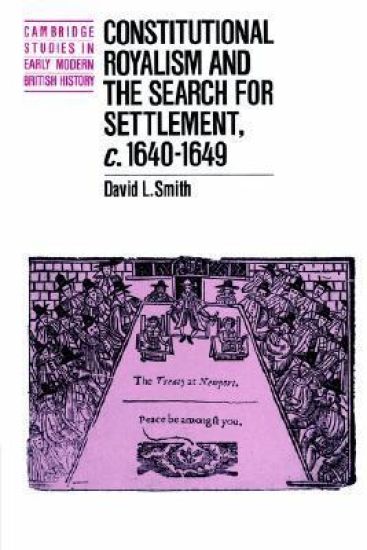
Constitutional Royalism and the Search for Settlement, c.1640–1649
‘Constitutional royalism’ is one of the most familiar yet least often examined of all the political labels found in the historiography of the English Revolution. This book fills a gap by investigating the leading Constitutional royalists who rallied to King Charles I in 1642 while consistently urging him to reach an ‘accommodation’ with Parliament. These royalists’ early careers reveal that a commitment to the rule of law and a relative lack of ‘godly’ zeal were the characteristic predictors of Constitutional royalism in the Civil War. Such attitudes explain why many of them criticised the policies of the King’s personal rule, but also why they joined the King in 1642 and tried to achieve a negotiated settlement thereafter. The final part of the book traces the Constitutional royalists through the Interregnum - during which they consciously withdrew from public life - to the Restoration, when many of them returned to prominence and saw their ideas vindicated.
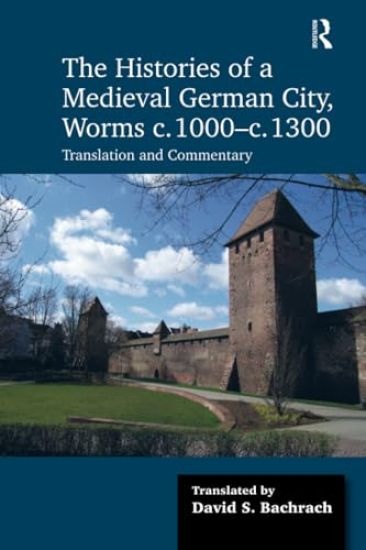
The Histories of a Medieval German City, Worms c. 1000-c. 1300
Germany was the most powerful kingdom in the medieval West from the mid-tenth to the mid-thirteenth century. However, its history remains largely unknown outside of the German-speaking regions of modern Europe. Until recently, almost all of the sources for medieval Germany were available only in the original Latin or in German translations, while most scholarly investigation has been in German. The limited English-language scholarship has focused on royal politics and the aristocracy. Even today, English-speaking students will find very little about the lower social orders, or Germany’s urban centers that came to play an increasingly important role in the social, economic, political, religious, and military life of the German kingdom after the turn of the millennium. The translation of the four texts in this volume is intended to help fill these lacunae. They focus on the city of Worms in the period c.1000 to c.1300. From them readers can follow developments in this city over a period of almost three centuries from the perspective of writers who lived there, gaining insights about the lives of both rich and poor, Christian and Jew. No other city in Germany provides a similar opportunity for comparison of changes over time. As important, Worms was an ’early adopter’ of new political, economic, institutional, and military traditions, which would later become normative for cities throughout the German kingdom. Worms was one of the first cities to develop as a center of episcopal power; it was also one of the first to develop an independent urban government, and was precocious in emerging as a de facto city-state in the mid-thirteenth century. These political developments, with their concomitant social, economic, and military consequences, would define urban life throughout the German kingdom. In sum, the history of Worms as told in the narrative sources in this volume can be understood as illuminating the broader urban history of the German kingdom at the heigh
The New Cambridge Medieval History: Volume 5, c.1198–c.1300

The New Cambridge Medieval History: Volume 5, c.1198–c.1300

David Abulafia

Cambridge University Press
2015
pokkari
The fifth volume of The New Cambridge Medieval History brings together studies of the political, religious, social and economic history of the whole of Europe and of the Mediterranean world between about 1198 and 1300. Comprehensive coverage of the developments in western Europe is balanced by attention to the east of Europe, including the Byzantine world, and the Islamic lands in Spain, north Africa and the Levant. Thematic articles look at the fine arts, the vernacular, communications and other aspects of a period in which the frontiers of Latin Christendom were expanding vigorously outwards; and attention is paid to the frontier societies that emerged in Spain, the Baltic and the Mediterranean islands.
Miracle Workers, S.C.E. Book Two

Miracle Workers, S.C.E. Book Two

Keith R a DeCandido; Kevin Dilmore; David Mack

Star Trek
2010
pokkari
STARFLEET CORPS OF ENGINEERS Their motto: Have tech, will travel Need to build a subspace accelerator while under attack by a deadly local predator? Need to rescue a starship from interphase without getting trapped there yourself? Call in the Starfleet Corps of Engineers team, specifically the crack team from the "U.S.S. da Vinci." Under the guidance of Captain David Gold and his first officer, former "Starship Enterprise"(TM) engineer Commander Sonya Gomez, the crew of the "da Vinci" can construct six impossible things before breakfast. Overseen by Captain Montgomery Scott from his office at Starfleet Headquarters, the S.C.E. crew put their lives on the line to rescue a space station from catastrophe, and face off against a deadly alien race of technology thieves with the aid of Lieutenant Nog from Space Station "Deep Space 9" (TM).
The Histories of a Medieval German City, Worms c. 1000-c. 1300
Germany was the most powerful kingdom in the medieval West from the mid-tenth to the mid-thirteenth century. However, its history remains largely unknown outside of the German-speaking regions of modern Europe. Until recently, almost all of the sources for medieval Germany were available only in the original Latin or in German translations, while most scholarly investigation has been in German. The limited English-language scholarship has focused on royal politics and the aristocracy. Even today, English-speaking students will find very little about the lower social orders, or Germany’s urban centers that came to play an increasingly important role in the social, economic, political, religious, and military life of the German kingdom after the turn of the millennium. The translation of the four texts in this volume is intended to help fill these lacunae. They focus on the city of Worms in the period c.1000 to c.1300. From them readers can follow developments in this city over a period of almost three centuries from the perspective of writers who lived there, gaining insights about the lives of both rich and poor, Christian and Jew. No other city in Germany provides a similar opportunity for comparison of changes over time. As important, Worms was an ’early adopter’ of new political, economic, institutional, and military traditions, which would later become normative for cities throughout the German kingdom. Worms was one of the first cities to develop as a center of episcopal power; it was also one of the first to develop an independent urban government, and was precocious in emerging as a de facto city-state in the mid-thirteenth century. These political developments, with their concomitant social, economic, and military consequences, would define urban life throughout the German kingdom. In sum, the history of Worms as told in the narrative sources in this volume can be understood as illuminating the broader urban history of the German kingdom at the heigh