
Kirjahaku
Etsi kirjoja tekijän nimen, kirjan nimen tai ISBN:n perusteella.
1000 tulosta hakusanalla Catherine Carson
Catherine Morland est un personnage de fiction cr par la femme de lettres britannique Jane Austen. Elle est le protagoniste principal du roman L'Abbaye de Northanger, publi en 1818, apr s la mort de l'auteur, mais crit avant 1803 sous le titre initial de Susan. Ce roman, parodie austenienne du roman gothique, attribue Catherine Morland le r le de l'h ro ne pers cut e par le m chant cruel et porteur de lourds secrets, qui contrarie ses amours avec celui qui la sauvera du malheur et de l'opprobre (Henry Tilney, dans le cas de L'Abbaye de Northanger).
Catherine; By William Makepeace Thackeray and George Saintsbury: Catherine; A Shabby Genteel Story; The Second Funeral Of Napoleon And Miscellanies, 1
George Saintsbury; William Makepeace Thackeray
Createspace Independent Publishing Platform
2016
nidottu
Catherine: A Story
Thackeray William Makepeace
Createspace Independent Publishing Platform
2016
nidottu

Catherine Morland: L'Abbeye de Northanger
Jane Austen
Createspace Independent Publishing Platform
2016
nidottu
17 ans, Catherine Morland est invit e par ses voisins les Allen passer quelques semaines Bath. Entre bals, promenades et boutiques, elle se lie tout d'abord d'amiti avec Isabelle Thorpe, qui fr quente son fr re, puis avec Eleanor Tilney, la soeur du charmant Henry Tilney. Lorsque les Tilney lui proposent de s journer chez eux Northanger Abbey, celle-ci est aux anges Cette somptueuse et antique demeure exerce un puissant pouvoir sur l'imagination de Catherine, f rue de romans gothiques. Tandis qu'elle chafaude les hypoth ses les plus folles, elle ne se doute pas du sort qui l'attend...

Catherine the Great: A Reference Guide to Her Life and Works covers all aspects of her life and work. Empress Catherine the Great was one of the most famous and amazing women in world history.Includes a detailed chronology of Catherine’s life, family, and work.The A to Z section includes the major events, places, and people in Catherine’s life.The bibliography includes a list of publications concerning her life and work.The index thoroughly cross-references the chronological and encyclopedic entries.

Born an obscure German princess who suffered under the control of a domineering, narcissistic mother, the fourteen-year-old Princess Sophie von Anhalt-Zerbst seemed to be destined for a minor marriage and a forgettable career. Destiny had other plans for her: summoned to Russia, then considered by most Europeans to be a vast, primitive wasteland, devoid of culture or sophistication, she became the Grand Duchess Ekaterina, wife of the future emperor Peter III.What followed her short, unhappy marriage was a legendary rise to supreme power. At the age of 33, the Grand Duchess Catherine became the Empress Catherine II, ruler in her own right of the largest empire on earth.In this book, you will learn how, during Catherine's lonely years as a neglected wife in the court of the Empress Elisabeth, she bided her time and amassed the necessary political and military support to overthrow the heir to the Romanov dynasty and seize his throne. You will also learn why, over the course of her 34-year reign, which saw rebellions, foreign wars, popular uprisings, and a string of jealous lovers vying for her favor, she came to be remembered by history under the name conferred upon her by her own people: Catherine the Great.

Nous sommes en mai 1829, dans la for t de Villers-Cotter ts, sur les lieux de l'enfance de l'auteur. Guillaume Watrin, chef des gardes-chasse du duc d'Orl ans, a de son pouse Marianne un fils, Bernard, garde-chasse lui aussi. Ils ont galement lev Catherine, fille de Rose Watrin, la soeur de Guillaume, et d'un prisonnier allemand bless , Fr d ric Blum, qui fut recueilli par la famille en 1808. Catherine et Bernard s'aiment, d'abord comme fr re et soeur, puis comme des amants. Mais Mathieu, enfant abandonn et recueilli par le couple Watrin, est f rocement envieux, et cherche faire chouer le projet de mariage de Catherine et Bernard. Mathieu parvient rendre Bernard follement jaloux de Louis Chollet, un jeune et riche Parisien qui s'est promis de s duire Catherine. Mathieu, qui a un fond m chant, a su se faire passer pour idiot depuis son enfance, neutralisant ainsi toute d fiance. Il organise alors un pi ge machiav lique pour inciter Bernard tuer Louis; mais Bernard, profond ment honn te, renonce in extremis au meurtre. C'est Mathieu lui-m me qui tire alors sur Louis avec le fusil de Bernard, pour faire accuser le jeune homme. Il esp re ainsi se d barrasser du m me coup de ses deux rivaux. Fran ois, fin pisteur la chasse et ami de Bernard, parvient par une habile suite de d ductions prouver l'innocence de Bernard et d masquer Mathieu, d nonc par sa cupidit m me. On apprend en m me temps que Louis n'est que l g rement bless . Catherine et Bernard vont pouvoir s'aimer et se marier. Mathieu est condamn au bagne de Toulon, et meurt quelque temps apr s lors d'une tentative d' vasion.
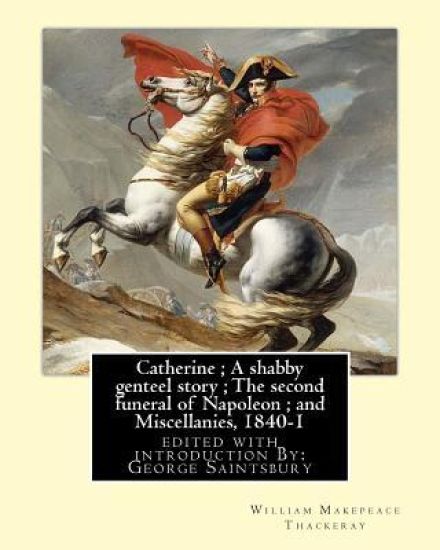
Catherine; A shabby genteel story; The second funeral of Napoleon; and Miscellanies, 1840-1: By: William Makepeace Thackeray, edited with introduction
George Saintsbury; William Makepeace Thackeray
Createspace Independent Publishing Platform
2016
nidottu
William Makepeace Thackeray ( 18 July 1811 - 24 December 1863) was an English novelist of the 19th century. He is famous for his satirical works, particularly Vanity Fair, a panoramic portrait of English society. Thackeray, an only child, was born in Calcutta, British India, where his father, Richmond Thackeray (1 September 1781 - 13 September 1815), was secretary to the Board of Revenue in the British East India Company. His mother, Anne Becher (1792-1864), was the second daughter of Harriet Becher and John Harman Becher, who was also a secretary (writer) for the East India Company.Richmond died in 1815, which caused Anne to send her son to England in 1816, while she remained in British India. The ship on which he travelled made a short stopover at St. Helena, where the imprisoned Napoleon was pointed out to him. Once in England he was educated at schools in Southampton and Chiswick, and then at Charterhouse School, where he became a close friend of John Leech. Thackeray disliked Charterhouse, and parodied it in his fiction as "Slaughterhouse". Nevertheless, Thackeray was honoured in the Charterhouse Chapel with a monument after his death. Illness in his last year there, during which he reportedly grew to his full height of six foot three, postponed his matriculation at Trinity College, Cambridge, until February 1829.Never too keen on academic studies, Thackeray left Cambridge in 1830, but some of his earliest published writing appeared in two university periodicals, The Snob and The Gownsman. Thackeray then travelled for some time on the continent, visiting Paris and Weimar, where he met Goethe. He returned to England and began to study law at the Middle Temple, but soon gave that up. On reaching the age of 21 he came into his inheritance from his father, but he squandered much of it on gambling and on funding two unsuccessful newspapers, The National Standard and The Constitutional, for which he had hoped to write. He also lost a good part of his fortune in the collapse of two Indian banks. Forced to consider a profession to support himself, he turned first to art, which he studied in Paris, but did not pursue it, except in later years as the illustrator of some of his own novels and other writings.Thackeray's years of semi-idleness ended after he married, on 20 August 1836, Isabella Gethin Shawe (1816-1893), second daughter of Isabella Creagh Shawe and Matthew Shawe, a colonel who had died after distinguished service, primarily in India. The Thackerays had three children, all girls: Anne Isabella (1837-1919), Jane (who died at eight months old) and Harriet Marian (1840-1875), who married Sir Leslie Stephen, editor, biographer and philosopher. Thackeray now began "writing for his life", as he put it, turning to journalism in an effort to support his young family. He primarily worked for Fraser's Magazine, a sharp-witted and sharp-tongued conservative publication for which he produced art criticism, short fictional sketches, and two longer fictional works, Catherine and The Luck of Barry Lyndon. Between 1837 and 1840 he also reviewed books for The Times. 4] He was also a regular contributor to The Morning Chronicle and The Foreign Quarterly Review. Later, through his connection to the illustrator John Leech, he began writing for the newly created magazine Punch, in which he published The Snob Papers, later collected as The Book of Snobs. This work popularised the modern meaning of the word "snob".Thackeray was a regular contributor to Punch between 1843 and 1854. George Edward Bateman Saintsbury ( 23 October 1845 - 28 January 1933), was an English writer, literary historian, scholar, critic and wine connoisseur.
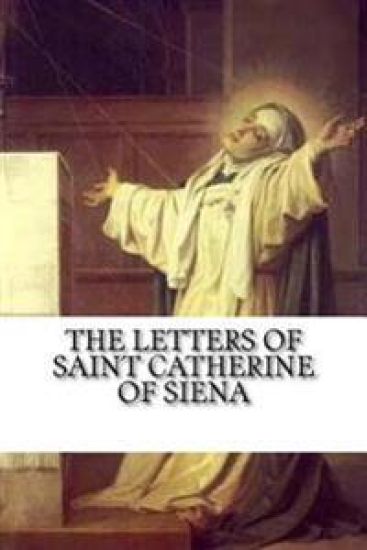
The Letters of Saint Catherine of Siena
Catherine Of Siena
Createspace Independent Publishing Platform
2016
nidottu
Saint Catherine of Siena (1347-1380) is widely considered one of the greatest saints of all time. She is best known for her mystical "Dialogue" with God the Father, for which she was declared a Doctor of the Church, but her letters are also unmatched in their spiritual power and profundity. Many people do not know that St Catherine was also a stigmatist, bearing the wounds and suffering the passion of Christ for the salvation of souls. She prayed to God to make the wounds invisible so as not to draw attention to herself. Only her confessor, Blessed Raymond of Capua, knew of her sharing in the sufferings of Our Lord until the day the saint died, when the wounds became visible for all to see. This edition of The Letters of St. Catherine, originally published in 1905 (but now in more modern English in this newly revised and edited version), includes an Introduction on the Life and Times of the Saint, a description of Saint Catherine as Seen in her Letters, the Chief Events in the Life of Saint Catherine, and a Brief Outline of Contemporary Public Events. See also "The Dialogue of Saint Catherine of Siena" which I have edited, updating the language for the modern reader. https: //www.amazon.com/Dialogue-Saint-Catherine-Siena/dp/1541022556/ref=sr_1_1?s=books&ie=UTF8&qid=1511642748&sr=1-1&keywords=dialogue+of+saint+catherine+of+siena See other excellent classic works revised into modern English published by the editor by searching "Darrell Wright". Thanks for looking, and also for positive reviews of them.

Catherine's Gift: Krasnodar Russia
Robert E. Brown
Createspace Independent Publishing Platform
2016
nidottu

CATHERINE the GREAT; Power and Passion
James a. Nelson
Createspace Independent Publishing Platform
2016
nidottu
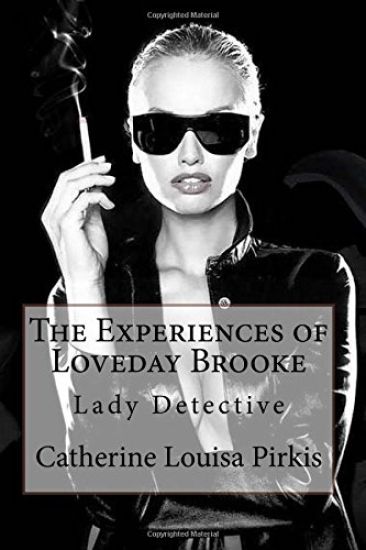
The Experiences of Loveday Brooke, Lady Detective Catherine Louisa Pirkis
Catherine Louisa Pirkis
Createspace Independent Publishing Platform
2017
nidottu

1st Eastnor Brownies 'Simply The Best'! 1967 - 2005: Personal Memories by Catherine Morton Lloyd & Jacky Bursnell
Catherine Morton Lloyd
Createspace Independent Publishing Platform
2017
nidottu

Catherine: A Story
William Makepeace Thackeray
Createspace Independent Publishing Platform
2017
nidottu
Catherine: A Story was the first full-length work of fiction produced by William Makepeace Thackeray. It first appeared in serialized installments in Fraser's Magazine between May 1839 and February 1840, credited to "Ikey Solomons, Esq. Junior". Thackeray's original intention in writing it was to criticize the Newgate school of crime fiction, exemplified by Bulwer-Lytton and Harrison Ainsworth, whose works Thackeray felt glorified criminals. Thackeray even included Dickens in this criticism for his portrayal of the good-hearted streetwalker Nancy and the charming pickpocket, the Artful Dodger, in Oliver Twist. Ainsworth's Jack Sheppard portrayed a real life prison breaker and thief from the eighteenth century in flattering terms. In contrast, Thackeray sought out a real life criminal whom he could portray in as unflattering terms as possible. He settled on Catherine Hayes, another eighteenth-century criminal, who was burned at the stake for murdering her husband in 1726. However, as he told his mother, Thackeray developed a "sneaking kindness" for his heroine, and the novel that was supposed to present criminals as totally vile, without any redeeming characteristics, instead made Catherine and her roguish companions seem rather appealing. Thackeray felt the result was a failure, and did not republish it in his lifetime.
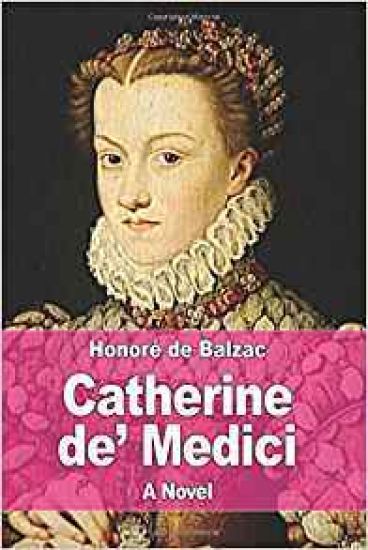

Catherine: A Story
William Makepeace Thackeray
Createspace Independent Publishing Platform
2017
nidottu
Catherine: A Story
William Makepeace Thackeray
Createspace Independent Publishing Platform
2017
nidottu

Catherine: A Story
Thackeray William Makepeace
Createspace Independent Publishing Platform
2017
nidottu
Catherine: A Story was the first full-length work of fiction produced by William Makepeace Thackeray. It first appeared in serialized installments in Fraser's Magazine between May 1839 and February 1840, credited to "Ikey Solomons, Esq. Junior". Thackeray's original intention in writing it was to criticize the Newgate school of crime fiction, exemplified by Bulwer-Lytton and Harrison Ainsworth, whose works Thackeray felt glorified criminals. Thackeray even included Dickens in this criticism for his portrayal of the good-hearted streetwalker Nancy and the charming pickpocket, the Artful Dodger, in Oliver Twist.
Catherine; A shabby genteel story; The second funeral of Napoleon; and Miscellanies, 1840-1. By: William Makepeace Thackeray and George Saintsbury ( w
George Saintsbury; William Makepeace Thackeray
Createspace Independent Publishing Platform
2017
nidottu
William Makepeace Thackeray 18 July 1811 - 24 December 1863) was an English novelist of the 19th century. He is known for his satirical works, particularly Vanity Fair, a panoramic portrait of English society.Thackeray, an only child, was born in Calcutta, British India, where his father, Richmond Thackeray (1 September 1781 - 13 September 1815), was secretary to the Board of Revenue in the British East India Company. His mother, Anne Becher (1792-1864), was the second daughter of Harriet Becher and John Harman Becher, who was also a secretary (writer) for the East India Company. Richmond died in 1815, which caused Anne to send her son to England in 1816, while she remained in British India. The ship on which he travelled made a short stopover at St. Helena, where the imprisoned Napoleon was pointed out to him. Once in England he was educated at schools in Southampton and Chiswick, and then at Charterhouse School, where he became a close friend of John Leech. Thackeray disliked Charterhouse, and parodied it in his fiction as "Slaughterhouse". Nevertheless, Thackeray was honoured in the Charterhouse Chapel with a monument after his death. Illness in his last year there, during which he reportedly grew to his full height of six foot three, postponed his matriculation at Trinity College, Cambridge, until February 1829.Never too keen on academic studies, Thackeray left Cambridge in 1830, but some of his earliest published writing appeared in two university periodicals, The Snob and The Gownsman.