Kirjojen hintavertailu. Mukana 12 083 983 kirjaa ja 12 kauppaa.

Kirjahaku

Etsi kirjoja tekijän nimen, kirjan nimen tai ISBN:n perusteella.

1000 tulosta hakusanalla Chad Cramer

Orthopedic Manual Therapy

Orthopedic Manual Therapy

Chad Cook; Eric Hegedus

Pearson
2011
nidottu
ORTHOPEDIC MANUAL THERAPY, 2/e is extensively updated and presents all modern foundations of orthopedic manual therapy, including patient management, clinical reasoning, reflective practice, and problem solving. Its comprehensive, regional approach to the body helps therapists synthesize new research, didactic knowledge, and clinical expertise. The text first systematically explains assessment, evaluation, treatment, and contraindications. Next, it offers in-depth insights into regional musculoskeletal conditions, supported by relevant anatomy, biomechanics, examination protocols, treatment techniques, and outcomes. Scientific research is analyzed to support the tests, techniques, and clinical reasoning presented. Hundreds of color images are provided, together with extensive scientific bibliographies. This edition’s improvements include: new chapters on neurodynamics and soft tissue mobilization; more patient cases; greater focus on clinical decision-making; and new video procedures at www.myhealthprofessionskit.com.
Showmance

Showmance

Chad Beguelin

Penguin Putnam Inc
2024
nidottu
"Showmance is ready for the big time....Beguelin crafts a story you never want to end." --Steven Rowley, New York Times bestselling author of The Celebrants A down-on-his-luck Broadway playwright is marooned in rural Illinois in this sharply funny queer rom-com Noah Adams's career as a playwright is circling the drain, thanks to a scorching review of his first Broadway musical. So when a family emergency sends him back to his Podunk hometown of Plainview, Illinois, he figures he'll hide out for a bit. But to Noah's horror, his agent has secretly arranged for him to stage an amateur version of the career-ruining musical at the local community theater. As if trying to work with a bunch of artless amateurs wasn't enough, Noah runs into Luke, the jerk from his high school years, everywhere he goes. Luke somehow grew up to be beloved by everyone in town...and undeniably gorgeous. As rehearsals begin, Noah is surprised by his cast's insights, the warmth of the town he'd dismissed, and the reality of what happened with Luke all those years ago. Just how much has Noah misjudged?
Pentecostals, Proselytization, and Anti-Christian Violence in Contemporary India
Every year, there are several hundred attacks on India's Christians. These attacks are carried out by violent anti-minority activists, many of them provoked by what they perceive to be Christians' propensity for aggressive proselytization, and/or by rumored or real conversions to the faith. In this violence, Pentecostal Christians are disproportionately targeted. Bauman finds that the violence against Pentecostals and Pentecostalized Evangelicals in India is not just a matter of current social, cultural, political, and interreligious dynamics internal to India, but is rather related to identifiable historical trends, as well as to historical and contemporary transnational flows of people, power, and ideas. Based on extensive interviews and ethnographic work, and drawing upon the vast scholarly literature on interreligious violence, Hindu nationalism, and Christianity in India, this volume accounts for this disproportionate targeting through a detailed analysis of Indian Christian history, contemporary Indian politics, Indian social and cultural characteristics, and Pentecostal belief and practice. While some of the factors in the targeting of Pentecostals are obvious and expected (e.g., their relatively greater evangelical assertiveness), other significant factors are less acknowledged and more surprising, among them the marginalization of Pentecostals by "mainstream" Christians, the social location of Pentecostal Christians, and transnational flows of missionary personnel, theories, and funds.
Pentecostals, Proselytization, and Anti-Christian Violence in Contemporary India
Every year, there are several hundred attacks on India's Christians. These attacks are carried out by violent anti-minority activists, many of them provoked by what they perceive to be Christians' propensity for aggressive proselytization, and/or by rumored or real conversions to the faith. In this violence, Pentecostal Christians are disproportionately targeted. Bauman finds that the violence against Pentecostals and Pentecostalized Evangelicals in India is not just a matter of current social, cultural, political, and interreligious dynamics internal to India, but is rather related to identifiable historical trends, as well as to historical and contemporary transnational flows of people, power, and ideas. Based on extensive interviews and ethnographic work, and drawing upon the vast scholarly literature on interreligious violence, Hindu nationalism, and Christianity in India, this volume accounts for this disproportionate targeting through a detailed analysis of Indian Christian history, contemporary Indian politics, Indian social and cultural characteristics, and Pentecostal belief and practice. While some of the factors in the targeting of Pentecostals are obvious and expected (e.g., their relatively greater evangelical assertiveness), other significant factors are less acknowledged and more surprising, among them the marginalization of Pentecostals by "mainstream" Christians, the social location of Pentecostal Christians, and transnational flows of missionary personnel, theories, and funds.
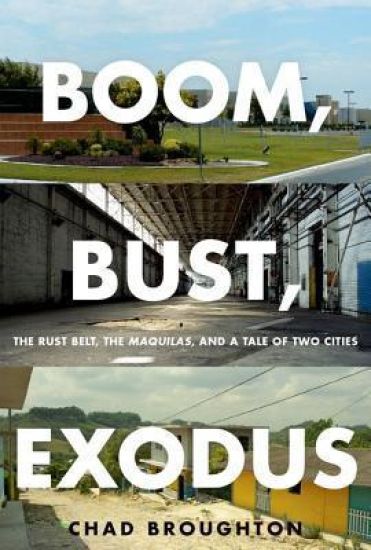
Boom, Bust, Exodus

Boom, Bust, Exodus

Chad Broughton

Oxford University Press Inc
2016
nidottu
In 2002, the town of Galesburg, a slowly declining Rustbelt city of 33,000 in western Illinois, learned that it would soon lose its largest factory, a Maytag refrigerator plant that had anchored Galesburg's social and economic life for decades. Workers at the plant earned $15.14 an hour, had good insurance, and were assured a solid retirement. In 2004, the plant was relocated to Reynosa, Mexico, where workers sometimes spent 13-hour days assembling refrigerators for $1.10 an hour. In Boom, Bust, Exodus, Chad Broughton offers a ground-level look at the rapid transition to a globalized economy, from the perspective of those whose lives it has most deeply affected. We live in a commoditized world, increasingly divorced from the origins of the goods we consume; it is easy to ignore who is manufacturing our smart phones and hybrid cars; and where they come from no longer seems to matter. And yet, Broughton shows, the who and where matter deeply, and in this book he puts human faces to the relentless cycle of global manufacturing. It is a tale of two cities. In Galesburg, where parts of the empty Maytag factory still stand, a hollowed out version of the American dream, the economy is a shadow of what it once was. Reynosa, in contrast, has become one of the exploding post-NAFTA "second-tier cities" of the developing world, thanks to the influx of foreign-owned, export-oriented maquiladoras--an industrial promised land throbbing with the energy of commerce, legal and illegal. And yet even these distinctions, Broughton shows, cannot be finely drawn: families in Reynosa also struggle to get by, and the city is beset by violence and a ruthless drug war. Those left behind in the post-Industrial decline of Galesburg, meanwhile, do not see themselves as helpless victims: they have gone back to school, pursued new careers, and learned to adapt and even thrive. In an era of growing inequality and a downsized middle class, Boom, Bust, Exodus gives us the voices of those who have borne the heaviest burdens of the economic upheavals of the past three decades. A deeply personal work grounded in solid scholarship, this important, immersive, and affecting book brings home the price and the cost of globalization.
A Daoist Theory of Chinese Thought

A Daoist Theory of Chinese Thought

Chad Hansen

Oxford University Press Inc
2000
nidottu
This book represents an ambitious attempt to remove the stumbling blocks that stand in the way of a dialogue between Chinese and world philosophy. Hansen's main goal is to present a unified theory of Classical Chinese thought. What makes his attempt very different from innumerable previous efforts is that he uses Daoism, not Confucianism, as the central and unifying principle.
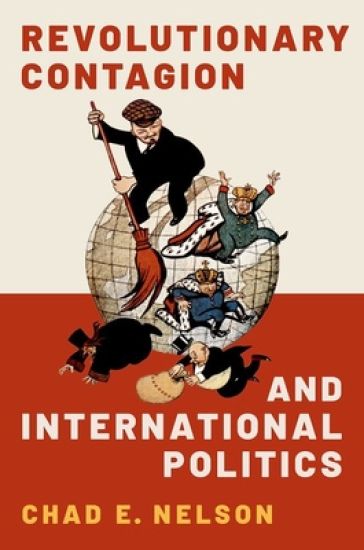
Revolutionary Contagion and International Politics

Revolutionary Contagion and International Politics

Chad E. Nelson

OXFORD UNIVERSITY PRESS INC
2022
sidottu
A unique theory of what happens when leaders fear a revolution abroad will spread to their own country and how that affects international relations. When do leaders fear that a revolution elsewhere will spread to their own polities, and what are the international effects of this fear? In Revolutionary Contagion, Chad E. Nelson develops and tests a theory that explains how states react to ideological-driven revolutions that have occurred in other nations. To do this, he analyzes four key revolutionary movements over two centuries-liberalism, communism, fascism, and Islamism. He further explains that the key to understanding the response to revolutions lies in focusing on the extent to which leaders fear upheaval in their own countries. According to the theory, Nelson argues, fear of contagion is driven more by the characteristics of the host rather than the activities of the infecting agents. In other words, leaders will fear revolutionary contagion when they have significant revolutionary opposition movements that have an ideological affinity with the revolutionary state. A powerful theory of the profound effects revolutions have on international relations, this book shows why one simply cannot make sense of international politics--including patterns of alliances and wars--in certain situations without considering the fear of contagion.
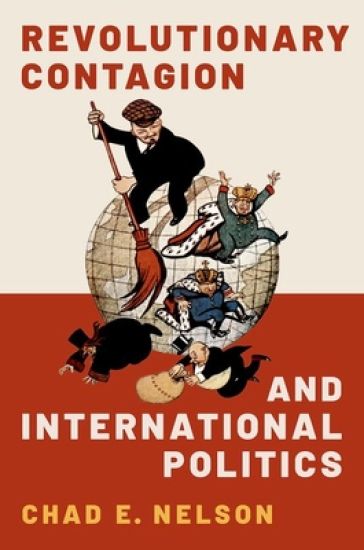
Revolutionary Contagion and International Politics

Revolutionary Contagion and International Politics

Chad E. Nelson

OXFORD UNIVERSITY PRESS INC
2022
nidottu
A unique theory of what happens when leaders fear a revolution abroad will spread to their own country and how that affects international relations. When do leaders fear that a revolution elsewhere will spread to their own polities, and what are the international effects of this fear? In Revolutionary Contagion, Chad E. Nelson develops and tests a theory that explains how states react to ideological-driven revolutions that have occurred in other nations. To do this, he analyzes four key revolutionary movements over two centuries-liberalism, communism, fascism, and Islamism. He further explains that the key to understanding the response to revolutions lies in focusing on the extent to which leaders fear upheaval in their own countries. According to the theory, Nelson argues, fear of contagion is driven more by the characteristics of the host rather than the activities of the infecting agents. In other words, leaders will fear revolutionary contagion when they have significant revolutionary opposition movements that have an ideological affinity with the revolutionary state. A powerful theory of the profound effects revolutions have on international relations, this book shows why one simply cannot make sense of international politics--including patterns of alliances and wars--in certain situations without considering the fear of contagion.
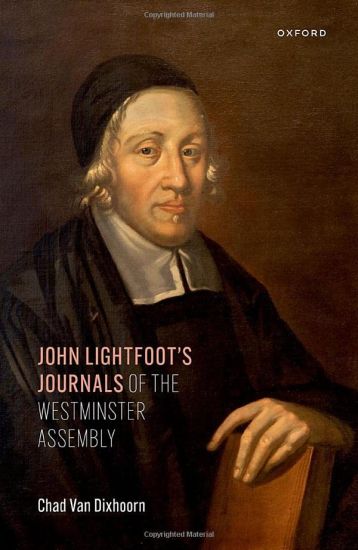
John Lightfoot's Journals of the Westminster Assembly

John Lightfoot's Journals of the Westminster Assembly

Chad Van Dixhoorn

Oxford University Press
2023
sidottu
What has by convention been called 'John Lightfoot's journal' is in fact a four-volume series of journals, the first of which has never been published. The journals are presented here in their entirety for the first time. John Lightfoot's journals cover a period in the author's life when he was a member of the famous 'assembly of divines' meeting in Westminster Abbey. The Westminster assembly (1643-1653) was comprised of approximately thirty members of parliament and 120 ministers. By the outbreak of the war in England in 1642, a majority in the Long Parliament had come to see it as its duty to renovate the Church of England, both bringing it into line with a more biblical code and up to date with the best Reformed Churches. Lightfoot's personal diary is of critical importance to assembly history because his meticulous little volumes supply the only account of the assembly's activities for sessions 1-44, and the only fulsome account for sessions 120-154, where the assembly's own minutes are missing. For the sessions where the assembly's minutes are extant, Lightfoot offers another set of eyes, often supplying additional information and a perspective differing from the assembly's own scribe. These sessions record the gathering's opening ceremonies, surprising fractious debates over the Thirty-nine Articles, and predictably heated conflicts between Episcopalians, Presbyterians, and Congregationalists over church governance. Lightfoot describes riots outside parliament, names meeting places for MPs and assembly members in London, and attempts to explain assembly dynamics in a way that The Minutes and Papers of the assembly do not. The four-volume journal ends abruptly after eighteen months, in December 1644. The body of this volume contains the full text of Lightfoot's surviving journals, accompanied by interpretive introductions for each session and editorial notation throughout. The introduction sets in context the author's life prior to and during the Westminster assembly and discusses the careful composition, potential audience, and checkered transmission of the journals.
Boom, Bust, Exodus

Boom, Bust, Exodus

Chad Broughton

Oxford University Press Inc
2015
sidottu
In 2002, the town of Galesburg, a slowly declining Rustbelt city of 34,000 in western Illinois, learned that it would soon lose its largest factory, a Maytag refrigerator plant that had anchored Galesburg's social and economic life for decades. Workers at the plant earned $15.14 an hour, had good insurance, and were assured a solid retirement. In 2004, the plant was relocated to Reynosa, Mexico, where workers spent 13-hour days assembling refrigerators for $1.10 an hour. In Boom, Bust, Exodus, Chad Broughton offers a ground-level look at the rapid transition to a globalized economy, from the perspective of those whose lives it has most deeply affected. We live in a commoditized world, increasingly divorced from the origins of the goods we consume; it is easy to ignore who is manufacturing our smart phones and hybrid cars; and where they come from no longer seems to matter. And yet, Broughton shows, the who and where matter deeply, and in this book he puts human faces to the relentless cycle of global manufacturing. It is a tale of two cities. In Galesburg, where the empty Maytag factory still stands, a hollowed out version of the American dream, the economy is a shadow of what it once was. Reynosa, in contrast, has become one of the exploding post-NAFTA "second-tier cities" of the developing world, thanks to the influx of foreign-owned, export-oriented maquiladoras--an industrial promised land throbbing with the energy of commerce, legal and illegal. And yet even these distinctions, Broughton shows, cannot be finely drawn: families in Reynosa also struggle to get by, and the city is beset by violence and a ruthless drug war. Those left behind in the post-Industrial decline of Galesburg, meanwhile, do not see themselves as helpless victims: they have gone back to school, pursued new careers, and learned to adapt and even thrive. In an era of growing inequality and a downsized middle class, Boom, Bust, Exodus gives us the voices of those who have borne the heaviest burdens of the economic upheavals of the past three decades. A deeply personal work grounded in solid scholarship, this important, immersive, and affecting book brings home the price and the cost of globalization.

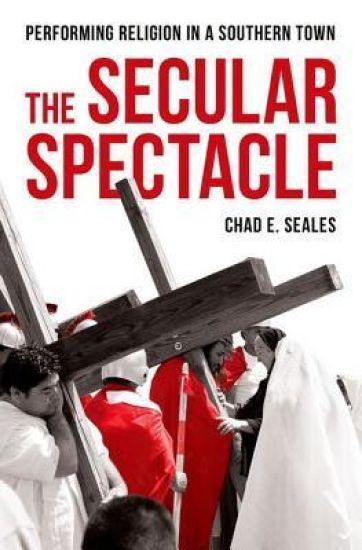
The Secular Spectacle

The Secular Spectacle

Chad E. Seales

Oxford University Press Inc
2013
sidottu
Tracing the religious history of Siler City, North Carolina, Chad E. Seales argues that southern whites cultivated their own regional brand of American secularism and employed it, alongside public religious performances, to claim and regulate public spaces. Over the course of the twentieth century, they wielded secularism to segregate racialized bodies, to challenge local changes resulting from civil rights legislation, and to respond to the arrival of Latino migrants. Combining ethnographic and archival sources, Seales studies the themes of industrialization, nationalism, civility, privatization, and migration through the local history of Siler City; its neighborhood patterns, Fourth of July parades, Confederate soldiers, minstrel shows, mock weddings, banking practices, police shootings, Good Friday processions, public protests, and downtown mural displays. Offering a spatial approach to the study of performative religion, The Secular Spectacle presents a generative narrative of secularism from the perspective of evangelical Protestants in the American South.
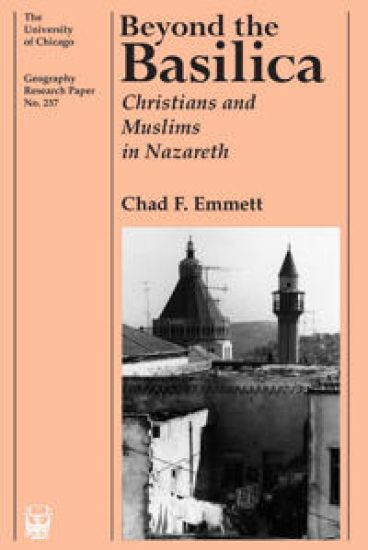
Beyond the Basilica

Beyond the Basilica

Chad F. Emmett

University of Chicago Press
1995
nidottu
Nazareth, the largest Arab city in Israel, is a surprising example of ethnic harmony in a region dominated by conflict. A recent trend toward integration of its historical Greek Orthodox, Roman Catholic and Muslim quarters, however, has disrupted the harmony. In this book, Emmett provides an analysis of the complex relationship between the structure of Nazareth's quarters and the relations between its ethnic communities. Emmett describes both the positive and negative effects of Nazareth's residential patterns. He shows that the addition of new and ethnically mixed quarters has promoted mixed schools, joint holiday celebrations, a common political culture and social networks that cross ethnic boundaries. But he also finds that tensions exist among Christian groups and between Muslims and Christians in regard to intersectarian marriages, religious conversion, attempts to establish a joint Christian cemetery and the emergence of a local Islamic party. Extensive interviews with leaders of religious groups, political parties and residents reveal the way in which members of each ethnic community perceive one another. A survey of 300 families provides details about the make-up of Nazareth's population, including residential histories, religion, level of religious conviction, friendship and shopping patterns. The maps trace changes in the distribution of religious groups and political affiliation in Nazareth from the mid-19th century to the present. This book should be of interest to cultural geographers, historians, demographers, political scientists and anyone who would like to learn more about an ethnically divided community in which the residents co-operate more than they fight.
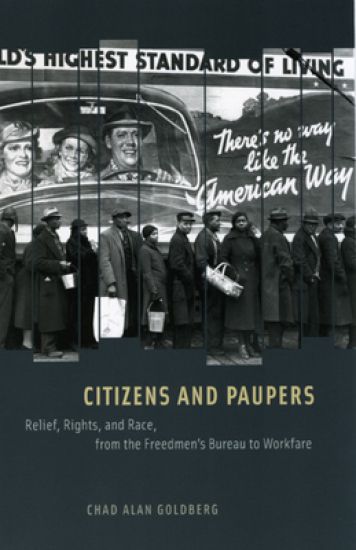
Citizens and Paupers

Citizens and Paupers

Chad Alan Goldberg

University of Chicago Press
2007
sidottu
There was a time when America's poor faced a stark choice between access to social welfare and full civil rights - a predicament that forced them to forfeit their citizenship in exchange for economic relief. Over time, however, our welfare system improved dramatically. But as Chad Alan Goldberg here demonstrates, its legacy of disenfranchisement persisted. Indeed, from Reconstruction onward, welfare policies have remained a flashpoint for recurring struggles over the boundaries of citizenship. "Citizens and Paupers" explores this contentious history by analyzing and comparing three major programs: the Freedmen's Bureau, the Works Progress Administration, and the present-day system of workfare that arose in the 1990s. Each of these overhauls of the welfare state created new groups of clients, new policies for aiding them, and new disputes over citizenship - conflicts that were entangled in racial politics and of urgent concern for social activists. This combustible mix of racial tension and social reform continues to influence how we think about welfare, and Citizens and Paupers is an invaluable analysis of the roots of the debate.
Citizens and Paupers

Citizens and Paupers

Chad Alan Goldberg

University of Chicago Press
2007
nidottu
There was a time when America's poor faced a stark choice between access to social welfare and full civil rights - a predicament that forced them to forfeit their citizenship in exchange for economic relief. Over time, however, our welfare system improved dramatically. But as Chad Alan Goldberg here demonstrates, its legacy of disenfranchisement persisted. Indeed, from Reconstruction onward, welfare policies have remained a flashpoint for recurring struggles over the boundaries of citizenship. "Citizens and Paupers" explores this contentious history by analyzing and comparing three major programs: the Freedmen's Bureau, the Works Progress Administration, and the present-day system of workfare that arose in the 1990s. Each of these overhauls of the welfare state created new groups of clients, new policies for aiding them, and new disputes over citizenship - conflicts that were entangled in racial politics and of urgent concern for social activists. This combustible mix of racial tension and social reform continues to influence how we think about welfare, and Citizens and Paupers is an invaluable analysis of the roots of the debate.
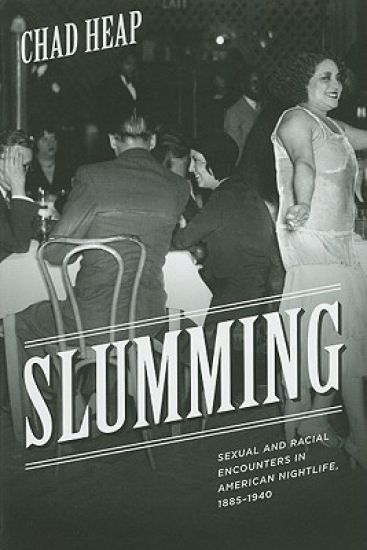
Slumming

Slumming

Chad Heap

University of Chicago Press
2010
nidottu
In this fascinating history, Chad Heap reveals that the reality of slumming was far more widespread - and important - than nostalgia-tinged recollections would lead us to believe. From its appearance as a 'fashionable dissipation' centered on the immigrant and working-class districts of 1880s New York through its spread to Chicago and into the 1930s nightspots frequented by lesbians and gay men, "Slumming" charts the development of this popular pastime, demonstrating how its moralizing origins were soon outstripped by the artistic, racial, and sexual adventuring that typified Jazz Age America. And while Heap doesn't ignore the role of exploitation and voyeurism in slumming - or the resistance it often provoked - he argues that the relatively uninhibited mingling it promoted across bounds of race and class helped to dramatically recast the racial and sexual landscape of burgeoning U.S. cities.
Modernity and the Jews in Western Social Thought

Modernity and the Jews in Western Social Thought

Chad Alan Goldberg

University of Chicago Press
2017
sidottu
In the late nineteenth and early twentieth centuries, prominent social thinkers in France, Germany, and the United States sought to understand the modern world taking shape around them. Although they worked in different national traditions and emphasized different features of modern society, they repeatedly invoked Jews as a touchstone for defining modernity and national identity in a context of rapid social change. In Modernity and the Jews in Western Social Thought, Chad Alan Goldberg brings us a major new study of Western social thought through the lens of Jews and Judaism. In France, where antisemites decried the French Revolution as the "Jewish Revolution," Emile Durkheim challenged depictions of Jews as agents of revolutionary subversion or counterrevolutionary reaction. When German thinkers such as Karl Marx, Georg Simmel, Werner Sombart, and Max Weber debated the relationship of the Jews to modern industrial capitalism, they reproduced, in secularized form, cultural assumptions derived from Christian theology. In the United States, William Thomas, Robert Park, and their students conceived the modern city and its new modes of social organization in part by reference to the Jewish immigrants concentrating there. In all three countries, social thinkers invoked real or purported differences between Jews and gentiles to elucidate key dualisms of modern social thought. The Jews thus became an intermediary through which social thinkers discerned in a roundabout fashion the nature, problems, and trajectory of their own wider societies. Goldberg rounds out his fascinating study by proposing a novel explanation for why Jews were such an important cultural reference point. He suggests a rethinking of previous scholarship on Orientalism, Occidentalism, and European perceptions of America, arguing that history extends into the present, with the Jews and now the Jewish state continuing to serve as an intermediary for self-reflection in the twenty-first century.
Modernity and the Jews in Western Social Thought

Modernity and the Jews in Western Social Thought

Chad Alan Goldberg

University of Chicago Press
2017
nidottu
In the late nineteenth and early twentieth centuries, prominent social thinkers in France, Germany, and the United States sought to understand the modern world taking shape around them. Although they worked in different national traditions and emphasized different features of modern society, they repeatedly invoked Jews as a touchstone for defining modernity and national identity in a context of rapid social change. In Modernity and the Jews in Western Social Thought, Chad Alan Goldberg brings us a major new study of Western social thought through the lens of Jews and Judaism. In France, where antisemites decried the French Revolution as the "Jewish Revolution," Emile Durkheim challenged depictions of Jews as agents of revolutionary subversion or counterrevolutionary reaction. When German thinkers such as Karl Marx, Georg Simmel, Werner Sombart, and Max Weber debated the relationship of the Jews to modern industrial capitalism, they reproduced, in secularized form, cultural assumptions derived from Christian theology. In the United States, William Thomas, Robert Park, and their students conceived the modern city and its new modes of social organization in part by reference to the Jewish immigrants concentrating there. In all three countries, social thinkers invoked real or purported differences between Jews and gentiles to elucidate key dualisms of modern social thought. The Jews thus became an intermediary through which social thinkers discerned in a roundabout fashion the nature, problems, and trajectory of their own wider societies. Goldberg rounds out his fascinating study by proposing a novel explanation for why Jews were such an important cultural reference point. He suggests a rethinking of previous scholarship on Orientalism, Occidentalism, and European perceptions of America, arguing that history extends into the present, with the Jews and now the Jewish state continuing to serve as an intermediary for self-reflection in the twenty-first century.
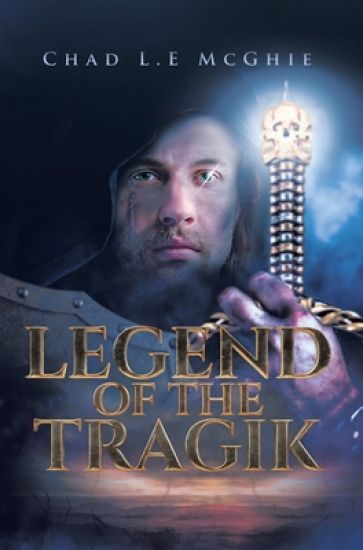
Legend of the Tragik

Legend of the Tragik

Chad L E McGhie

Tellwell Talent
2022
pokkari
Not all fires are welcoming.After decades of war, this had never been more true for the neighboring kingdoms of Tristren and Zemotze. Locked in a tense armistice, there was a promise of a treaty in the air. However, as the Blademage Volgare flees from his enemies, he can see through the wall of deception that clouds the land. Meanwhile, in the bustling city of Brigandee, the shadow of the weapon known as the Tragik has crept in closer than comfortable. The young man named Hinro Ga
Legend of the Tragik

Legend of the Tragik

Chad L E McGhie

Tellwell Talent
2022
sidottu
Not all fires are welcoming.After decades of war, this had never been more true for the neighboring kingdoms of Tristren and Zemotze. Locked in a tense armistice, there was a promise of a treaty in the air. However, as the Blademage Volgare flees from his enemies, he can see through the wall of deception that clouds the land. Meanwhile, in the bustling city of Brigandee, the shadow of the weapon known as the Tragik has crept in closer than comfortable. The young man named Hinro Gaskette lives a simple life, expecting little other than to be a soldier like his father before him. Those expectations are shattered, however, when tragedy awakens a nightmarish power from within . . .