

Kirjahaku
Etsi kirjoja tekijän nimen, kirjan nimen tai ISBN:n perusteella.
1000 tulosta hakusanalla Charles Locks
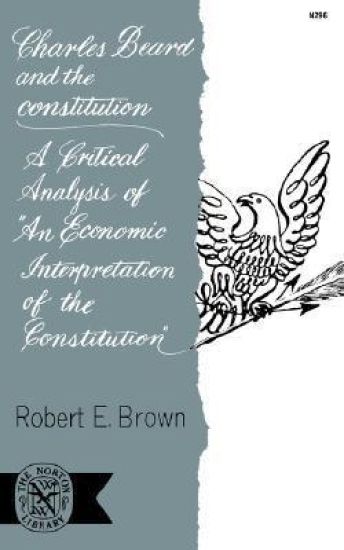
In this work, Robert E. Brown applies the fruits of modern historical scholarship toward an understanding of Beard's groundbreaking and controversial work. With a perspective of forty years, Brown attempts to separate the valid from the bogus in this work.

Here are most of the previously unpublished writings of Charles E. Ives: a primary source book on this unique American composer. These "Memos," as Ives called them, were on separate leaves and dealt with his music, composition, criticism, autobiography, biography, and many other topics. During his lifetime Ives rearranged them, lent them out, mislaid and tucked them away in books so that, in the late 1940s, only about three-fifths of them were available to his biographer. After his death in 1954, Ives's papers were gradually put in order, and in time most of the remaining leaves came to light. These two "batches" are here dovetailed into a three-part form by John Kirkpatrick, who has devotedly arranged, edited, and annotated them. Part One, "Pretext," sets forth Ives's aims, his views on music, critics and criticism. In part Two, "Scrapbook," Ives discusses his music. Part Three, "Memories," is devoted to biographical and autobiographical remembrances.

Describes Darwin's work as a naturalist, and presents an intimate portrait of him as a son, brother, father, and husband.

Charles Darwin's Autobiography was first published in 1887, five years after his death. It was a bowdlerized edition: Darwin's family, attempting to protect his posthumous reputation, had deleted all the passages they considered too personal or controversial. The present complete edition did not appear until 1959, one hundred years after the publication of The Origin of Species. Upon its appearance, Loren Eiseley wrote: "No man can pretend to know Darwin who does not know his autobiography. Here, for the first time since his death, it is presented complete and unexpurgated, as it exists in the family archives. It will prove invaluable to biographers and cast new light on the personality of one of the world's greatest scientists. Nora Barlow, Darwin's granddaughter, has proved herself a superb editor. Her own annotations make fascinating reading." The daring and restless mind, the integrity and simplicity of Darwin's character are revealed in this direct and personal account of his life--his family, his education, his explorations of the natural world, his religion and philosophy. The editor has provided page and line references to the more important restored passages, and previously unpublished notes and letters on family matters and on the controversy between Samuel Butler appear in an appendix.

Jan Swafford's colorful biography first unfolds in Ives's Connecticut hometown of Danbury, then follows Ives to Yale and on to his years in New York, where he began his double career as composer and insurance executive. The Charles Ives that emerges from Swafford's story is a precocious, well-trained musician, a brilliant if mercurial thinker about art and life, and an experimenter in the spirit of Edison and the Wright brothers.
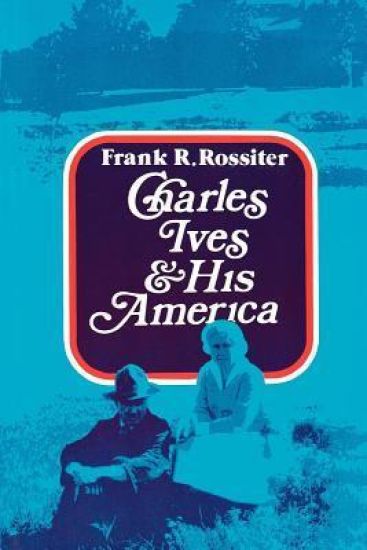
“When I decided to undertake serious research on Ives and began to delve into his papers, I became more and more convinced that the Ives Legend which has grown up around him gives a very imperfect picture of the man. I think that the key to an understanding of his place in American culture lies in his extreme artistic isolation. The creative artist in America has a tradition of being isolated, of lacking an audience. But nearly all such artists have had at least a small circle of friends who sustained them artistically and intellectually. Ives had nothing of the kind during his creative years; he was about as close to complete isolation as it is possible for a creative artist to be.” —From the author’s preface
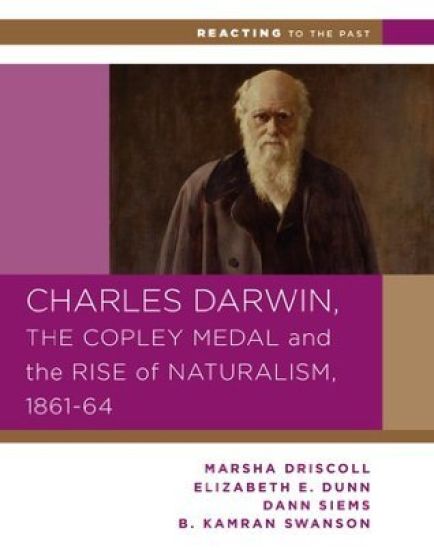
Charles Darwin, the Copley Medal, and the Rise of Naturalism, 1861-1864
Marsha Driscoll; Elizabeth E. Dunn; Dann Siems; B. Kamran Swanson
WW Norton Co
2014
nidottu
Since its appearance in 1859, Darwin's long awaited treatise in "genetic biology" had received reviews both favourable and damning. Thomas Huxley and Samuel Wilberforce presented arguments for and against the theory in a dramatic and widely publicised face-off at the 1860 meeting of the British Association for the Advancement of Science in Oxford. Their encounter sparked a vigorous, complex debate that touched on a host of issues and set the stage for the Royal Society’s consideration of whether or not they ought to award Darwin the Copley Medal, the society’s most prestigious prize. While the action takes place in meetings of the Royal Society, Great Britain’s most important scientific body, a parallel and influential public argument smoldered over the nature of science and its relationship to modern life in an industrial society.
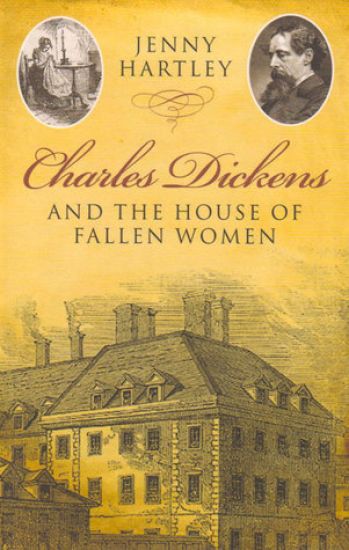
London in Charles Dickens's time was a city of great contrast. The affluent and middle classes enjoyed a comfortable existence but for the poor, life was cruel and harsh, the more so for girls and young women. Many characters in Dickens's classic novels exemplify this: Little Em'ly in David Copperfield is perhaps the best known. Dickens was clearly troubled by what he saw and in autumn 1847 established Urania Cottage in Shepherd's Bush as a hostel for destitute young women. The residents came from prisons, workhouses, police courts and from the streets of London. They included prostitutes, petty thieves and homeless teenagers. Urania Cottage was financed by the millionairess Angela Burdett Coutts of the banking family and details of the residents, its routines and its dramas are brought to life in the treasure-trove of letters written to her by Dickens. The aims of Urania Cottage were simple - to rehabilitate the residents and prepare them for a normal life as domestic servants in Britain's expanding colonies - Australia chiefly but some went to Canada and South Africa.Charles Dickens and the House of Fallen Women vividly portrays the lot of the poor in mid-nineteenth century London and some of the people who were moved to help. Jenny Hartley's meticulous research has revealed the identities of many of the residents of Urania Cottage and how they fared later in life. The book is at once moving and dramatic - life at the cottage didn't always run smoothly - and shows that with help, even the most deprived people can recover.
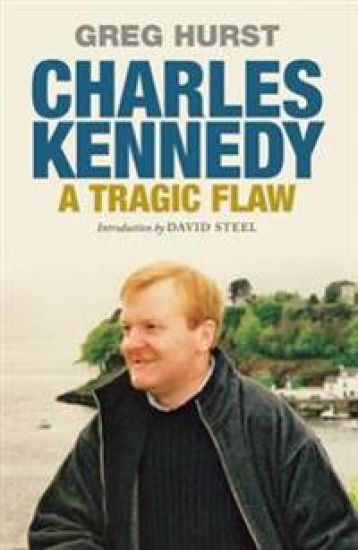
Charles Kennedy was found dead on 1 June 2015. He was only 55 years of age. His death was due to complications resulting from alcohol abuse over many years. Much has been written about his addiction to alcohol, with justification. The condition dominated his life for at least 25 years, brought about the breakdown of his marriage and caused him to lie repeatedly about the problem. Those closest to him, family and colleagues, tried to help him but as Kennedy could not help himself, all their efforts were in vain. However, this tragic flaw which resulted in his premature death should not obscure Kennedy's career in politics, which began in 1983, with his election to parliament as the SDP member for Ross, Cromarty and Skye. He was just 23 years of age. Kennedy's victory was a shock. The seat had been held for the Conservatives by Hamish Gray since 1970. Several prominent candidates failed to win seats in 1983, including Menzies Campbell and it was suggested Kennedy felt 'undeserving' of his success, which may have sown the first seeds of self-doubt that dogged him throughout his career. Tipped as a future leader of his party at an early stage, Kennedy supported the merger of the SDP with the Liberal party in 1988. The process caused much turbulence but once the dust had settled, Kennedy emerged with credit. When Paddy Ashdown resigned in 1999, Kennedy was a candidate to succeed him and after several tortuous rounds of voting, he emerged as the victor over Simon Hughes. Kennedy inherited a financially strong party with 46 MPs, 10 MEPs, 17 MSPs in Edinburgh and six AMs in Cardiff. When he resigned the leadership in 2006 the Lib Dem's strength in Westminster had risen to 62 MPs and Kennedy was described as the most successful third party leader for more than eighty years. During Kennedy's tenure of office, he abandoned the traditional Lib-Lab cooperation and followed an independent route to position his party as the natural party of opposition. He also showed strong conviction when opposing Britain's planned involvement in the Iraq war in 2003. But nemesis was near. Rumours of his addiction to alcohol began to leak out and further humiliating public appearances, when drunk, brought matters to a head and he was forced to resign the leadership. This biography is a frank account of Charles Kennedy's political career that began in triumph and ended in tragedy.
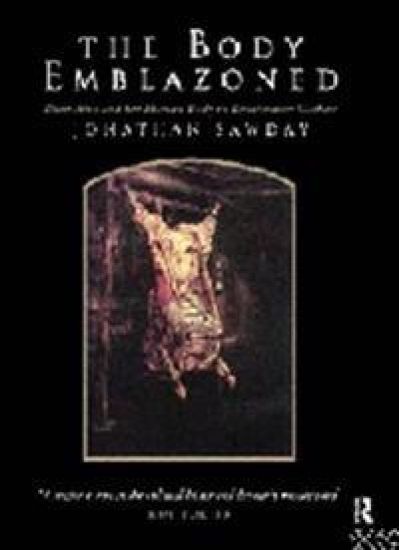
Charles Carlton's biography of the `monarch of the Civil Wars' was praised for its distinctive psychological portrait of Charles I when it was first published in 1983. Challenging conventional interpretations of the king, as well as questioning orthodox historical assumptions concerning the origins and development of the Civil Wars, the book quickly established itself as the definitive biography. In the eleven years since Charles I: The Personal Monarch was published an immense amount of new material on the king and his reign have emerged and yet no new biography has been written. Professor Carlton's second edition includes a substantial new preface which takes account of the new work. Addressing and analysing the furious historiographical debates which have surrounded the period, Carlton offers a fresh and lucid perspective. The text and bibliography have been thoroughly updated.

Charles Carlton's biography of the `monarch of the Civil Wars' was praised for its distinctive psychological portrait of Charles I when it was first published in 1983. Challenging conventional interpretations of the king, as well as questioning orthodox historical assumptions concerning the origins and development of the Civil Wars, the book quickly established itself as the definitive biography. In the eleven years since Charles I: The Personal Monarch was published an immense amount of new material on the king and his reign have emerged and yet no new biography has been written. Professor Carlton's second edition includes a substantial new preface which takes account of the new work. Addressing and analysing the furious historiographical debates which have surrounded the period, Carlton offers a fresh and lucid perspective. The text and bibliography have been thoroughly updated.
Charles Dickens
Routledge
1995
sidottu
The Critical Heritage gathers together a large body of critical sources on major figures in literature. Each volume presents contemporary responses to a writer's work, enabling students and researchers to read for themselves, for example, comments on early performances of Shakespeare's plays, or reactions to the first publication of Jane Austen's novels.The carefully selected sources range from landmark essays in the history of criticism to journalism and contemporary opinion, and little published documentary material such as letters and diaries. Significant pieces of criticism from later periods are also included, in order to demonstrate the fluctuations in an author's reputation.Each volume contains an introduction to the writer's published works, a selected bibliography, and an index of works, authors and subjects.The Collected Critical Heritage set will be available as a set of 68 volumes and the series will also be available in mini sets selected by period (in slipcase boxes) and as individual volumes.
Charles Dickens: Family History
Routledge
1999
muu
This set gives a unique insight into Charles Dickens' life, through the writings of relatives and friends. Collecting hard to find material together in one place, this snapshot of one of our greatest literary figures will provide the background necessary for enhancing the study of his writings.
This is Volume I of six in a series on the Nineteenth and Twentieth Century Anglo-American Philosophy. Originally published in 1939, this study looks Charles Peirce, who characterized himself as a mere table of contents, so abstract, a very snarl of twine. The purpose of the following pages is to clarify Peirce in some measure, partly by restatement, partly by filling the lacunae in his thought with what the author thinks are its implications.
This volume includes sections on Life and Contexts, Dickens's novels and Criticism.

Charles Dickens's Bleak House
Routledge
2004
sidottu
With its sustained social criticism and complex construction, Charles Dickens's Bleak House (1853) is considered by many critics to be Dickens's most remarkable novel. Janice Allan:introduces the contextual issues that most directly influenced Dickens's writing and reprints relevant source documentsprovides a comprehensive survey of the criticism of Bleak House from publication to the present, then introduces, reprints and annotates extracts from significant critical textsdiscusses key passages of the text, which are reprinted and fully annotated for ease of useincludes cross-references throughout, making illuminating connections between the text, contexts and interpretations of the novelconcludes the volume with suggestions to further reading, enabling additional focused studyBoth accessible and informative, Janice Allan provides an invaluable guide to one of the nineteenth century's most important and frequently studied novels.
Charles Dickens's Bleak House
Routledge
2004
nidottu
With its sustained social criticism and complex construction, Charles Dickens's Bleak House (1853) is considered by many critics to be Dickens's most remarkable novel. Janice Allan:introduces the contextual issues that most directly influenced Dickens's writing and reprints relevant source documentsprovides a comprehensive survey of the criticism of Bleak House from publication to the present, then introduces, reprints and annotates extracts from significant critical textsdiscusses key passages of the text, which are reprinted and fully annotated for ease of useincludes cross-references throughout, making illuminating connections between the text, contexts and interpretations of the novelconcludes the volume with suggestions to further reading, enabling additional focused studyBoth accessible and informative, Janice Allan provides an invaluable guide to one of the nineteenth century's most important and frequently studied novels.
Charles Dickens's Oliver Twist
Routledge
2005
sidottu
Charles Dickens’ Oliver Twist is one of the most significant novels of the Victorian era and having been adapted for both stage and screen, retains its impact in the cultural consciousness of many nations. Taking the form of a sourcebook, this guide to Dickens’ novel includes:extensive introductory comment on the contexts, critical history and interpretations of the text, from publication to the presentannotated extracts from key contextual documents, reviews, critical works and the text itselfcross-references between documents and sections of the guide, in order to suggest links between texts, contexts and criticismsuggestions for further reading. Part of the Routledge Guides to Literature series, this volume is essential reading for those beginning a detailed study of Oliver Twist and seeking not only a guide to the novel, but a way through the wealth of contextual and critical material that surrounds Dickens’ text.
Charles Dickens's Oliver Twist
Routledge
2005
nidottu
Charles Dickens’ Oliver Twist is one of the most significant novels of the Victorian era and having been adapted for both stage and screen, retains its impact in the cultural consciousness of many nations. Taking the form of a sourcebook, this guide to Dickens’ novel includes:extensive introductory comment on the contexts, critical history and interpretations of the text, from publication to the presentannotated extracts from key contextual documents, reviews, critical works and the text itselfcross-references between documents and sections of the guide, in order to suggest links between texts, contexts and criticismsuggestions for further reading. Part of the Routledge Guides to Literature series, this volume is essential reading for those beginning a detailed study of Oliver Twist and seeking not only a guide to the novel, but a way through the wealth of contextual and critical material that surrounds Dickens’ text.