Kirjojen hintavertailu. Mukana 11 342 296 kirjaa ja 12 kauppaa.

Kirjahaku

Etsi kirjoja tekijän nimen, kirjan nimen tai ISBN:n perusteella.

747 tulosta hakusanalla Cherokee Hatcher

Sovereignty on Trial: The Cherokee Nation and the Fight for Native Rights
The story of the legal battle between the Cherokee Nation and the State of Georgia that ultimately led to the infamous Trail of Tears and the ongoing struggles for Native sovereignty. Sovereignty on Trial tells the story of a trio of landmark United States Supreme Court cases--Johnson v. M'Intosh (1823), Cherokee Nation v. Georgia (1831), and Worcester v. Georgia (1832)--that considered the legal status of Native nations in the early nineteenth century. Known as the Marshall Trilogy--majority opinions all written by Chief Justice John Marshall--the decisions are inconsistent in their holdings and reasoning, leaving American Indian law and interpretations of Native sovereignty confusing and ambiguous. In M'Intosh, Marshall used the imperial doctrine of discovery to diminish the property rights and autonomy of the Native nations. Subsequent interpretations of Marshall's opinion in Cherokee Nation, with its "guardian and ward" analogy, ultimately placed Native people in a dependent status with the United States. At the end of his judicial career, however, Marshall came to view Native rights in a different light, and his opinion in Worcester was a powerful acclamation of Native political sovereignty and territorial rights. Courts have tried with little success to find a coherent line through the three rulings. The two Georgia cases resulted from the state's efforts to extend its jurisdiction over the Cherokee Nation and annihilate its government. These cases were decided against the backdrop of the Indian Removal Act of 1830. When President Andrew Jackson and Congress failed to enforce Worcester, Georgia interned and forcibly removed the Cherokee in the now infamous tragedy known as the Trail of Tears. Tim Alan Garrison places this trio of cases in their broader legal and historical context. Significantly, Garrison explains why Georgia sought to expel the Cherokees from their homeland, how these attacks on native sovereignty tore apart Cherokee national unity, and how the changes in Cherokee political culture determined their strategy in resisting the state's onslaught. The Cherokee resistance against Georgia was a remarkable example of national courage for the Indigenous peoples of the world, and their determination to fight oppression through the judicial system of the United States left a lasting impact on American Indian law. The Cherokee Cases tells an important, if disturbing, story whose reverberations are felt to the present day.

Sovereignty on Trial: The Cherokee Nation and the Fight for Native Rights
The story of the legal battle between the Cherokee Nation and the State of Georgia that ultimately led to the infamous Trail of Tears and the ongoing struggles for Native sovereignty. Sovereignty on Trial tells the story of a trio of landmark United States Supreme Court cases--Johnson v. M'Intosh (1823), Cherokee Nation v. Georgia (1831), and Worcester v. Georgia (1832)--that considered the legal status of Native nations in the early nineteenth century. Known as the Marshall Trilogy--majority opinions all written by Chief Justice John Marshall--the decisions are inconsistent in their holdings and reasoning, leaving American Indian law and interpretations of Native sovereignty confusing and ambiguous. In M'Intosh, Marshall used the imperial doctrine of discovery to diminish the property rights and autonomy of the Native nations. Subsequent interpretations of Marshall's opinion in Cherokee Nation, with its "guardian and ward" analogy, ultimately placed Native people in a dependent status with the United States. At the end of his judicial career, however, Marshall came to view Native rights in a different light, and his opinion in Worcester was a powerful acclamation of Native political sovereignty and territorial rights. Courts have tried with little success to find a coherent line through the three rulings. The two Georgia cases resulted from the state's efforts to extend its jurisdiction over the Cherokee Nation and annihilate its government. These cases were decided against the backdrop of the Indian Removal Act of 1830. When President Andrew Jackson and Congress failed to enforce Worcester, Georgia interned and forcibly removed the Cherokee in the now infamous tragedy known as the Trail of Tears. Tim Alan Garrison places this trio of cases in their broader legal and historical context. Significantly, Garrison explains why Georgia sought to expel the Cherokees from their homeland, how these attacks on native sovereignty tore apart Cherokee national unity, and how the changes in Cherokee political culture determined their strategy in resisting the state's onslaught. The Cherokee resistance against Georgia was a remarkable example of national courage for the Indigenous peoples of the world, and their determination to fight oppression through the judicial system of the United States left a lasting impact on American Indian law. The Cherokee Cases tells an important, if disturbing, story whose reverberations are felt to the present day.
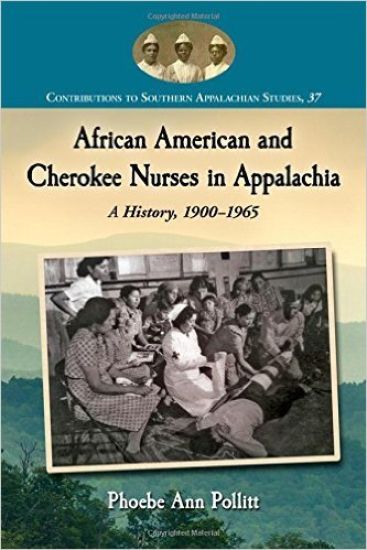
African American and Cherokee Nurses in Appalachia

African American and Cherokee Nurses in Appalachia

Phoebe Ann Pollitt

McFarland Co Inc
2016
pokkari
Few career opportunities were available to minority women in Appalachia in the first half of the 20th century. Nursing offered them a respected, relatively well paid profession and--as few physicians or hospitals would treat people of color--their work was important in challenging health care inequities in the region. Working in both modern surgical suites and tumble-down cabins, these women created unprecedented networks of care, managed nursing schools and built professional nursing organizations while navigating discrimination in the workplace. Focusing on the careers and contributions of dozens of African American and Eastern Band Cherokee registered nurses, this first comprehensive study of minority nurses in Appalachia documents the quality of health care for minorities in the region during the Jim Crow era. Racial segregation in health care and education and state and federal policies affecting health care for Native Americans are examined in depth.
Demanding the Cherokee Nation

Demanding the Cherokee Nation

Andrew Denson

University of Nebraska Press
2004
sidottu
Demanding the Cherokee Nation examines nineteenth-century Cherokee political rhetoric to address an enigma in American Indian history: the contradiction between the sovereignty of Indian nations and the political weakness of Indian communities. Making use of a rich collection of petitions, appeals, newspaper editorials, and other public records, Andrew Denson describes the ways in which Cherokees represented their people and their nation to non-Indians after their forced removal to Indian Territory in the 1830s. He argues that Cherokee writings on nationhood document a decades-long effort by tribal leaders to find a new model for American Indian relations in which Indian nations could coexist with a modernizing United States. Most non-Natives in the nineteenth century assumed that American development and progress necessitated the end of tribal autonomy, that at best the Indian nation was a transitional state for Native people on the way to assimilation. As Denson shows, however, Cherokee leaders found a variety of ways in which the Indian nation, as they defined it, belonged in the modern world. Tribal leaders responded to developments in the United States and adapted their defense of Indian autonomy to the great changes transforming American life in the middle and late nineteenth century. In particular, Cherokees in several ways found new justification for Indian nationhood in American industrialization.
Delaware Tribe in a Cherokee Nation

Delaware Tribe in a Cherokee Nation

Brice Obermeyer

University of Nebraska Press
2009
sidottu
The Delaware Tribe of Oklahoma is an American Indian tribe currently incorporated as part of the larger Cherokee Nation. Originally from the Hudson and Delaware River valleys, the Delawares are neither socially nor historically related to the Cherokees and were incorporated with them simply because they were forced to move to the Cherokee Nation in 1867. The Delawares never assimilated into Cherokee society and culture and today seek federal recognition as a separate tribe to protect their particular cultural and political identity. However, Delaware efforts to achieve federal recognition are complicated by the Cherokee Nation, which does not support Delaware independence as it could potentially compromise Cherokee jurisdiction. Delaware Tribe in a Cherokee Nation is an ethnographic study of the Delaware Tribe and its struggle for federal recognition and political separation from the larger Cherokee Nation. Brice Obermeyer details the Delawares' struggle for self-determination, revealing important insights into the process and politics of federal recognition. This perceptive ethnography of a tribe trying to assert its right to sovereignty and its independence from a larger and more powerful tribe complicates accepted notions of how the federal recognition process works and the effects it has on tribal members and tribal relations. Although many tribes exist today as constituent parts of a larger American Indian tribe, Delaware Tribe in a Cherokee Nation is the first book to study this phenomenon in Native North America.
Demanding the Cherokee Nation

Demanding the Cherokee Nation

Andrew Denson

University of Nebraska Press
2015
pokkari
Demanding the Cherokee Nation examines nineteenth-century Cherokee political rhetoric to address an enigma in American Indian history: the contradiction between the sovereignty of Indian nations and the political weakness of Indian communities. Making use of a rich collection of petitions, appeals, newspaper editorials, and other public records, Andrew Denson describes the ways in which Cherokees represented their people and their nation to non-Indians after their forced removal to Indian Territory in the 1830s. He argues that Cherokee writings on nationhood document a decades-long effort by tribal leaders to find a new model for American Indian relations in which Indian nations could coexist with a modernizing United States. Most non-Natives in the nineteenth century assumed that American development and progress necessitated the end of tribal autonomy, that at best the Indian nation was a transitional state for Native people on the way to assimilation. As Denson shows, however, Cherokee leaders found a variety of ways in which the Indian nation, as they defined it, belonged in the modern world. Tribal leaders responded to developments in the United States and adapted their defense of Indian autonomy to the great changes transforming American life in the middle and late nineteenth century. In particular, Cherokees in several ways found new justification for Indian nationhood in American industrialization.
A History of the Cherokee Nation Volume 26

A History of the Cherokee Nation Volume 26

Rachel Caroline Eaton

UNIVERSITY OF OKLAHOMA PRESS
2025
sidottu
Written shortly before her death in 1938, Rachel Caroline Eaton's A History of the Cherokee Nation is the celebrated Cherokee historian's magnum opus - and a work whose grounding in Cherokee tradition and perspective makes it unique in the annals of American history. The book spans the years from pre-contact to what Eaton feared would be the Cherokee Nation's demise after allotment and Oklahoma statehood in 1907. Its later chapters chronicle post-Civil War events that Eaton herself witnessed, from the repeated incursions into Cherokee sovereignty by railroad and timber barons, white interlopers, land speculators, and federal policy makers to the attempted dissolution of Cherokee nationhood and self-governance. Published here for the first time, A History of the Cherokee Nation is at once rigorously researched and documented and deeply indebted to Cherokee methods of storytelling and transmitting knowledge. Eaton's incorporation of local histories, oral accounts, family archives, and the contributions of non-academic storytellers and knowledge keepers gives this work a sense of intimacy and immediacy rare among conventional histories of the time. Her History is also attentive to the importance of Cherokee family and kinship, a cultural tradition carried forward by editors Martha Berry and Patricia Dawson, both Eaton family descendants, and Dave Berry. Eaton's history of her people is accompanied by a foreword, introduction, and copious notes by the editors to provide guidance and context for today's readers. Once deemed 'too pro-Cherokee' for publication, the book now stands as a powerful testament to the tenacity of the Cherokee spirit, the endurance of the Cherokee Nation's history, culture, and tradition, and the significance of the Native voice in the American story.
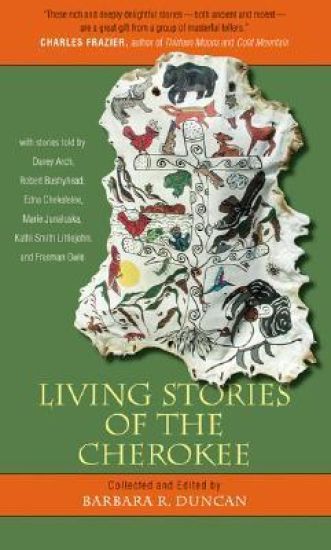
Living Stories of the Cherokee

Living Stories of the Cherokee

The University of North Carolina Press
1998
nidottu
This remarkable book, the first major new collection of Cherokee stories published in nearly a hundred years, presents seventy-two traditional and contemporary tales from the Eastern Band of Cherokee Indians in North Carolina. It features stories told by Davey Arch, Robert Bushyhead, Edna Chekelelee, Marie Junaluska, Kathi Smith Littlejohn, and Freeman Owle--six Cherokee storytellers who learned their art and their stories from family and community. The tales gathered here include animal stories, creation myths, legends, and ghost stories as well as family tales and stories about such events in Cherokee history as the Trail of Tears. Taken together, they demonstrate that storytelling is a living, vital tradition. As new stories are added and old stories are changed or forgotten, Cherokee storytelling grows and evolves. In an introductory essay, Barbara Duncan writes about the Cherokee storytelling tradition and explains the ""oral poetics"" style in which the stories are presented. This format effectively conveys the rhythmic, oral quality of the living storytelling tradition, allowing the reader to ""hear"" the voice of the storyteller. |Six celebrated Eastern Cherokee storytellers present 72 traditional and contemporary tales, including animal stories, ghost stories, histories, and legends. The first major collection of Cherokee stories in nearly a century.
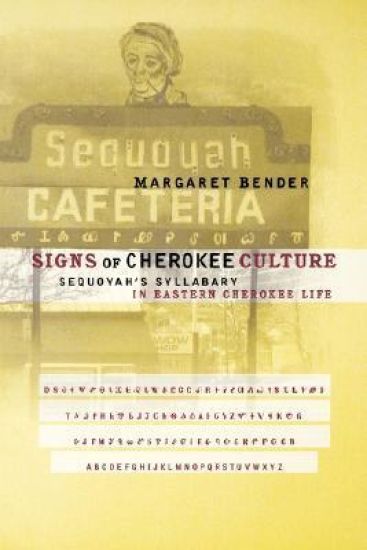
Signs of Cherokee Culture

Signs of Cherokee Culture

Bender Margaret

The University of North Carolina Press
2002
nidottu
Based on extensive fieldwork in the community of the Eastern Band of Cherokee Indians in western North Carolina, this book uses a semiotic approach to investigate the historic and contemporary role of the Sequoyan syllabary - the written system for representing the sounds of the Cherokee language - in Eastern Cherokee life. The Cherokee syllabary was invented in the 1820s by the respected Cherokee Sequoyah. The syllabary quickly replaced alternative writing systems for Cherokee and was reportedly in widespread use by the mid-nineteenth century. After that, literacy in Cherokee declined, except in specialized religious contexts. But as Bender shows, recent interest in cultural revitalization among the Cherokees has increased the use of the syllabary in education, publications, and even signage. Bender also explores the role played by the syllabary within the ever more important context of tourism. (The Eastern Cherokee Band hosts millions of visitors each year in the Great Smoky Mountains.) English is the predominant language used in the Cherokee community, but Bender shows how the syllabary is used in special and subtle ways that help to shape a shared cultural and linguistic identity among the Cherokees. Signs of Cherokee Culture thus makes an important contribution to the ethnographic literature on culturally specific literacies.
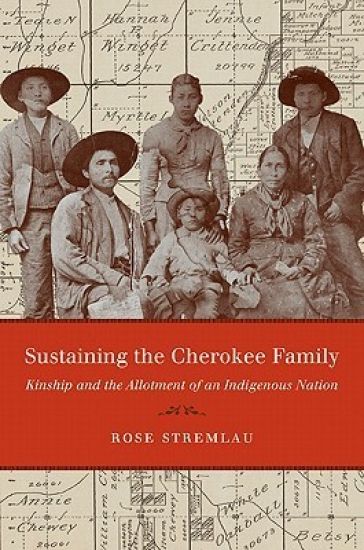
Sustaining the Cherokee Family

Sustaining the Cherokee Family

Stremlau Rose

The University of North Carolina Press
2011
nidottu
During the late nineteenth and early twentieth centuries, the federal government sought to forcibly assimilate Native Americans into American society through systematized land allotment. In Sustaining the Cherokee Family , Rose Stremlau illuminates the impact of this policy on the Cherokee Nation, particularly within individual families and communities in modern-day northeastern Oklahoma. Emphasizing Cherokee agency, Stremlau reveals that Cherokee families' organization, cultural values, and social and economic practices allowed them to adapt to private land ownership by incorporating elements of the new system into existing domestic and community-based economies. Drawing on evidence from a range of sources, including Cherokee and United States censuses, federal and tribal records, local newspapers, maps, county probate records, family histories, and contemporary oral histories, Stremlau demonstrates that Cherokee management of land perpetuated the values and behaviors associated with their sense of kinship, therefore uniting extended families. And, although the loss of access to land and communal resources slowly impoverished the region, it reinforced the Cherokees' interdependence. Stremlau argues that the persistence of extended family bonds allowed indigenous communities to retain a collective focus and resist aspects of federal assimilation policy during a period of great social upheaval. |During the late nineteenth and early twentieth centuries, the federal government sought to forcibly assimilate Native Americans into American society through systematized land allotment. Stremlau illuminates the impact of this policy on the Cherokee Nation, particularly within individual families and communities in modern-day northeastern Oklahoma.
A Guide to Cherokee Documents in Foreign Archives

A Guide to Cherokee Documents in Foreign Archives

William L. Anderson; James A. Lewis

Scarecrow Press
1983
sidottu
Professors Anderson and Lewis have compiled a guide to documents abroad that focuses on the Cherokee Indians. Exploring the archives of the three major colonial powers in the New World (England, France, and Spain), this guide describes over eight thousand documents that cover the Cherokee past from the sixteenth to the twentieth centuries.
Race and the Cherokee Nation

Race and the Cherokee Nation

Randal Hall

University of Pennsylvania Press
2008
sidottu
"We believe by blood only," said a Cherokee resident of Oklahoma, speaking to reporters in 2007 after voting in favor of the Cherokee Nation constitutional amendment limiting its membership. In an election that made headlines around the world, a majority of Cherokee voters chose to eject from their tribe the descendants of the African American freedmen Cherokee Indians had once enslaved. Because of the unique sovereign status of Indian nations in the United States, legal membership in an Indian nation can have real economic benefits. In addition to money, the issues brought forth in this election have racial and cultural roots going back before the Civil War. Race and the Cherokee Nation examines how leaders of the Cherokee Nation fostered a racial ideology through the regulation of interracial marriage. By defining and policing interracial sex, nineteenth-century Cherokee lawmakers preserved political sovereignty, delineated Cherokee identity, and established a social hierarchy. Moreover, Cherokee conceptions of race and what constituted interracial sex differed from those of blacks and whites. Moving beyond the usual black/white dichotomy, historian Fay A. Yarbrough places American Indian voices firmly at the center of the story, as well as contrasting African American conceptions and perspectives on interracial sex with those of Cherokee Indians. For American Indians, nineteenth-century relationships produced offspring that pushed racial and citizenship boundaries. Those boundaries continue to have an impact on the way individuals identify themselves and what legal rights they can claim today.
Deconstructing the Cherokee Nation

Deconstructing the Cherokee Nation

Tyler Boulware

University Press of Florida
2011
sidottu
This significant contribution to Cherokee studies examines the tribe's life during the eighteenth century, up to the Removal. By revealing town loyalties and regional alliances, Tyler Boulware uncovers a persistent identification hierarchy among the colonial Cherokee.Boulware aims to fill the gap in Cherokee historical studies by addressing two significant aspects of Cherokee identity: town and region. Though other factors mattered, these were arguably the most recognizable markers by which Cherokee peoples structured group identity and influenced their interactions with outside groups during the colonial era.This volume focuses on the understudied importance of social and political ties that gradually connected villages and regions and slowly weakened the localism that dominated in earlier decades. It highlights the importance of borderland interactions to Cherokee political behavior and provides a nuanced investigation of the issue of Native American identity, bringing geographic relevance and distinctions to the topic.
Deconstructing the Cherokee Nation

Deconstructing the Cherokee Nation

Tyler Boulware

University Press of Florida
2015
nidottu
This significant contribution to Cherokee studies examines the tribe’s life during the eighteenth century, up to the Removal. By revealing town loyalties and regional alliances, Tyler Boulware uncovers a persistent identification hierarchy among the colonial Cherokee.Boulware aims to fill the gap in Cherokee historical studies by addressing two significant aspects of Cherokee identity: town and region. Though other factors mattered, these were arguably the most recognizable markers by which Cherokee peoples structured group identity and influenced their interactions with outside groups during the colonial era.This volume focuses on the understudied importance of social and political ties that gradually connected villages and regions and slowly weakened the localism that dominated in earlier decades. It highlights the importance of borderland interactions to Cherokee political behavior and provides a nuanced investigation of the issue of Native American identity, bringing geographic relevance and distinctions to the topic.
Center Places & Cherokee Towns

Center Places & Cherokee Towns

Christopher B. Rodning

The University of Alabama Press
2015
sidottu
In Center Places and Cherokee Towns, Christopher B. Rodning discusses the ways architecture and other aspects of the built environment, such as hearths, burials, and earthen mounds and embankments, formed center places within the Cherokee cultural landscape of the southern Appalachians from A.D. 1400 through 1700.Archaeology offers a rich framework for understanding a culture before its recorded written history. In Center Places and Cherokee Towns, Christopher B. Rodning opens a panoramic vista onto protohistoric Cherokee culture. He posits that Cherokee households and towns were anchored within their cultural and physical landscapes by built features that acted as “center places.”Rodning investigates the period from the first Spanish contact with sixteenth-century Native American chiefdoms in La Florida through to the development of formal trade relations between other Native Ameri­can societies and English and French colonial provinces during the late 1600s and 1700s. Rodning focuses particularly on the Coweeta Creek archaeological site in the upper Tennessee Valley in southwestern North Carolina and describes the ways in which elements of the built environ­ment were manifestations of Cherokee people and culture.Drawing on archaeological data, delving into primary sources dating from the 1500s through the 1700s, and considering Cherokee myths and legends remembered and recorded during the nineteenth cen­tury, Rodning shows how the arrangement of public structures and household dwellings in a Cherokee community both shaped and were shaped by Cherokee culture. The center places Rodning highlights in this rewarding study serve as points of attachment between Cherokee individuals and their communities as well as between their present and past. Rodning explores the ways in which Cherokee architecture and the built environment were sources of cultural stability in the af­termath of European contact, and how the course of European contact altered the landscape of Cherokee towns in the long run.In this multi-faceted consideration of archaeology, ethnohistory, and recorded oral tradition, Rodning adeptly demonstrates the distinct ways that Cherokee identity was constructed through architecture and other material forms. Center Places and Cherokee Towns will have a broad appeal to students and scholars of southeastern archaeology, anthropology, Native American studies, prehistoric and protohistoric Cherokee culture, landscape archaeology, and ethnohistory.
Forging a Cherokee-American Alliance in the Creek War

Forging a Cherokee-American Alliance in the Creek War

Susan M. Abram

The University of Alabama Press
2015
sidottu
Forging a Cherokee-American Alliance in the Creek War explores how the Creek War of 1813–1814 not only affected Creek Indians but also acted as a catalyst for deep cultural and political transformation within the society of the United States’ Cherokee allies.The Creek War of 1813–1814 is studied primarily as an event that im­pacted its two main antagonists, the defending Creeks in what is now the State of Alabama and the expanding young American republic. Scant attention has been paid to how the United States’ Cherokee allies contributed to the war and how the war transformed their society. In Forging a Cherokee-American Alliance in the Creek War, Susan M. Abram explains in engrossing detail the pivotal changes within Cherokee society triggered by the war that ultimately ended with the Cherokees’ forced removal by the United States in 1838.The Creek War (also known as the Red Stick War) is generally seen as a local manifestation of the global War of 1812 and a bright footnote of military glory in the dazzling rise of Andrew Jackson. Jackson’s victory, which seems destined only in historic hindsight, was greatly aided by Cherokee fighters. Yet history has both marginalized Cherokee contri­butions to that conflict and overlooked the fascinating ways Cherokee society altered as it strove to accommodate, rationalize, and benefit from an alliance with the expanding American republic. Through the prism of the Creek War and evolving definitions of masculinity and community within the Cherokee community, Abram delineates as has never been done before the critical transitional decades prior to the Trail of Tears.Deeply insightful, Abram illuminates the ad hoc process of cultural, political, and sometimes spiritual change among the Cherokees. Before the onset of hostilities, the Cherokees already faced numerous threats and divisive internal frictions. Abram concisely records the Cherokee strategies for meeting these challenges, describing how, for example, they accepted a centralized National Council and replaced the tradi­tion of conflict-resolution through blood law with a network of “ligh­thorse regulators.” And while many aspects of masculine war culture remained, it too changed as it was filtered and reinterpreted through contact with the legalistic and structured American military.Rigorously documented and persuasively argued, Forging of a Cherokee-American Alliance in the Creek War fills a critical gap in the history of the early republic, the War of 1812, the Cherokee people, and the South.