Kirjojen hintavertailu. Mukana 12 381 625 kirjaa ja 12 kauppaa.

Kirjahaku

Etsi kirjoja tekijän nimen, kirjan nimen tai ISBN:n perusteella.

1000 tulosta hakusanalla Conrad Mbewe

Joseph Conrad and the Adventure Tradition

Joseph Conrad and the Adventure Tradition

Andrea White

Cambridge University Press
2008
pokkari
Nineteenth-century adventure fiction relating to the British empire usually served to promote, celebrate and justify the imperial project, asserting the essential and privileging difference between 'us' and 'them', colonizing and colonized. Andrea White's study opens with an examination of popular exploration literature in relation to later adventure stories, showing how a shared view of the white man in the tropics authorized the European intrusion into other lands. She then sets the fiction of Joseph Conrad in this context, showing how Conrad in fact demythologized and disrupted the imperial subject constructed in earlier writing, by simultaneously - with the modernist's double vision - admiring man's capacity to dream but applauding the desire to condemn many of its consequences. She argues that the very complexity of Conrad's work provided an alternative, and more critical, means of evaluating the experience of empire.
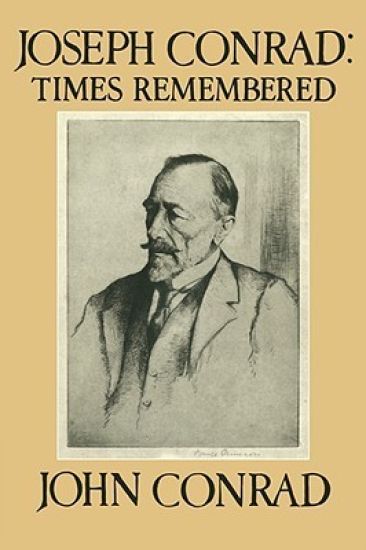
Joseph Conrad: Times Remembered

Joseph Conrad: Times Remembered

John Conrad

Cambridge University Press
2008
pokkari
Though others have published reminiscences of Joseph Conrad, these accounts have frequently contained inaccuracies, sometimes even simple fabrications. It is partly in an attempt to set the record straight that John Conrad, the novelist's only surviving son, has committed these memoirs to print. Mr Conrad has not tried to import into the book the biographical interpretations or speculations of others, but rather to recall and set down as honestly and directly as possible what he remembers from around 1909 to the point of his father's death in 1924. Through his vivid and detailed account of the day-to-day existence in the various houses the family inhabited during this period, Mr Conrad is able both to throw light on many aspects of his father's life and to invoke the sense of an era of English social life which has now disappeared. His memoirs are informal, often anecdotal, recording what amused, irritated or moved his father.
Joseph Conrad's Letters to R. B. Cunninghame Graham

Joseph Conrad's Letters to R. B. Cunninghame Graham

Joseph Conrad

Cambridge University Press
2011
pokkari
Joseph Conrad's friendship with R. B. Cunninghame Graham was stimulating, and in many ways paradoxical. These letters to Cunninghame Graham are the most illuminating sequence of letters from Conrad to any of his correspondents. He struggles to define his philosophical and political beliefs in relation to Graham's radical and provocative opinions. The majority of the letters were written between 1897 and 1904, during which time Conrad reached full maturity as a novelist. The letters also provide comments on Conrad's work, and show how Graham helped to sustain him in some of his most strenuous literary struggles. Of the eighty-one letters in Dr Watts' edition, which was originally published in 1969, twenty-five had never been published before, and some of the remainder had appeared in incomplete or inaccurate versions. Conrad's spelling and punctuation are retained and his own alterations indicated. There is a biographical and critical introduction, and explanatory footnotes.
The Selected Letters of Joseph Conrad

The Selected Letters of Joseph Conrad

Joseph Conrad

Cambridge University Press
2015
sidottu
Since the publication of the Cambridge edition of The Collected Letters of Joseph Conrad, the numerous letters in the nine volumes, many of them published for the first time and many more taken from hard-to-find books and journals, have had a profound influence on writing about Conrad. This selection makes the highlights available in one volume. The letters have been re-edited with shorter footnotes and an emphasis on the latest scholarship. Letters originally written in French or Polish appear only in revised English translations. Among the topics that stand out are Conrad's memories of growing up in Poland and Ukraine, his ideas about fiction, often expressed in precise but sympathetic comments on the work of his friends, the anxieties of war and revolution, his struggle to keep his integrity as a writer, and his lives as a sailor and a family man.
Joseph Conrad

Joseph Conrad

Jacques Berthoud

Cambridge University Press
1978
pokkari
Focuses on the novels written in the first decade of the twentieth century, illuminating Conrad's exploration of the contradictions inherent in human relations.
The Collected Letters of Joseph Conrad

The Collected Letters of Joseph Conrad

Joseph Conrad

Cambridge University Press
1988
sidottu
This is the third of the projected eight-volume edition comprising all the surviving letters of Joseph Conrad under the general editorship of Professor Frederick R. Karl. When completed, it will have assembled about 4,000 letters, over a third of them published before only in defective versions. As with previous volumes in the series, this volume contains an editorial introduction, illustrations, and extensive annotation. The period covered by the third volume is 1903 to 1907 when Conrad stood at the height of his powers. It was during these years that he completed Nostromo and The Secret Agent. Yet this was not a happy time for him: his plans for leisurely, contemplative work were constantly interrupted by dangerous illnesses in the family, his own bad health, financial worries, and the pleas of editors desperate for copy. Conrad maintained his correspondence with old friends such as Galsworthy, Wells, and Ford Madox Ford, and developed a number of new friendships. This is also the period in which Conrad became absorbed in political fiction, and this is reflected in an intriguing sequence of America, and censorship. As always, the letters to his literary agent J. B. Pinker provide a detailed (and largely unpublished) account of Conrad's plans and literary commitments, week by week, month by month.
The Collected Letters of Joseph Conrad

The Collected Letters of Joseph Conrad

Joseph Conrad

Cambridge University Press
1991
sidottu
This is the fourth of eight volumes comprising all the surviving letters of Joseph Conrad. Conrad spent half the period of Volume Four writing Under Western Eyes and the other half recovering from the ensuing mental and physical breakdown. During the early months of 1908, the short story 'Razumov' began growing into a novel that embodied Conrad's appalled fascination with Russian politics, his misgivings about language, and his acute sense of loneliness. After the completion of the novel in 1910 and a vehement quarrel with J. B. Pinker, his agent, Conrad suffered a breakdown whose effects lingered for many months. By the spring of 1911, however, he was able to resume the long-delayed Chance. The tale of these years emerges vividly from the correspondence. Of special interest are frank critiques of John Galsworthy's work, manoeuvrings around the new and distinguished English Review, an indignant falling out with Ford Madox Ford, mercurial transactions with Pinker, enlightening accounts of writing in progress (The Secret Sharer and A Personal Record as well as the two novels), reactions to the tumultuous politics of the day, anecdotes about John and Borys Conrad, and evidence of new friendships with American and French writers, among them André Gide.
Joseph Conrad and the Adventure Tradition

Joseph Conrad and the Adventure Tradition

Andrea White

Cambridge University Press
1993
sidottu
Nineteenth-century adventure fiction relating to the British empire usually served to promote, celebrate, and justify the imperial project, asserting the essential and privileging difference between ‘us’ and ‘them’, colonising and colonised. Andrea White’s study opens with an examination of popular exploration literature in relation to later adventure stories, showing how a shared view of the white man in the tropics authorised the European intrusion into other lands. She then sets the fiction of Joseph Conrad in this context, showing how Conrad in fact demythologised and disrupted the imperial subject constructed in earlier writing, by simultaneously - with the modernist’s double vision - admiring man’s capacity to dream but applauding the desire to condemn many of its consequences. She argues that the very complexity of Conrad’s work provided an alternative, and more critical, means of evaluating the experience of empire.
The Collected Letters of Joseph Conrad

The Collected Letters of Joseph Conrad

Joseph Conrad

Cambridge University Press
2005
sidottu
This penultimate volume of Conrad’s collected letters ends soon after his 65th birthday. Over the previous three years, Conrad wrote The Rover, struggled with Suspense, translated The Book of Job (a Polish comedy), collaborated with J. B. Pinker on a cinematic treatment of ‘Gaspar Ruiz’, and worked by himself on adapting The Secret Agent for the London stage. He saw the publication of The Rescue, Notes on Life and Letters, and the Doubleday/Heinemann collected edition, most of whose volumes had new Author’s Notes. Especially in North America, the collected edition strengthened his reputation as the leading English-language novelist of his day. This recognition could not always console him for his worries about his health, his family, and the state of post-war Europe, but he had not lost his sense of irony. These letters, the majority new to scholarship, abound in striking turns of phrase and unexpected insights.
The Collected Letters of Joseph Conrad

The Collected Letters of Joseph Conrad

Joseph Conrad

Cambridge University Press
2007
sidottu
Volume Eight of Conrad's collected letters covers the last nineteen months of his life (1923-24). Much of this correspondence is unpublished; its editors have had access to the major private collections as well as holdings in public and academic libraries. The letters themselves are accompanied by notes on contexts, allusions, and editorial problems, and prefaced with a general introduction and biographies of the correspondents. Letters to his family written during his visit to the United States are a notable feature of this collection, which is also rich in comments on literary questions, current events, his experiences at sea, the reception of The Rover, and work on his unfinished novel, Suspense.
The Collected Letters of Joseph Conrad

The Collected Letters of Joseph Conrad

Joseph Conrad

Cambridge University Press
2007
sidottu
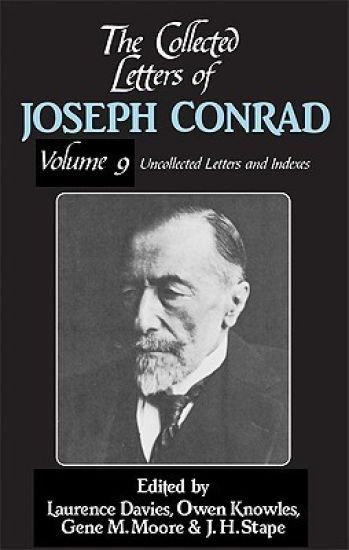
The last volume in The Collected Letters of Joseph Conrad presents over two hundred new letters written between 1892 and 1923. Some are to correspondents who have not previously appeared in the collected letters; others are to family members, friends, and colleagues familiar from earlier volumes. Many of the letters in both categories are substantial enough to justify a recharting of Conrad's work, his friendships, his experiences, and his opinions on such subjects as opera, marriage, editorial tampering, the reading public, British foreign policy, the consolations and the penalties of faith, the Dutch Empire, translating Maupassant, the power of oratory, the revolutions of 1917, and the deficiencies of Ibsen's Ghosts. This volume holds enough surprises to suggest that there can never be a final word on Conrad and includes indexes and further apparatus for the whole series.
The Collected Letters of Joseph Conrad 9 Volume Hardback Set
This landmark nine-volume set offers the complete letters of Joseph Conrad in the highly acclaimed authorised Cambridge edition. Starting with his earliest letters to his imprisoned father and following through his adult careers at sea and as a writer, and his experiences as lover, husband, friend, and parent, these volumes allow scholars to read Conrad's life in his own words. The first eight volumes present over four thousand letters in chronological order. The final volume includes, as well as a cumulative index to the edition, more than two hundred newly available letters, adding fresh nuances and complexities to the remarkable story of his life and work. In each volume, extensive explanatory notes and invaluable introductions illuminate the context of his work and times. This edition has become a standard reference work for all scholars and students of Conrad, and will retain its importance for generations to come.
Joseph Conrad in Context

Joseph Conrad in Context

Cambridge University Press
2009
sidottu
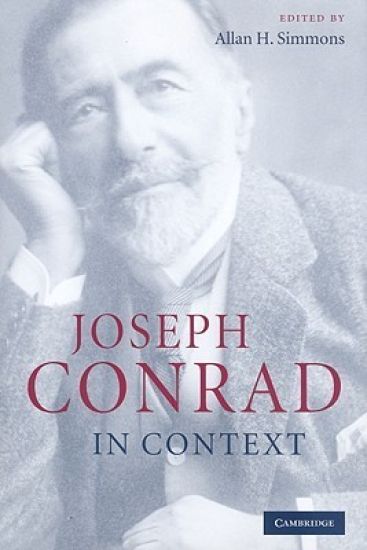
Joseph Conrad's Polish background, his extensive travels and his detached view of his adopted country, Britain, gave him a perspective unique among English writers of the twentieth century. Combining Continental and British influences, Victorian and Modernist styles, he was an artist acutely responsive to his age, whose works reflect and chronicle its shaping forces. This volume examines the biographical, historical, cultural and political contexts that fashioned his works. Written by a specialist, each short chapter covers a specific theme in relation to Conrad's life and work: letters, Modernism, the sea, the Polish and French languages, the First World War, and many other topics. This book will appeal to scholars as well as to those beginning their study of this extraordinary writer. It shows how this combination of different contexts allowed Conrad to become a key transitional figure in the early emergence of British literary modernism.