Cyril, bishop of Alexandria from 412 to 444, is renowned both as one of the most authoritative of all the fathers of the church, and at the same time as one of the most controversial of all church politicians. He oversaw the final extinguishing of pagan religion from Alexandria, and also spent the height of his career as a statesman and an author fighting the doctrines of Nestorius, whose excommunication he brought about at the Council of Ephesus (431). Having spent the first fifteen years of his episcopate writing extensive commentaries on Scripture, from 429 onwards Cyril turned his enormous learning and talent for penning and distributing polemic tracts to the development of doctrinal orthodoxy after he sensed that the new ideas coming out of Constantinople threatened the very core of the Christian doctrines of Incarnation and salvation. The three treatises here translated into English for the first time all belong to the period around the ecumenical council. On Orthodoxy to Theodosius was written for the emperor, a year before the council met, with the aim of persuading him that Nestorius's sermons were heretical and that his task as leader of both church and state was to ensure right religious observance. The Defense against the Bishops of Oriens and the Defense against Theodoret were written in the months leading up to the council when Cyril found himself required to defend his notorious "Twelve Chapters (or Anathemas)," which many bishops in other parts of the empire felt had gone too far in an anti-Nestorian direction. All three works were key parts of Cyril's battle for orthodoxy and mark key moments in the church's progress towards the definition of Christological orthodoxy that was made at Chalcedon.
Cyril of Alexandria (ca. 376-444) is best known for his defense of orthodoxy at the time of the Nestorian controversy over the nature of Christ. However, by far the larger part of Cyril's literary output consisted of commentaries on books of both Old and New Testaments, written before the Christological debate was sparked off in 428. One of these works, of major proportions, was the so-called Glaphyra (""elegant comments"") on the Pentateuch. This comprises a total of thirteen separate ""books,"" or volumes: seven on Genesis, three on Exodus, and one each on Leviticus, Numbers and Deuteronomy. The comments primarily concern the narrative portions of the Pentateuch, hence the greater space given to Genesis, though a number of the legal prescriptions are also treated. This present volume, containing all seven books on Genesis, is the first of a projected two-volume set which will offer a translation of the whole Glaphyra for the first time in English. Cyril's aims within the commentary are both theological and pastoral. His chosen method begins with a consideration of the historia. Here the Alexandrian patriarch deals with the text at the literal level. At this stage he explains any historical, cultural, and at times even linguistic and textual issues presented within the passage, which is then followed by some theological instruction or lessons of a more practical nature based upon the literal interpretation. The exposition then moves on to the theoria. This is Cyril's preferred term for the contemplation of the spiritual sense, that is to say, the mystery of Christ which he firmly held lay hidden beneath the surface of the Old Testament text. With great adeptness and consistency Cyril identifies elements within the ancient narratives as figures, or ""types and shadows,"" of the Lord Jesus Christ, the Church, and the teachings of the gospel.
Rebirth: A History of Europe Since World War II examines the transition of Europe from a period of crisis to an era of political confidence and economic strength. As the title suggests, the pervasive theme of the book is that of rebirth. The most recent decades are set in the context of modern European history as a whole. The authors trace the disillusionment and uncertainty that overcame Europe at the turn of the twentieth century and that culminated in the devastation of the Second World War. In their analysis of the political and economic causes of the renaissance that has followed the demise of the Cold War, the authors highlight the themes of national integration and economic modernization.The chapters are uniquely organized to present both international and domestic developments in Europe as coherent wholes as well as the importance of their interaction. The initial analysis of key international developments in the twentieth century helps students to understand the relationship between foreign and domestic events and provides background for the substantial discussion of the major European countries that follows in chapters devoted to each national experience. The political and economic histories of these nation-states are considered in terms of their individual traditions and challenges, and the authors explore difficult issues such as the overall costs and benefits of the scientific-technological revolution, the pursuit of social justice, the proper role of the state and of political parties, and contrasting national paths of economic and political development.Rebirth is designed as a text for use in courses on modern European history ? especially twentieth-century Europe ? and for students of comparative politics who are seeking a substantial consideration of the historical factors of European politics. In this revised edition, the authors have updated the text with an analysis of developments since 1991 and added recent scholarship to the lists of Suggested Readings.
The Instant Manager has helped thousands of readers hone the skills and fundamental competencies critical to managerial success. Now in an expanded edition, the book reflects new business realities, giving experienced and novice managers alike the tools and information they need. With much of the material presented in bulleted lists or as quick tips, the book provides instant access to practical advice on subjects such as: * Teambuilding * Leadership * Performance improvement * Conflict management * Written and oral communication * Creative problem-solving * Goal-setting * Decision-making * Motivation * Interviewing and hiring * And many others Read cover-to-cover as a primer or on the job as a daily problem-solver, The Instant Manager helps readers maximize team productivity, drive results, and take charge of their own careers.
This compelling work is the most comprehensive and sophisticated account to date of the relationship between Hans Urs von Balthasar—a Swiss theologian and Catholic priest—and the German philosopher Georg Hegel. While underscoring the depth and breadth of Balthasar’s engagement with the philosopher, author Cyril O’Regan argues that Balthasar is the most concertedly anti-Hegelian theologian of the 20th century. For him, it is essential to engage Hegel because of his corrections of sclerotic forms of premodern Christian thought, but even more importantly to resist and correct his systematic thought, which represents a comprehensive misremembering of the Christian thought, practices, and forms of life. An important and original work, this book addresses a topic that puts the possibility of an authentic postmodern theology at stake.
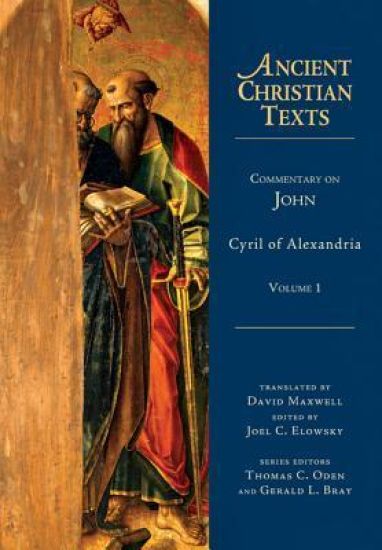
Cyril of Alexandria (ca. 378-444), one of the most brilliant representatives of the Alexandrian theological tradition, is best known for championing the term Theotokos (God-bearer) in opposition to Nestorius of Constantinople. Cyril's great Commentary on John, offered here in the Ancient Christian Text series in two volumes, predates the Nestorian controversy, however, and focuses its theological fire power against Arianism. The commentary, which is addressed to catechists, displays Cyril's breath-taking mastery of the full content of the Bible and his painstaking attention to detail as he seeks to offer practical teaching on the cosmic story of God's salvation. David Maxwell provides readers with the first complete English translation of the text since the nineteenth century. It rests on Pusey's critical edition of the Greek text and puts on display Cyril's theological interpretation of Scripture and his appeal to the patristic tradition that preceded him. Today's readers will find the commentary an indispensable tool for understanding Cyril's approach to Scripture. Ancient Christian Texts are new English translations of full-length commentaries or sermon series from ancient Christian authors that allow you to study key writings of the early church fathers in a fresh way.
Cyril of Alexandria (ca. 378-444), one of the most brilliant representatives of the Alexandrian theological tradition, is best known for championing the term Theotokos (God-bearer) in opposition to Nestorius of Constantinople. Cyril's great Commentary on John, offered here in the Ancient Christian Texts series in two volumes, predates the Nestorian controversy and focuses its theological firepower against Arianism. The commentary, addressed to catechists, displays Cyril's breathtaking mastery of the full content of the Bible and his painstaking attention to detail as he offers practical teaching for the faithful on the cosmic story of God's salvation. David R. Maxwell provides readers with the first completely fresh English translation of the text since the nineteenth century. It rests on Pusey's critical edition of the Greek text and displays Cyril's profound theological interpretation of Scripture and his appeal to the patristic tradition that preceded him. Today's readers will find the commentary an indispensable tool for understanding Cyril's approach to Scripture. Ancient Christian Texts are new English translations of full-length commentaries or sermon series from ancient Christian authors that allow you to study key writings of the early church fathers in a fresh way.
Rabbi Cyril Harris has has a huge impact on Jewish life wherever he has ministered to Orthodox Jewry. Indeed his influence has extended far beyond the various communities that he has served; there is no question that, today he must be considered among the most influential Jews in Rabbinical circles. For Heaven's Sake: The Chief Rabbi's Diary is an insightful, compassionate and properly inspired look at Jewish life in it's many forms. To call it a book of pastoral musings or reflections would do it an injustice. Similarly, the Rabbi's observations and comments go far beyond our conventional idea of a diary. The Rabbi has never been shy or lacking a sense of humour. His book reflects his critical, questioning mind at every turn; it is imbued throughout with his amused regard for the world at large and his wide ranging flock in particular. On every page the warmth of the man and his deeply held spiritual conviction shine through. Rabbi Harris has the gift of the born story teller. He writes in a style accessible to Jew and non-Jew alike. His message is that of humanity's concern for one another; each story carries with it a principle of care. Rabbi Harris has played an important role in the new, transforming and reforming South Africa. He has given a rabbinic sanction to the principles of political activism that opposed Apartheid and combined to side with the forces of change for a non-racial democracy. The Chief Rabbi's diary skillfully pulls together the religious and spiritual life of a man of God and the temporal convictions of a man who cares deeply about the plight of others - whoever they might be. It resonates with the Jewish toast: To Life!
This volume of poems by Cyril Wong, one of the leading figures of poetry in Singapore, reflects the many ways in which love between two men can unfold, balancing emotional outpourings with meditations on the nature of relationships. The poetry punctures the sometimes oppressive reality of life in a city that is hypermodern yet far from free and, through twists and turns, ultimately lifts the reader to a place beyond pleasure and pain. Sensual, anecdotal and, of course, confessional, Infinity Diary charts an evolution in the work of one of Asia’s most intimate English-language poets.
This volume is devoted to the history, monuments and topography of Byzantine Constantinople, and includes two specially written pieces, as well as up-dates to the studies reprinted. Many of the articles deal with the imperial constructions of the first centuries of the City’s existence - for instance, the columns of Constantine and Justinian, the Mausoleum of the Holy Apostles and the churches of St Sophia, St John of Studius, and Sts Sergius and Bacchus - structures which provided the basic monumental framework around which Constantinople developed and its life was lived. In his reconstruction of these monuments and their history, Cyril Mango demonstrates how much can be achieved by combining the information gained from meticulous examination of the written sources, whether contemporary or from post-medieval travellers, with that provided by the surviving buildings themselves and the remains that have been excavated. Ce volume, voué à l’histoire, aux monuments et à la topographie de Constantinople la Byzantine, comprend deux études rédigées pour l’occasion, ainsi qu’une mise à jour des travaux qui y sont re-publiés. Bon nombre des études traitent plus particulièrement des constructions impériales datant des premiers siècles d’existence de la cité - tels, les colonnes de Constantin et de Justinien, la Mausolé des Saints Apôtres et les églises de Ste Sophie, St Jean de Studius, ou de Sts Serge et Bacchus; un ensemble de structures qui apportèrent la base monumentale autour de laquelle Constantinople s’est développée et a vécu. Au travers de cette reconstruction des monuments et de leur histoire, Cyril Mango démontre combien peut être atteint en combinant l’information acquise à partir d’un examen méticuleux des sources écrites - que celles-ci soient contemporaines ou proviennent des voyageurs post-médiévaux - à celle que l’on peut tirer des bâtiments-mêmes qui ont survécu, ainsi que des restes qui été re
From its foundation, the city of Constantinople dominated the Byzantine world. It was the seat of the emperor, the centre of government and church, the focus of commerce and culture, by far the greatest urban centre; its needs in terms of supplies and defense imposed their own logic on the development of the empire. Byzantine Constantinople has traditionally been treated in terms of the walled city and its immediate suburbs. In this volume, containing 25 papers delivered at the 27th Spring Symposium of Byzantine Studies held at Oxford in 1993, the perspective has been enlarged to encompass a wider geographical setting, that of the city’s European and Asiatic hinterland. Within this framework a variety of interconnected topics have been addressed, ranging from the bare necessities of life and defence to manufacture and export, communications between the capital and its hinterland, culture and artistic manifestations and the role of the sacred.
Inner Asia - in premodern times the little-known land of nomads and semi-nomads - has moved to the world's front page in the 20th century as the complex struggles for the future of Afghanistan, Soviet Central Asia, Tibet and other territories make clear. But because Inner Asia as a whole is divided among several states politically and among area specialists academically, broad perspectives on recent events are difficult to find. This work treats the region as a single unit, providing both an account of the region's past and an analysis of its present and its prospects in a thematic, rather than a strictly country-by-country manner.