Kirjojen hintavertailu. Mukana 11 244 527 kirjaa ja 12 kauppaa.

Kirjahaku

Etsi kirjoja tekijän nimen, kirjan nimen tai ISBN:n perusteella.

1000 tulosta hakusanalla D Castleton

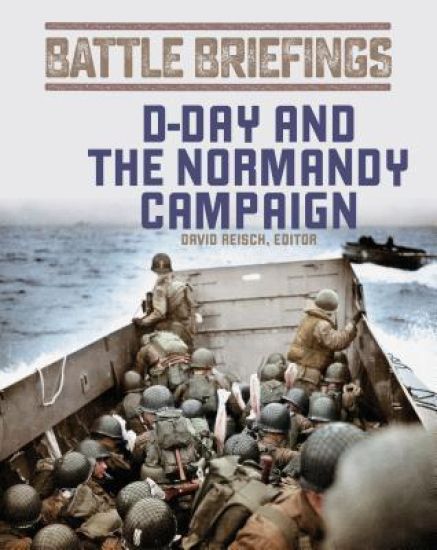
D-Day and the Normandy Campaign
Stackpole’s Battle Briefings series offers accessible and insightful summaries of battles, commanders, and other military history topics. This inaugural installment features one of World War II’s most pivotal campaigns: D-Day and the battle for Normandy that followed. It begins with Allied plans for the beachhead assault and Rommel’s construction of German defenses, but the book’s heart is the fighting as seen from both sides, from the Rangers at Pointe du Hoc and the landing at Omaha Beach to hedgerow combat, the air war, and clashes of Shermans and panzers.
D-Day Deception

D-Day Deception

Mary Kathryn Barbier

Stackpole Books
2009
nidottu
Before landing in France on D-Day, June 6, 1944, the Allies executed an elaborate deception plan designed to prevent the Germans from concentrating forces in Normandy. The lesser-known first part, Fortitude North, suggested a threat to Norway. Fortitude South--largely through a fictitious army group under Gen. George S. Patton--indicated that Allied forces would come ashore in the Pas de Calais rather than Normandy. Barbier sheds new light on this story of double agents and phantom units while reassessing the importance of Operation Fortitude.
D-Day

D-Day

Nicholas A. Veronico

Stackpole Books
2019
sidottu
Those who witnessed it never forgot it: the great armada of Allied ships that filled the English Channel on D-Day, June 6, 1944. From battleships, cruisers, and destroyers down to the much smaller landing ships and landing craft, these nearly 7,000 vessels bombarded the Normandy coast, ferried men, tanks, and equipment across the channel, and landed 150,000 troops—under withering German fire—on Omaha, Utah, Gold, Juno, and Sword beaches in a single day. In numbers and scope, it was the largest seaborne invasion in history. Meanwhile, some 12,000 aircraft flew above the sea, a dizzying assortment of fighters and bombers, transports, recon craft, and gliders. Taking off from air fields in England, they dropped thousands of paratroopers and even vehicles, bombed roads and German positions miles inland, provided vital intelligence, and attacked any German planes that were able to take to the skies. It was the largest single-day aerial operation in history. And yet these important—and impressive—aspects of D-Day haven’t received the coverage they deserve, having been overshadowed by the fighting on the beaches. Veronico assembles photos of both the air and sea components of the D-Day invasion, giving the sailors and airmen their due and giving modern readers a vivid sense of what this monumental day was like in the air and at sea.
D-Day General

D-Day General

Noel F. Mehlo

Stackpole Books
2021
sidottu
Omaha was the make-or-break Allied beach on D-Day—in (perhaps) the make-or-break campaign of World War II. If American soldiers couldn’t gain a foothold there, then D-Day was unlikely to succeed. On June 6, 1944, U.S. troops on Omaha suffered the worst casualties of any of the five Allied invasion beaches—so many casualties, and so much tactical difficulty, that Omaha almost didn’t succeed. One big reason why Americans gained a foothold on Omaha was Gen. Norman “Dutch” Cota. A graduate of the West Point class of 1917 (alongside famous classmates Matthew Ridgway, Mark Clark, and Lightning Joe Collins), Norm Cota played football with Dwight Eisenhower, who graduated two years earlier. From March 1941 to February 1943, Cota served with the famous 1st Infantry Division, the Big Red One, as division intelligence officer, plans/training officer, and finally chief of staff. He performed so well in the North Africa campaign that he was sent to England to help plan D-Day. After laying the tactical groundwork for the amphibious landings, Cota was made assistant division commander of the 29th Infantry Division. On the eve of D-Day, he told his men, “You’re going to find confusion. The landing craft aren’t going in on schedule, and people are going to be landed in the wrong place. Some won’t be landed at all. . . . We must improvise, carry on, not lose our heads.” On June 6, 1944, under heavy fire, Cota landed with the second wave of the 29th Infantry Division on Omaha Beach, about an hour after the start of the invasion. He personally rallied the survivors of the landings and led the opening of one of the first exits off Omaha. Cota seemed to be everywhere that day. Coming upon a group of Rangers, the general told them, “Rangers, lead the way” (hence the Rangers’ motto). He is also known for saying, “Gentlemen, we are being killed on the beaches. Let us go inland and be killed.” And, to a captain uncertain how to proceed: “I’ll tell you what, captain. You and your men start shooting at them. I’ll take a squad of men, and you and your men watch carefully. I’ll show you how to take a house with Germans in it.” Having demonstrated the task, Cota asked the officer, “Do you understand? Do you know how to do it now? . . . I won’t be around to do it for you again. I can’t do it for everybody.” Great quips—which American military history will always remember and which show the character, in every sense, of Dutch Cota. Cota was a fighter—a fighting general, a D-Day general—and his contribution to D-Day will remain his rallying of demoralized troops and his blazing the trail toward the breakout and victory on Omaha. Ted Roosevelt Jr., who landed at Utah Beach, has always received credit as the D-Day general (like Cota, Roosevelt also demanded that he land on D-Day—and then died of a heart attack a month later), but Cota is the hero-general of the day, having landed early on D-Day on bloody Omaha. Portrayed by Robert Mitchum in the grand D-Day film The Longest Day, Cota has not yet received his due—and there’s a campaign now afoot to award him a belated Medal of Honor. His story cries out to be told.
D.H. Lawrence

D.H. Lawrence

James C Cowan

OHIO STATE UNIVERSITY PRESS
2003
pokkari
D. H. Lawrence: Self and Sexuality is a psychoanalytic study of D. H. Lawrence's life and writings. James Cowan relies most notably the methods of Heinz Kohut, psychoanalytic "self psychology," and employs as well the object relation theories of D. W. Winnicott and others. This work also examines sexual issues in Lawrence's work from a literary and critical perspective, employing authoritative medical and psychoanalytic sources in human sexuality. Lawrence's work, which was early read in traditional Freudian terms, has only recently been considered from other psychoanalytic perspectives. In this self psychological study, Cowan provides a new and path-breaking analysis of Lawrence. Turning to several problematic issues of sexuality in Lawrence, the author first discusses a number of Lawrence's sexual fallacies, and personal and cultural issues. Cowan also considers contrasting idealized and negative presentations of Mellors and Sir Clifford Chatterley in Lady Chatterley's Lover, and the theme of the "loss of desire" sequence of poems in Pansies.
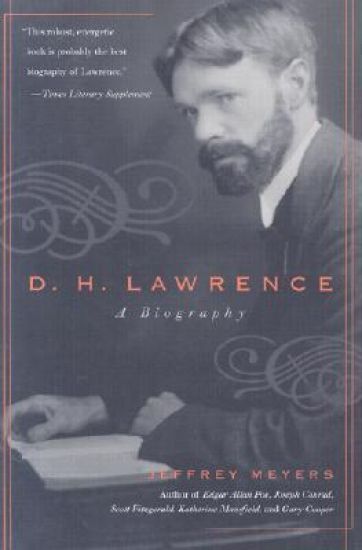
D.H. Lawrence

D.H. Lawrence

Jeffrey Meyers

Cooper Square Publishers Inc.,U.S.
2002
pokkari
Jeffrey Meyers, the author of highly acclaimed biographies of Hemingway and George Orwell, offers this masterly work on British novelist D. H. Lawrence (1885-1930). Meyers' fresh insights into Lawrence's life illuminate Lawrence's working-class childhood, his tempestuous marriage, and his death in France after the scandalous publication of Lady Chatterley's Lover, revealing Lawrence's complex method of intermingling autobiography and fiction. Through intensive research and access to unpublished essays and letters of Lawrence and his circle, Meyers describes the circumstances of his mother's death, the reason for the suppression of The Rainbow, and the author's protean (and extreme) sexuality that mirrored that of his fiction.
D'Aulaires' Book of Norwegian Folktales

D'Aulaires' Book of Norwegian Folktales

University of Minnesota Press
2016
sidottu
From the authors who wrote and illustrated Ola, Leif the Lucky, and Children of the Northlights comes their collection of Norwegian folktales. First printed in 1938, this selection of timeless stories returns to enchant audiences all over again. Experience Norways magical world of cinderlads, princesses, and trolls throughout the pages of dAulaires Book of Norwegian Folktales.
D-Modules, Perverse Sheaves, and Representation Theory

D-Modules, Perverse Sheaves, and Representation Theory

Ryoshi Hotta; Kiyoshi Takeuchi; Toshiyuki Tanisaki

Birkhauser Boston Inc
2007
sidottu
D-modules continues to be an active area of stimulating research in such mathematical areas as algebra, analysis, differential equations, and representation theory. Key to D-modules, Perverse Sheaves, and Representation Theory is the authors' essential algebraic-analytic approach to the theory, which connects D-modules to representation theory and other areas of mathematics. Significant concepts and topics that have emerged over the last few decades are presented, including a treatment of the theory of holonomic D-modules, perverse sheaves, the all-important Riemann-Hilbert correspondence, Hodge modules, and the solution to the Kazhdan-Lusztig conjecture using D-module theory. To further aid the reader, and to make the work as self-contained as possible, appendices are provided as background for the theory of derived categories and algebraic varieties. The book is intended to serve graduate students in a classroom setting and as self-study for researchers in algebraic geometry, and representation theory.
D.C. by the Numbers

D.C. by the Numbers

Thomas N. Edmonds

University Press of America
1995
sidottu
This work takes a statistical approach to the question of the District of Columbia's statehood, and details hundreds of indicators of the state's ill-health. The book is a strong condemnation of the District's leadership and its history of "home rule".
D.H. Lawrence Today

D.H. Lawrence Today

Barry J. Scherr

Peter Lang Publishing Inc
2004
sidottu
D. H. Lawrence Today is a rare and extraordinary blend of intellectual-political history, psycho-literary biography, and literary criticism not seen in Lawrence studies since the heyday of F. R. Leavis. Barry J. Scherr provides a vigorous defense of Lawrence against his powerful enemies in the literary-cultural-political-academic world - a world dominated today by the political correctness of the elite extreme left-wing intelligentsia. Dr. Scherr employs a daring, original, intense strategy to deal with Lawrence's enemies, involving unique, intricate, complex explication de texte as well as incisive polemic. Unconventional and seminal, D. H. Lawrence Today is the most stimulating, provocative, courageous book on Lawrence to appear in many years.
D. H. Lawrence's The Rainbow and Women in Love

D. H. Lawrence's The Rainbow and Women in Love

Doo-Sun Ryu

Peter Lang Publishing Inc
2005
sidottu
Focusing on D. H. Lawrence's concept of essential criticism , which was introduced in his posthumously published Study of Thomas Hardy and his statement that every work of art adheres to some system of morality. But it must contain the essential criticism on the morality to which it adheres , this book examines the ways in which Lawrence presents his ideas in his major novels The Rainbow and Women in Love. It explores how this concept plays a crucial role in his fiction as an other to the implied author's messages: functioning differently, as equivocation and creative strife, respectively, in The Rainbow and Women in Love, the concept helps to make these novels more dynamic that commonly realized.
D.H. Lawrence's Italian Travel Literature and Translations of Giovanni Verga
While travel literature, particularly the Italian travel literature of D. H. Lawrence - Twilight in Italy (1916), Sea and Sardinia (1921), and Etruscan Places (1927; 1932) - has received a great deal of attention in recent years, nobody has examined this work from a Bakhtinian viewpoint. This approach allows us a unique perspective as well as a new appreciation of both Lawrence and Mikhail Bakhtin. This is also true with respect to translation studies where the reader will find Lawrence's work on Giovanni Verga presented in a new and suggestive fashion. In short, this book provides new insights into D. H. Lawrence's relationship to the Italian Other (as well as charts the permutations within himself). This book makes a valuable contribution to our understanding of two of the greatest literary figures of the twentieth century, D. H. Lawrence and Mikhail Bakhtin.
D-Modules and Microlocal Calculus

D-Modules and Microlocal Calculus

Masaki Kashiwara; Mutsumi (TRN) Saito

Amer Mathematical Society
2002
pokkari
Masaki Kashiwara is undoubtedly one of the masters of the theory of $D$-modules, and he has created a good, accessible entry point to the subject. The theory of $D$-modules is a very powerful point of view, bringing ideas from algebra and algebraic geometry to the analysis of systems of differential equations. It is often used in conjunction with microlocal analysis, as some of the important theorems are best stated or proved using these techniques. The theory has been used very successfully in applications to representation theory.Here, there is an emphasis on $b$-functions. These show up in various contexts: number theory, analysis, representation theory, and the geometry and invariants of prehomogeneous vector spaces. Some of the most important results on $b$-functions were obtained by Kashiwara. A hot topic from the mid '70s to mid '80s, it has now moved a bit more into the mainstream. Graduate students and research mathematicians will find that working on the subject in the two-decade interval has given Kashiwara a very good perspective for presenting the topic to the general mathematical public.
D-Passage

D-Passage

Minh-ha T. Trinh

Duke University Press
2013
sidottu
D-Passage is a unique book by the world-renowned filmmaker, artist, and critical theorist Trinh T. Minh-ha. Taking as grounding forces her feature film Night Passage and installation L'Autre marche (The Other Walk), both co-created with Jean-Paul Bourdier, she discusses the impact of new technology on cinema culture and explores its effects on creative practice. Less a medium than a "way," the digital is here featured in its mobile, transformative passages. Trinh's reflections shed light on several of her major themes: temporality; transitions; transcultural encounters; ways of seeing and knowing; and the implications of the media used, the artistic practices engaged in, and the representations created. In D-Passage, form and structure, rhythm and movement, and language and imagery are inseparable. The book integrates essays, artistic statements, in-depth conversations, the script of Night Passage, movie stills, photos, and sketches.
D-Passage

D-Passage

Minh-ha T. Trinh

Duke University Press
2013
pokkari
D-Passage is a unique book by the world-renowned filmmaker, artist, and critical theorist Trinh T. Minh-ha. Taking as grounding forces her feature film Night Passage and installation L'Autre marche (The Other Walk), both co-created with Jean-Paul Bourdier, she discusses the impact of new technology on cinema culture and explores its effects on creative practice. Less a medium than a "way," the digital is here featured in its mobile, transformative passages. Trinh's reflections shed light on several of her major themes: temporality; transitions; transcultural encounters; ways of seeing and knowing; and the implications of the media used, the artistic practices engaged in, and the representations created. In D-Passage, form and structure, rhythm and movement, and language and imagery are inseparable. The book integrates essays, artistic statements, in-depth conversations, the script of Night Passage, movie stills, photos, and sketches.
D is for Dragon Dance

D is for Dragon Dance

Compestine Ying Chang

Holiday House Inc
2018
sidottu
A bilingual introduction to the Chinese New Year in English and Chinese. From the dazzling dragon dance to the scrumptious steamed dumplings to the firecrackers that frighten away evil spirits, this alphabet book celebrates the traditions of the lunar new year. First published in 2006, this new rendition presents the English text alongside the Chinese.
D. H. Lawrence in New Mexico

D. H. Lawrence in New Mexico

Arthur J. Bachrach

University of New Mexico Press
2006
nidottu
David Herbert Lawrence was born in Eastwood, England, in 1885. In 1914, he married Frieda Von Richtofen, a German national and distant cousin of the German war ace, 'The Red Baron' von Richthofen. While living on the Coast of Cornwall in 1917, they were harassed and accused of being spies for Germany. By 1921, the Lawrences were living in Italy and D. H. had won international acclaim for his writings. Mabel Dodge Sterne invited the pair to her home in Taos, New Mexico. Travelling by way of Ceylon, Australia, Tahiti, and, finally, San Francisco, the Lawrences set foot in New Mexico for the first time in 1922. Although he travelled all over the world, Lawrence was never as happy anywhere as he was in Taos. Arthur Bachrach has lived in Taos for over twenty years, and he has come to know people who freely recalled the Lawrences. They shared information about the circle of artists and friends who surrounded the Lawrences and their lifestyles. Bachrach provides information on Lawrence's writings and the influence living in the mountains of New Mexico had upon him. D. H. Lawrence died of tuberculosis while visiting France in 1930, and five years later, his ashes were placed in a memorial on his beloved Kiowa Ranch near Taos. Given to the University of New Mexico in the 1950s by D. H's widow, the ranch is known today as the D. H. Lawrence Ranch.
D'Arcy McNickle's ""The Hungry Generations

D'Arcy McNickle's ""The Hungry Generations

University of New Mexico Press
2007
sidottu
William D'arcy Mckickle was born in 1904 in Montana to a father of Scottish-Irish heritage and a French-Canadian Cree mother. His mixed-blood heritage and his parents' rocky marriage and subsequent divorce would strongly influence the future versions of his first novel ""The Surrounded."" ""The Hungry Generations"" is an early, handwritten version of McNickle's groundbreaking and semi-autobiographical novel ""The Surrounded"" and consists of three distinct parts. Part one is set in McNickle's native Montana and has the protagonist, Archilde, reconciling with his father. This part corresponds most closely to the ""The Surrounded"". Part two takes place in Paris where Archilde meets Claudia and her family and explores the community of the American expatriate artists. This section was cut out entirely during revisions of the novel. Part three shows Archilde as a farmer on his father's land in Montana and his arrest and trial for the murder of the game warden. ""The Hungry Generations"" is a social document providing insight into Indian-White marriages at the turn of the twentieth century, the life of the mixed-blood children of these marriages, and the attempts to assimilate them into mainstream American life. Partially autobiographical, the novel serves as a mirror of McNickle's adolescence on the Flathead Reservation in Montana and his experiences in Europe. Birgit Hans offers an extensive introduction to ""The Hungry Generations"" and presents the novel here as it was originally written in the 1930s. This manuscript version of ""The Hungry Generations"" is located in the archives of The Newberry Library in Chicago and has never before been published.