Kirjahaku
Etsi kirjoja tekijän nimen, kirjan nimen tai ISBN:n perusteella.
1000 tulosta hakusanalla Daniel A. Strachman
Intraoperative MRI in Functional Neurosurgery, An Issue of Neurosurgery Clinics
Daniel A. Lim; Paul S. Larson
W B Saunders Co Ltd
2009
sidottu
For this issue, Drs. Daniel Lim and Paul Larson at the University of California San Francisco present a collection of papers dedicated to Functional Neurosurgery. They explore topics such as functional neurosurgery orginis of Intraoperative MRI, iMRI safety, anethesia in the iMRI environment, gene therapy, the use of iMRI for cell-based therapy of Parkinson's desease, and more.
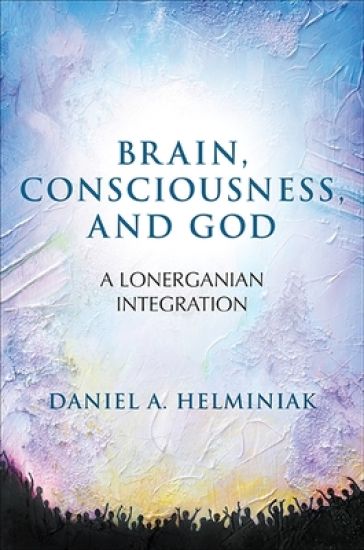
A constructive critique of neuropsychological research on human consciousness and religious experience that applies the thought of Bernard Lonergan.Brain, Consciousness, and God is a constructive critique of neuroscientific research on human consciousness and religious experience. An adequate epistemology-a theory of knowledge-is needed to address this topic, but today there exists no consensus on what human knowing means, especially regarding nonmaterial realities. Daniel A. Helminiak turns to twentieth-century theologian and philosopher Bernard Lonergan's breakthrough analysis of human consciousness and its implications for epistemology and philosophy of science. Lucidly summarizing Lonergan's key ideas, Helminiak applies them to questions about science, psychology, and religion. Along with Lonergan, eminent theorists in consciousness studies and neuroscience get deserved, detailed attention. Helminiak demonstrates the reality of the immaterial mind and, addressing the Cartesian "mind-body problem," explains how body and mind could make up one being, a person. Human consciousness is presented not only as awareness of objects, but also as self-presence, the self-conscious experience of human subjectivity, a spiritual reality. Lonergan's analyses allow us to say exactly what "spiritual" means, and it need have nothing to do with God.
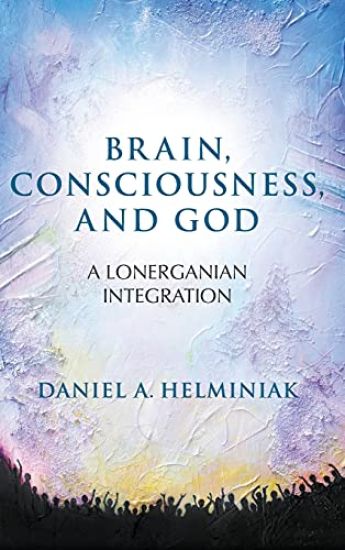
A constructive critique of neuropsychological research on human consciousness and religious experience that applies the thought of Bernard Lonergan.Brain, Consciousness, and God is a constructive critique of neuroscientific research on human consciousness and religious experience. An adequate epistemology-a theory of knowledge-is needed to address this topic, but today there exists no consensus on what human knowing means, especially regarding nonmaterial realities. Daniel A. Helminiak turns to twentieth-century theologian and philosopher Bernard Lonergan's breakthrough analysis of human consciousness and its implications for epistemology and philosophy of science. Lucidly summarizing Lonergan's key ideas, Helminiak applies them to questions about science, psychology, and religion. Along with Lonergan, eminent theorists in consciousness studies and neuroscience get deserved, detailed attention. Helminiak demonstrates the reality of the immaterial mind and, addressing the Cartesian "mind-body problem," explains how body and mind could make up one being, a person. Human consciousness is presented not only as awareness of objects, but also as self-presence, the self-conscious experience of human subjectivity, a spiritual reality. Lonergan's analyses allow us to say exactly what "spiritual" means, and it need have nothing to do with God.
Offers a process philosophical approach to mysticism and mystical religious experience.Process Mysticism uses the process philosophies of Charles Hartshorne, Alfred North Whitehead, and Henri Bergson to explore mystical religious experiences. The aim is not so much to demonstrate that such experiences are true or veridical as it is to understand, in a William Jamesian fashion, how they could be possible and not contradict the concept of God held by philosophers and theologians. Divine world-inclusiveness, ideal power and tragedy, the ontological argument, asceticism and the via negativa, divine visions and voices, and the aesthetics and ethics of mysticism are all treated in detail. The book is ecumenical in that it is meant to illuminate mystical experiences as they occur around the world in different religious traditions, but the author is especially familiar with those in the Abrahamic religions. "Mysticism" can refer to either direct experience of God or the claim that such experience is ineffable, and both senses of the term are carefully analyzed in the book.
Offers a process philosophical approach to mysticism and mystical religious experience.Process Mysticism uses the process philosophies of Charles Hartshorne, Alfred North Whitehead, and Henri Bergson to explore mystical religious experiences. The aim is not so much to demonstrate that such experiences are true or veridical as it is to understand, in a William Jamesian fashion, how they could be possible and not contradict the concept of God held by philosophers and theologians. Divine world-inclusiveness, ideal power and tragedy, the ontological argument, asceticism and the via negativa, divine visions and voices, and the aesthetics and ethics of mysticism are all treated in detail. The book is ecumenical in that it is meant to illuminate mystical experiences as they occur around the world in different religious traditions, but the author is especially familiar with those in the Abrahamic religions. "Mysticism" can refer to either direct experience of God or the claim that such experience is ineffable, and both senses of the term are carefully analyzed in the book.

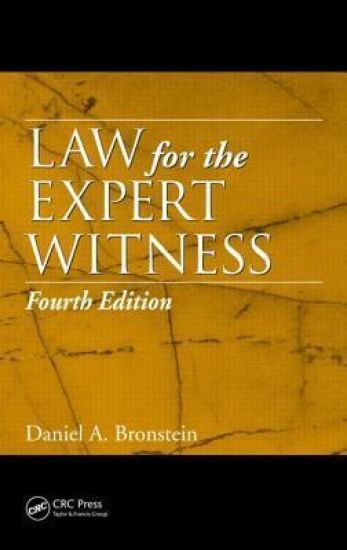
Law for the Expert Witness
Daniel A. Bronstein
Routledge Member of the Taylor and Francis Group
2011
sidottu
Extensively updated and expanded to incorporate legislative and practical changes enacted since the publication of the previous edition, Law for the Expert Witness, Fourth Edition is designed for professionals and students requiring edification on the current processes and techniques of legal procedure.Drawn from revised versions of the readings assigned to graduate and continuing education courses taught by the author, as well as his own professional experience, the text is divided into four sections. Beginning with procedural issues that an expert witness will encounter in advance of the trial itself, the chapters cover legal paperwork, discovery, depositions and other discovery techniques, and consequences for failure to comply with discovery. The next section addresses evidentiary issues, exploring fundamental concepts such as burden of proof, presumptions, and admissibility. It defines who is an expert and when one can testify, and describes the proper form of questions to an expert. Next, the book discusses chain of custody issues, exhibits, hearsay, and the best evidence rule.The book includes suggestions and hints for the expert witness applicable to direct testimony as well as tips on withstanding cross-examination. The final section of the book contains excerpts from the Federal Rules of Civil Procedure and the Federal Rules of Evidence as well as a table of illustrative cases.New topics in this Fourth Edition include: The non-discoverability of the expert’s draft reports, as mandated by FRCP26The issue of destruction of evidence as it effects discovery and tests, experiments, and chain of custodyNew and updated information on differing rules among states regarding who is an expert and whether that testimony will be admitted into evidenceThe reissuance of the Federal Rules of Civil Procedure with new subsectionsMaintaining the same user-friendly style that made previous editions so popular, this volume enables expert witnesses and attorneys to present compelling evidence in court that will withstand objection from even the most challenging adversary.
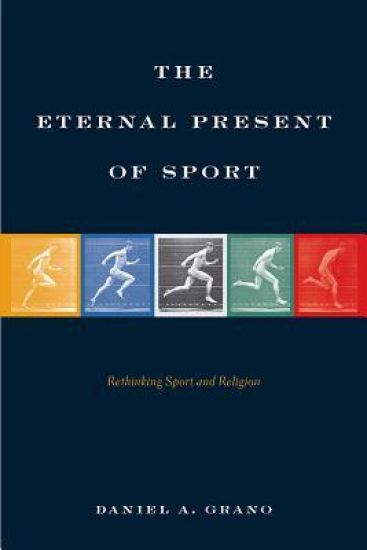
In his persuasive study The Eternal Present of Sport, Daniel Grano rethinks the sport-religion relationship by positioning sport as a source of theological trouble. Focusing on bodies, time, movement, and memory, he demonstrates how negative theology can be practically and theoretically useful as a critique of elite televised sport. Grano asserts that it is precisely through sport’s highest religious ideals that controversies are taking shape and constituting points of political and social rupture. He examines issues of transcendence, “legacy”-e.g., “greatest ever,” or “all-time”-and “witnessing” through instant replay, which undermine institutional authority. Grano also reflects on elite athletes representing especially powerful embodiments of religious and social conflict, including around issues related to gender, sexuality, ability doping, traumatic brain injury, and institutional greed. Elite sport is in a period of profound crisis. It is through the ideals Grano analyzes that we can imagine a radically alternative future for elite sport.
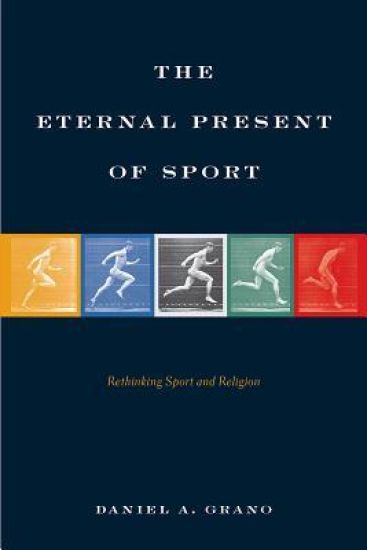
In his persuasive study The Eternal Present of Sport, Daniel Grano rethinks the sport-religion relationship by positioning sport as a source of theological trouble. Focusing on bodies, time, movement, and memory, he demonstrates how negative theology can be practically and theoretically useful as a critique of elite televised sport. Grano asserts that it is precisely through sport’s highest religious ideals that controversies are taking shape and constituting points of political and social rupture. He examines issues of transcendence, “legacy”-e.g., “greatest ever,” or “all-time”-and “witnessing” through instant replay, which undermine institutional authority. Grano also reflects on elite athletes representing especially powerful embodiments of religious and social conflict, including around issues related to gender, sexuality, ability doping, traumatic brain injury, and institutional greed. Elite sport is in a period of profound crisis. It is through the ideals Grano analyzes that we can imagine a radically alternative future for elite sport.

A highly accessible resource for students and professionals as well as parents, Building the Bonds of Attachment presents a composite case study of one child’s developmental course following years of abuse and neglect. Weaving theory and research into a powerful narrative, Hughes offers effective methods for facilitating attachment in children who have experienced serious trauma. The text emphasizes both the specialized psychotherapy and parenting strategies often necessary in facilitating a child's psychological development and attachment security. Hughes steps through an integrated intervention model that blends attachment and trauma theories with the most current research as well as general principles of both parenting and child and family therapy. Thoughtful and practical, the third edition provides an invaluable guide for therapists and social workers, students in training, and parents. Updates to the Third Edition include: ·Coverage of the greater preparation given to both the therapist and parent before the onset of the treatment and placement based on our understanding of how the attachment histories of both the parents and therapists impact their engagement with the child ·Introduction of the concept of blocked care to better understand the challenges of raising a traumatized child with attachment difficulties ·Introduction of the classification of developmental trauma that is now commonly used to describe the challenges faced by children such as Katie ·Expanded coverage of intersubjectivity with demonstrations throughout the book as to its impact on the development of the child ·Stronger development of the therapeutic and parenting stance of PACE (playful, accepting, curious, empathic) since this has become a strong organizing principle for training both therapists and parents using the dyadic developmental psychotherapy (DDP) model ·Updated examples of the components of DDP (affective-reflective dialogue, follow-lead-follow, interactive repair, deepening the narrative) and a discussion of the ties between DDP and new research in interpersonal neurobiology

A highly accessible resource for students and professionals as well as parents, Building the Bonds of Attachment presents a composite case study of one child’s developmental course following years of abuse and neglect. Weaving theory and research into a powerful narrative, Hughes offers effective methods for facilitating attachment in children who have experienced serious trauma. The text emphasizes both the specialized psychotherapy and parenting strategies often necessary in facilitating a child's psychological development and attachment security. Hughes steps through an integrated intervention model that blends attachment and trauma theories with the most current research as well as general principles of both parenting and child and family therapy. Thoughtful and practical, the third edition provides an invaluable guide for therapists and social workers, students in training, and parents. Updates to the Third Edition include: ·Coverage of the greater preparation given to both the therapist and parent before the onset of the treatment and placement based on our understanding of how the attachment histories of both the parents and therapists impact their engagement with the child ·Introduction of the concept of blocked care to better understand the challenges of raising a traumatized child with attachment difficulties ·Introduction of the classification of developmental trauma that is now commonly used to describe the challenges faced by children such as Katie ·Expanded coverage of intersubjectivity with demonstrations throughout the book as to its impact on the development of the child ·Stronger development of the therapeutic and parenting stance of PACE (playful, accepting, curious, empathic) since this has become a strong organizing principle for training both therapists and parents using the dyadic developmental psychotherapy (DDP) model ·Updated examples of the components of DDP (affective-reflective dialogue, follow-lead-follow, interactive repair, deepening the narrative) and a discussion of the ties between DDP and new research in interpersonal neurobiology



New Drugs (2005-2009) and Comparison Ratings: NDCR 2010 Edition
Daniel A. Hussar
Createspace Independent Publishing Platform
2010
nidottu

The Short Death of Phineas Bean
Daniel a. Miller
Createspace Independent Publishing Platform
2011
nidottu