

Kirjahaku
Etsi kirjoja tekijän nimen, kirjan nimen tai ISBN:n perusteella.
1000 tulosta hakusanalla David L. Goetsch




Molecular Photophysics and Spectroscopy (Second Edition)
David L Andrews; Robert H Lipson
Institute of Physics Publishing
2021
sidottu

Molecular Photophysics and Spectroscopy (Second Edition)
David L Andrews; Robert H Lipson
INSTITUTE OF PHYSICS PUBLISHING
2021
pokkari

Optical Nanomanipulation (Second Edition)
David L Andrews; David S Bradshaw
INSTITUTE OF PHYSICS PUBLISHING
2022
sidottu

Optical Nanomanipulation (Second Edition)
David L Andrews; David S Bradshaw
INSTITUTE OF PHYSICS PUBLISHING
2022
pokkari

Surface and Interface Science
David L. (Pennsylvania State University (United States)) Allara; Prof. Robert L. (University of Delaware (United States)) Opila
INSTITUTE OF PHYSICS PUBLISHING
2025
sidottu
'Bottom-Line Call Center Management breaks new ground by addressing key skills and techniques in assessing and implementing effective management practices to maximize the human and capital resources at the call center manager's disposal. Drawing on the author's unique data sets and years of research experience in the industry, 'Bottom-Line Call Center Management' helps call center managers evaluate their current status, implement cost-effective changes, and measure results of their changes to ensure a culture of accountability within the call center at all levels increasing the bottom line. The processes include an evaluation of current customer service representatives, defining, delimiting and assessing the labor shed of the center, and exploring the customer service representative's unique skills and leveraging those skills into a unique and dynamic work environment. Likewise, the process also determines the learning skills and competencies necessary to meet and exceed the basic requirements for all call centers. Furthermore, each step has a pre, in-process, and post evaluation to ensure projects are progressing according to plan. Lastly, all evaluations are measured against the bottom line through a return on investment (ROI) model. The framework for this book uses the culture of call centers, defined and lived through the customer service representatives, as the lens to view all processes, measurements, accountability and return on investment. This framework is critical since there has been much emphasis on technology-as-a-solution which treats the employees as a hindrance instead of the enablers of positive change. Likewise, customer service representatives eventually act as strong determinants of success with the call center and thus the bottom line.

A second selection of photographs of the author's hometown. Halesowen was a small working class town and as such was closely knit, until the redevelopment and mass expansion of the 1960s and 1970s.
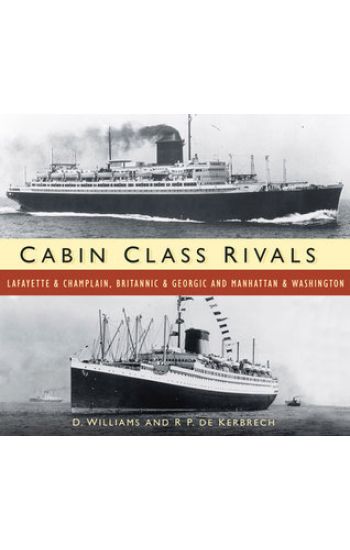
During the late 1920s and early 1930s three pairs of unique and innovative passenger liners emerged from France, the UK and the US designated as cabin-class liners: the Lafayette and Champlain, Britannic and Georgic and the Manhattan and Washington – three steamships and three motorships. Born at the height of the Great Depression and constructed at a time when there was much work needed in the shipbuilding and allied trades, they were overshadowed by the larger, more luxurious express liners on the prestigious North Atlantic route. Their introduction made incursions into the Atlantic passenger traffic, with spacious accommodation and sumptuous public rooms, in effect offering first-class travel in relative luxury at much lower fares and at a longer, slower crossing time. Much overlooked by historians, their impact on the style and standards for Atlantic travel were trendsetting and challenged the major passenger liner companies to re-think their strategies. Here, David L. Williams and Richard P. de Kerbrech have examined the part played by these cabin-class rivals and highlight their rightful place in the history and development of North Atlantic steam – and motor – navigation.
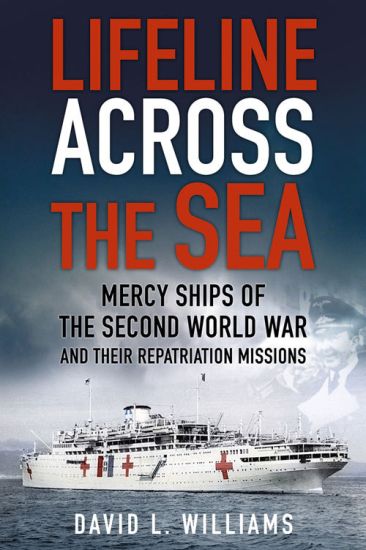
The safe exchange of wounded or gravely ill prisoners of war, ‘protected personnel’ – medical staff and clergy – and diplomats, civilians and alien internees is a little known dimension of the Second World War, yet it was highly dangerous work. Here, David L. Williams tells the gripping story of some fifty mercy ships engaged in these repatriation voyages, each of the exchanges arranged individually between Allied nations and the Axis belligerents, through neutral intermediaries, and often conducted under the supervision of the International Red Cross. Sailing alone and undefended through hostile waters, and conspicuously illuminated at night, the ships were constantly in danger from submarine and aircraft, their safety depending totally on the transmission and receipt of ‘safe passage’ commands to the armed units in their paths. However, despite the risk of attack and severe loss of life, these exchange operations were essential for providing a lifeline to thousands of people caught up in a cruel and brutal war.
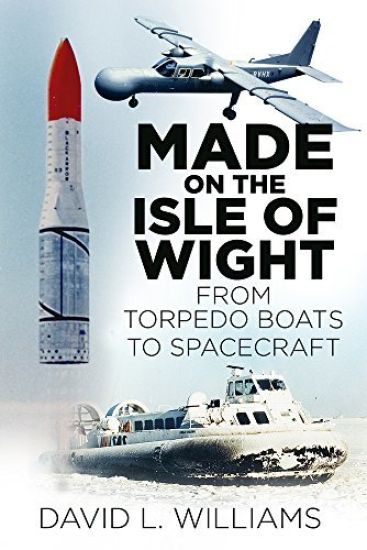
Made on the Isle of Wight is a pictorial celebration of the immense contribution to the aviation, automotive and marine industries that this tiny island has given, from the first hovercraft to boats that held the world water speed record and even the only all-British rocket and satellite into space. With a focus on invention, innovation and record-breaking, local author David L. Williams explores the many products of the island’s industry, along with designers and engineers, and the workforce that created these fascinating inventions.
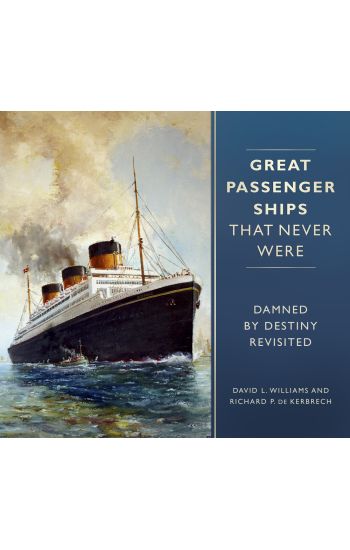
Great Passenger Ships that Never Were
David L. Williams; Richard P. Kerbrech
The History Press Ltd
2019
sidottu
Great passenger ships that never were is a completely revised and updated version of Damned by Destiny (Teredo Books, 1982), a comprehensive account of the large passenger ships that, for one reason or another, never entered commercial service. Some never made it off the drawing board or out of the model shop, some met with disaster after launch and some were diverted to wartime service but didn’t survive, never used for their original purpose. They were all the victims of circumstance, whether due to financial crises, timing or changing technology. Some of these liners and cruise vessels may have become the greatest passenger ships ever achieved. They would have surpassed the most famous, not only in speed and splendour but in size and appearance, besides setting trends that were subsequently adopted for ships that did enter service. With beautiful pictures and detailed diagrams this book is a true insight into what might have been.
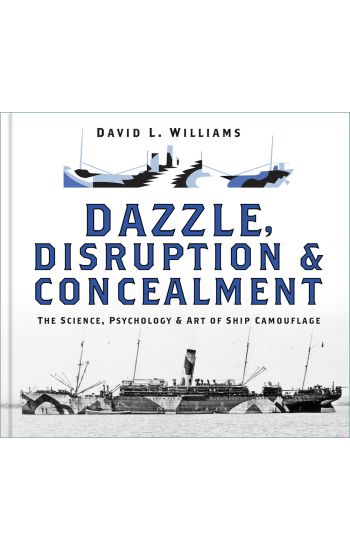
Many people are familiar with the term ‘dazzle design’, but what of its origins and objectives as a defensive practice at sea? And was it the only approach to the painted protection of merchant and naval vessels during the two world wars? David L. Williams examines the origins of maritime camouflage, how it was originally influenced by natural concealment as seen in living creatures and plants and was followed by the emergence of two fundamentally opposed schools of thought: reduced visibility and disruption to visual perception.Dazzle, Disruption & Concealment explores the objectives and design features of each of the various strategies advocated as forms of painted protection by looking at the scientific and artistic principles involved (the behaviour of light and the process of vision). It considers their effectiveness as a means of reducing visibility or in disturbing the comprehension of crucial target attributes (ship’s speed, distance and bearing). It also identifies the key individuals engaged in maritime camouflage development as well as the institutions set up to conduct in depth research into these practices.
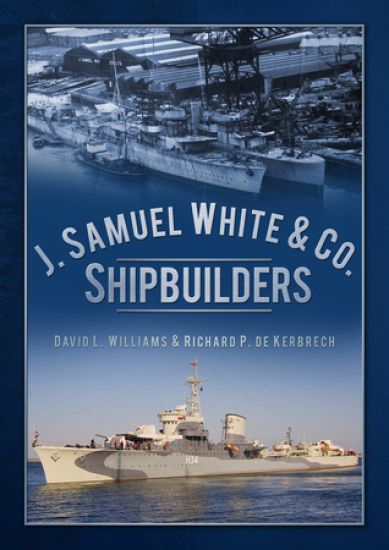
J. Samuel White & Co., Shipbuilders
David L. Williams; Richard P. Kerbrech
The History Press Ltd
2012
nidottu
J. Samuel White & Company was the oldest firm on the Admiralty List and built 252 ships for the Royal Navy alone. The yard’s closure in 1966 ended 300 years of shipbuilding during which time the company had gained acclaim from mercantile and naval customers alike. Famed early on for fast Revenue cutters and naval brigs, in its final years Royal Navy destroyers earned it great distinction. Highly innovative, it developed and patented many pioneering products while other innovations included semi-diesel engines, heat exchangers, air conditioners and compressors, besides a range of marine thruster units. Not only did the company build ships and boats but it also constructed a range of marine aircraft. During the First World War, White’s production accounted for 100 ships, including twenty-seven destroyers, and 201 seaplanes. Production during the Second World War added up to 317 ships, among them twenty-six destroyers and a large minelayer. Illustrated with photographs of these and many of the company’s other products, this book tells the story of J. Samuel White and its subsidiary concerns, a business built on a reputation of quality which earned it the slogan: “White’s-built – well-built!”.
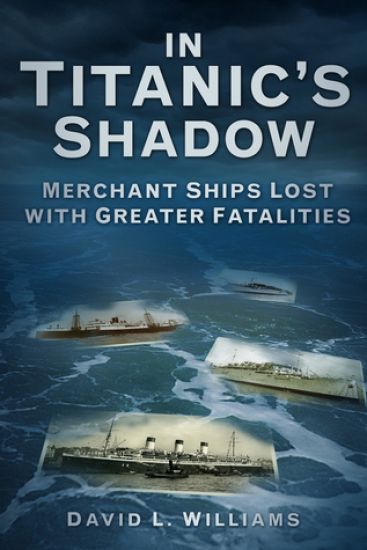
While the near 1,500 victims of Titanic accounted for a huge loss of life, each of the ships here had a greater number of casualties, in some cases more than five times as many. In total, these 27 merchant ship sinkings resulted in a staggering loss of life at sea – more than 96,000 in total, 3,840 per ship. While the circumstances were different to Titanic, the outcome in each case was no less tragic. Yet, despite the fact that Titanic ranks behind so many other losses, so powerful has her name become that it was the inevitable choice to describe some of these other events, ‘Germany’s Titanic’ and ‘The Titanic of Japan’ being two examples. Ships include the Lancastria, Britain’s worst maritime disaster with 3,000 lost; the Ryusei Maru, a Japanese ‘Hellship’ loaded with 6,000 Allied POWs, torpedoed by a US submarine; and the Wilhelm Gustloff, a German liner packed with 7,800 civilians, sunk by a Russian submarine. There were no survivors and this tragedy was the worst maritime disaster of all time.

The year 1645 saw the biggest witch-hunt in English history. Faced by the extreme challenges of religious dissent, poverty, sickness and the threat of foreign invasion, Ipswich became an ideological battlefield during the English Civil Wars. Here Puritanism struggled against Catholic sensibilities, the Devil loomed at the door of every English home, and the age of the witchfinder was born. This book focuses on witchcraft in Ipswich and the most extreme punishment ever given to an English witch, and challenges some stereotypes of the period: reflecting on the growth in Puritan sects, gender politics, the exploitation of the poor, the importance of beliefs in the occult and the rise of English power in the New World.

When the Syrian regime used sarin and other chemical weapons against dissidents in August 2013, an estimated 1729 people were killed including 400 children. President Barack Obama warned that the use of chemical weapons would constitute a "red line”, but he refused to take military action. Trump’s approach has been even more disengaged and lacking in clarity. Frontline Syria highlights America’s failure to prevent conflict escalation in Syria. Based on interviews with US officials involved in Syria policy, as well as UN personnel, the book draws conclusions about America’s role in world affairs and its potential to prevent deadly conflict. It also highlights the role of front-line states in Syria and other countries who engaged in the Syrian conflict to advance their national interests. Covering key turning points in the Syrian civil war, including the impact of recent decisions by the Trump administration, Frontline Syria critically evaluates America’s global power and provides a diplomatic and military history of the conflict. Based on this analysis, the book offers policy recommendations and makes a case for America’s future role addressing peace and conflict.