The Railway Children is a children's book by Edith Nesbit, originally serialised in The London Magazine during 1905 and first published in book form in 1906. It has been adapted for the screen several times, of which the 1970 film version is the best known. The Oxford Dictionary of National Biography credits Oswald Barron, who had a deep affection for Nesbit, with having provided the plot. The setting is thought to be inspired by Edith's walks to Chelsfield railway station close to where she lived, and her observance of the construction of the railway cutting and tunnel between Chelsfield and Knockholt. Plot: The story concerns a family who move from London to "The Three Chimneys", a house near the railway in Yorkshire, after the father, who works at the Foreign Office, is imprisoned after being falsely accused of spying. The children befriend an Old Gentleman who regularly takes the 9:15 train near their home; he is eventually able to help prove their father's innocence, and the family is reunited. The family takes care of a Russian exile, Mr Szczepansky, who came to England looking for his family (later located) and Jim, the grandson of the Old Gentleman, who suffers a broken leg in a tunnel. The theme of an innocent man being falsely imprisoned for espionage and finally vindicated might have been influenced by the Dreyfus Affair, which was a prominent worldwide news item a few years before the book was written. The Russian exile, persecuted by the Tsars for writing "a beautiful book about poor people and how to help them" and subsequently helped by the children, was most likely an amalgam of the real-life dissidents Sergius Stepniak and Peter Kropotkin who were both friends of the author.... Edith Nesbit (married name Edith Bland; 15 August 1858 - 4 May 1924) was an English author and poet; she published her books for children under the name of E. Nesbit. She wrote or collaborated on more than 60 books of children's literature. She was also a political activist and co-founded the Fabian Society, a socialist organisation later affiliated to the Labour Party. Nesbit was born in 1858 at 38 Lower Kennington Lane in Kennington, Surrey (now part of Greater London), the daughter of an agricultural chemist, John Collis Nesbit, who died in March 1862, before her fourth birthday. Her sister Mary's ill health meant that the family travelled around for some years, living variously in Brighton, Buckinghamshire, France (Dieppe, Rouen, Paris, Tours, Poitiers, Angoul me, Bordeaux, Arcachon, Pau, Bagn res-de-Bigorre, and Dinan in Brittany), Spain and Germany, before settling for three years at Halstead Hall in Halstead in north-west Kent, a location which later inspired The Railway Children (this distinction has also been claimed by the Derbyshire town of New Mills). At eighteen, Nesbit met the bank clerk Hubert Bland in 1877. Seven months pregnant, she married Bland on 22 April 1880, though she did not immediately live with him, as Bland initially continued to live with his mother. Their marriage was a stormy one. Early on Nesbit discovered that another woman believed she was Hubert's fiancee and had also borne him a child. A more serious blow came later when she discovered that her good friend, Alice Hoatson, was pregnant with Hubert's child. She had previously agreed to adopt Hoatson's child and allow Hoatson to live with her as their housekeeper. After she discovered the truth, they quarrelled violently and she suggested that Hoatson and the baby should leave; her husband threatened to leave Edith if she disowned the baby and its mother. Hoatson remained with them as a housekeeper and secretary and became pregnant by Bland again 13 years later....
"Conventionally our life-story ended in a shower of rice at the church door, amid the scent of white flowers, with a flutter of white favors all about us." Thus begins The Red House, Nesbit's charming novel of Chloe and Len, newlyweds adjusting to a new life and a new home. When Len inherits a house in the country from his uncle, Chloe insists they live there, whether the rumors of a ghost be true or not. When mysterious events happen, they are always blamed on the ghost. But the ultimate surprise rests in who that ghost really is. Edith Nesbit (married name Edith Bland; 15 August 1858 - 4 May 1924) was an English author and poet; she published her books for children under the name of E. Nesbit. She wrote or collaborated on more than 60 books of children's literature. She was also a political activist and co-founded the Fabian Society, a socialist organisation later affiliated to the Labour Party. Nesbit was born in 1858 at 38 Lower Kennington Lane in Kennington, Surrey (now part of Greater London), the daughter of an agricultural chemist, John Collis Nesbit, who died in March 1862, before her fourth birthday. Her sister Mary's ill health meant that the family travelled around for some years, living variously in Brighton, Buckinghamshire, France (Dieppe, Rouen, Paris, Tours, Poitiers, Angoul me, Bordeaux, Arcachon, Pau, Bagn res-de-Bigorre, and Dinan in Brittany), Spain and Germany, before settling for three years at Halstead Hall in Halstead in north-west Kent, a location which later inspired The Railway Children (this distinction has also been claimed by the Derbyshire town of New Mills). At eighteen, Nesbit met the bank clerk Hubert Bland in 1877. Seven months pregnant, she married Bland on 22 April 1880, though she did not immediately live with him, as Bland initially continued to live with his mother. Their marriage was a stormy one. Early on Nesbit discovered that another woman believed she was Hubert's fiancee and had also borne him a child. A more serious blow came later when she discovered that her good friend, Alice Hoatson, was pregnant with Hubert's child. She had previously agreed to adopt Hoatson's child and allow Hoatson to live with her as their housekeeper. After she discovered the truth, they quarrelled violently and she suggested that Hoatson and the baby should leave; her husband threatened to leave Edith if she disowned the baby and its mother. Hoatson remained with them as a housekeeper and secretary and became pregnant by Bland again 13 years later. Edith again adopted Hoatson's child. Nesbit's children were Paul Bland (1880-1940), to whom The Railway Children was dedicated; Iris Bland (1881-1950s); Fabian Bland (1885-1900); Rosamund Bland (1886-1950), to whom The Book of Dragons was dedicated; and John Bland (1898-1971) to whom The House of Arden was dedicated. Her son Fabian died aged 15 after a tonsil operation; Nesbit dedicated a number of books to him: Five Children and It and its sequels, as well as The Story of the Treasure Seekers and its sequels. Nesbit's adopted daughter Rosamund collaborated with her on the book Cat Tales....
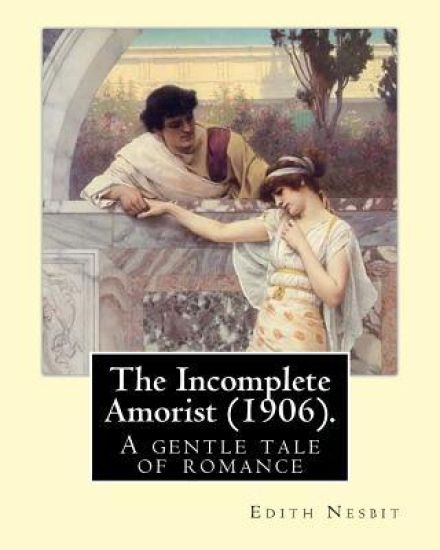
Edith Nesbit (married name Edith Bland; 15 August 1858 - 4 May 1924) was an English author and poet; she published her books for children under the name of E. Nesbit. She wrote or collaborated on more than 60 books of children's literature. She was also a political activist and co-founded the Fabian Society, a socialist organisation later affiliated to the Labour Party. Nesbit was born in 1858 at 38 Lower Kennington Lane in Kennington, Surrey (now part of Greater London), the daughter of an agricultural chemist, John Collis Nesbit, who died in March 1862, before her fourth birthday. Her sister Mary's ill health meant that the family travelled around for some years, living variously in Brighton, Buckinghamshire, France (Dieppe, Rouen, Paris, Tours, Poitiers, Angoul me, Bordeaux, Arcachon, Pau, Bagn res-de-Bigorre, and Dinan in Brittany), Spain and Germany, before settling for three years at Halstead Hall in Halstead in north-west Kent, a location which later inspired The Railway Children (this distinction has also been claimed by the Derbyshire town of New Mills). At eighteen, Nesbit met the bank clerk Hubert Bland in 1877. Seven months pregnant, she married Bland on 22 April 1880, though she did not immediately live with him, as Bland initially continued to live with his mother. Their marriage was a stormy one. Early on Nesbit discovered that another woman believed she was Hubert's fiancee and had also borne him a child. A more serious blow came later when she discovered that her good friend, Alice Hoatson, was pregnant with Hubert's child. She had previously agreed to adopt Hoatson's child and allow Hoatson to live with her as their housekeeper. After she discovered the truth, they quarrelled violently and she suggested that Hoatson and the baby should leave; her husband threatened to leave Edith if she disowned the baby and its mother. Hoatson remained with them as a housekeeper and secretary and became pregnant by Bland again 13 years later. Edith again adopted Hoatson's child. Nesbit's children were Paul Bland (1880-1940), to whom The Railway Children was dedicated; Iris Bland (1881-1950s); Fabian Bland (1885-1900); Rosamund Bland (1886-1950), to whom The Book of Dragons was dedicated; and John Bland (1898-1971) to whom The House of Arden was dedicated. Her son Fabian died aged 15 after a tonsil operation; Nesbit dedicated a number of books to him: Five Children and It and its sequels, as well as The Story of the Treasure Seekers and its sequels. Nesbit's adopted daughter Rosamund collaborated with her on the book Cat Tales.... A gentle tale of romance and art from a noted children's author . . . "He asked idle questions: she answered them with a conscientious tremulous truthfulness that showed to him as the most finished art. Betty told him nervously and in words ill-chosen everything that he asked to know, but all the while the undercurrent of questions rang strong within her -- 'When is he to teach me? Where? How' -- so that when at last there was left but the bare fifteen minutes needed to get one home in time for the midday dinner she said abruptly: 'And when shall I see you again'"
Edith Nesbit (married name Edith Bland; 15 August 1858 - 4 May 1924) was an English author and poet; she published her books for children under the name of E. Nesbit. She wrote or collaborated on more than 60 books of children's literature. She was also a political activist and co-founded the Fabian Society, a socialist organisation later affiliated to the Labour Party.Nesbit was born in 1858 at 38 Lower Kennington Lane in Kennington, Surrey (now part of Greater London), the daughter of an agricultural chemist, John Collis Nesbit, who died in March 1862, before her fourth birthday. Her sister Mary's ill health meant that the family travelled around for some years, living variously in Brighton, Buckinghamshire, France (Dieppe, Rouen, Paris, Tours, Poitiers, Angoul me, Bordeaux, Arcachon, Pau, Bagn res-de-Bigorre, and Dinan in Brittany), Spain and Germany, before settling for three years at Halstead Hall in Halstead in north-west Kent, a location which later inspired The Railway Children (this distinction has also been claimed by the Derbyshire town of New Mills
Set against the bleak winter landscape of New England, Ethan Frome is the story of a poor farmer, lonely and downtrodden, his wife Zeena, and her cousin, the enchanting Mattie Silver. In the playing out of this short novel's powerful and engrossing drama, Edith Wharton constructed her least characteristic and most celebrated book.
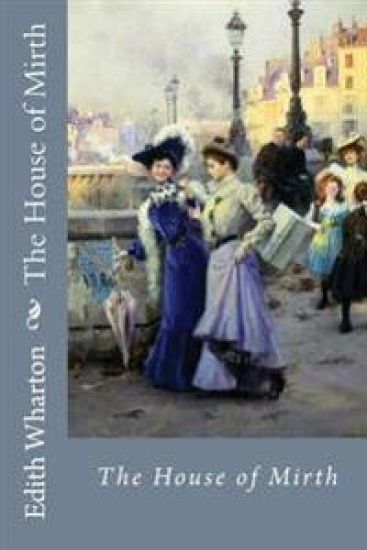
The House of Mirth (1905), a novel by Edith Wharton (1862-1937), tells the story of Lily Bart, a well-born but impoverished woman belonging to New York City's high society around the turn of the last century. a] Wharton creates a portrait of a stunning beauty who, though raised and educated to marry well both socially and economically, is reaching her 29th year, an age when her youthful blush is drawing to a close and her marital prospects are becoming ever more limited. The House of Mirth traces Lily's slow two-year social descent from privilege to a tragically lonely existence on the margins of society. Wharton uses Lily as an attack on "an irresponsible, grasping and morally corrupt upper class." (309-310)
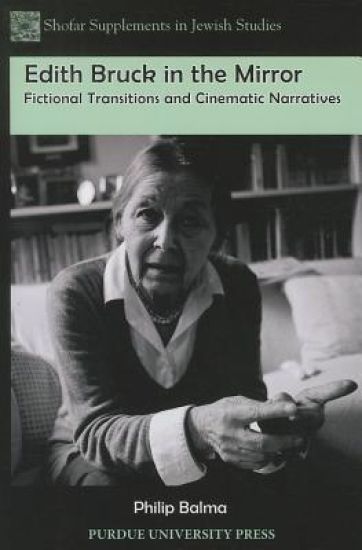
Author of more than thirteen books and several volumes of poetry, screenwriter, and director, Edith Bruck is one of the leading literary voices in Italy, attracting increasing attention in the English-speaking world not least for her powerful Holocaust testimony, which is often compared with the work of her contemporaries Primo Levi and Giorgio Bassani. Born in Hungary in 1932, she was deported with her family to the concentration camps of Auschwitz, Dachau, Christianstadt, Landsberg, and Bergen-Belsen, where she lost both her parents and a brother. After the war, she traveled widely until 1954 when she settled in Rome. She has lived there ever since. This important new study is motivated by a desire to better understand and situate Bruck's art as well as to advance (and, when necessary, to revise) the critical discourse on her considerable and eclectic body of work. As such, it underscores and analyzes the intermedial nature of her contributions to contemporary Italian culture, which should no longer be understood merely in terms of her willingness to revisit the subject of the Holocaust on the printed page or the silver screen. It also includes previously unpublished interviews with the author. The book will be of broad interest to scholars and students of Jewish (especially Holocaust) studies, Italian literature, film studies, women's studies, and postcolonial culture."This is the first comprehensive scholarly analysis of the work produced by a main contemporary author of Italian Holocaust literature, focused on Bruck's overall artistic production (novels, poetry, film, and TV productions). It will offer scholars and students alike a new interpretive perspective and a valuable source of reference for their studies." Gabriella Romani, Seton Hall University.
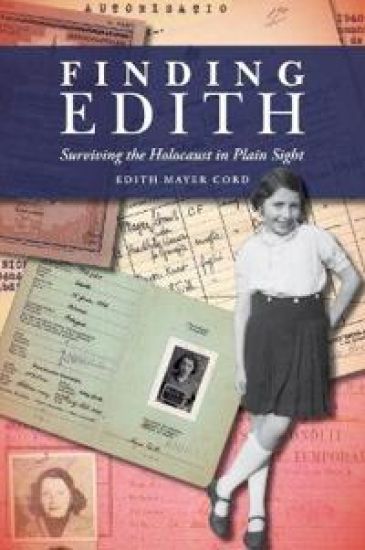
Finding Edith: Surviving the Holocaust in Plain Sight is the coming-of-age story of a young Jewish girl chased in Europe during World War II. Like a great adventure story, the book describes the childhood and adolescence of a Viennese girl growing up against the backdrop of the Great Depression, the rise of Nazism, World War II, and the religious persecution of Jews throughout Europe. Edith was hunted in Western Europe and Vichy France, where she was hidden in plain sight, constantly afraid of discovery and denunciation. Forced to keep every thought to herself, Edith developed an intense inner life. After spending years running and eventually hiding alone, she was smuggled into Switzerland. Deprived of schooling, Edith worked at various jobs until the end of the war when she was able to rejoin her mother, who had managed to survive in France.After the war, the truth about the deathcamps and the mass murder on an industrial scale became fully known. Edith faced the trauma of Germany's depravity, the murder of her father and older brother in Auschwitz, her mother's irrational behavior, and the extreme poverty of the post-war years. She had to make a living but also desperately wanted to catch up on her education. What followed were seven years of struggle, intense study, and hard work until finally, against considerable odds, Edith earned the baccalauréat in 1949 and the licence ès lettres from the University of Toulouse in 1952 before coming to the United States. In America, Edith started at the bottom like all immigrants and eventually became a professor and later a financial advisor and broker. Since her retirement, Edith dedicates her time to publicly speaking about her experiences and the lessons from her life.
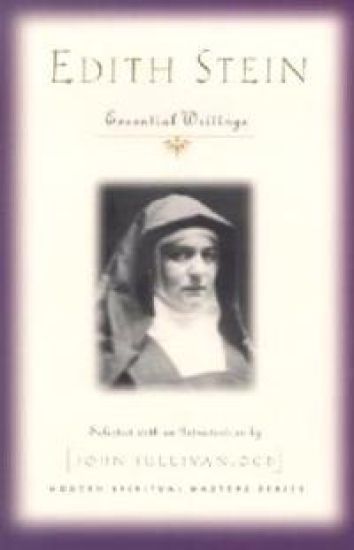
Edith Stein (1891-1942), who was recently canonized, was one of the most intriguing Catholics of the twentieth century. A Jewish convert, an eminent philosopher, educator, and advocate for women, she became a Discalced Carmelite nun, Sister Teresa Benedicta of the Cross. Arrested by the Nazis she died in Auschwitz in 1942. This volume highlights the extraordinary features of her spirituality -- a vision that integrated her philosophical training, her affinity for Carmelite mysticism, and her personal identification with the way of the Cross. Edith Stein provides a wonderful introduction to an extraordinary mind.
Founded in 1893, the Confederate Veteran was a monthly magazine devoted to the wartime reminiscences of Confederate soldiers. In 1913 founding editor Sumner A. Cunningham died, and his longtime secretary, Edith Drake Pope, succeeded him. Over the next twenty years, she transformed the journal into the official mouthpiece of the United Daughters of the Confederacy, which played a leading role in the transmission of the Confederate past to a new generation in the twentieth century.John A. Simpson explores Edith Pope’s life, work, and legacy, demonstrating that as editor of the Confederate Veteran, Pope guarded the interests of the Lost Cause with grace, strength, and unswerving loyalty. Having secured editorial control from the Confederate memorial associations that opposed her, she skillfully navigated between time-worn practices established by Cunningham and her own inclination toward change in order to attract a younger and more contemporary readership. Her personal connection to the Confederate heritage, through the Civil War experiences of her parents, played an important role in her outlook and her motivations as editor. Even under Pope’s able-bodied leadership, however, the magazine faced financial challenges to its survival. To meet these challenges, Pope formed a lasting and mutually beneficial relationship with the United Daughters of the Confederacy, which became the largest, and arguably, the most influential women’s organization in the South. Simpson pays special attention to the local chapter, known as Nashville Number 1, and its alliance with Pope and the Confederate Veteran. He refutes the notion that members were backward-looking dilettantes and instead draws a complex portrait of women who were actively involved in a broad spectrum of civic, patriotic, religious, educational, and even reform activities. As Simpson reveals, this alliance of women actively shaped southern culture in the early decades of the century, and his analysis sheds new light on the role of professional and club women on southern history. The Author: John A. Simpson holds a Ph.D. in history from the University of Oregon and is author of S.A. Cunningham and the Confederate Heritage and Reminiscences of the 41st Tennessee. He is a public schoolteacher in Kelso, Washington.
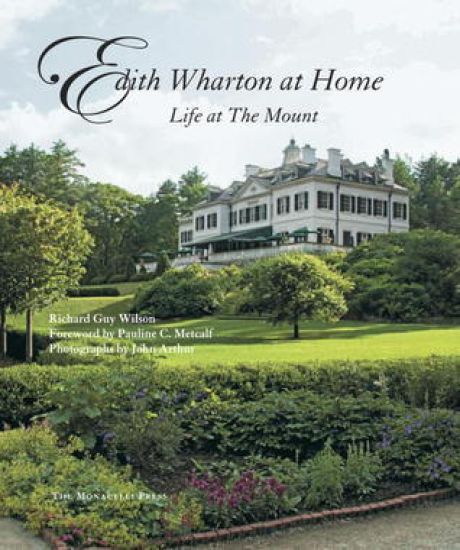
"The Mount was to give me country cares and joys, long happy rides and drives through the wooded lanes of that loveliest region, the companionship of dear friends, and the freedom from trivial obligations, which was necessary if I was to go on with my writing. The Mount was my first real home . . . its blessed influence still lives in me."-- Edith Wharton, 1934 Completed in 1902, The Mount sits in the rolling landscape of the Berkshire Hills, with views overlooking Laurel Lake and all the way out to the mountains. At the turn of the century, Lenox and Stockbridge were thriving summer resort communities, home to Vanderbilts, Sloanes, and other leading families of the Gilded Age. "Edith Wharton at Home" connects The Mount to that milieu and details Wharton's design of the house and landscape. Embodying principles set forth in Wharton's famous book "The Decorating of Houses "and her deep knowledge of Italian gardens, The Mount is truly an autobiographical house. There Wharton wrote some of her best-known and successful novels including "Ethan Frome" and "House of Mirth." Published to coincide with the celebrations surrounding the 150th anniversary of Wharton's birth, "Edith Wharton at Home "presents Wharton as a writer, as a designer, and as a hostess. Authoritative text by Richard Guy Wilson, Commonwealth Professor of Architectural History at the University of Virginia and host of the popular series "America's Castles "is illustrated with archival images as well as new color photography of the restoration of The Mount and its spectacular gardens. "Edith Wharton at Home" is an ideal addition to The Mount Bookshop (initial buyback of 500 copies; visitation of 30,000 annually with a significant increase anticipated for the 150th anniversary celebration).
A New York Review Books Original Edith Wharton wrote about New York as only a native can. Her Manhattan is a city of well-appointed drawing rooms, hansoms and broughams, all-night cotillions, and resplendent Fifth Avenue flats. Bishops' nieces mingle with bachelor industrialists; respectable wives turn into excellent mistresses. All are governed by a code of behavior as rigid as it is precarious. What fascinates Wharton are the points of weakness in the structure of Old New York: the artists and writers at its fringes, the free-love advocates testing its limits, widows and divorc es struggling to hold their own. The New York Stories of Edith Wharton gathers twenty stories of the city, written over the course of Wharton's career. From her first published story, "Mrs. Manstey's View," to one of her last and most celebrated, "Roman Fever," this new collection charts the growth of an American master and enriches our understanding of the central themes of her work, among them the meaning of marriage, the struggle for artistic integrity, the bonds between parent and child, and the plight of the aged. Illuminated by Roxana Robinson's Introduction, these stories showcase Wharton's astonishing insight into the turbulent inner lives of the men and women caught up in a rapidly changing society.
The Valley of Decision is set in eighteenth-century Italy. Here Wharton pits folks inspired by the antireligious thoughts of Rousseau and Voltaire against the orthodox leaders of the day. Soon enough Wharton's night-constant theme comes through: this, like most other violations of personal convention, will come at a terrible cost.