Kirjojen hintavertailu. Mukana 11 699 587 kirjaa ja 12 kauppaa.

Kirjahaku

Etsi kirjoja tekijän nimen, kirjan nimen tai ISBN:n perusteella.

1000 tulosta hakusanalla Edward Carson

Edward Pugh of Ruthin 1763-1813

Edward Pugh of Ruthin 1763-1813

John Barrell

University of Wales Press
2013
nidottu
Edward Pugh (1763-1813) was a Ruthin-born, Welsh-speaking artist and writer who produced compelling landscapes images of Denbighshire in particular and, more widely of North Wales, Monmouthshire and London. He also wrote what is probably the best account of a tour in Wales ever written: it is far superior to Borrow's. This book, the first to consider Pugh's work in detail, shows how his landscapes reveal a wealth of local knowledge, and dramatise some issues of great importance to Wales in his time: the effects of the enclosure of common land; the effects of the war with France on industry and the condition of the poor; the need to develop and modernise the Welsh economy; the power of the great landowners. Apart from Pugh's, almost all the pictures and tours we have of late eighteenth and early nineteenth century North Wales were made by English artists and writers. None of these can tell us about life in North Wales with the same insight as Pugh.
Edward Thomas and World Literary Studies

Edward Thomas and World Literary Studies

Andrew Webb

University of Wales Press
2013
nidottu
Edward Thomas and World Literary Studies offers a revelatory re-reading of Edward Thomas. Adapting Pascale Casanova's vision of 'world literature' as a system of competing national traditions, this study analyses Thomas's appropriation of Anglocentric British literary culture at key moments of historical crisis in the twentieth century: after the First World War, either side of the Second World War, and with the resumption of war in Ireland in the 1970s. It shows how the dominant assumptions underpinning the discipline of English Literature marginalise the Welshness of Thomas's work, before combining this revised 'world literature' model with fresh archival research to reveal how Thomas's reading of Welsh culture - its barddas, folk and literary traditions - is central both to his creation of an innovative body of poetry and to his extensive, and relatively neglected, prose. This study is groundbreaking in its contribution to recent debates about devolution and independence for Britain's constituent nations.
Edward Lear and the Pussycat

Edward Lear and the Pussycat

Alex Johnson

British Library Publishing
2019
nidottu
Behind every great writer there is a beloved pet, providing inspiration in life and in death, and companionship in what is often a lonely working existence. They also offer practical services, such as personal protection, although they may sometimes eat first drafts, or bite visitors. This book salutes all of the cats and dogs, ravens and budgerigars, monkeys and guinea pigs, wombats, turtles, and two laughing jackasses, who enriched the lives of their masters and mistresses, sat on their keyboards, slept in their beds, and occasionally provided the creative spark for their stories and poems. Gathered here are the tales of Beatrix Potter's rabbit, Benjamin Bouncer; Lord Byron's bear; the six cats of T S Eliot; Camus' cat, Cigarette; Arthur C Clarke's dog, Sputnik; and George Orwell's goat, Muriel. Enid Blyton's fox terrier, Bobs, `wrote' her columns in Teacher's World magazine, while John Steinbeck's poodle accompanied him on his 1960 US road trip, their exploits published as Travels with Charley. Agatha Christie dedicated her 1937 novel Dumb Witness to her favourite dog, Peter - the ultimate tribute.
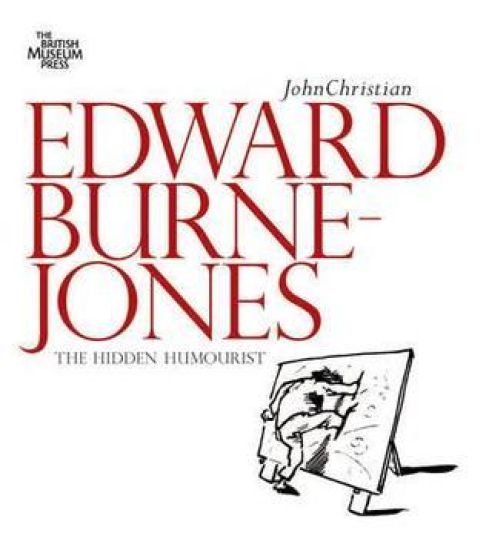
Edward Burne-Jones

Edward Burne-Jones

John Christian

British Museum Press
2011
nidottu
Edward Burne-Jones, member of the Pre-Raphaelite Brotherhood is renowned for his beautiful but usually melancholy evocations of a mythical, literary, ancient or medieval world, as well as his life-long friendship with William Morris. It will surprise many therefore to discover that he was a talented caricaturist and comic sketch artist. This charming book reveals a man brimming with imagination, a keen eye and impish sense of humour who took delight in drawing to amuse and entertain. His witty but affectionate caricatures of friends and family feature familiar faces, such as Morris and Dante Gabriel Rossetti, while his self-caricatures are endearingly self-deprecating. Accompanying these are enchanting sketches he created to illustrate letters and entertain children, and an introduction discussing the life and work of the artist in wider context. Beautifully illustrated with rarely published pieces from the large collection at the British Museum, this book provides an insight into another side of Burne-Jones and illuminates the personality and relationships of one of the most beloved English romantic painters.
Edward the Second

Edward the Second

Charles Forker

Manchester University Press
1995
nidottu
The introduction to this edition contains an analysis of the first quarto (including new evidence of its original dating) and a reconsideration of the play's complex relation to the Shakespearean histories that preceded and followed it. Charles R. Forker offers a discussion of Marlowe's use of sources, and presents a new argument for the drama's five-act structure. He delves into the conflicting and controversial opinions concerning the genre and sexual politics of the play, and also includes a full record of the stage history. Forker has collated some 46 editions (including the important, rare and usually ignored editions of Broughton and Oxberry in 1818). The appendices provide substantive variants from the Broughton and Oxberry texts as well as extracts from the sources.
Edward Gibbon

Edward Gibbon

Voltaire Foundation
1997
sidottu
In the summer of 1994, on the occasion of the bicentenary of Gibbon’s death, a group of scholars gathered in Oxford to commemorate and explore his achievement, producing this volume of essays. Eighteen years earlier, in 1976, there were similar gatherings for the bicentenary of the publication of the first volume of The Decline and fall, likewise producing published collections of essays. Comparing the present volume with its predecessors, how has scholarship devoted to Gibbon changed in the intervening years? The dominant theme of Gibbon studies during this recent period has been ‘disaggregation’, and this can be understood in two senses. Firstly, there has been textual disaggregation. Works which earlier scholars were content to treat as ‘un ensemble’ are today scrupulously delaminated: manuscripts are compared, different editions collated, separate instalments discriminated, successive drafts juxtaposed. It seems safe to say that no modern study of Gibbon could gain a hearing unless its author was evidently a master of the relevant textual bibliography. The result of this renewed interest in bibliography has been a much sharper awareness of the complexity of Gibbon’s writings as literary artefacts. Secondly, disaggregation has also occurred in the contexts, both English and European, within which Gibbon’s work demand to be read. The Enlightenment itself is now apprehended as a congeries of movements and events that attracted men of divergent aims and beliefs. In this freshly complicated setting, Gibbon’s life and work emerge as key points, through which swirled many of the most important intellectual currents of the day. The essays collected in this volume exemplify and extend these trends in Gibbon scholarship.
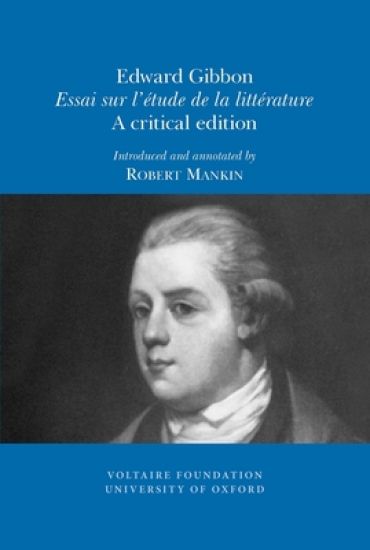
Edward Gibbon, 'Essai Sur L'étude De La Litterature'
Before he had even conceived of the Decline and fall of the Roman Empire there was another Edward Gibbon, a young expatriate living in Switzerland and writing in French. In the Essai, a work of remarkable erudition and energy completed by the age of twenty-one, Gibbon reflects on the present state of knowledge in post-Renaissance Europe – what he calls littérature.The first publication of the Essai since 1761, this critical edition sets Gibbon’s work in its intellectual context. A detailed introduction examines the biographical, cultural and historical background to this text: the young writer’s perception of European intellectual life as he observed it from Lausanne, his relation to the Encyclopédie and the French académies, the fate of erudition, and the modern organization of learning in books. An extensive commentary completes this edition, providing invaluable annotation of each chapter, including the important but little-known sections on religion that were replaced by Gibbon in the final text.As current debates revisit the meaning of Enlightenment, readers will find in this edition of Gibbon’s Essai a new approach to the intellectual networks and tensions that lie at its heart.
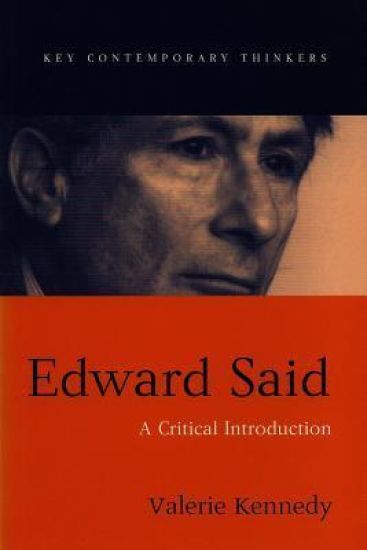
Edward Said

Edward Said

Valerie Kennedy

Polity Press
2000
nidottu
Edward Said is one of the foremost thinkers writing today. His work as a literary and cultural critic, a political commentator, and the champion of the cause of Palestinian rights has given him a unique position in western intellectual life. This new book is a major exploration and assessment of his writings in all these main areas. Focusing on Said's insistence on the connection between literature, politics and culture, Kennedy offers an overview and assessment of the main strands of Said's work, drawing out the links and contradictions between each area. The book begins with an examination of Orientalism, one of the founding texts of post-colonial studies. Kennedy looks at the book in detail, probing both its strengths and weaknesses, and linking it to its sequel, Culture and Imperialism. She then examines Said's work on the Palestinian people, with his emphasis on the need for a Palestinian narrative to counter pro-Israeli accounts of the Middle East, and his searing criticisms of US, Israeli, and even Arab governments. The book closes with an examination of Said's importance in the field of post-colonial studies, notably colonial discourse analysis and post-colonial theory, and his significance as a public intellectual. This book will be of great interest to anyone studying post-colonialism, literary theory, politics, and the Middle East, as well as anyone interested in Said's writings.
Edward Hicks: Pacifist Bishop at War
The story of outspoken pacifist bishop Edward Hicks throws new light on the problems of conscience created by World War One. Edward Hicks, Bishop of Lincoln, was already regarded as a maverick for his stance on the education of women, teetotalism, social justice, and votes for everyone. He came from a different class to that of most bishops. When war came, he was a rare dissenting voice amidst the Church's vocal support for its morality. Acclaimed author G. R. Evans draws upon Hicks's detailed diaries to reveal Edward Hicks as a man battling with his own conscience and principles, not least at seeing his sons go off to fight - one never to return. This is a fascinating glimpse into the impact the War had on an individual and those around him, who waited at home - and tried to hold onto their humanity.
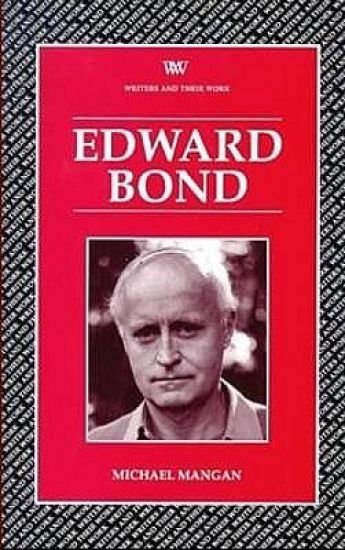
Edward Bond

Edward Bond

Michael Mangan

Liverpool University Press
1998
pokkari
Edward Bond has been, since his controversial arrival on the theatrical scene in 1965, one of Britain’s most distinctive and important theatre writers. This study examines his work, from The Pope’s Wedding (1962) to Coffee (1995). It gives an overview of the development of his distinctive dramatic language and style, and looks at his experiments with various theatrical forms and genres. It examines, too, the ways in which Bond’s insistence upon the necessity of the drama as an agent of social evolution have determined his development as a dramatist. There are sections which situate Bond’s work within its wider theatrical and political contexts, and which explore his concerns with issues such as violence, technology and social evolution, as they are expressed in plays such as Saved (1965), and Lear (1971). The study also deals with Bond’s continual dialogue with our cultural history – with the ways in which he rewrites classic plays and plunders familiar theatrical genres in order to demythologize the past.
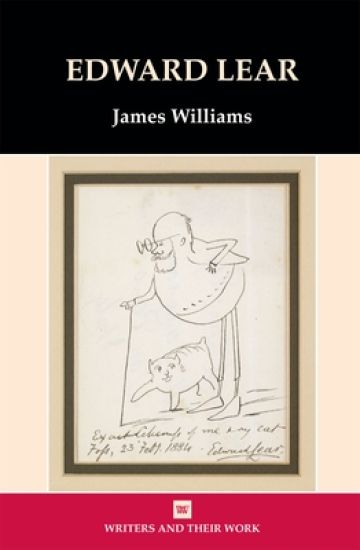
Edward Lear

Edward Lear

James Williams

Liverpool University Press
2018
sidottu
Edward Lear wrote a well-known autobiographical poem that begins ‘How pleasant to know Mr Lear!’ But how well do we really know him? On the one hand he is, in John Ashbery’s words, ‘one of the most popular poets who ever lived’; on the other hand he has often been overlooked or marginalized by scholars and in literary histories. James Williams’s account, the first book-length critical study of the poet since the 1980s, sets out to re-introduce Lear and to accord him his proper place: as a major Victorian figure of continuing appeal and relevance, and especially as a poet of beauty, comedy, and profound ingenuity. Williams approaches Lear’s work thematically, tracing some of its most fundamental subjects and situations. Grounded in attentive close readings, Williams also connects Lear’s nonsense with his various other creative endeavours: as a zoological illustrator and landscape painter, a travel writer, and a prolific diarist and correspondent.
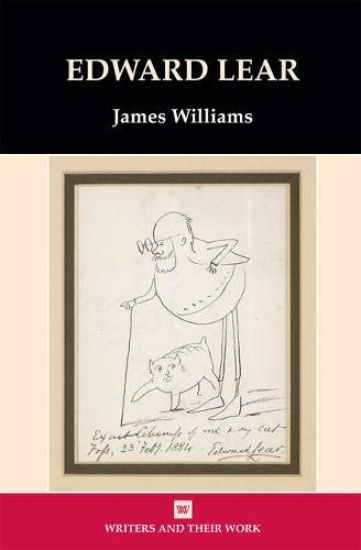
Edward Lear

Edward Lear

James Williams

Liverpool University Press
2018
nidottu
Edward Lear wrote a well-known autobiographical poem that begins ‘How pleasant to know Mr Lear!’ But how well do we really know him? On the one hand he is, in John Ashbery’s words, ‘one of the most popular poets who ever lived’; on the other hand he has often been overlooked or marginalized by scholars and in literary histories. James Williams’s account, the first book-length critical study of the poet since the 1980s, sets out to re-introduce Lear and to accord him his proper place: as a major Victorian figure of continuing appeal and relevance, and especially as a poet of beauty, comedy, and profound ingenuity. Williams approaches Lear’s work thematically, tracing some of its most fundamental subjects and situations. Grounded in attentive close readings, Williams also connects Lear’s nonsense with his various other creative endeavours: as a zoological illustrator and landscape painter, a travel writer, and a prolific diarist and correspondent.
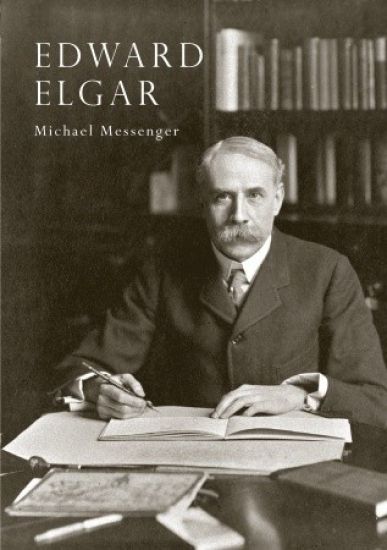
Edward Elgar

Edward Elgar

Messenger Michael

Shire Publications
2005
nidottu
Forever linked to the Last Night of the Proms, the Three Choirs Festival in Gloucester, Hereford and Worcester cathedrals, and his evocative 'Enigma Variations', Edward Elgar's music is a joy to chorcal societies and orchestras worldwide. The son of a piano tuner, born in a tiny cottage in Worcestershire, brought up as a Roman Catholic in Protestant England, withut university education or formal musical training, Elgar overcame these disadvantages to become the most famous British composer of his generation.
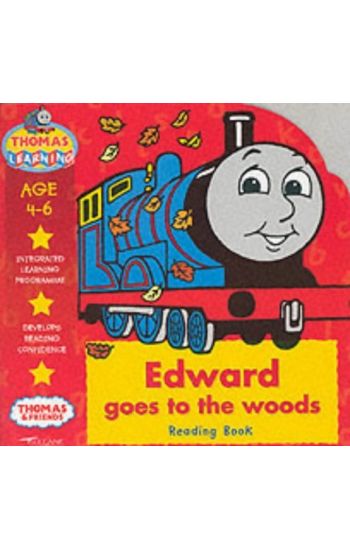
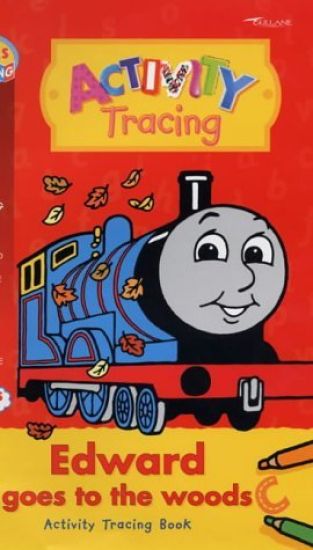
Edward Goes to the Woods
This exciting new Learning Programme Series has been researched and developed by Betty Root, a leading educational specialist. Thomas is a character who will immediately engage the attention of young children, and will be an important factor in helping them to learn.
Edward Goes to the Woods

Edward Goes to the Woods

EGMONT CHILDRENS BOOKS
2002
nidottu
This exciting new Learning Programme Series has been researched and developed by Betty Root, a leading educational specialist. Thomas is a character who will immediately engage the attention of young children, and will be an important factor in helping them to learn.
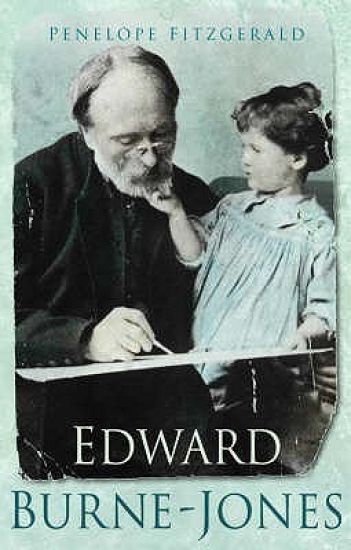
Edward Burne-Jones

Edward Burne-Jones

Penelope Fitzgerald

Sutton Publishing Ltd
2003
nidottu
Edward Burne-Jones is well known as a Pre-Raphelite painter, but little is known about his life. Here, in her first book, Penelope Fitzgerald paints a portrait of one of the most interesting and individual of all Victorian artists.
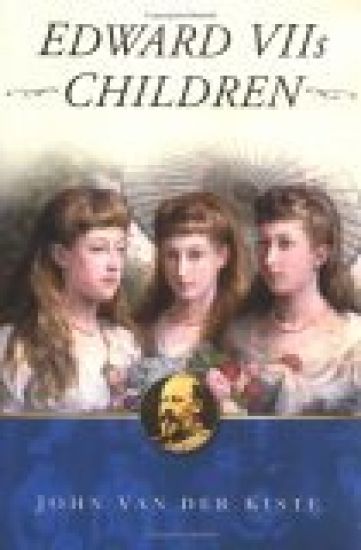
Edward VII's Children

Edward VII's Children

John Van der Kiste

Sutton Publishing Ltd
1980
pokkari
King Edward VII and Queen Alexandra had six children. Of the five who reached maturity, only one, the future King George V, has received much attention from biographers. The eldest son, Albert Victor, Duke of Clarence, a backward youth and a subject of scandal, died before he was thirty. The three princesses, Louise, Princess Royal and Duchess of Fife, the lifelong spinster Victoria, and Maud, Queen of Norway, were never well-known to the British public during their lifetime. In this detailed and fascinating account, John Van der Kiste has drawn upon previously unpublished correspondence from the Royal Archives, Windsor, to reveal for the first time the part this hitherto neglected group of characters played in supporting the royal family and crown during a period of transition from the Victorian age to the uncertain twentieth century.
Edward Lear

Edward Lear

Vivien Noakes

Sutton Publishing Ltd
2004
sidottu
There was an Old Man of Tobago Lived long on rice, gruel and sago But at last, to his bliss The physician said this To a roast leg of mutton you may go. This original limerick inspired Lear to create more than one hundred in his First Book of Nonsense. Written to amuse the children of his patron, the Earl of Derby, the book far exceeded the author's expectations - reaching 19 printings in his lifetime, becoming top in the Pall Mall Gazette's 'List of the Best Hundred Authors' (chosen by John Ruskin), and going on to amuse children and adults up to the present day. Yet, as Vivien Noakes reveals, there was much more to Lear than his acclaimed limericks and cartoons. The youngest but one of 21 children, Lear had a constant struggle against ill-health, loneliness and depression throughout his life. An innovator in art and literature, he was born both out of time and out of place, finding the narrowness and provincialism of life in England stultifying and travelling constantly in order to find a climate and a culture that suited him. The story of Lear's life is both deeply poignant and hugely uplifting. This new edition of Vivian Noakes's highly acclaimed biography is completely revised
Edward Lear

Edward Lear

Vivien Noakes

Sutton Publishing Ltd
2006
nidottu
Edward Lear is famous as the author of "A Book of Nonsense" and of the timeless children's songs, "The Owl and the Pussycat" and "The Jumblies". Yet, for this gentle genius, infectious merriment mingled with a deep sadness. Who is the man behind the nonsense? Born the twentieth of twenty-one children, he was rejected by his mother and brought up by his eldest sister. Almost entirely self-taught, at the age of nineteen Lear published "Illustrations of the Family of Psittacidae, or Parrots", one the finest books of ornithological illustration ever produced. Then, at the age of twenty-five, he turned his back on this early success to become a traveller and landscape painter. Largely unrecognized during his lifetime, he is now considered to be one of the finest painters of the Victoria age. Always an outsider, yet at ease with the noblest in the land, Lear was a friend of the Pre-Raphaelites and of Tennyson, and was drawing master to Queen Victoria. Loved by the children whom he entertained with his songs and stories, he was an innovator in both literature and art, bringing the largely oral tradition of Nonsense into the literary fold, and accompanying his verses with powerful but simple drawings that were revolutionary in their day and set the pattern for modern cartoon illustration.
Edward Thomas

Edward Thomas

Eleanor Farjeon

Sutton Publishing Ltd
2008
nidottu
Eleanor Farjeon, first met Edward Thomas in 1912, when her brother invited him to tea. It was the beginning of a deep friendship between the shy 31-year-old woman and the reserved writer. Though he died at the Battle of Arras in 1917, it was a friendship which for Eleanor did not end with his death, but lived beyond in his letters and poems. This double memoir uses Edward's letters and Eleanor's diaries and linking commentary to provide a candid account of their developing friendship. Edward was often deeply depressed but Eleanor also shows another side to his character, capturing moments of joy and humour. She offers a unique account of Thomas' development as a poet, including the momentous meeting with American poet Robert Frost whose encouragement led to Thomas' first poems. Thomas describes for her his family, his friendships with other writers, including D.H. Lawrence, and provides a detailed account of his First World War experiences. First published in 1948, this is an acclaimed classic. This edition, published for the 90th anniversary of Thomas' death, includes an introduction by Anne Harvey, a selection of Eleanor's sonnets, and "Walking Tom", the little-known poem about Edward by Clifford Bax and Herbert Farjeon.