Kirjojen hintavertailu. Mukana 12 016 292 kirjaa ja 12 kauppaa.

Kirjahaku

Etsi kirjoja tekijän nimen, kirjan nimen tai ISBN:n perusteella.

1000 tulosta hakusanalla Elizabeth Ferrars

Elizabeth Bacon Custer and the Making of a Myth

Elizabeth Bacon Custer and the Making of a Myth

Shirley A. Leckie

University of Oklahoma Press
1993
sidottu
Georger Armstrong Custer's death in 1876 at the Battle of the Little Big Horn left Elizabeth Bacon Custer a thirty-four-year-old widow who was deeply in debt. By the time she died fifty-seven years later she had achieved economic security, recognition as an author and lecturer, and the respect of numerous public figures. She had built the Custer legend, an idealized image of her husband as a brilliant military commander and a family man without personal failings. In Elizabeth Bacon Custer and the Making of a Myth, Shirley A. Leckie explores the life of ""Libbie,"" a frontier army wife who willingly adhered to the social and religious restrictions of her day, yet used her authority as model wife and widow to influence events and ideology far beyond the private sphere.
Elizabeth Bacon Custer and the Making of a Myth

Elizabeth Bacon Custer and the Making of a Myth

Shirley A. Leckie

University of Oklahoma Press
1998
nidottu
Georger Armstrong Custer's death in 1876 at the Battle of the Little Big Horn left Elizabeth Bacon Custer a thirty-four-year-old widow who was deeply in debt. By the time she died fifty-seven years later she had achieved economic security, recognition as an author and lecturer, and the respect of numerous public figures. She had built the Custer legend, an idealized image of her husband as a brilliant military commander and a family man without personal failings. In Elizabeth Bacon Custer and the Making of a Myth, Shirley A. Leckie explores the life of ""Libbie,"" a frontier army wife who willingly adhered to the social and religious restrictions of her day, yet used her authority as model wife and widow to influence events and ideology far beyond the private sphere.
Elizabeth Barrett Browning, Woman and Artist

Elizabeth Barrett Browning, Woman and Artist

Cooper Helen M.

The University of North Carolina Press
1988
nidottu
A UNC Press Enduring Edition -- UNC Press Enduring Editions use the latest in digital technology to make available again books from our distinguished backlist that were previously out of print. These editions are published unaltered from the original, and are presented in affordable paperback formats, bringing readers both historical and cultural value.
Elizabeth Gaskell

Elizabeth Gaskell

Nancy S. Weyant

Scarecrow Press
2004
nidottu
A great deal has been written about Elizabeth Gaskell in the last decade. This extensively annotated guide to the literature builds upon Weyant's 1994 work on Gaskell that covered some 350 sources published between 1976-1991. This supplement identifies almost 600 new books, book chapters, journal articles, dissertations, masters theses and honors theses on the life and writings of Gaskell published since 1991. Contents include: — two appendices listing new editions of Gaskell's works in print, as well as digital, audio and video formats —A selection of Web sites appropriate for the undergraduate and beginning graduate student —citations of many brief articles in the Gaskell Newsletter that are ignored in the standard indexes —numerous sources that would otherwise be difficult or impossible to locate —an author index and an extensive subject index to facilitate locating relevant information
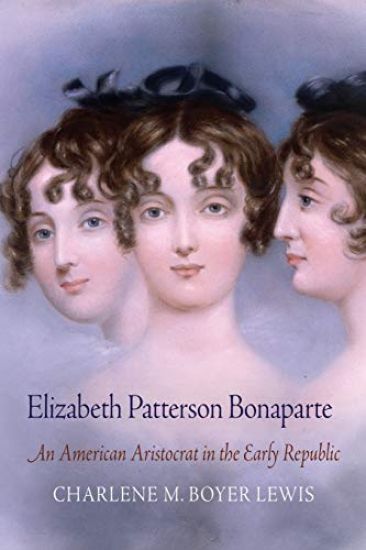
Elizabeth Patterson Bonaparte

Elizabeth Patterson Bonaparte

Charlene M. Boyer Lewis

University of Pennsylvania Press
2014
pokkari
Two centuries ago, Elizabeth Patterson Bonaparte was one of the most famous women in America. Beautiful, scandalous, and outspoken, she had wed Napoleon's brother Jerome, borne his child, and seen the marriage annulled by the emperor himself. With her notorious behavior, dashing husband, and associations with European royalty, Elizabeth became one of America's first celebrities during a crucial moment in the nation's history. At the time of Elizabeth's fame, the United States had only recently gained its independence, and the character of American society and politics was not yet fully formed. Still concerned that their republican experiment might fail and that their society might become too much like that of monarchical Europe, many Americans feared the corrupting influence of European manners and ideas. Elizabeth Patterson Bonaparte's imperial connections and aristocratic aspirations made her a central figure in these debates, with many, including members of Congress and the social elites of the day, regarding her as a threat. Appraising Elizabeth Patterson Bonaparte's many identities-celebrity, aristocrat, independent woman, mother-Charlene M. Boyer Lewis shows how Madame Bonaparte, as she was known, exercised extraordinary social power at the center of the changing transatlantic world. In spite of the assumed threat that she posed to the new social and political order, Americans could not help being captivated by Elizabeth's style, beauty, and wit. She offered an alternative to the republican wife by pursuing a life of aristocratic dreams in the United States and Europe. Her story reminds us of the fragility of the American experiment in its infancy and, equally important, of the active role of women in the debates over society and culture in the early republic.
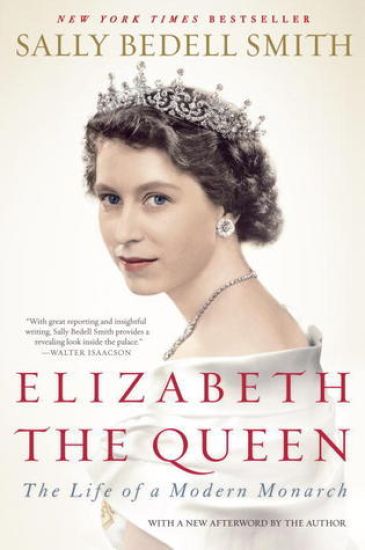
Elizabeth the Queen: The Life of a Modern Monarch

Elizabeth the Queen: The Life of a Modern Monarch

Sally Bedell Smith

Random House Trade
2012
nidottu
NEW YORK TIMES BESTSELLER - This "excellent, all-embracing" (The New York Times) biography of Queen Elizabeth II is a magisterial study of the woman known only from a distance--and a captivating window into her decades-long reign. From the moment of her ascension to the throne in 1952 at the age of twenty-five, Queen Elizabeth II was the object of unparalleled scrutiny. But through the fog of glamour and gossip, how well did we really know the world's most famous monarch? Drawing on numerous interviews and never-before-revealed documents, acclaimed biographer Sally Bedell Smith pulls back the curtain to show in intimate detail the public and private lives of Queen Elizabeth II, who led her country and Commonwealth through the wars and upheavals of the last twentieth and twenty-first centuries with unparalleled composure, intelligence, and grace. In Elizabeth the Queen, we meet the young girl who suddenly becomes "heiress presumptive" when her uncle abdicates the throne. We meet the thirteen-year-old Lilibet as she falls in love with a young navy cadet named Philip and becomes determined to marry him, even though her parents prefer wealthier English aristocrats. We see the teenage Lilibet repairing army trucks during World War II and standing with Winston Churchill on the balcony of Buckingham Palace on V-E Day. We see the young Queen struggling to balance the demands of her job with her role as the mother of two young children. Sally Bedell Smith brings us inside the palace doors and into the Queen's daily routines--the "red boxes" of documents she reviewed each day, the weekly meetings she had with twelve prime ministers, her physically demanding tours abroad, and the constant scrutiny of the press--as well as her personal relationships: with her husband, Prince Philip, the love of her life; her children and their often-disastrous marriages; her grandchildren and friends.
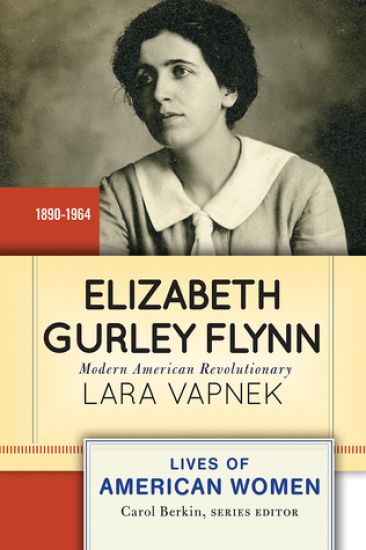
Elizabeth Gurley Flynn

Elizabeth Gurley Flynn

Lara Vapnek

Westview Press Inc
2015
nidottu
In 1906, fifteen-year old Elizabeth Gurley Flynn mounted a soapbox in Times Square to denounce capitalism and proclaim a new era for women's freedom. Quickly recognized as an outstanding public speaker and formidable organizer, she devoted her life to creating a socialist America, "free from poverty, exploitation, greed and injustice." Flynn became the most important female leader of the Industrial Workers of the World and of the American Communist Party, fighting tirelessly for workers' rights to organize and to express dissenting ideas. Weaving together Flynn's personal and political life, this biography reveals previously unrecognized connections between feminism, socialism, free love, and free speech. Flynn's remarkable career casts new light on the long and varied history of radicalism in the United States.About the Lives of American Women series: Selected and edited by renowned women's historian Carol Berkin, these brief biographies are designed for use in undergraduate courses. Rather than a comprehensive approach, each biography focuses instead on a particular aspect of a woman's life that is emblematic of her time, or which made her a pivotal figure in the era. The emphasis is on a 'good read', featuring accessible writing and compelling narratives, without sacrificing sound scholarship and academic integrity. Primary sources at the end of each biography reveal the subject's perspective in her own words. Study questions and an annotated bibliography support the student reader.
Elizabeth Bishop

Elizabeth Bishop

Marilyn May Lombardi

University of Virginia Press
1993
sidottu
These essays on Pulitzer Prize winner, Elizabeth Bishop, argue that her ""sense of difference"" as an orphan, a woman artist and a lesbian, play a significant role in the questioning of aesthetic, ethical and sexual boundaries that is so much part of her poetic practice.
Elizabeth Bishop

Elizabeth Bishop

Marilyn May Lombardi

University of Virginia Press
1993
nidottu
This book brings together the work of pioneering scholars in the field- critics who are exploring the psychosexual tensions within Bishop's vision and the uncanny way her poetics of dislocation challenges our assumptions about placement and orientation. These scholars argue that Bishop's ""sense of difference"" as an orphan, a woman artist, and a lesbian plays a significant role in the questioning of aesthetic, ethical, and sexual boundaries that is so much a part of her poetic practice. Drawing on central issues of Bishop's personal life, the book considers the ways in which the poet's art confronts the female body, the sexual politics of literary tradition, and the pleasures and perils of language itself.
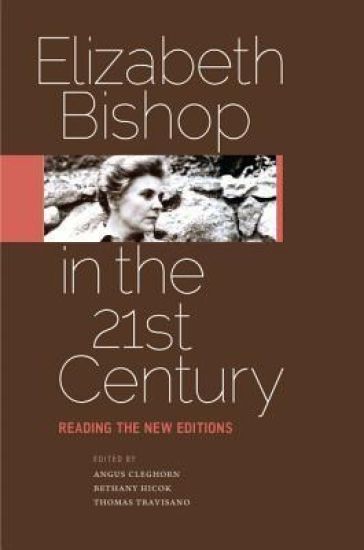
Elizabeth Bishop in the Twenty-First Century
In recent years, a series of major collections of posthumous writings by Elizabeth Bishop, one of the most widely read and discussed poets of the twentieth century have been published, profoundly affecting how we look at her life and work. The hundreds of letters, poems, and other writings in these volumes have expanded Bishop's published work by well over a thousand pages and placed before the public a ""new"" Bishop whose complexity was previously familiar to only a small circle of scholars and devoted readers. This collection of essays by many of the leading figures in Bishop studies provides a deep and multifaceted account of the impact of the new editions of writings and how they both enlarge and complicate our understanding of Bishop as a cultural icon.
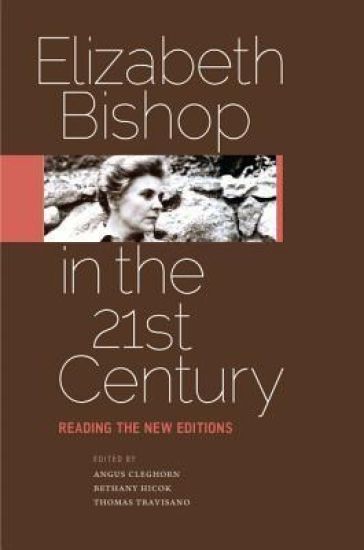
Elizabeth Bishop in the Twenty-First Century
In recent years, a series of major collections of posthumous writings by Elizabeth Bishop, one of the most widely read and discussed poets of the twentieth century have been published, profoundly affecting how we look at her life and work. The hundreds of letters, poems, and other writings in these volumes have expanded Bishop's published work by well over a thousand pages and placed before the public a ""new"" Bishop whose complexity was previously familiar to only a small circle of scholars and devoted readers. This collection of essays by many of the leading figures in Bishop studies provides a deep and multifaceted account of the impact of the new editions of writings and how they both enlarge and complicate our understanding of Bishop as a cultural icon.
Elizabeth Bishop's Brazil

Elizabeth Bishop's Brazil

Bethany Hicok

University of Virginia Press
2016
nidottu
When the American poet Elizabeth Bishop arrived in Brazil in 1951 at the age of forty, she had not planned to stay, but her love affair with the Brazilian aristocrat Lota de Macedo Soares and with the country itself set her on another course, and Brazil became her home for nearly two decades. In this groundbreaking new study, Bethany Hicok offers Bishop’s readers the most comprehensive study to date on the transformative impact of Brazil on the poet’s life and art. Based on extensive archival research and travel, Elizabeth Bishop’s Brazil argues that the whole shape of Bishop’s writing career shifted in response to Brazil, taking on historical, political, linguistic, and cultural dimensions that would have been inconceivable without her immersion in this vibrant South American culture.Hicok reveals the mid-century Brazil that Bishop encountered--its extremes of wealth and poverty, its spectacular topography, its language, literature, and people--and examines the Brazilian class structures that placed Bishop and Macedo Soares at the center of the country’s political and cultural power brokers. We watch Bishop develop a political poetry of engagement against the backdrop of America’s Cold War policies and Brazil’s political revolutions. Hicok also offers the first comprehensive evaluation of Bishop’s translations of Brazilian writers and their influence on her own work. Drawing on archival sources that include Bishop’s unpublished travel writings and providing provocative new readings of the poetry, Elizabeth Bishop’s Brazil is a long-overdue exploration of a pivotal phase in this great poet’s life and work.
Elizabeth Bishop's Brazil

Elizabeth Bishop's Brazil

Bethany Hicok

University of Virginia Press
2016
sidottu
When the American poet Elizabeth Bishop arrived in Brazil in 1951 at the age of forty, she had not planned to stay, but her love affair with the Brazilian aristocrat Lota de Macedo Soares and with the country itself set her on another course, and Brazil became her home for nearly two decades. In this groundbreaking new study, Bethany Hicok offers Bishop’s readers the most comprehensive study to date on the transformative impact of Brazil on the poet’s life and art. Based on extensive archival research and travel, Elizabeth Bishop’s Brazil argues that the whole shape of Bishop’s writing career shifted in response to Brazil, taking on historical, political, linguistic, and cultural dimensions that would have been inconceivable without her immersion in this vibrant South American culture.Hicok reveals the mid-century Brazil that Bishop encountered--its extremes of wealth and poverty, its spectacular topography, its language, literature, and people--and examines the Brazilian class structures that placed Bishop and Macedo Soares at the center of the country’s political and cultural power brokers. We watch Bishop develop a political poetry of engagement against the backdrop of America’s Cold War policies and Brazil’s political revolutions. Hicok also offers the first comprehensive evaluation of Bishop’s translations of Brazilian writers and their influence on her own work. Drawing on archival sources that include Bishop’s unpublished travel writings and providing provocative new readings of the poetry, Elizabeth Bishop’s Brazil is a long-overdue exploration of a pivotal phase in this great poet’s life and work.
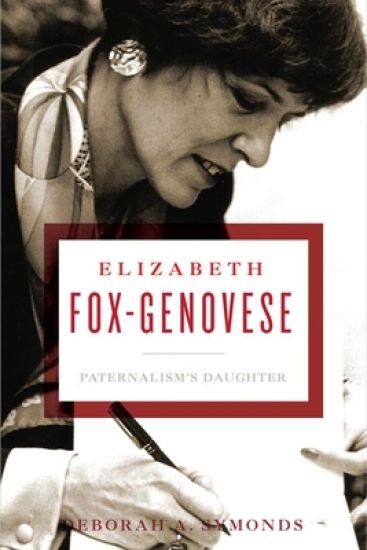
Elizabeth Fox-Genovese

Elizabeth Fox-Genovese

Deborah A. Symonds

University of Virginia Press
2021
sidottu
A celebrated historian and women's studies scholar, Elizabeth Fox-Genovese roiled both disciplines with her transition from Marxist-inclined feminist to conservative public intellectual. In the first major biography of this singular and controversial scholar, Deborah Symonds explores Fox-Genovese's enormous personal archive and traces Fox-Genovese's life from a brilliant girl in the World War II era struggling with demanding parents and anorexia to a woman intellectual in the later twentieth century and into the new millennium, providing an illuminating and moving psychological portrait. Never settled, Fox-Genovese was, by turns, a French historian, Marxist feminist, literary critic, southern historian, Red Tory, public intellectual, and conservative Catholic but still, in her eyes, a feminist. This biography sheds new light on its subject's dynamic and intellectually productive marriage to leftist historian Eugene D. Genovese. In her provocative politics, which confront us still with the complexities of left and right, and her constant search for her place in the world, Fox-Genovese's story resonates more strongly than ever.
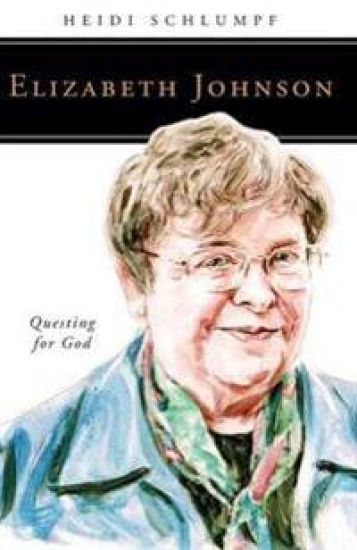
Elizabeth Johnson

Elizabeth Johnson

Heidi Schlumpf

Liturgical Press
2016
pokkari
Who is God? That is the question Elizabeth A. Johnson has spent her life exploring. As a Catholic theologian, writer, teacher, and religious woman, Johnson has searched for “the Living God” and ways to understand God that make sense for our time, perhaps most famously in her groundbreaking book She Who Is. Her work is firmly grounded in the Catholic tradition while it explores the edges of that tradition, pushing it to be more inclusive—a project that has caught the attention of other scholars, everyday Catholics, and sometimes critics. Johnson’s own relationship with God as Holy Mystery has helped her to navigate her life’s challenges, including finding herself thrust into the spotlight as a headline-making symbol of religious women facing challenges from the church leadership. With this first biography of one of the preeminent Catholic theologians of our time, those who have been enriched by Johnson’s work will now find themselves inspired by her remarkable life story.
Elizabeth Cady Stanton, Feminist As Thinker
More than one hundred years after her death, Elizabeth Cady Stanton still stands—along with her close friend Susan B. Anthony—as the major icon of the struggle for women's suffrage. In spite of this celebrity, Stanton's intellectual contributions have been largely overshadowed by the focus on her political activities, and she is yet to be recognized as one of the major thinkers of the nineteenth century. Here, at long last, is a single volume exploring and presenting Stanton's thoughtful, original, lifelong inquiries into the nature, origins, range, and solutions of women's subordination. Elizabeth Cady Stanton, Feminist as Thinker reintroduces, contextualizes, and critiques Stanton's numerous contributions to modern thought. It juxtaposes a selection of Stanton's own writings, many of them previously unavailable, with eight original essays by prominent historians and social theorists interrogating Stanton's views on such pressing social issues as religion, marriage, race, the self and community, and her place among leading nineteenth century feminist thinkers. Taken together, these essays and documents reveal the different facets, enduring insights, and fascinating contradictions of the work of one of the great thinkers of the feminist tradition. Contributors: Barbara Caine, Richard Cándida Smith, Ellen Carol DuBois, Ann D. Gordon, Vivian Gornick, Kathi Kern, Michele Mitchell, and Christine Stansell.
Elizabeth Cady Stanton, Feminist As Thinker
More than one hundred years after her death, Elizabeth Cady Stanton still stands—along with her close friend Susan B. Anthony—as the major icon of the struggle for women's suffrage. In spite of this celebrity, Stanton's intellectual contributions have been largely overshadowed by the focus on her political activities, and she is yet to be recognized as one of the major thinkers of the nineteenth century. Here, at long last, is a single volume exploring and presenting Stanton's thoughtful, original, lifelong inquiries into the nature, origins, range, and solutions of women's subordination. Elizabeth Cady Stanton, Feminist as Thinker reintroduces, contextualizes, and critiques Stanton's numerous contributions to modern thought. It juxtaposes a selection of Stanton's own writings, many of them previously unavailable, with eight original essays by prominent historians and social theorists interrogating Stanton's views on such pressing social issues as religion, marriage, race, the self and community, and her place among leading nineteenth century feminist thinkers. Taken together, these essays and documents reveal the different facets, enduring insights, and fascinating contradictions of the work of one of the great thinkers of the feminist tradition. Contributors: Barbara Caine, Richard Cándida Smith, Ellen Carol DuBois, Ann D. Gordon, Vivian Gornick, Kathi Kern, Michele Mitchell, and Christine Stansell.
Elizabeth Bowen

Elizabeth Bowen

Renee Carine Hoogland

New York University Press
1994
sidottu
Immensely popular during her lifetime, the Ango-Irish writer Elizabeth Bowen (1899-1973) has since been treated as a peripheral figure on the literary map. If only in view of her prolific outputten novels, nearly eighty short stories, and a substantial body of non- fictionBowen is a noteworthy novelist. The radical quality of her work, however, renders her an exceptional one. Surfacing in both subject matter and style, her fictions harbor a subversive potential which has hitherto gone unnoticed. Using a wide range of critical theories-from semiotics to psychoanalysis, from narratology to deconstruction-this book presents a radical re-reading of a selection of Bowen's novels from a lesbian feminist perspective. Taking into account both cultural contexts and the author's non-fictional writings, the book's main focus is on configurations of gender and sexuality. Bowen's fiction constitutes an exploration of the unstable and destabilizing effects of sexuality in the interdependent processes of subjectivity and what she herself referred to as so-called reality.
Elizabeth Bowen

Elizabeth Bowen

Renee Carine Hoogland

New York University Press
1994
pokkari
Immensely popular during her lifetime, the Ango-Irish writer Elizabeth Bowen (1899-1973) has since been treated as a peripheral figure on the literary map. If only in view of her prolific outputten novels, nearly eighty short stories, and a substantial body of non- fictionBowen is a noteworthy novelist. The radical quality of her work, however, renders her an exceptional one. Surfacing in both subject matter and style, her fictions harbor a subversive potential which has hitherto gone unnoticed. Using a wide range of critical theories-from semiotics to psychoanalysis, from narratology to deconstruction-this book presents a radical re-reading of a selection of Bowen's novels from a lesbian feminist perspective. Taking into account both cultural contexts and the author's non-fictional writings, the book's main focus is on configurations of gender and sexuality. Bowen's fiction constitutes an exploration of the unstable and destabilizing effects of sexuality in the interdependent processes of subjectivity and what she herself referred to as so-called reality.
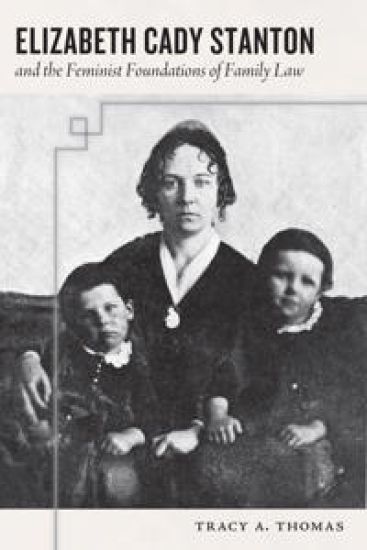
Elizabeth Cady Stanton and the Feminist Foundations of Family Law
Thomas Byers Memorial Outstanding Publication Award from the University of Akron Law Alumni Association Much has been written about women's rights pioneer Elizabeth Cady Stanton. Historians have written her biography, detailed her campaign for woman's suffrage, documented her partnership with Susan B. Anthony, and compiled all of her extensive writings and papers. Stanton herself was a prolific author; her autobiography, History of Woman Suffrage, and Woman's Bible are classics. Despite this body of work, scholars and feminists continue to find new and insightful ways to re-examine Stanton and her impact on women's rights and history. Law scholar Tracy A. Thomas extends this discussion of Stanton's impact on modern-day feminism by analyzing her intellectual contributions to—and personal experiences with—family law. Stanton's work on family issues has been overshadowed by her work (especially with Susan B. Anthony) on woman's suffrage. But throughout her fifty-year career, Stanton emphasized reform of the private sphere of the family as central to achieving women's equality. By weaving together law, feminist theory, and history, Thomas explores Stanton's little-examined philosophies on and proposals for women's equality in marriage, divorce, and family, and reveals that the campaigns for equal gender roles in the family that came to the fore in the 1960s and '70s had nineteenth-century roots. Using feminist legal theory as a lens to interpret Stanton's political, legal, and personal work on the family, Thomas argues that Stanton's positions on divorce, working mothers, domestic violence, childcare, and many other topics were strikingly progressive for her time, providing significant parallels from which to gauge the social and legal policy issues confronting women in marriage and the family today.