Ein Paar im Rentenalter beginnt ein neues Leben in der Provence, mietet ein altes Haus, legt einen Garten an. Sie treffen auf den "Unhold", die Katzenschlampe, einen dreibeinigen Rottweiler, die bibelfeste Madame Dijolle, mile und seine Tante lodie, den Legion r mit der Riesendogge, H rve, den Pizzab cker, den Kickboxer, die Grattler vom Portugiesenhof, korsische Separatisten, die haschumnebelte Isabelle und IHN. So vergehen die Tage im "Mas Roustan". Aber schnell steht fest Ruhiges Rentnerdasein sieht anders aus.
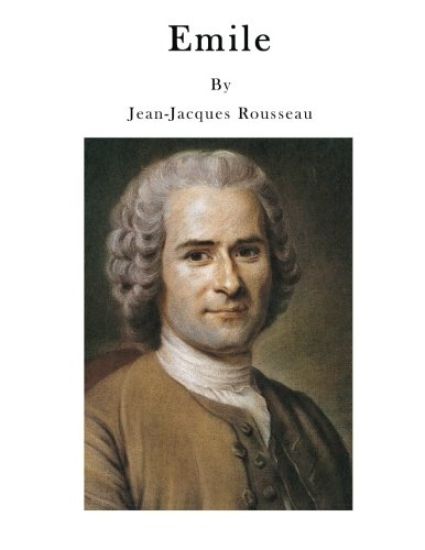
EmileTreatise on EducationByJean-Jacques RousseauTranslated by Barbara FoxleyEmile, or On Education or Emile, or Treatise on Education is a treatise on the nature of education and on the nature of man written by Jean-Jacques Rousseau, who considered it to be the "best and most important of all my writings." Due to a section of the book entitled "Profession of Faith of the Savoyard Vicar," Emile was banned in Paris and Geneva and was publicly burned in 1762, the year of its first publication. During the French Revolution, Emile served as the inspiration for what became a new national system of education.This collection of scattered thoughts and observations has little order or continuity; it was begun to give pleasure to a good mother who thinks for herself. My first idea was to write a tract a few pages long, but I was carried away by my subject, and before I knew what I was doing my tract had become a kind of book, too large indeed for the matter contained in it, but too small for the subject of which it treats. For a long time I hesitated whether to publish it or not, and I have often felt, when at work upon it, that it is one thing to publish a few pamphlets and another to write a book. After vain attempts to improve it, I have decided that it is my duty to publish it as it stands. I consider that public attention requires to be directed to this subject, and even if my own ideas are mistaken, my time will not have been wasted if I stir up others to form right ideas. A solitary who casts his writings before the public without any one to advertise them, without any party ready to defend them, one who does not even know what is thought and said about those writings, is at least free from one anxiety--if he is mistaken, no one will take his errors for gospel.I shall say very little about the value of a good education, nor shall I stop to prove that the customary method of education is bad; this has been done again and again, and I do not wish to fill my book with things which everyone knows. I will merely state that, go as far back as you will, you will find a continual outcry against the established method, but no attempt to suggest a better. The literature and science of our day tend rather to destroy than to build up. We find fault after the manner of a master; to suggest, we must adopt another style, a style less in accordance with the pride of the philosopher. In spite of all those books, whose only aim, so they say, is public utility, the most useful of all arts, the art of training men, is still neglected. Even after Locke's book was written the subject remained almost untouched, and I fear that my book will leave it pretty much as it found it.We know nothing of childhood; and with our mistaken notions the further we advance the further we go astray. The wisest writers devote themselves to what a man ought to know, without asking what a child is capable of learning. They are always looking for the man in the child, without considering what he is before he becomes a man. It is to this study that I have chiefly devoted myself, so that if my method is fanciful and unsound, my observations may still be of service. I may be greatly mistaken as to what ought to be done, but I think I have clearly perceived the material which is to be worked upon. Begin thus by making a more careful study of your scholars, for it is clear that you know nothing about them; yet if you read this book with that end in view, I think you will find that it is not entirely useless.
" Il y a des figures impossibles saisir, et l'histoire du Prot e antique nous pouvante. Comme ce fils de Neptune, M. de Girardin a le don des m tamorphoses; il s'offre tour tour sous mille formes diverses, il vous chappe, il glisse entre vos doigts; c'est une ombre, un fant me, quelque chose qui miroite, scintille, blouit et ne se laisse pas atteindre. Le cam l on n'a pas de nuances plus vari es, de reflets plus trompeurs. Jamais M. de Girardin ne se pr sente de face, on ne le voit que de profil, et, si nous arrivons donner quelque ressemblance cette physionomie fugitive, nous devrons eh remercier notre bonheur plut t que notre adresse. mile de Girardin ne conna t pas lui-m me le jour de sa naissance..."
This is a new edition of Germinal, originally published in 1895 by Leonard Smithers for The Lutetian Society, of London, translated by Havelock Ellis. Part of Adeptio's Unforgettable Classic Series, this is not a facsimile reprint. Obvious typographical errors have been carefully corrected and the entire text has been reset and redesigned by Adeptio Editions to enhance readability, while respecting the original edition. Germinal, a bleak but nevertheless fascinatingly realistic and intriguing novel, tells the story of a coal-mining community in mid-nineteenth-century France. The main protagonist is a young man, tienne Lantier, who arrives at the fictional town of Montsou, in northern France, near the Belgium border, looking for a job. He finds work as a miner, having to labor long hours under miserable conditions. Passionate about socialism, and seeing the hopeless lives of his fellow miners-having to put up with reduced wages, harsh working conditions, and hunger-he ends up leading them to a violent strike. Thanks to Leonard Smithers (1861-1907)-a London publisher associated with the Decadent movement-and his Lutetian Society-a secret literary society-translators such as Havelock Ellis were able to provide British readers with translations of some of mile Zola's controversial novels, aiming at expanding the cultural horizons of the few lucky readers who had access to them. Considered by the overwhelming majority of critics as the best translator of Zola's Germinal, Havelock Ellis (1859-1939) was a social activist, a physician and a psychologist, whose best-known works concern sexuality and criminology. In 1890 he published The Criminal, a remarkable work on criminal anthropology. In 1897, he co-authored, with John Addington Symonds, Sexual Inversion, the first medical text in English about homosexuality, another of his masterpieces. In 1898 he wrote Affirmations, which contains essays on Nietzsche, Casanova, Zola, Huysmans, and St. Francis. About the Author: mile- douard-Charles-Antoine Zola (1840-1902) was a journalist, a novelist, a playwright, and a political activist. He was one of the most influential French novelists of the 19th century and the founder of the literary and theatrical school of naturalism. Zola was a major figure in the political liberalization of France. During his youth in the south of France, Zola befriended Paul C zanne, his schoolmate and future renowned Post-Impressionist painter-best known for his incredibly varied painting style that influenced 20th century abstract art. Zola's first book, Contes Ninon (Stories for Ninon), was a collection of short stories dedicated to his imaginary childhood love, Ninon. He published his debut novel in 1865, La Confession de Claude, an autobiographical work that chronicled a man falling in love with a sex worker. The book drew the attention of the public as well as of the police, and it was banned in the social circles, causing Zola to lose his job. Zola went on to write Th r se Raquin (1867), his first major novel, which delves into intrigue, adultery, and murder; and the dark love story Madeleine F rat (1868), his last novel before he started his masterful Rougon-Macquart 20-novel series.
This is a new edition of Piping Hot (Pot-Bouille): A Realistic Novel, originally published in 1887 by Vizetelly & Co., of London, England. Part of Adeptio's Unforgettable Classic Series, this is not a facsimile reprint. Obvious typographical errors have been carefully corrected and the entire text has been reset and redesigned by Adeptio Editions to enhance readability, while respecting the original edition. Piping Hot follows the adventures of a young and ambitious man, Octave Mouret, who moves into a house on Rue de Choiseul, one of the immense "maisons bourgeoises" in Paris, in which several characters of the novel live and interact. In the beginning of the story, Octave Mouret meets Madame H douin, owner and director of a nearby shop, "The Ladies' Paradise," where Mouret is employed as a salesman. Piping Hot is a fascinating story of love and ambition which follows the private lives of a number of individuals who pursue different occupations while living under the same roof. About the Author: mile- douard-Charles-Antoine Zola (1840-1902) was a journalist, a novelist, a playwright, and a political activist. He was one of the most influential French novelists of the 19th century and the founder of the literary and theatrical school of naturalism. Zola was a major figure in the political liberalization of France. During his youth in the south of France, Zola befriended Paul C zanne, his schoolmate and future renowned Post-Impressionist painter-best known for his incredibly varied painting style that influenced 20th century abstract art. Zola's first book, Contes Ninon (Stories for Ninon), was a collection of short stories dedicated to his imaginary childhood love, Ninon. He published his debut novel in 1865, La Confession de Claude, an autobiographical work that chronicled a man falling in love with a sex worker. The book drew the attention of the public as well as of the police, and it was banned in the social circles, causing Zola to lose his job. Zola went on to write Th r se Raquin (1867), his first major novel, which delves into intrigue, adultery, and murder; and the dark love story Madeleine F rat (1868), his last novel before he started his masterful Rougon-Macquart 20-novel series. mile Zola's works include novels, dramas, poetry, and criticism, among which is his famous Les Rougon-Macquart (1871-1893), a cycle of twenty novels which depict various aspects of life and society, such as The Fortune of the Rougons (La Fortune des Rougon) originally published in 1871 and the first novel of the series; The Rush For The Spoil (La Cur e), in 1872; The Conquest of Plassans (La Conqu te de Plassans), in 1874; The Assommoir - The Prelude to Nana (L'Assommoir), in 1877, the seventh novel of the series, about the suffering of the Parisian working-class; Nana (1880), the ninth installment, which deals with prostitution; Piping Hot (Pot-Bouille), in 1882, the tenth novel of the cycle and Zola's most sarcastic satire, which describes daily life in a newly constructed block of flats in late nineteenth-century Paris; The Ladies Paradise (1883), the eleventh novel (original title: Au Bonheur des Dames), which focuses on Octave Mouret, who, in Piping Hot , meets Caroline H douin, the owner of a small silk shop; Germinal (1885), the thirteenth novel in the series, which depicts the mining industry and is considered by some as his masterpiece; and The Soil (La Terre), in 1887-all published by Adeptio Editions.
This is a new edition of The Fortune of the Rougons, originally published in 1886 by Vizetelly & Co., of London, translated without abridgment. Part of Adeptio's Unforgettable Classic Series, this is not a facsimile reprint. Obvious typographical errors have been carefully corrected and the entire text has been reset and redesigned by Adeptio Editions to enhance readability, while respecting the original edition. The Fortune of the Rougons is the initial volume of the Rougon-Macquart series. Though it was by no means M. Zola's first essay in fiction, it was undoubtedly his first great bid for genuine literary fame, and the foundation of what must necessarily be regarded as his life-work. The story, set in the fictitious Proven al town of Plassans, tells the story of Silv re and Miette, two idealistic young supporters of the republican resistance to Louis-Napoleon Bonaparte's December 1851 coup d' tat that created the French Second Empire. The idea of writing the "natural and social history of a family under the Second Empire," extending to a score of volumes, was doubtless suggested to M. Zola by Balzac's immortal Comedie Humaine. He was twenty-eight years of age when this idea first occurred to him; he was fifty-three when he at last sent the manuscript of his concluding volume, Dr. Pascal, to the press. He had spent five-and-twenty years in working out his scheme, persevering with it doggedly and stubbornly, whatever rebuffs he might encounter, whatever jeers and whatever insults might be directed against him by the ignorant, the prejudiced, and the hypocritical. Truth was on the march and nothing could stay it; even as, at the present hour, its march, if slow, none the less continues athwart another and a different crisis of the illustrious novelist's career. E. A. V. MERTON, SURREY: August, 1898. About the Author: mile- douard-Charles-Antoine Zola (1840-1902) was a journalist, a novelist, a playwright, and a political activist. He was one of the most influential French novelists of the 19th century and the founder of the literary and theatrical school of naturalism. Zola was a major figure in the political liberalization of France. During his youth in the south of France, Zola befriended Paul C zanne, his schoolmate and future renowned Post-Impressionist painter-best known for his incredibly varied painting style that influenced 20th century abstract art. Zola's first book, Contes Ninon (Stories for Ninon), was a collection of short stories dedicated to his imaginary childhood love, Ninon. He published his debut novel in 1865, La Confession de Claude, an autobiographical work that chronicled a man falling in love with a sex worker. The book drew the attention of the public as well as of the police, and it was banned in the social circles, causing Zola to lose his job. Zola went on to write Th r se Raquin (1867), his first major novel, which delves into intrigue, adultery, and murder; and the dark love story Madeleine F rat (1868), his last novel before he started his masterful Rougon-Macquart 20-novel series.
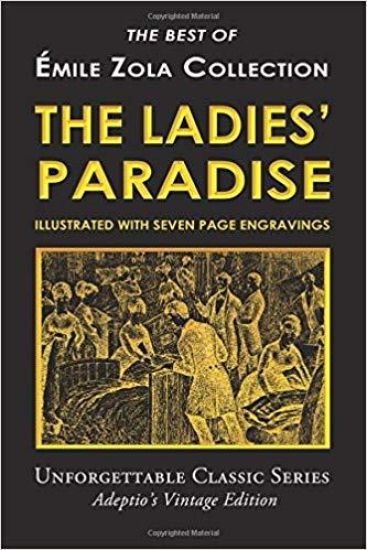
The Ladies' Paradise, originally Au Bonheur des Dames, is the eleventh novel of the famous Rougon-Macquart (1871-1893) series of twenty novels written by mile Zola. It tells a rags-to-riches story about Denise Baudu, a poor young girl from the provinces, and Octave Mouret, the wealthy owner of the department store where Denise comes to work. The rise of the modern department store in late nineteenth-century Paris, the store as a symbol of capitalism of the modern city, and the bourgeois revolution tell us a fascinating story of love and ambition, while depicting a rich texture of Parisian society. Part of Adeptio's Unforgettable Classic Series, this is not a facsimile reprint. Obvious typographical errors have been carefully corrected and the entire text has been reset and redesigned by Adeptio Editions to enhance readability, while respecting the original edition. About the Author: mile- douard-Charles-Antoine Zola (1840-1902) was a journalist, a novelist, a playwright, and a political activist. He was one of the most influential French novelists of the 19th century and the founder of the literary and theatrical school of naturalism. Zola was a major figure in the political liberalization of France. During his youth in the south of France, Zola befriended Paul C zanne, his schoolmate and future renowned Post-Impressionist painter-best known for his incredibly varied painting style that influenced 20th century abstract art. Zola's first book, Contes Ninon (Stories for Ninon), was a collection of short stories dedicated to his imaginary childhood love, Ninon. He published his debut novel in 1865, La Confession de Claude, an autobiographical work that chronicled a man falling in love with a sex worker. The book drew the attention of the public as well as of the police, and it was banned in the social circles, causing Zola to lose his job. Zola went on to write Th r se Raquin (1867), his first major novel, which delves into intrigue, adultery, and murder; and the dark love story Madeleine F rat (1868), his last novel before he started his masterful Rougon-Macquart 20-novel series. mile Zola's works include novels, dramas, poetry, and criticism, among which is his famous Les Rougon-Macquart (1871-1893), a cycle of twenty novels which depict various aspects of life and society, such as The Fortune of the Rougons (La Fortune des Rougon) originally published in 1871 and the first novel of the series; The Rush For The Spoil (La Cur e), in 1872; The Conquest of Plassans (La Conqu te de Plassans), in 1874; The Assommoir - The Prelude to Nana (L'Assommoir), in 1877, the seventh novel of the series, about the suffering of the Parisian working-class; Nana (1880), the ninth installment, which deals with prostitution; Piping Hot (Pot-Bouille), in 1882, the tenth novel of the cycle and Zola's most sarcastic satire, which describes daily life in a newly constructed block of flats in late nineteenth-century Paris; The Ladies Paradise (1883), the eleventh novel (original title: Au Bonheur des Dames), which focuses on Octave Mouret, who, in Piping Hot , meets Caroline H douin, the owner of a small silk shop; Germinal (1885), the thirteenth novel in the series, which depicts the mining industry and is considered by some as his masterpiece; and The Soil (La Terre), in 1887-all published by Adeptio Editions. Zola's open letter to French president F lix Faure, under the headline J'Accuse... , published on the front page of the newspaper L'Aurore on January 13, 1898, charging various French officials with a "terrible miscarriage of justice," reopened the case of the Jewish army officer, Captain Alfred Dreyfus, who had been sentenced to Devil's Island. For that, Zola was himself sentenced to a year in prison but fled to England, returning one year later after Dreyfus' name had been cleared. Dreyfus was eventually reinstated as an officer and publicly decorated with the Legion of Honor.
This is a new edition of "The Assommoir (L'Assommoir), The Prelude to 'Nana'," originally published in 1885 by Vizetelly & Co., of London, England. Part of Adeptio's Unforgettable Classic Series, this is not a facsimile reprint. Obvious typographical errors have been carefully corrected and the entire text has been reset and redesigned by Adeptio Editions to enhance readability, while respecting the original edition. The novel is principally the story of Gervaise Macquart, who is featured briefly in the first novel in the series, La Fortune des Rougon, running away to Paris with her shiftless lover Lantier to work as a washerwoman in a hot, busy laundry in one of the seedier areas of the city. "The Assommoir" is considered one of Zola's masterpieces The novel-a study of alcoholism and poverty in the working-class districts of Paris-was a huge commercial success and helped establish Zola's fame and reputation throughout France and the world. About the Author: mile- douard-Charles-Antoine Zola (1840-1902) was a journalist, a novelist, a playwright, and a political activist. He was one of the most influential French novelists of the 19th century and the founder of the literary and theatrical school of naturalism. Zola was a major figure in the political liberalization of France. During his youth in the south of France, Zola befriended Paul C zanne, his schoolmate and future renowned Post-Impressionist painter-best known for his incredibly varied painting style that influenced 20th century abstract art. Zola's first book, Contes Ninon (Stories for Ninon), was a collection of short stories dedicated to his imaginary childhood love, Ninon. He published his debut novel in 1865, La Confession de Claude, an autobiographical work that chronicled a man falling in love with a sex worker. The book drew the attention of the public as well as of the police, and it was banned in the social circles, causing Zola to lose his job. Zola went on to write Th r se Raquin (1867), his first major novel, which delves into intrigue, adultery, and murder; and the dark love story Madeleine F rat (1868), his last novel before he started his masterful Rougon-Macquart 20-novel series. mile Zola's works include novels, dramas, poetry, and criticism, among which is his famous Les Rougon-Macquart (1871-1893), a cycle of twenty novels which depict various aspects of life and society, such as The Fortune of the Rougons (La Fortune des Rougon) originally published in 1871 and the first novel of the series; The Rush For The Spoil (La Cur e), in 1872; The Conquest of Plassans (La Conqu te de Plassans), in 1874; The Assommoir - The Prelude to Nana (L'Assommoir), in 1877, the seventh novel of the series, about the suffering of the Parisian working-class; Nana (1880), the ninth installment, which deals with prostitution; Piping Hot (Pot-Bouille), in 1882, the tenth novel of the cycle and Zola's most sarcastic satire, which describes daily life in a newly constructed block of flats in late nineteenth-century Paris; The Ladies Paradise (1883), the eleventh novel (original title: Au Bonheur des Dames), which focuses on Octave Mouret, who, in Piping Hot , meets Caroline H douin, the owner of a small silk shop; Germinal (1885), the thirteenth novel in the series, which depicts the mining industry and is considered by some as his masterpiece; and The Soil (La Terre), in 1887-all published by Adeptio Editions. Zola's open letter to French president F lix Faure, under the headline J'Accuse... , published on the front page of the newspaper L'Aurore on January 13, 1898, charging various French officials with a "terrible miscarriage of justice," reopened the case of the Jewish army officer, Captain Alfred Dreyfus, who had been sentenced to Devil's Island. For that, Zola was himself sentenced to a year in prison but fled to England, returning one year later after Dreyfus' name had been cleared. Dreyfus was reinstated as officer and decora
This is a new edition of "Nana, Sequel to The Assommoir (L'Assommoir)," originally published in 1880 by T.B. Peterson & Brothers, of Philadelphia, U.S.A. Part of Adeptio's Unforgettable Classic Series, this is not a facsimile reprint. Obvious typographical errors have been carefully corrected and the entire text has been reset and redesigned by Adeptio Editions to enhance readability, while respecting the original edition. Nana is a continuation of The Assommoir (L'Assommoir); but Nana in no way resembles The Assommoir. It is elaborated with the same care; it is as real, as intense, and as bold as its predecessor, but it places before us a totally different world, and with all the "brutal justice of a photograph." This time we are not conducted to the workshop and to the forge-to homes of poverty and drunkenness-or to the terrible places where the liquor that stupefies and embrutes is sold. mile Zola, instead; gives us in Nana, a careful study of the manners and life of that class, whose principal business in life is to be amused, which class, ordinary romance-writers designate as "men of elegant leisure." About the Author: mile- douard-Charles-Antoine Zola (1840-1902) was a journalist, a novelist, a playwright, and a political activist. He was one of the most influential French novelists of the 19th century and the founder of the literary and theatrical school of naturalism. Zola was a major figure in the political liberalization of France. During his youth in the south of France, Zola befriended Paul C zanne, his schoolmate and future renowned Post-Impressionist painter-best known for his incredibly varied painting style that influenced 20th century abstract art. Zola's first book, Contes Ninon (Stories for Ninon), was a collection of short stories dedicated to his imaginary childhood love, Ninon. He published his debut novel in 1865, La Confession de Claude, an autobiographical work that chronicled a man falling in love with a sex worker. The book drew the attention of the public as well as of the police, and it was banned in the social circles, causing Zola to lose his job. Zola went on to write Th r se Raquin (1867), his first major novel, which delves into intrigue, adultery, and murder; and the dark love story Madeleine F rat (1868), his last novel before he started his masterful Rougon-Macquart 20-novel series. mile Zola's works include novels, dramas, poetry, and criticism, among which is his famous Les Rougon-Macquart (1871-1893), a cycle of twenty novels which depict various aspects of life and society, such as The Fortune of the Rougons (La Fortune des Rougon) originally published in 1871 and the first novel of the series; The Rush For The Spoil (La Cur e), in 1872; The Conquest of Plassans (La Conqu te de Plassans), in 1874; The Assommoir - The Prelude to Nana (L'Assommoir), in 1877, the seventh novel of the series, about the suffering of the Parisian working-class; Nana (1880), the ninth installment, which deals with prostitution; Piping Hot (Pot-Bouille), in 1882, the tenth novel of the cycle and Zola's most sarcastic satire, which describes daily life in a newly constructed block of flats in late nineteenth-century Paris; The Ladies Paradise (1883), the eleventh novel (original title: Au Bonheur des Dames), which focuses on Octave Mouret, who, in Piping Hot , meets Caroline H douin, the owner of a small silk shop; Germinal (1885), the thirteenth novel in the series, which depicts the mining industry and is considered by some as his masterpiece; and The Soil (La Terre), in 1887-all published by Adeptio Editions. Zola's open letter to French president F lix Faure, under the headline J'Accuse... , published on the front page of the newspaper L'Aurore on January 13, 1898, charging various French officials with a "terrible miscarriage of justice," reopened the case of the Jewish army officer, Captain Alfred Dreyfus, who had been sentenced to Devil's Island.
This is a new edition of "Th r se Raquin," originally published in 1887 by Vizetelly & Co., of London, England. Part of Adeptio's Unforgettable Classic Series, this is not a facsimile reprint. Obvious typographical errors have been carefully corrected and the entire text has been reset and redesigned by Adeptio Editions to enhance readability, while respecting the original edition. Th r se Raquin tells the story of a young woman, unhappily married to her first cousin by an overbearing aunt who may seem to be well-intentioned but in many ways is deeply selfish. Th r se's husband, Camille, is sickly and egocentric, and when the opportunity arises, Th r se enters into a turbulent and sordidly passionate affair with one of Camille's friends, Laurent. Th r se Raquin is considered one of Zola's masterpieces The novel was a huge commercial success and helped establish Zola's fame and reputation throughout France and the world. About the Author: mile- douard-Charles-Antoine Zola (1840-1902) was a journalist, a novelist, a playwright, and a political activist. He was one of the most influential French novelists of the 19th century and the founder of the literary and theatrical school of naturalism. Zola was a major figure in the political liberalization of France. During his youth in the south of France, Zola befriended Paul C zanne, his schoolmate and future renowned Post-Impressionist painter-best known for his incredibly varied painting style that influenced 20th century abstract art. Zola's first book, Contes Ninon (Stories for Ninon), was a collection of short stories dedicated to his imaginary childhood love, Ninon. He published his debut novel in 1865, La Confession de Claude, an autobiographical work that chronicled a man falling in love with a sex worker. The book drew the attention of the public as well as of the police, and it was banned in the social circles, causing Zola to lose his job. Zola went on to write Th r se Raquin (1867), his first major novel, which delves into intrigue, adultery, and murder; and the dark love story Madeleine F rat (1868), his last novel before he started his masterful Rougon-Macquart 20-novel series. mile Zola's works include novels, dramas, poetry, and criticism, among which is his famous Les Rougon-Macquart (1871-1893), a cycle of twenty novels which depict various aspects of life and society, such as The Fortune of the Rougons (La Fortune des Rougon) originally published in 1871 and the first novel of the series; The Rush For The Spoil (La Cur e), in 1872; The Conquest of Plassans (La Conqu te de Plassans), in 1874; The Assommoir - The Prelude to Nana (L'Assommoir), in 1877, the seventh novel of the series, about the suffering of the Parisian working-class; Nana (1880), the ninth installment, which deals with prostitution; Piping Hot (Pot-Bouille), in 1882, the tenth novel of the cycle and Zola's most sarcastic satire, which describes daily life in a newly constructed block of flats in late nineteenth-century Paris; The Ladies Paradise (1883), the eleventh novel (original title: Au Bonheur des Dames), which focuses on Octave Mouret, who, in Piping Hot , meets Caroline H douin, the owner of a small silk shop; Germinal (1885), the thirteenth novel in the series, which depicts the mining industry and is considered by some as his masterpiece; and The Soil (La Terre), in 1887-all published by Adeptio Editions. Zola's open letter to French president F lix Faure, under the headline J'Accuse... , published on the front page of the newspaper L'Aurore on January 13, 1898, charging various French officials with a "terrible miscarriage of justice," reopened the case of the Jewish army officer, Captain Alfred Dreyfus, who had been sentenced to Devil's Island. For that, Zola was himself sentenced to a year in prison but fled to England, returning one year later after Dreyfus' name had been cleared. Dreyfus was reinstated as an officer and publicly decora
Book This is a new edition of "The Soil (La Terre)," originally published in 1888 by Vizetelly & Co., of London, England. Part of Adeptio's Unforgettable Classic Series, this is not a facsimile reprint. Obvious typographical errors have been carefully corrected and the entire text has been reset and redesigned by Adeptio Editions to enhance readability, while respecting the original edition. The Soil (La Terre) has around one hundred characters Zola presents a realistic narrative of the poverty and cruelty of rural life in the late nineteenth century. The English translation brought such a clamor that Henry Vizetelly (the translator and publisher) was prosecuted and sentenced to three months incarceration. The Soil (La Terre) is considered one of Zola's masterpieces The novel was a huge commercial success and helped establish Zola's fame and reputation throughout France and the world. About the Author: mile- douard-Charles-Antoine Zola (1840-1902) was a journalist, a novelist, a playwright, and a political activist. He was one of the most influential French novelists of the 19th century and the founder of the literary and theatrical school of naturalism. Zola was a major figure in the political liberalization of France. During his youth in the south of France, Zola befriended Paul C zanne, his schoolmate and future renowned Post-Impressionist painter-best known for his incredibly varied painting style that influenced 20th century abstract art. Zola's first book, Contes Ninon (Stories for Ninon), was a collection of short stories dedicated to his imaginary childhood love, Ninon. He published his debut novel in 1865, La Confession de Claude, an autobiographical work that chronicled a man falling in love with a sex worker. The book drew the attention of the public as well as of the police, and it was banned in the social circles, causing Zola to lose his job. Zola went on to write Th r se Raquin (1867), his first major novel, which delves into intrigue, adultery, and murder; and the dark love story Madeleine F rat (1868), his last novel before he started his masterful Rougon-Macquart 20-novel series. mile Zola's works include novels, dramas, poetry, and criticism, among which is his famous Les Rougon-Macquart (1871-1893), a cycle of twenty novels which depict various aspects of life and society, such as The Fortune of the Rougons (La Fortune des Rougon) originally published in 1871 and the first novel of the series; The Rush For The Spoil (La Cur e), in 1872; The Conquest of Plassans (La Conqu te de Plassans), in 1874; The Assommoir - The Prelude to Nana (L'Assommoir), in 1877, the seventh novel of the series, about the suffering of the Parisian working-class; Nana (1880), the ninth installment, which deals with prostitution; Piping Hot (Pot-Bouille), in 1882, the tenth novel of the cycle and Zola's most sarcastic satire, which describes daily life in a newly constructed block of flats in late nineteenth-century Paris; The Ladies Paradise (1883), the eleventh novel (original title: Au Bonheur des Dames), which focuses on Octave Mouret, who, in Piping Hot , meets Caroline H douin, the owner of a small silk shop; Germinal (1885), the thirteenth novel in the series, which depicts the mining industry and is considered by some as his masterpiece; and The Soil (La Terre), in 1887-all published by Adeptio Editions. Zola's open letter to French president F lix Faure, under the headline J'Accuse... , published on the front page of the newspaper L'Aurore on January 13, 1898, charging various French officials with a "terrible miscarriage of justice," reopened the case of the Jewish army officer, Captain Alfred Dreyfus, who had been sentenced to Devil's Island. For that, Zola was himself sentenced to a year in prison but fled to England, returning one year later after Dreyfus' name had been cleared. Dreyfus was eventually reinstated as an officer and publicly decorated with the Legion of Honor.
This is a new edition of "Madeleine F rat," originally published in 1888 by Vizetelly & Co., of London, England. Part of Adeptio's Unforgettable Classic Series, this is not a facsimile reprint. Obvious typographical errors have been carefully corrected and the entire text has been reset and redesigned by Adeptio Editions to enhance readability, while respecting the original edition. Madeleine F rat tells the story of a young woman, divided between two men-her husband William and Jacques, a former lover. This is a strong novel, full of human sexuality that describes amazingly faithful the human emotions. The novel is one of the mile Zola's masterpieces About the Author: mile- douard-Charles-Antoine Zola (1840-1902) was a journalist, a novelist, a playwright, and a political activist. He was one of the most influential French novelists of the 19th century and the founder of the literary and theatrical school of naturalism. Zola was a major figure in the political liberalization of France. During his youth in the south of France, Zola befriended Paul C zanne, his schoolmate and future renowned Post-Impressionist painter-best known for his incredibly varied painting style that influenced 20th century abstract art. Zola's first book, Contes Ninon (Stories for Ninon), was a collection of short stories dedicated to his imaginary childhood love, Ninon. He published his debut novel in 1865, La Confession de Claude, an autobiographical work that chronicled a man falling in love with a sex worker. The book drew the attention of the public as well as of the police, and it was banned in the social circles, causing Zola to lose his job. Zola went on to write Th r se Raquin (1867), his first major novel, which delves into intrigue, adultery, and murder; and the dark love story Madeleine F rat (1868), his last novel before he started his masterful Rougon-Macquart 20-novel series. mile Zola's works include novels, dramas, poetry, and criticism, among which is his famous Les Rougon-Macquart (1871-1893), a cycle of twenty novels which depict various aspects of life and society, such as The Fortune of the Rougons (La Fortune des Rougon) originally published in 1871 and the first novel of the series; The Rush For The Spoil (La Cur e), in 1872; The Conquest of Plassans (La Conqu te de Plassans), in 1874; The Assommoir - The Prelude to Nana (L'Assommoir), in 1877, the seventh novel of the series, about the suffering of the Parisian working-class; Nana (1880), the ninth installment, which deals with prostitution; Piping Hot (Pot-Bouille), in 1882, the tenth novel of the cycle and Zola's most sarcastic satire, which describes daily life in a newly constructed block of flats in late nineteenth-century Paris; The Ladies Paradise (1883), the eleventh novel (original title: Au Bonheur des Dames), which focuses on Octave Mouret, who, in Piping Hot , meets Caroline H douin, the owner of a small silk shop; Germinal (1885), the thirteenth novel in the series, which depicts the mining industry and is considered by some as his masterpiece; and The Soil (La Terre), in 1887-all published by Adeptio Editions. Zola's open letter to French president F lix Faure, under the headline J'Accuse... , published on the front page of the newspaper L'Aurore on January 13, 1898, charging various French officials with a "terrible miscarriage of justice," reopened the case of the Jewish army officer, Captain Alfred Dreyfus, who had been sentenced to Devil's Island. For that, Zola was himself sentenced to a year in prison but fled to England, returning one year later after Dreyfus' name had been cleared. Dreyfus was eventually reinstated as an officer and publicly decorated with the Legion of Honor.