Kirjojen hintavertailu. Mukana 11 717 486 kirjaa ja 12 kauppaa.

Kirjahaku

Etsi kirjoja tekijän nimen, kirjan nimen tai ISBN:n perusteella.

1000 tulosta hakusanalla Emily Manuel Reeves

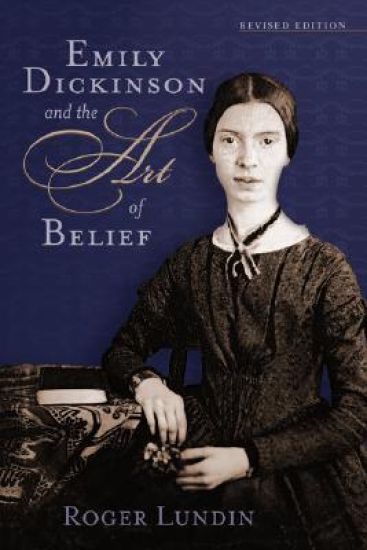
Emily Dickinson and the Art of Belief

Emily Dickinson and the Art of Belief

Professor Roger Lundin

William B Eerdmans Publishing Co
2004
nidottu
Named an "Outstanding Academic Book" by Choice when it was published in 1998, Emily Dickinson and the Art of Belief has since been widely recognized as one of the finest biographies of the great American poet. This superb work by Roger Lundin is now available in a revised edition that, in addition to incorporating text updates, aligns all citations of Dickinson's poems with the newly established standard edition of Dickinson's writing. Lundin looks chronologically at Dickinson's life, paying special attention to her experience of faith. He skillfully relates her personal development -- as it can be charted through her poems and letters -- to nineteenth-century American political, social, religious, and intellectual history. Series: Library of Religious Biography Series Editors: Mark A. Noll (series editor), Nathan O. Hatch (series editor), Allen C. Guelzo (series editor) The Library of Religious Biography is a series of original biographies on important religious figures throughout American and British history. The authors are well-known historians, each a recognized authority in the period of religious history in which his or her subject lived and worked.Grounded in solid research of both published and archival sources, these volumes link the lives of their subjects -- not always thought of as "religious" persons -- to the broader cultural contexts and religious issues that surrounded them. Each volume includes a bibliographical essay and an index to serve the needs of students, teachers, and researchers. Marked by careful scholarship yet free of footnotes and academic jargon, the books in this series are well-written narratives meant to be read and enjoyed as well as studied. Titles in this Series: Aimee Semple McPherson: Everybody's Sister Blaise Pascal: Reasons of the Heart Charles G. Finney and the Spirit of American Evangelicalism The Divine Dramatist: George Whitefield and the Rise of Modern Evangelicalism Emily Dickinson and the Art of Belief Occupy until I Come: A. T. Pierson and the Evangelization of the World The Puritan as Yankee: A Life of Horace Bushnell Sworn on the Altar of God: A Religious Biography of Thomas Jefferson Thomas Merton and the Monastic Vision William Ewart Gladstone: Faith and Politics in Victorian Britain
Emily Hamilton and Other Writings

Emily Hamilton and Other Writings

Sukey Vickery

University of Nebraska Press
2009
pokkari
Sukey Vickery's Emily Hamilton is an epistolary novel dealing with the courtship and marriages of three women. Originally published in 1803, it is one of the earliest examples of realist fiction in America and a departure from other novels at the turn of the nineteenth century. From the outset its author intended it as a realist project, never delving into the overly sentimental plotting or characterization present in much of the writing of Vickery's contemporaries. Emily Hamilton explores from a decidedly feminine perspective the idea of a woman's right to choose her own spouse and the importance of female friendship. Vickery's characterization of women further diverges from the typical eighteenth- and early nineteenth-century didactic of the righteous/sinful woman and depicts, instead, believable female characters exhibiting true-to-life behavior. A presentation of this novel accompanied by Vickery's poetry, letters, a diary fragment, and a few nineteenth-century responses to her work, Emily Hamilton and Other Writings is the first complete collection of Vickery's writings.
Emily Post: Daughter of the Gilded Age, Mistress of American Manners
In an engaging book that sweeps from the Gilded Age to the 1960s, award-winning author Laura Claridge presents the first authoritative biography of Emily Post, who changed the mindset of millions of Americans with Etiquette, a perennial bestseller and touchstone of proper behavior. A daughter of high society and one of Manhattan's most sought-after debutantes, Emily Price married financier Edwin Post. It was a hopeful union that ended in scandalous divorce. But the trauma forced Emily Post to become her own person. After writing novels for fifteen years, Emily took on a different sort of project. When it debuted in 1922, Etiquette represented a fifty-year-old woman at her wisest-and a country at its wildest. Claridge addresses the secret of Etiquette's tremendous success and gives us a panoramic view of the culture from which it took its shape, as its author meticulously updated her book twice a decade to keep it consistent with America's constantly changing social landscape. Now, nearly fifty years after Emily Post's death, we still feel her enormous influence on how we think Best Society should behave.
Emily Dickinson's Vision

Emily Dickinson's Vision

James R. Guthrie

University Press of Florida
1998
sidottu
In this contribution to Emily Dickinson biography and criticism, the author demonstrates how the poet's optical disease - strabismus, a deviation of the cornea - directly affected her subject matter, her poetic method, and indeed her sense of her own identity.
Emily Dickinson in Love

Emily Dickinson in Love

John Evangelist Walsh

Rutgers University Press
2012
sidottu
From the award-winning author of Poe the Detective: The Curious Circumstances Behind "The Mystery of Marie Roget" comes a compelling argument for the identity of Emily Dickinson’s true love Proud of my broken heartSince thou didst break it,Proud of the pain IDid not feel till thee . . .Those words were written by Emily Dickinson to a married man. Who was he?For a century or more the identity of Emily Dickinson’s mysterious “Master” has been eagerly sought, especially since three letters from her to him were found and published in 1955. In Emily Dickinson in Love, John Evangelist Walsh provides the first book-length treatment of this fascinating subject, offering a solution based wholly on documented facts and the poet’s own writings.Crafting the affair as a love story of rare appeal, and writing with exquisite attention to detail, in Part I Walsh reveals and meticulously proves the Master to be Otis Lord, a friend of the poet’s father and a man of some reputation in law and politics. Part II portrays the full dimensions of their thirty-year romance, most of it clandestine, including a series of secret meetings in Boston.After uncovering and confirming the Master’s identity, Walsh fits that information into known events of Emily’s life to make sense of facts long known but little understood—Emily’s decision to dress always in white, for instance, or her extreme withdrawal from a normal existence when she had previously been an active, outgoing friend to many men and women.In a lengthy section of Notes and Sources, Walsh presents his proofs in abundant detail, demonstrating that the evidence favors one man so irresistibly that there is left no room for doubt. Each reader will decide if he has truly succeeded in making the case for Otis Lord.
Emily Davies

Emily Davies

University of Virginia Press
2004
sidottu
Sarah Emily Davies (1830-1921) lived and crusaded during a time of profound change for education and women's rights in England. At the time of her birth, women's suffrage was scarcely open to discussion, and not one of England's Universities (there were four) admitted women. By the time of her death, not only had the number of universities grown to 12 - all of which were open to women - women had also begun to get the vote. Davies's own activism in the women's movement and in the social and educational reform movements of the time culminated in her founding of Girton College, Cambridge University, the first residential college of higher education for women. Much of the social change that Davies witnessed - and helped to effect - was discussed, encouraged and elicited through her personal correspondence. These letters, written to friends, allies and potential supporters during the years of Davies's greatest political and social activity, reveal the evolution of her skill and sophistication as an activist. They also show the development of women's suffrage, education and journalism movements from a group of loosely affiliated like-minded friends to an astute and organized political network of reformers. In these letters - most of which have never been publshed - we see Davies struggle to understand and theorize about the role of women, cajole and encourage potential supporters, explore complexities of various reform movements and demonstrate her formidable attention to detail in inventing and constructing an imaginable new institution. Her intensely engaged life placed Davies at the very heart of the events that transformed her era.
Emily Dickinson - American Writers 81

Emily Dickinson - American Writers 81

Donoghue Denis

UNIVERSITY OF MINNESOTA PRESS
1969
nidottu
Emily Dickinson - American Writers 81 was first published in 1969. Minnesota Archive Editions uses digital technology to make long-unavailable books once again accessible, and are published unaltered from the original University of Minnesota Press editions.
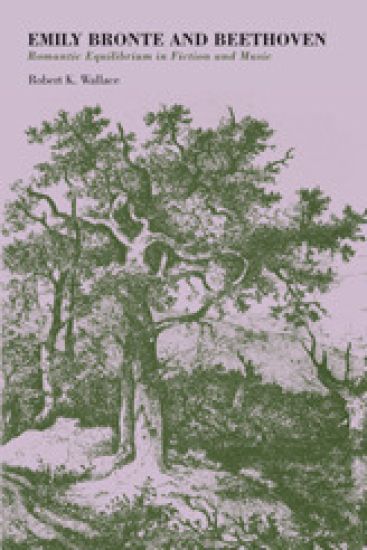
Emily Bronte and Beethoven

Emily Bronte and Beethoven

Robert K. Wallace

University of Georgia Press
2008
pokkari
When Emily Brontë was studying music in Brussels in 1842, she was drawn into the city's appreciation of Beethoven. After her exposure to the works of the great composer, Brontë's creativity flourished and she went on to compose what was to be her only novel—Wuthering Heights.In Emily Brontë and Beethoven, Robert K. Wallace continues to work from the perspective he developed in his Jane Austen and Mozart—integrating two fields that have traditionally been kept apart. Wallace compares Brontë and Beethoven through a close examination of the Romantic traits that their works share. Innovative and stimulating, Wallace's study extends literary criticism into a new context where equilibrium, balance, proportion and symmetry serve as a fulcrum to launch the reader into a new understanding of the formal parallels, the moods and emotions that connect music and literature.
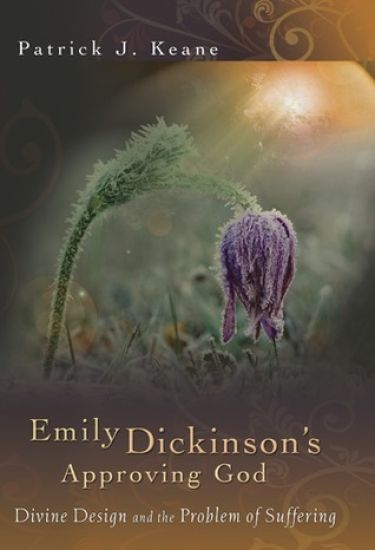
Emily Dickinson's Approving God

Emily Dickinson's Approving God

Patrick J. Keane

University of Missouri Press
2008
sidottu
As much a doubter as a believer, Emily Dickinson often expressed views about God in general - and God with respect to suffering in particular. In many of her poems, she contemplates the question posed by countless theologians and poets before her: how can one reconcile a benevolent deity with evil in the world?Examining Dickinson's perspectives on the role played by a supposedly omnipotent and all-loving God in a world marked by violence and pain, Patrick Keane initially focuses on her poem 'Apparently with no surprise,' in which frost, a 'blonde Assassin,' beheads a 'happy Flower,' a spectacle presided over by 'an Approving God.' This tiny lyric, Keane shows, epitomizes the poet's embattled relationship with the deity of her Calvinist tradition.Although the problem of suffering is usually couched in terms of natural disasters or human injustice, Dickinson found new ways of considering it. By choosing a flower as her innocent 'victim,' she bypassed standard 'answers' to the dilemma (suffering as justified punishment for wickedness, or as attributable to the assertion of free will) in order to focus on the problem in it purest symbolic form. Keane goes on to provide close readings of many of Dickinson's poems and letters engaging God, showing how she addressed the challenges posed - by her own experience and by an innate scepticism reinforced by a nascent Darwinism - to the argument from design and the concept of a benevolent deity.More than a dissection of a single poem, Keane's book is a sweeping personal reflection on literature and religion, faith and scepticism, theology and science. He traces the evolving history of the ""Problem of Suffering"" from the ""Hebrew Scriptures"" (Job and Ecclesiastes), through the writings of Paul, Augustine, and Aquinas, to the most recent theological and philosophical studies of the problem. Keane is interested in how readers today respond to Emily Dickinson's often combative poems about God; at the same time, she is located as a poet whose creative life coincided with the momentous changes and challenges to religious faith associated with Darwin and Nietzsche. Keane also considers Dickinson's poems and letters in the context of the great Roman tradition, as it runs from Milton through Wordsworth, demonstrating how the work of these poets (perhaps surprisingly in the case of the latter) helps illuminate Dickinson's poetry and thought.Because Dickinson the poet was also Emily the gardener, her love of flowers was an appropriate vehicle for her observations on mortality and her expressions of doubt. Emily Dickinson's ""Approving God"" is a graceful study that reveals not only the audacity of Dickinson's thought but also its relevance to modern readers. In light of ongoing confrontations between Darwinism and design, science and literal conceptions of divine Creator, it is an equally provocative read for students of literature and students of life.
Emily Mason

Emily Mason

Barbara Stehle; Elisa Wouk Almino

RIZZOLI INTERNATIONAL PUBLICATIONS
2025
sidottu
This is the most definitive volume on the life and art of Emily Mason (1932 2019), a post New York School abstract painter whose work is marked by vibrant color and improvisational brushwork. Born in Greenwich Village, Mason developed her distinctive approach to Abstract Expressionism and Color Field painting, reminiscent of the abstractions of Mark Rothko, Helen Frankenthaler, and Joan Mitchell. This long overdue book rediscovers this important artist and reaffirms Mason s place among the most influential abstract painters of her time. The volume examines Mason s artistic evolution from her education at The Cooper Union to her unique and dedicated approach that transcended conventional art movements. The essays explore her significant oils on paper, prints, and clayboards, showcasing her technical prowess and adaptability. Personal writings offer insights into Mason s reflections and experiences, enriching the understanding of her impactful legacy.
Emily Dickinson and the Problem of Others

Emily Dickinson and the Problem of Others

Christopher E.G. Benfey

University of Massachusetts Press
1984
nidottu
The vivid story of a tightly knit group of travelers--connoisseurs, collectors, scientists--who dedicated themselves to exploring and preserving what they referred to as Old Japan and Old Japan's lasting influence on the culture of Gilded Age America. After the Civil War, the United States--as cultural historian and critic Christopher Benfey argues--lost its philosophical moorings and looked eastward, to Old Japan and its seemingly untouched indigenous culture, for balance and perspective. Japan, meanwhile, was trying to reinvent itself as a more cosmopolitan, modern state, transforming in the space of twenty-five years from a feudal backwater to an international power. It was the parallel rise of these two young nations that initiated some of the major power struggles--both military and economic--of the twentieth century. This great wave of historical and cultural reciprocity brought with it some larger-than-life personalities, and this is their story as well. The lure of unknown foreign cultures played out on both sides of the Pacific, in the lives of Herman Melville, Theodore Roosevelt, Henry Adams, John La Farge, Kakuzo Okakura (the author of The Book of Tea), Isabelle Gardner, and Lafcadio Hearn, among others. The Great Wave is a beautifully rendered meditation on the subject of cultural identity and on the consequences--both good and bad--of cultural cross-pollonation. Above all, like Louis Menand's The Metaphysical Club, it proves that what important history does at its best is transform our worldview.
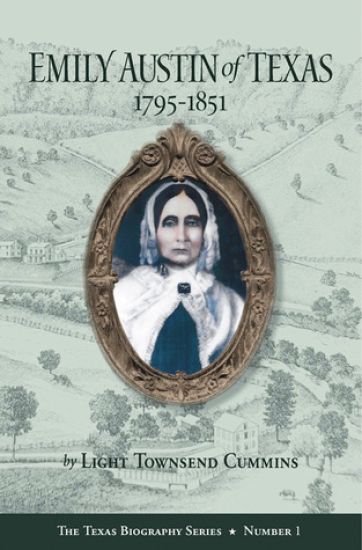
Emily Austin of Texas 1795-1851

Emily Austin of Texas 1795-1851

TCU Press

Texas Christian University Press,U.S.
2009
sidottu
The Austin family left an indelible mark on Texas and the expanding American nation. In this insightful biography, Light Townsend Cummins turns the historical spotlight on Emily Austin, the daughter who followed the trails of the western frontier to Texas, where she saw the burgeoning young colony erupt in revolution, establish a proud republic, and usher in the period of antebellum statehood. Emily's journey was one of remarkable personal change as the rigors of frontier life shaped her into a uniquely self-reliant southern woman, one who fulfilled the role of the plantation mistress while taking a distinct hand in ambitious public ventures. Despite her ties to influential family members, including her brother Stephen F. Austin, Emily's determined spirit allowed her to live on her own terms. In all of her notable activities, Emily principally remained a devoted daughter, sister, wife, and mother who proudly clung to her Austin roots. Utilizing her family's written correspondence, Cummins provides insight into Emily's multifaceted personality and the relationships that sustained her through times of tribulation and triumph.
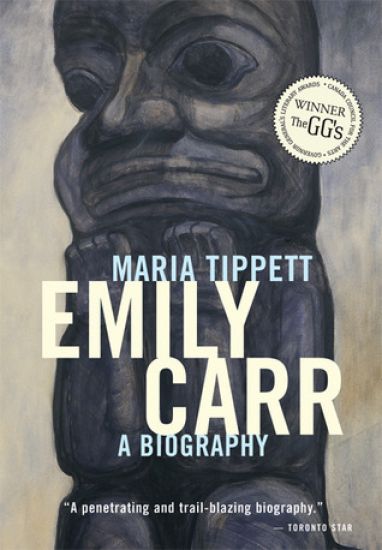
Emily Carr

Emily Carr

Maria Tippett

House of Anansi Press Ltd ,Canada
2006
pokkari
This classic of Canadian art biography, which won the Governor General's Award for Nonfiction, is a remarkable portrait of one of Canada's greatest artists. Emily Carr's life was filled with tension, between the conventions of society and her own originality, between her relationships with others and her often lonely struggle to overcome obstacles, between happiness and despair. Acclaimed writer and historian Maria Tippett has captured the essence of this complex life, weaving a narrative that is at once sympathetic and penetrating.