Kirjojen hintavertailu. Mukana 11 342 296 kirjaa ja 12 kauppaa.

Kirjahaku

Etsi kirjoja tekijän nimen, kirjan nimen tai ISBN:n perusteella.

1000 tulosta hakusanalla Francis Alua

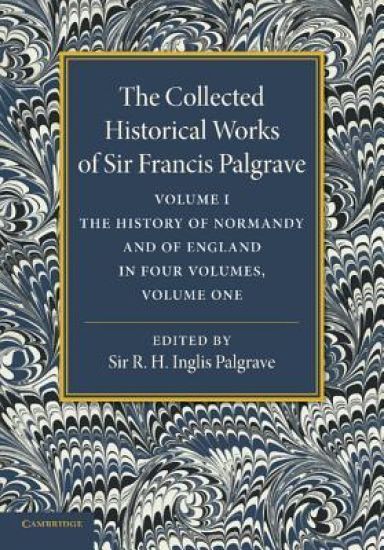
The Collected Historical Works of Sir Francis Palgrave, K.H.: Volume 1
Sir Francis Palgrave (1788–1861) was a distinguished English historian, solicitor and antiquarian, now considered to be the founder of the Public Record Office. After his death, Palgrave's son Sir Inglis Palgrave edited his Collected Historical Works, which focus mostly on the Anglo-Norman and Middle Ages. Originally published in 1919, this first volume of the Collected Historical Works contains the text of the first part of Palgrave's exhaustive history of England and Normandy, dealing with the period beginning with the Carlovingians in the eighth century and concluding with the rise of Rollo. Authorial and editorial notes are supplied at the back, and the volume begins with a biographical note on Palgrave written by his son. This book will be of value to anyone with an interest in English or French history or in Victorian historiography.
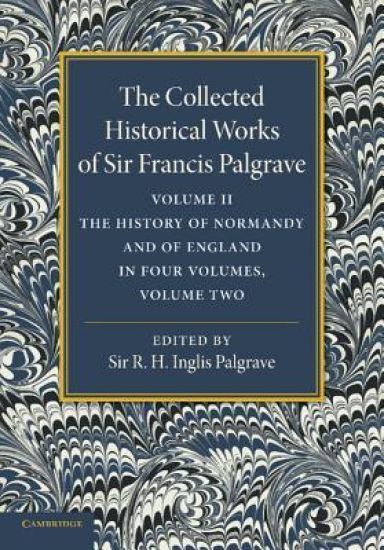
The Collected Historical Works of Sir Francis Palgrave, K.H.: Volume 2
Sir Francis Palgrave (1788–1861) was a distinguished English historian, solicitor and antiquarian, now considered to be the founder of the Public Record Office. After his death, Palgrave's son Sir Inglis Palgrave edited his Collected Historical Works, which focus mostly on the Anglo-Norman and Middle Ages. Originally published in 1919, this second volume of the Collected Historical Works contains the text of the second part of Palgrave's exhaustive history of England and Normandy, dealing with the period from the reign of Charles-le-Simple to the death of Richard-Sans-Peur. Editorial notes are supplied at the back of the volume. This book will be of value to anyone with an interest in English or French history or in Victorian historiography.
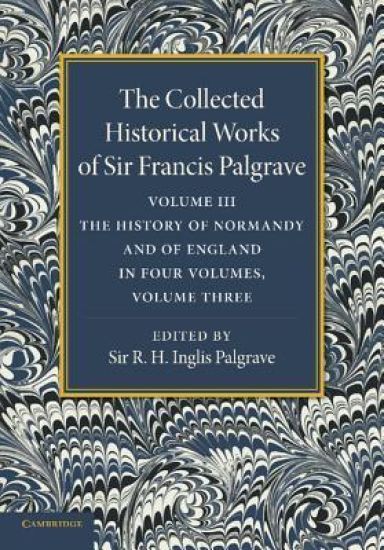
The Collected Historical Works of Sir Francis Palgrave, K.H.: Volume 3
Sir Francis Palgrave (1788–1861) was a distinguished English historian, solicitor and antiquarian, now considered to be the founder of the Public Record Office. After his death, Palgrave's son Sir Inglis Palgrave edited his Collected Historical Works, which focus mostly on the Anglo-Norman and Middle Ages. Originally published in 1921, this third volume of the Collected Historical Works contains the text of the third part of Palgrave's exhaustive history of England and Normandy, which was published after his death, and covers the period from Richard-Sans-Peur to William the Conqueror. Editorial notes are supplied at the back of the volume, and the text is prefaced with an essay on the Church's influence on many aspects of medieval life, especially art and literature. This book will be of value to anyone with an interest in English or French history or in Victorian historiography.
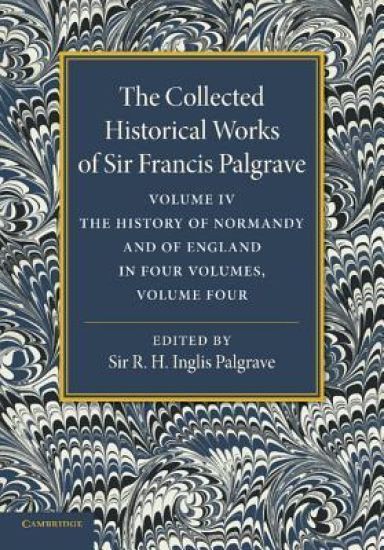
The Collected Historical Works of Sir Francis Palgrave, K.H.: Volume 4
Sir Francis Palgrave (1788–1861) was a distinguished English historian, solicitor and antiquarian, now considered to be the founder of the Public Record Office. After his death, Palgrave's son Sir Inglis Palgrave edited his Collected Historical Works, which focus mostly on the Anglo-Norman and Middle Ages. Originally published in 1921, this fourth volume of the Collected Historical Works contains the text of the fourth and final part of Palgrave's exhaustive history of England and Normandy, which covers events in Britain and Normandy between the death of William the Conqueror and the accession of Henry Plantagenet. Editorial notes are supplied at the back of the volume. This book will be of value to anyone with an interest in English or French history or in Victorian historiography.
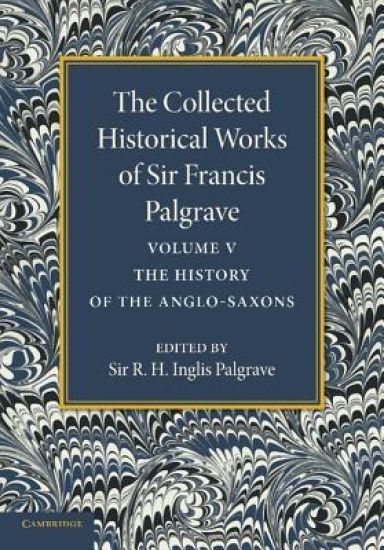
The Collected Historical Works of Sir Francis Palgrave, K.H.: Volume 5
Sir Francis Palgrave (1788–1861) was a distinguished English historian, solicitor and antiquarian, now considered to be the founder of the Public Record Office. After his death, Palgrave's son Sir Inglis Palgrave edited his Collected Historical Works, which focus mostly on the Anglo-Norman and Middle Ages. Originally published in 1921, this fifth volume of the Collected Historical Works contains the text of Palgrave's history of the Anglo-Saxons from 55 BC to the Norman Conquest in 1066. Editorial notes are supplied at the back of the volume, and there are plates with illustrations of important Anglo-Saxon artifacts. This book will be of value to anyone with an interest in English history or in Victorian historiography.
The Collected Historical Works of Sir Francis Palgrave, K.H.: Volume 6
Sir Francis Palgrave (1788–1861) was a distinguished English historian, solicitor and antiquarian, now considered to be the founder of the Public Record Office. After his death, Palgrave's son Sir Inglis Palgrave edited his Collected Historical Works, which focus mostly on the Anglo-Norman and Middle Ages. Originally published in 1921, this sixth volume of the Collected Historical Works contains the text of the first part of Palgrave's history of the rise of the English commonwealth in the Anglo-Saxon period, with a focus on the modern structures that have their roots in Anglo-Saxon policies. Editorial notes are supplied at the back of the volume. This book will be of value to anyone with an interest in Anglo-Saxon history or in Victorian historiography.
The Collected Historical Works of Sir Francis Palgrave, K.H.: Volume 7
Sir Francis Palgrave (1788–1861) was a distinguished English historian, solicitor and antiquarian, now considered to be the founder of the Public Record Office. After his death, Palgrave's son Sir Inglis Palgrave edited his Collected Historical Works, which focus mostly on the Anglo-Norman and Middle Ages. Originally published in 1921, this seventh volume of the Collected Historical Works contains the text of the second and final part of Palgrave's history of the rise of the English commonwealth in the Anglo-Saxon period, which contains the original texts and authorial translations of the key documents used and cited in the previous volume. Editorial notes are supplied at the back of the volume. This book will be of value to anyone with an interest in Anglo-Saxon history or in Victorian historiography.
The Collected Historical Works of Sir Francis Palgrave, K.H.: Volume 8
Sir Francis Palgrave (1788–1861) was a distinguished English historian, solicitor and antiquarian, now considered to be the founder of the Public Record Office. After his death, Palgrave's son Sir Inglis Palgrave edited his Collected Historical Works, which focus mostly on the Anglo-Norman and Middle Ages. Originally published in 1922, this eighth volume of the Collected Historical Works contains the text of Palgrave's two stories on life in the Middle Ages in England, 'The Merchant and the Friar' and 'Three Generations of an Imaginary Norfolk Family'. The volume is introduced by prolific historian A. Hamilton Thompson. This book will be of value to anyone with an interest in medieval life or in Victorian historiography.
The Collected Historical Works of Sir Francis Palgrave, K.H.: Volume 9
Sir Francis Palgrave (1788–1861) was a distinguished English historian, solicitor and antiquarian, now considered to be the founder of the Public Record Office. After his death, Palgrave's son Sir Inglis Palgrave edited his Collected Historical Works, which focus mostly on the Anglo-Norman and Middle Ages. Originally published in 1922, this ninth volume of the Collected Historical Works contains the text of the first collection of Palgrave's reviews, articles and assorted notes, including articles that were previously unpublished. Editorial notes are supplied at the back of the volume. This book will be of value to anyone with an interest in Palgrave's work or in pre-Norman, Norman and medieval English history.
The Collected Historical Works of Sir Francis Palgrave, K.H: Volume 10
Sir Francis Palgrave (1788–1861) was a distinguished English historian, solicitor and antiquarian, now considered to be the founder of the Public Record Office. After his death, Palgrave's son Sir Inglis Palgrave edited his Collected Historical Works, which focus mostly on the Anglo-Norman and Middle Ages. Originally published in 1922, this tenth and final volume of the Collected Historical Works contains the text of the second collection of Palgrave's reviews, focusing mostly on comparative mythology, art and the history of medieval France. This book will be of value to anyone with an interest in Palgrave's work or in medieval history.
Francis Jenkinson, Fellow of Trinity College Cambridge and University Librarian
Originally published in 1926, this book contains the biography of Francis Jenkinson, a fellow of Trinity College, Cambridge, and the University Librarian for the University of Cambridge from 1889 until his death in 1923. The memoir was written by his friend H. F. Stewart, who was also a fellow at Trinity with Jenkinson. Jenkinson was a well-respected figure in University circles and was responsible for collecting the large amount of material relating to WWI now in the University Library's collection. This book will be of value to anyone with an interest in Jenkinson's life and his legacy.
The World Encompassed by Sir Francis Drake: Being his Next Voyage to that to Nombre de Dios
The publications of the Hakluyt Society (founded in 1846) made available edited (and sometimes translated) early accounts of exploration. The first series, which ran from 1847 to 1899, consists of 100 books containing published or previously unpublished works by authors from Christopher Columbus to Sir Francis Drake, and covering voyages to the New World, to China and Japan, to Russia and to Africa and India. This account of Drake's circumnavigation of the world in 1577–1580 was first published by his nephew in 1628 and appears to derive from notes made by Francis Fletcher, the chaplain to the expedition, although a surviving manuscript account by Fletcher is not identical. The introduction to this edition (published in 1854) discusses textual problems, and also puts the narrative into the context of Drake's career as one of the privateers who carried on England's unacknowledged war with Spain in the decades before the Armada.
The Works of Francis Bacon

The Works of Francis Bacon

Francis Bacon

Cambridge University Press
2011
pokkari
Francis Bacon (1561–1626), the English philosopher, statesman and jurist, is best known for developing the empiricist method which forms the basis of modern science. Bacon's writings concentrated on philosophy and judicial reform. His most significant work is the Instauratio Magna comprising two parts - The Advancement of Learning and the Novum Organum. The first part is noteworthy as the first major philosophical work published in English (1605). James Spedding (1808–81) and his co-editors arranged this fourteen-volume edition, published in London between 1857 and 1874, not in chronological order but by subject matter, so that different volumes would appeal to different audiences. The material is divided into three parts: philosophy and general literature; legal works; and letters, speeches and tracts relating to politics. Volume 1, published 1857, contains the biography by Bacon's secretary, William Rawley (c.1588–1667), and part 1 of the philosophical works included in the Instauratio Magna.
The Works of Francis Bacon

The Works of Francis Bacon

Francis Bacon

Cambridge University Press
2011
pokkari
Francis Bacon (1561–1626), the English philosopher, statesman and jurist, is best known for developing the empiricist method which forms the basis of modern science. Bacon's writings concentrated on philosophy and judicial reform. His most significant work is the Instauratio Magna comprising two parts - The Advancement of Learning and the Novum Organum. The first part is noteworthy as the first major philosophical work published in English (1605). James Spedding (1808–81) and his co-editors arranged this fourteen-volume edition, published in London between 1857 and 1874, not in chronological order but by subject matter, so that different volumes would appeal to different audiences. The material is divided into three parts: philosophy and general literature; legal works; and letters, speeches and tracts relating to politics. Volume 2, published in 1857, continues part 1 of Bacon's Latin writings intended to be included as part of the Instauratio Magna.
The Works of Francis Bacon

The Works of Francis Bacon

Francis Bacon

Cambridge University Press
2011
pokkari
Francis Bacon (1561–1626), the English philosopher, statesman and jurist, is best known for developing the empiricist method which forms the basis of modern science. Bacon's writings concentrated on philosophy and judicial reform. His most significant work is the Instauratio Magna comprising two parts - The Advancement of Learning and the Novum Organum. The first part is noteworthy as the first major philosophical work published in English (1605). James Spedding (1808–81) and his co-editors arranged this fourteen-volume edition, published in London between 1857 and 1874, not in chronological order but by subject matter, so that different volumes would appeal to different audiences. The material is divided into three parts: philosophy and general literature; legal works; and letters, speeches and tracts relating to politics. Volume 3, published in 1857, contains Bacon's philosophical works in Latin that either were not intended to be part of the Instauratio Magna or were abandoned.
The Works of Francis Bacon

The Works of Francis Bacon

Francis Bacon

Cambridge University Press
2011
pokkari
Francis Bacon (1561–1626), the English philosopher, statesman and jurist, is best known for developing the empiricist method which forms the basis of modern science. Bacon's writings concentrated on philosophy and judicial reform. His most significant work is the Instauratio Magna comprising two parts - The Advancement of Learning and the Novum Organum. The first part is noteworthy as the first major philosophical work published in English (1605). James Spedding (1808–81) and his co-editors arranged this fourteen-volume edition, published in London between 1857 and 1874, not in chronological order but by subject matter, so that different volumes would appeal to different audiences. The material is divided into three parts: philosophy and general literature; legal works; and letters, speeches and tracts relating to politics. Volume 4, published in 1858, contains the English translation of Bacon's philosophical works that formed part of the Instauratio Magna.
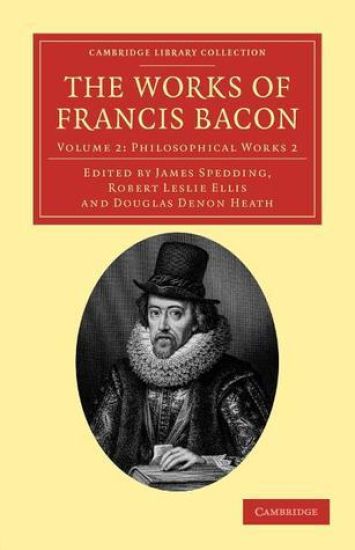
The Works of Francis Bacon

The Works of Francis Bacon

Francis Bacon

Cambridge University Press
2011
pokkari
Francis Bacon (1561–1626), the English philosopher, statesman and jurist, is best known for developing the empiricist method which forms the basis of modern science. Bacon's writings concentrated on philosophy and judicial reform. His most significant work is the Instauratio Magna comprising two parts - The Advancement of Learning and the Novum Organum. The first part is noteworthy as the first major philosophical work published in English (1605). James Spedding (1808–81) and his co-editors arranged this fourteen-volume edition, published in London between 1857 and 1874, not in chronological order but by subject matter, so that different volumes would appeal to different audiences. The material is divided into three parts: philosophy and general literature; legal works; and letters, speeches and tracts relating to politics. Volume 5, published in 1858, contains the English translations of the remainder of the Instauratio Magna and his other philosophical writings.