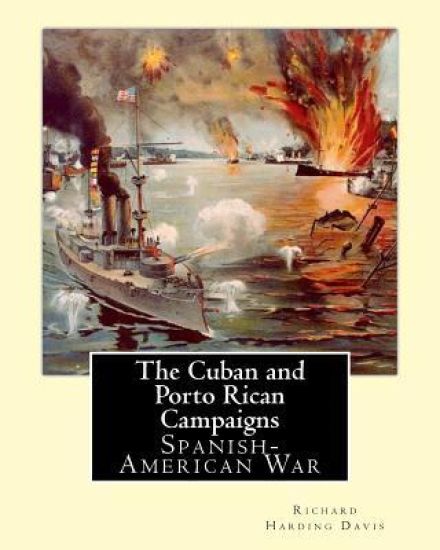
Richard Harding Davis (April 18, 1864 - April 11, 1916) was an American journalist and writer of fiction and drama, known foremost as the first American war correspondent to cover the Spanish-American War, the Second Boer War, and the First World War.His writing greatly assisted the political career of Theodore Roosevelt and he also played a major role in the evolution of the American magazine. His influence extended to the world of fashion and he is credited with making the clean-shaven look popular among men at the turn of the 20th century. Davis was born on April 18, 1864 in Philadelphia, Pennsylvania.His mother Rebecca Harding Davis was a prominent writer in her day. His father, Lemuel Clarke Davis, was himself a journalist and edited the Philadelphia Public Ledger. As a young man, Davis attended the Episcopal Academy. In 1882, after an unhappy year at Swarthmore College, Davis transferred to Lehigh University, where his uncle, H. Wilson Harding, was a professor.While at Lehigh, Davis published his first book, The Adventures of My Freshman (1884), a collection of short stories. Many of the stories had originally appeared in the student magazine the Lehigh Burr. In 1885, Davis transferred to Johns Hopkins University. After college, his father helped him gain his first position as a journalist at the Philadelphia Record but he was soon dismissed. After another brief position at the Philadelphia Press, Davis accepted a better-paying position at the New York Evening Sun where he gained attention for his flamboyant style and his writing on controversial subjects such as abortion, suicide and execution.He first attracted attention in May to June 1889, by reporting on the devastation of Johnstown, Pennsylvania, following the infamous flood and added to his reputation by reporting on other noteworthy events such as the first electrocution of a criminal (the execution of William Kemmler in 1890)...... Frederick Coffay Yohn (February 8, 1875 - June 6, 1933), often recognized only by his initials, F. C. Yohn, was an artist and magazine illustrator.Yohn's work appeared in publications including Scribner's Magazine, Harper's Magazine, and Collier's Weekly. Books he illustrated included Jack London's A Daughter of the Snows, Frances Hodgson Burnett's The Dawn of a To-morrow and Henry Cabot Lodge's Story of the American Revolution. He studied at the Indianapolis Art School during his first student year and then studied at the Art Students League of New York under Henry Siddons Mowbray (1858-1928). Mowbray studied at the Atelier of L on Bonnat in Paris. Yohn often specialized in historical military themes, especially of the American Revolution, as well as the First World War. He designed the 2 cent US Postal Service stamp in 1929 to commemorate the 150th Anniversary of George Rogers Clark's Victory over the British at Sackville. He is best known for his painting of George Washington at Valley Forge.
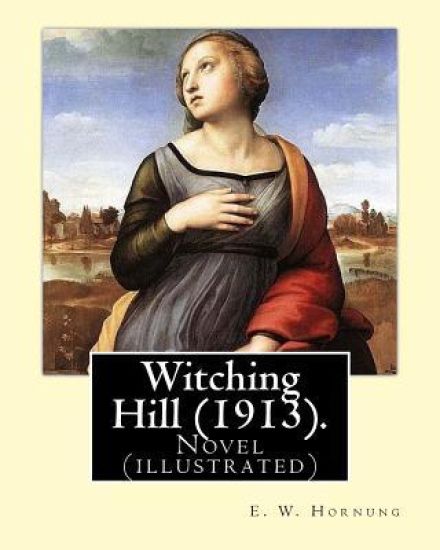
Ernest William Hornung (7 June 1866 - 22 March 1921) was an English author and poet known for writing the A. J. Raffles series of stories about a gentleman thief in late 19th-century London. Hornung was educated at Uppingham School; as a result of poor health he left the school in December 1883 to travel to Sydney, where he stayed for two years. He drew on his Australian experiences as a background when he began writing, initially short stories and later novels. In 1898 he wrote "In the Chains of Crime", which introduced Raffles and his sidekick, Bunny Manders; the characters were based partly on his friends Oscar Wilde and his lover, Lord Alfred Douglas, and also on the characters of Sherlock Holmes and Dr. Watson, created by his brother-in-law, Arthur Conan Doyle. The series of Raffles short stories were collected for sale in book form in 1899, and two further books of Raffles short stories followed, as well as a poorly received novel. Aside from his Raffles stories, Hornung was a prodigious writer of fiction, publishing numerous books from 1890, with A Bride from the Bush to his 1914 novel The Crime Doctor. The First World War brought an end to Hornung's fictional output. His son, Oscar, was killed at the Second Battle of Ypres in July 1915. Hornung joined the YMCA, initially in England, then in France, where he helped run a canteen and library. He published two collections of poetry during the war, and then, afterwards, one further volume of verse and an account of his time spent in France, Notes of a Camp-Follower on the Western Front. Hornung's fragile constitution was further weakened by the stress of his war work. To aid his recuperation, he and his wife visited the south of France in 1921. He fell ill from influenza on the journey, and died on 22 March 1921, aged 54. Although much of Hornung's work has fallen into obscurity, his Raffles stories continued to be popular, and have formed numerous film and television adaptations. Hornung's stories dealt with a wider range of themes than crime: he examined scientific and medical developments, guilt, class and the unequal role played by women in society. Two threads that run through a sizeable proportion of his books are Australia and cricket; the latter was also a lifelong passion..... Frederick Coffay Yohn (February 8, 1875 - June 6, 1933), often recognized only by his initials, F. C. Yohn, was an artist and magazine illustrator.
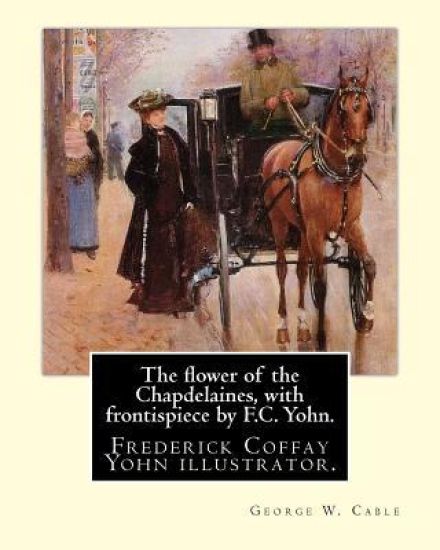
Frederick Coffay Yohn (February 8, 1875 - June 6, 1933), often recognized only by his initials, F. C. Yohn, was an artist and magazine illustrator.Yohn's work appeared in publications including Scribner's Magazine, Harper's Magazine, and Collier's Weekly. Books he illustrated included Jack London's A Daughter of the Snows, Frances Hodgson Burnett's The Dawn of a To-morrow and Henry Cabot Lodge's Story of the American Revolution. He studied at the Indianapolis Art School during his first student year and then studied at the Art Students League of New York under Henry Siddons Mowbray (1858-1928). Mowbray studied at the Atelier of L on Bonnat in Paris. Yohn often specialized in historical military themes, especially of the American Revolution, as well as the First World War. He designed the 2 cent US Postal Service stamp in 1929 to commemorate the 150th Anniversary of George Rogers Clark's Victory over the British at Sackville. He is best known for his painting of George Washington at Valley Forge............. George Washington Cable (October 12, 1844 - January 31, 1925) was an American novelist notable for the realism of his portrayals of Creole life in his native New Orleans, Louisiana. He has been called "the most important southern artist working in the late 19th century, as well as the first modern southern writer." In his treatment of racism, mixed-race families and miscegenation, his fiction has been thought to anticipate that of William Faulkner. He also wrote articles critical of contemporary society. Due to hostility against him after two 1885 essays encouraging racial equality and opposing Jim Crow, Cable moved with his family to Northampton, Massachusetts. He lived there for the next thirty years, then moved to Florida. Biography: Cable was born in 1844 in New Orleans, Louisiana, the son of George W. Cable, Sr., and Rebecca Boardman Cable. They were wealthy slaveholders who were members of the Presbyterian Church and New Orleans society, whose families had moved there after the Louisiana Purchase. First educated in private schools, the younger Cable had to get work after his father died young. The elder Cable had lost investments, and the family struggled financially. Cable later learned French on his own. He served in the Confederate Army during the American Civil War, in which he took part in support of the Southern cause. His experiences changed his ideas about Southern and Louisiana society, and he began writing during a two-year bout with malaria. In 1870 Cable went into journalism, writing for the New Orleans Picayune. He worked for them from 1865 to 1879, by which time he had become an established writer. In 1869, George Cable married Louisa Stewart Bartlett, with whom he had several children. He was invited to submit stories in Scribner's Monthly, where his story "Sieur George", published in 1873, was a critical and popular success. He published six more stories of Creole life with Scribner's in the following three years. The stories were collected and published in a book in 1879 as Old Creole Days. While romantic in plot, the stories revealed the multi-cultural and multi-racial nature of antebellum New Orleans society, with ties among French, Spanish, African, Native American and Caribbean Creoles. He also addressed conflicts that arose following the Louisiana Purchase, when traditional New Orleans Creoles of color had to confront Anglo-Americans - who ultimately asserted their concept of a biracial society, rather than acknowledging the multiracial class of free people of color.In 1880 Cable published his first novel, The Grandissimes: A Story of Creole Life, portraying multiracial members and different classes of society in the early 1800s shortly after the Louisiana Purchase. It had first been serialized in Scribner's. The plot follows the adventures and romances of several members of the Grandissime family, a French Creole family with mixed-race members............
Frederick Coffay Yohn (February 8, 1875 - June 6, 1933), often recognized only by his initials, F. C. Yohn, was an artist and magazine illustrator. George Washington Cable (October 12, 1844 - January 31, 1925) was an American novelist notable for the realism of his portrayals of Creole life in his native New Orleans, Louisiana. He has been called "the most important southern artist working in the late 19th century, as well as the first modern southern writer." In his treatment of racism, mixed-race families and miscegenation, his fiction has been thought to anticipate that of William Faulkner. He also wrote articles critical of contemporary society. Due to hostility against him after two 1885 essays encouraging racial equality and opposing Jim Crow, Cable moved with his family to Northampton, Massachusetts. He lived there for the next thirty years, then moved to Florida. Biography: Cable was born in 1844 in New Orleans, Louisiana, the son of George W. Cable, Sr., and Rebecca Boardman Cable. They were wealthy slaveholders who were members of the Presbyterian Church and New Orleans society, whose families had moved there after the Louisiana Purchase. First educated in private schools, the younger Cable had to get work after his father died young. The elder Cable had lost investments, and the family struggled financially. Cable later learned French on his own. He served in the Confederate Army during the American Civil War, in which he took part in support of the Southern cause. His experiences changed his ideas about Southern and Louisiana society, and he began writing during a two-year bout with malaria. In 1870 Cable went into journalism, writing for the New Orleans Picayune. He worked for them from 1865 to 1879, by which time he had become an established writer. In 1869, George Cable married Louisa Stewart Bartlett, with whom he had several children. He was invited to submit stories in Scribner's Monthly, where his story "Sieur George", published in 1873, was a critical and popular success. He published six more stories of Creole life with Scribner's in the following three years. The stories were collected and published in a book in 1879 as Old Creole Days. While romantic in plot, the stories revealed the multi-cultural and multi-racial nature of antebellum New Orleans society, with ties among French, Spanish, African, Native American and Caribbean Creoles. He also addressed conflicts that arose following the Louisiana Purchase, when traditional New Orleans Creoles of color had to confront Anglo-Americans - who ultimately asserted their concept of a biracial society, rather than acknowledging the multiracial class of free people of color.In 1880 Cable published his first novel, The Grandissimes: A Story of Creole Life, portraying multiracial members and different classes of society in the early 1800s shortly after the Louisiana Purchase. It had first been serialized in Scribner's. The plot follows the adventures and romances of several members of the Grandissime family, a French Creole family with mixed-race members. He used this historical romance as a way to explore society and its racial injustice, as he addressed European Creoles, the mixed-race class, pla age, slavery, and lynchings. Also in 1880, the United States Census Bureau commissioned Cable to write a "historical sketch" of pre-Civil War New Orleans for a special section of the 10th United States Census' "Social statistics of cities." He submitted a well-researched 313-page history. It was greatly reduced for publication in 1884. His novella Madame Delphine (1881), expanded from a short story, featured the issue of miscegenation, in which a woman of partially African descent tries to arrange the marriage of her daughter, who has more European ancestry, to one of the French Creole elite. In 1884 he published a work, Dr. Sevier, on prison reform.
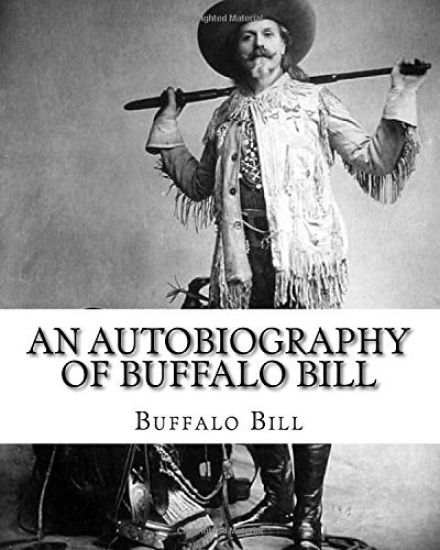
William Frederick "Buffalo Bill" Cody (February 26, 1846 - January 10, 1917) was an American scout, bison hunter, and showman. He was born in Le Claire, Iowa Territory (now the U.S. state of Iowa), but he lived for several years in his father's hometown in Toronto, Ontario, Canada, before the family returned to the Midwest and settled in the Kansas Territory.Buffalo Bill started working at the age of eleven, after his father's death, and became a rider for the Pony Express at age 14. During the American Civil War, he served the Union from 1863 to the end of the war in 1865. Later he served as a civilian scout for the US Army during the Indian Wars, receiving the Medal of Honor in 1872.One of the most colorful figures of the American Old West, Buffalo Bill's legend began to spread when he was only twenty-three. Shortly thereafter he started performing in shows that displayed cowboy themes and episodes from the frontier and Indian Wars. He founded Buffalo Bill's Wild West in 1883, taking his large company on tours in the United States and, beginning in 1887, in Great Britain and continental Europe.Early life and education edit]Cody was born on February 26, 1846, on a farm just outside Le Claire, Iowa. His father, Isaac Cody, was born on September 5, 1811, in Toronto Township, Upper Canada, now part of Mississauga, Ontario, directly west of Toronto. Mary Ann Bonsell Laycock, Bill's mother, was born about 1817 in New Jersey, near Philadelphia. She moved to Cincinnati to teach school, and there she met and married Isaac. She was a descendant of Josiah Bunting, a Quaker who had settled in Pennsylvania. There is no evidence to indicate Buffalo Bill was raised as a Quaker. In 1847 the couple moved to Ontario, having their son baptized in 1847, as William Cody, at the Dixie Union Chapel in Peel County (present-day Peel Region, of which Mississauga is part), not far from the farm of his father's family. The chapel was built with Cody money, and the land was donated by Philip Cody of Toronto Township.They lived in Ontario for several years.In 1853, Isaac Cody sold his land in rural Scott County, Iowa, for $2000, and the family moved to Fort Leavenworth, Kansas Territory. In the years before the Civil War, Kansas was overtaken by political and physical conflict over the slavery question. Isaac Cody was against slavery. He was invited to speak at Rively's store, a local trading post where pro-slavery men often held meetings. His antislavery speech so angered the crowd that they threatened to kill him if he didn't step down. A man jumped up and stabbed him twice with a Bowie knife. Rively, the store's owner, rushed Cody to get treatment, but he never fully recovered from his injuries.In Kansas, the family was frequently persecuted by pro-slavery supporters. Cody's father spent time away from home for his safety. His enemies learned of a planned visit to his family and plotted to kill him on the way. Bill, despite his youth and being ill at the time, rode 30 miles (48 km) to warn his father. Isaac Cody went to Cleveland, Ohio, to organize a group of thirty families to bring back to Kansas, in order to add to the antislavery population. During his return trip he caught a respiratory infection which, compounded by the lingering effects of his stabbing and complications from kidney disease, led to his death in April 1857.After his death, the family suffered financially. At age 11, Bill took a job with a freight carrier as a "boy extra".......Newell Convers Wyeth (October 22, 1882 - October 19, 1945), known as N. C. Wyeth, was an American artist and illustrator. He was the pupil of artist Howard Pyle and became one of America's greatest illustrators.
The 18th century was a wealth of knowledge, exploration and rapidly growing technology and expanding record-keeping made possible by advances in the printing press. In its determination to preserve the century of revolution, Gale initiated a revolution of its own: digitization of epic proportions to preserve these invaluable works in the largest archive of its kind. Now for the first time these high-quality digital copies of original 18th century manuscripts are available in print, making them highly accessible to libraries, undergraduate students, and independent scholars.Medical theory and practice of the 1700s developed rapidly, as is evidenced by the extensive collection, which includes descriptions of diseases, their conditions, and treatments. Books on science and technology, agriculture, military technology, natural philosophy, even cookbooks, are all contained here.++++The below data was compiled from various identification fields in the bibliographic record of this title. This data is provided as an additional tool in helping to insure edition identification: ++++British LibraryT147660The plates were originally issued in 'Various subjects of natural history .. ' London, 1776-92]. With a final leaf with a list of plates and five final leaves of indices.London: printed by T. Bensley for Benjamin and John White, and John Sewell, 1796. 2],106, 12]p., LX plates; 1
The 18th century was a wealth of knowledge, exploration and rapidly growing technology and expanding record-keeping made possible by advances in the printing press. In its determination to preserve the century of revolution, Gale initiated a revolution of its own: digitization of epic proportions to preserve these invaluable works in the largest archive of its kind. Now for the first time these high-quality digital copies of original 18th century manuscripts are available in print, making them highly accessible to libraries, undergraduate students, and independent scholars.Medical theory and practice of the 1700s developed rapidly, as is evidenced by the extensive collection, which includes descriptions of diseases, their conditions, and treatments. Books on science and technology, agriculture, military technology, natural philosophy, even cookbooks, are all contained here.++++The below data was compiled from various identification fields in the bibliographic record of this title. This data is provided as an additional tool in helping to insure edition identification: ++++British LibraryT010656With 'A letter from Edward Hussey Delaval, .. to Mr. Wilson, ..'.London: printed for Lockyer Davis, 1773. 8],68p.; 4
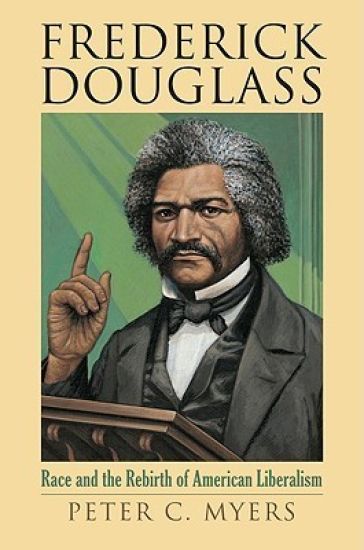
For Frederick Douglass, the iconic nineteenth-century slave and abolitionist, the foundations for his arguments in support of racial equality rested on natural rights and natural law - and the bold proclamation of the Declaration of Independence that all men are created equal. But because many Americans never observed this principle - and in Douglass' day even renounced it - he made it his life's work to move the nation toward this vision of a more noble liberalism. Peter Myers now considers that effort and the natural rights arguments by which Douglass confronted race in America.Myers examines the philosophic core of Douglass' political thought, offering a greater understanding of its depth and coherence. He depicts Douglass as the leading thinker to apply the Founders' doctrine of natural rights to the plight of African Americans - an activist who grounded his arguments on the rights guaranteed by the Constitution and the inherent injustice not only of slavery but of any form of racial superiority.Myers first reconsiders Douglass' descriptive analysis of slavery, developing his arguments for its natural wrongness and for its natural weakness in conjunction with the right of resistance. He then examines Douglass' understandings of civil government in general and of the U.S. constitutional order in particular, exploring his argument on the Constitution's relation to slavery and his thoughts on the powers and duties of the federal and state governments in the matter of postslavery race relations - including new insight into Douglass' controversial ""do nothing"" doctrine.Myers argues that Douglass' political thought at its core is both more coherent and more defensible in substance than his critics acknowledge. He maintains that Douglass was right in finding the natural rights principles of the Declaration a sufficient theoretical basis for addressing the nation's racial problems and contends that his hopefulness for the demise of slavery and white supremacy was marked by moderation and realism.Myers finds in Douglass' political thought the foundations of a revitalized argument for the mainstream civil rights, integrationist tradition of African American political thought. His analysis offers a new way of looking at an important thinker, as well as a compelling case for hoping that race relations in America will improve over time.
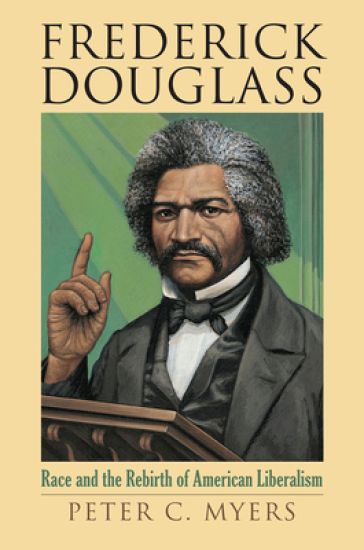
For Frederick Douglass, the iconic nineteenth-century slave and abolitionist, the foundations for his arguments in support of racial equality rested on natural rights and natural law-and the bold proclamation of the Declaration of Independence that all men are created equal. But because many Americans never observed this principle—and in Douglass’s day even renounced it—he made it his life’s work to move the nation toward this vision of a more noble liberalism. Peter Myers now considers that effort and the natural rights arguments by which Douglass confronted race in America.Myers examines the philosophic core of Douglass’s political thought, offering a greater understanding of its depth and coherence. He depicts Douglass as the leading thinker to apply the Founders’ doctrine of natural rights to the plight of African Americans—an activist who grounded his arguments on the rights guaranteed by the Constitution and the inherent injustice not only of slavery but of any form of racial superiority.Myers first reconsiders Douglass’s descriptive analysis of slavery, developing his arguments for its natural wrongness and for its natural weakness in conjunction with the right of resistance. He then examines Douglass’s understandings of civil government in general and of the U.S. constitutional order in particular, exploring his argument on the Constitution’s relation to slavery and his thoughts on the powers and duties of the federal and state governments in the matter of postslavery race relations—including new insight into Douglass’s controversial “do nothing” doctrine.Myers argues that Douglass’s political thought at its core is both more coherent and more defensible in substance than his critics acknowledge. He maintains that Douglass was right in finding the natural rights principles of the Declaration a sufficient theoretical basis for addressing the nation’s racial problems and contends that his hopefulness for the demise of slavery and white supremacy was marked by moderation and realism.Myers finds in Douglass’s political thought the foundations of a revitalized argument for the mainstream civil rights, integrationist tradition of African American political thought. His analysis offers a new way of looking at an important thinker, as well as a compelling case for hoping that race relations in America will improve over time.