Kirjojen hintavertailu. Mukana 11 590 110 kirjaa ja 12 kauppaa.

Kirjahaku

Etsi kirjoja tekijän nimen, kirjan nimen tai ISBN:n perusteella.

1000 tulosta hakusanalla French Hacking

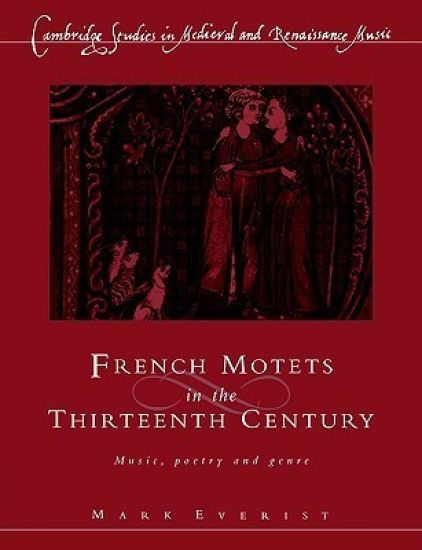
French Motets in the Thirteenth Century

French Motets in the Thirteenth Century

Everist Mark

Cambridge University Press
2004
pokkari
This is the first full-length study of the vernacular motet in thirteenth-century France. The motet was the most prestigious type of music of that period, filling a gap between the music of the so-called Notre-Dame School and the Ars Nova of the early fourteenth century. This book takes the music and the poetry of the motet as its starting-point and attempts to come to grips with the ways in which musicians and poets treated pre-existing material, creating new artefacts. The book reviews the processes of texting and retexting, and the procedures for imparting structure to the works; it considers the way we conceive genre in the thirteenth-century motet, and supplements these with principles derived from twentieth-century genre theory. The motet is viewed as the interaction of literary and musical modes whose relationships give meaning to individual musical compositions.
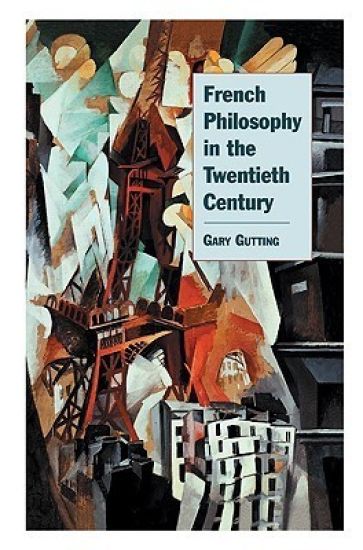
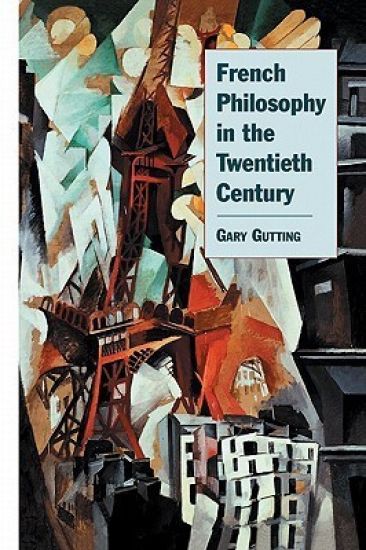
French Philosophy in the Twentieth Century

French Philosophy in the Twentieth Century

Gary Gutting

Cambridge University Press
2001
sidottu
In this book Gary Gutting tells, clearly and comprehensively, the story of French philosophy from 1890 to 1990. He examines the often neglected background of spiritualism, university idealism, and early philosophy of science, and also discusses the privileged role of philosophy in the French education system. Taking account of this background, together with the influences of avant-garde literature and German philosophy, he develops a rich account of existential phenomenology, which he argues is the central achievement of French thought during the century, and of subsequent structuralist and poststructuralist developments. His discussion includes chapters on Bergson, Sartre, Beauvoir, Merleau-Ponty, Foucault, and Derrida, with sections on other major thinkers including Lyotard, Deleuze, Irigaray, Levinas, and Ricoeur. He offers challenging analyses of the often misunderstood relationship between existential phenomenology and structuralism and of the emergence of poststructuralism. Finally, he sketches the major current trends of French philosophy.
French Philosophy in the Twentieth Century

French Philosophy in the Twentieth Century

Gutting Gary

Cambridge University Press
2001
pokkari
In this book Gary Gutting tells, clearly and comprehensively, the story of French philosophy from 1890 to 1990. He examines the often neglected background of spiritualism, university idealism, and early philosophy of science, and also discusses the privileged role of philosophy in the French education system. Taking account of this background, together with the influences of avant-garde literature and German philosophy, he develops a rich account of existential phenomenology, which he argues is the central achievement of French thought during the century, and of subsequent structuralist and poststructuralist developments. His discussion includes chapters on Bergson, Sartre, Beauvoir, Merleau-Ponty, Foucault, and Derrida, with sections on other major thinkers including Lyotard, Deleuze, Irigaray, Levinas, and Ricoeur. He offers challenging analyses of the often misunderstood relationship between existential phenomenology and structuralism and of the emergence of poststructuralism. Finally, he sketches the major current trends of French philosophy.
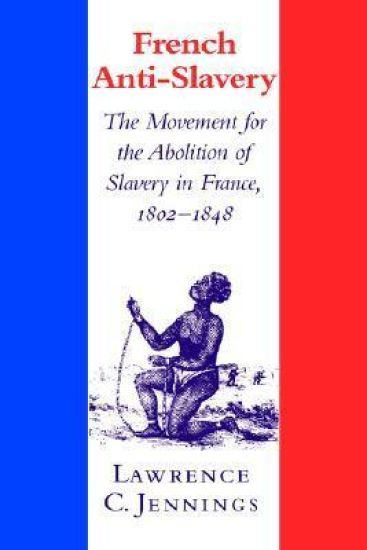
French Anti-Slavery

French Anti-Slavery

Lawrence C. Jennings

Cambridge University Press
2000
sidottu
Some works have examined the first and temporary abolition of French colonial slavery during the French Revolutionary era, but relatively little is known about the second French abolitionist movement that culminated in the freeing of a quarter of a million slaves in 1848. This book fills the huge gap in existing historiography by providing the first detailed study of French anti-slavery forces during this period, explaining why France abolished colonial slavery fifteen years later than Britain but fifteen years before emancipation in the United States. It traces the largely political struggle of a cautious, elitist group of humanitarians against a well-organized colonial lobby and a largely indifferent July Monarchy government. The few radical, determined abolitionists, like the black Cyrille Bissette, were too marginal to move French public opinion and bring about abolition until the Revolution of 1848 brought the Second Republic to power.
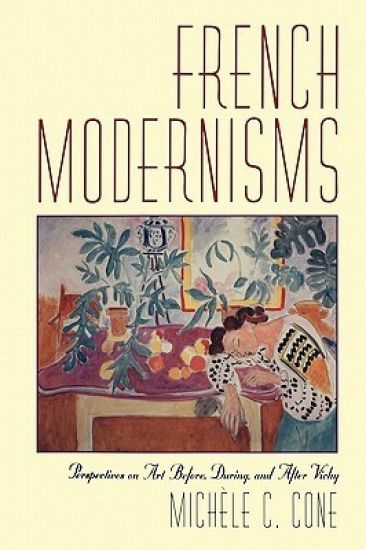
French Modernisms

French Modernisms

Michèle C. Cone

Cambridge University Press
2001
sidottu
This book examines the history of modern art in France from 1935 to 1970, demonstrating the close link between art and politics in this period. In essays focusing on key events in the exhibition and criticism of modern art, Michèle Cone provides a broader context for the racism and xenophobia that characterize Vichy-era France. Her analyses demonstrate that art critics, artists, and even the state attempted to exclude the Other - Jewish artists in the years leading up to and including World War II, American artists in the postwar period - in an effort to safeguard the integrity of indigenous traditions. Cone argues that the decline of French art in the second half of the century was caused, not by the invasion of the Abstract Expressionists and other foreign artists, but by the Parisian art establishment itself, which continued to promote national identity and tradition, the dominant values of the Vichy period.
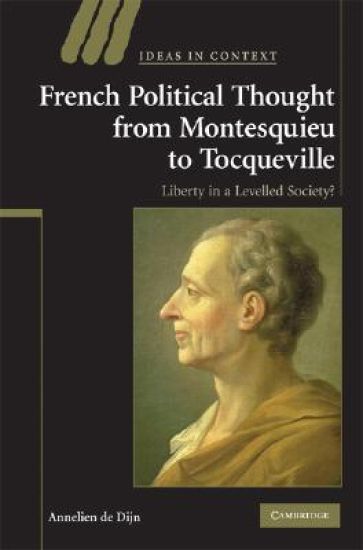
French Political Thought from Montesquieu to Tocqueville

French Political Thought from Montesquieu to Tocqueville

Annelien de Dijn

Cambridge University Press
2008
sidottu
This study makes a major contribution to our understanding of one of the most important and enduring strands of modern political thought. Annelien de Dijn argues that Montesquieu's aristocratic liberalism - his conviction that the preservation of freedom in a monarchy required the existence of an aristocratic 'corps intermédiaire' - had a continued impact on post-revolutionary France. Revisionist historians from Furet to Rosanvallon have emphasised the impact of revolutionary republicanism on post-revolutionary France, with its monist conception of politics and its focus on popular sovereignty. Dr de Dijn, however, highlights the persistence of a pluralist liberalism that was rooted in the Old Regime, and which saw democracy and equality as inherent threats to liberty. She thus provides an alternative context in which to read the work of Alexis de Tocqueville, who is revealed as the heir not just of Restoration liberals, but also of the Royalists and their hero, Montesquieu.
French Grand Opera and the Historical Imagination

French Grand Opera and the Historical Imagination

Sarah Hibberd

Cambridge University Press
2009
sidottu
During the July Monarchy, French grand operas, with their plots drawn from historical events, tended to be received as metaphors for current political themes. Previous studies have usually underestimated the role of music and the visual dimensions in articulating an alternative message to that offered by the libretto, and have instead focused on single political interpretations. In this study, five operas - Auber's La Muette de Portici and Gustave III, Niedermeyer's Stradella, Halévy's Charles VI and Meyerbeer's Le Prophete - illustrate the complex, contested nature of political meaning during this period. By setting these operas in the context of the emerging liberal historiography pioneered by Jules Michelet, and analysing the manner in which audiences and critics constructed 'meanings' with reference to their personal and collective experience and memories, this study reveals the central position that grand opera occupied in the period, bringing the past alive.
French Organ Music in the Reign of Louis XIV

French Organ Music in the Reign of Louis XIV

Ponsford David

Cambridge University Press
2011
sidottu
Presenting a fresh approach to French organ music, David Ponsford analyses the repertory from the reign of Louis XIV by genre. The colourful French organ was so consistent in design that the very titles of pieces that were constituent parts of organ masses, Magnificats and suites prescribed the registrations: plein jeu, fugue, duo, récit, trio, fond d'orgue and grand jeu. Particular examples from published livres d'orgue and important manuscript collections are analysed chronologically, so that influences from Italian as well as French sacred and secular music can be traced. This analysis reveals the dynamic development of compositional styles in which each composer developed, modified or reacted against the exemplars of his predecessors. Composers discussed include Louis Couperin, François Couperin, Raison, Clérambault and Marchand. The reader will gain an enhanced understanding of performance practices such as notes inégales, fingering and ornamentation, and the influence of French composers on J. S. Bach.