Kirjojen hintavertailu. Mukana 11 244 527 kirjaa ja 12 kauppaa.

Kirjahaku

Etsi kirjoja tekijän nimen, kirjan nimen tai ISBN:n perusteella.

1000 tulosta hakusanalla Gavin Pyakurel

Understanding the Archaeological Record

Understanding the Archaeological Record

Gavin Lucas

Cambridge University Press
2012
pokkari
This book explores the diverse understandings of the archaeological record in both historical and contemporary perspective, while also serving as a guide to reassessing current views. Gavin Lucas argues that archaeological theory has become both too fragmented and disconnected from the particular nature of archaeological evidence. The book examines three ways of understanding the archaeological record - as historical sources, through formation theory and as material culture - then reveals ways to connect these three domains through a reconsideration of archaeological entities and archaeological practice. Ultimately, Lucas calls for a rethinking of the nature of the archaeological record and the kind of history and narratives written from it.
An Introduction to Hinduism

An Introduction to Hinduism

Gavin D. Flood

Cambridge University Press
1996
pokkari
This book provides a much-needed thematic and historical introduction to Hinduism, the religion of the majority of people in India. Dr Flood traces the development of Hindu traditions from their ancient origins, through the major deities of Visnu, Siva and the Goddess, to the modern world. Hinduism is discussed as both a global religion and a form of nationalism. Emphasis is given to the tantric traditions, which have been so influential; to Hindu ritual, which is more fundamental to the life of the religion than are specific beliefs or doctrines; and to Dravidian influences from south India. An Introduction to Hinduism examines the ideas of dharma, particularly in relation to the ideology of kingship, caste and world renunciation. Dr Flood also introduces some debates within contemporary scholarship about the nature of Hinduism. It is suitable both for the student and for the general reader.
Ammianus Marcellinus

Ammianus Marcellinus

Gavin Kelly

Cambridge University Press
2008
sidottu
Ammianus Marcellinus is usually regarded as our most important source for the history of the second half of the fourth century AD, while his literary qualities are neglected. This book demonstrates what a subtle and manipulative writer Ammianus is; attention is paid particularly to his rich and variegated intertextuality with earlier classical literature and history. Questioning the prevailing interest in the historian's life as the key to his work, Dr Kelly evaluates the historiographical function of the vivid and thrilling autobiographical passages. The range of Ammianus' allusions is surveyed, including his use of classical examples, his relationship with historical source-texts and the workings of internal echoes within the history. His interactions with other texts are seen as carefully controlled and meaningful; and both his allusive techniques and writing in general, it is argued, are better viewed as reflecting a classical, rather than a late antique, aesthetic.
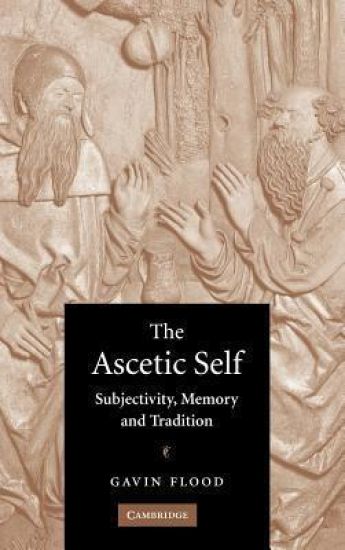
The Ascetic Self

The Ascetic Self

Gavin Flood

Cambridge University Press
2004
sidottu
This 2004 book is about the ascetic self in the scriptural religions of Christianity, Buddhism and Hinduism. The author claims that asceticism can be understood as the internalisation of tradition, the shaping of the narrative of a life in accordance with the narrative of tradition that might be seen as the performance of the memory of tradition. Such a performance contains an ambiguity or distance between the general intention to eradicate the will, or in some sense to erase the self, and the affirmation of will in ascetic performance such as weakening the body through fasting. Asceticism must therefore be seen in the context of ritual. The book also offers a paradigm for comparative religion more generally, one that avoids the inadequate choices of either examining religions through overarching categories on the one hand and the abandoning of any comparative endeavour that focuses purely on area-specific study on the other.
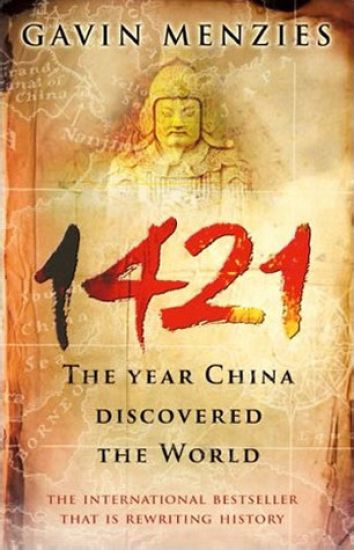
1421

1421

Gavin Menzies

Bantam Books (Transworld Publishers a division of the Random House Group)
2004
pokkari
In 1421, the largest fleet the world had ever seen set sail from China under the command of Emperor Zhu Di's loyal eunuch admirals. But by the time they returned home, Zhu Di had lost control and China was turning inwards, leaving the records of their discoveries to be forgotten for centuries.
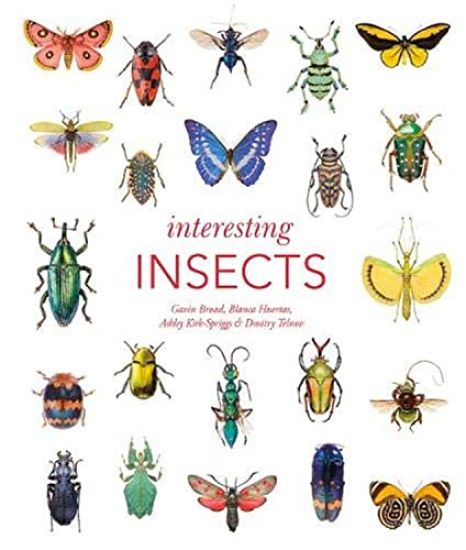
Interesting Insects

Interesting Insects

Gavin Broad; Ashley Kirk-Spriggs

THE NATURAL HISTORY MUSEUM
2020
sidottu
Interesting Insects presents striking and surprisingly photogenic insect portraits, each specially selected from the oldest and most important entomology collection in the world - 34 million specimens held by London's Natural History Museum.
Kennedy on Negotiation

Kennedy on Negotiation

Gavin Kennedy

Gower Publishing Ltd
1997
sidottu
Negotiation is a vital skill for every manager. As a result, there are almost as many 'patented' techniques for negotiation as there are managers, each proclaiming to be the definitive route to success. The authors behind these techniques keep their work very much to themselves. Their fundamentally different approaches to negotiation remain in isolation from each other, as if their authors were too polite to contradict others in the field. In most cases, when you are developing your negotiation skills, this leaves you with a stark choice: pick a single technique and ignore the rest. Until now ... Kennedy on Negotiation is an authoritative and comprehensive guide to negotiation skills training and practice. Dr Kennedy uses the well-established 'Four Phases' model as the structure around which he critiques constructively the numerous competing theories and models. Gavin Kennedy's book is everything you would expect from one of the most respected writers on negotiation. It is a readable and reliable guide to all that is best in the various contributions to negotiation training from authors such as John Nash, Walton and McKersie, Atkinson, Nierenberg, Rubin and Brown, Gottschalk, Karass, Fisher and Ury, and many more, including Gavin Kennedy himself.
Strategic Negotiation

Strategic Negotiation

Gavin Kennedy

Gower Publishing Ltd
2007
sidottu
A first-rate organizational business plan demands an understanding of the dynamics behind remuneration, joint ventures, partnerships, alliances, major contracts; in fact, all of the commercial imperatives that will define success or failure over a five-year (or longer) period. And realizing this plan will involve complex and often multi-level or multi-party negotiations. The scale and context of these negotiations requires a level of strategic awareness because the interests of the parties are more complex, the options more numerous, and the outcomes more critical than at a tactical level. Strategic Negotiation is written for senior executives who provide input to or assessment of their organization's medium or long-term planning process, and who are engaged in implementing any aspects of their organization's plans. Part One focuses on the foundations of strategic negotiation: the commercial imperatives - what the organization must do to restructure and resource its operations to achieve commercial success - and the negotiation strategies associated with each. It also explains the logistics of managing complex public and private sector negotiations. Part Two includes the tools for successful negotiation: bid strategies; techniques for analyzing your position before you start and reassessing it during the negotiation; and the negotiation agenda and how to design and compile it. If you are operating at a senior level where negotiations are, by their nature, high value, complex, multi-level and often multi-party, what better guide than Gavin Kennedy, a long-standing world expert on negotiation, and his book Strategic Negotiation?
Meeting of Religions and the Trinity

Meeting of Religions and the Trinity

Gavin D'Costa

Continuum International Publishing Group Ltd.
2000
nidottu
One of the most discussed topics of our time is Christianity's relation to other religions. In this important new book, one of Britain's leading contemporary theologians develops a sharp and penetrating critique of the pluralist position. In the tradition of Alasdair MacIntyre and John Milbank, D'Costa shows that too often it masks a secularizing agenda, traceable to the worst apects of Enlightenment modernity. Even by its own criteria, pluralism does not succeed. D'Costa demonstrates this by exploring the 'meeting of the religions' in its leading exponents from Christianity, Judaism, Hinduism and Buddhism. He discovers the influence of Western modernist thought or else a veiled exclusivism not only in Hick, Knitter, Cohn-Sherbok and Panikkar, but even in Radhakrishnan and the Dalai Lama. He then goes on to establish an alternative Trinitarian approach to interreligious prayer and tolerance, drawing on recent discussions of other religions as 'vehicles of salvation'. The final section of the book represents the first major systematic theological study of interfaith prayer.
Selected Poems 1933-1993

Selected Poems 1933-1993

Gavin Ewart

Faber Faber
2008
nidottu
'The most remarkable phenomenon of the English poetic scene during the last ten years or so has been the advent, or perhaps I should say the irruption, of Gavin Ewart' wrote Philip Larkin. Larkin was one among many poets and critics who admired Gavin Ewart's work; Stephen Spender, Anthony Thwaite and Peter Porter were also fans. Influenced by T. S. Eliot and Ezra Pound, but especially by W. H. Auden, Ewart was a prolific poet and his verse reflected a bawdy wit and an irrepressible sense of humour. He was largely known for his irreverence to sexual convention and is the second most prolific contributor to Making Love to Marilyn Monroe: The Faber Book of Blue Verse. The poems in the Selected Poems were chosen by Ewart before his death in 1995 and were published for the first time in 1996. They are a selection of the best work from a writer of poetry for both adults and children who had a long and productive career.
Slow Boats to China

Slow Boats to China

Gavin Young

Faber Faber
2009
nidottu
Seven months and twenty-three agreeably ill-assorted vessels are what were required to transport Gavin Young, by slow boat, from Piraeus to Canton. His odyssey teemed with excitement, adventure and colour. Gavin Young's account memorably distils the people, places, smells, conversations, ships and history of the places he encountered in what is his most famous book.The sequel, Slow Boats Home, is also reissued in Faber Finds. 'An unusual and fascinating book.' Hammond Innes, Guardian'Storms, fleas, pirates, bad food and bureaucrats ... My Young suffered what he did to entertain us.'Anthony Burgess, Observer
Slow Boats Home

Slow Boats Home

Gavin Young

Faber Faber
2009
nidottu
In this, the sequel to Slow Boats to China (also reissued in Faber Finds), Gavin Young tells, with equal panache, of his return voyage from the China Seas to England, via the South Seas, Cape Horn and West Africa.'I am decidedly envious of Gavin Young and his Slow Boats Home, successor to his highly entertaining Slow Boats to China . . . a fascinating, memorable book.' Eric Newby, the Guardian 'Like Slow Boats to China this is likely to become a classic of travel.' Francis King, the Spectator
Worlds Apart

Worlds Apart

Gavin Young

Faber Faber
2009
nidottu
This volume collects the best of Gavin Young's journalism. These pieces, by turn elegant, vivid and compassionate, display his acute understanding of the varied worlds in which we live.'Young is a born raconteur. His writing is full of visual impressions and touches of sensibility. He is driven more by people than by seats of power. But it is difficult to be a compassionate journalist without appearing soppy or sentimental. Young often achieves it. One finishes Worlds Apart exhilarated, moved, angered and enthralled: a tribute to its quality.' Jon Swain, Sunday Times
Return to the Marshes

Return to the Marshes

Gavin Young

Faber Faber
2009
nidottu
It was the legendary traveller Wilfred Thesiger who first introduced Gavin Young to the Marshes of Iraq. Since then Young has been entranced by both the beauty of the Marshes and by the Marsh Arabs who inhabit them, a people whose lifestyle is almost unchanged from that of their predecessors, the Ancient Sumerians.On his return to the Marshes some years later Gavin Young found that the twentieth-century had rudely intruded on this lifestyle and that war was threatening to make the Marsh Arabs existence extinct. Return to the Marshes, first published in 1977, is at once a moving tribute to a unique way of life as well as a love story to a place and its people. 'A superbly written essay which combines warmth of personal tone, a good deal of easy historical scholarship and a talent for vivid description rarely found outside good fiction.' Jonathan Raban, Sunday Times
A Wavering Grace

A Wavering Grace

Gavin Young

Faber Faber
2009
nidottu
As an Observer correspondent in Vietnam before the American withdrawal in 1975, Gavin Young met many courageous Vietnamese people. He frequently stayed with one such person, Madame Bong, a woman who had lost her husband when she was only twenty-five, had recovered the mangled limbs of one son from a battlefield and watched as another son was sent off to a 're-education camp' for seven years. When Young was allowed to return to Vietnam he helped many of Madame Bong's relatives emigrate to the US. A Wavering Grace is a personal account of how one ordinary family survived the horrors of war and a political process that was beyond their control. 'By far ... the most moving account of Vietnam to be written in recent years.' Norman Lewis'This delicate, terrible and enchanting book ... brings the atmosphere of Vietnam so near that you can almost taste and smell it.' Jonathan Mirsky, The Times'Full of passion and feeling ... A Wavering Grace could be described as a love story [and] tells the story of Vietnam and Mme Bong's family in its many conflicting complexions.' Andrew Barrow, Spectator
Beyond Lion Rock

Beyond Lion Rock

Gavin Young

Faber Faber
2009
pokkari
In 1946 Roy Farrell and Syd de Kantzow's beloved, battered wartime DC-3 touched down in Shanghai for the first time. On board was a cargo of morning coats and toothbrushes from New York, forging the first post-war supply route across the treacherous eastern Himalayas. The international airline now known as Cathay Pacific was born.Gavin Young tells the swashbuckling story of an empire of the air, a thrilling, action-packed adventure that began in an era closer to Biggles and biplanes held together by wire and safety pins than to our own.'Pioneers like Farrell and de Kantzow would have had plenty of time to enjoy the dawn over Kangchebjunga. Would thye think of us with envy or contempt, cruising seven miles up with hundreds of passengers, air-conditioning, i-flight concerts, movies, hot four-course meals with an elaborate wine line and all mod-cons? . . . All this in forty years! Could the world have changed so much and so fast?' This is Gavin Young himself eloquently reflecting on the extraordinary changes in air travel. There can be little doubt where his own sympathies lie.
From Sea to Shining Sea

From Sea to Shining Sea

Gavin Young

Faber Faber
2009
pokkari
Gavin Young' s North American odyssey took him from Central Park and the old Atlantic whaling ports all the way to a tiny cabin in the Yukon, where Jack London heard 'the call of the wild'. Whether sleuthing through riot-racked Los Angeles in the footsteps of Philip Marlowe, crossing the Arizona Desert on Route 66 like Steinbeck's Depression-era migrant workers or searching for the characters of Cannery Row in Monterey, Young brilliantly uses the past to illuminate the present. 'Gavin Young is perpetually inquisitive, racially colour-blind, intrepid, reflective and gregarious ... plainly a man in a million, and a writer in two.' Bernard Levin 'He catches the mind's eye of the reader very deftly ... and, without losing his sense of irony, gives us a genuine account of the tragedy and the pathos, as well as the optimism and bravery, that created American civilization.' Christoper Hitchens, Mail on Sunday