
Kirjahaku
Etsi kirjoja tekijän nimen, kirjan nimen tai ISBN:n perusteella.
1000 tulosta hakusanalla Gregory
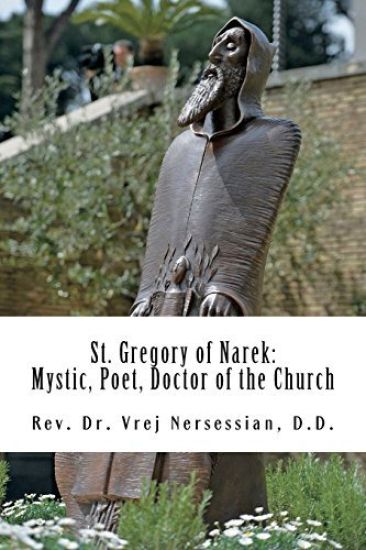
St Gregory of Narek: Mystic, Poet, Doctor of the Church
Vrej Nersessian
Createspace Independent Publishing Platform
2018
nidottu
The tenth century Armenian monk's Book of Lamentations (also known as The Narek or Book of Prayers or Speaking with God from the depths of the Heart) immediately occupied a pre-eminence in Armenian literature and spirituality which it has never lost. The prayers express the ecstatic distress of the heart, convinced of its sinful and creaturely unworthiness, overwhelmed by God's loving condescension. As a doctor or teacher of the Universal Church, his work, with its specifically eastern cultural and theological ethos, is now recognised as inspiration for all. On April 12, 2015 Pope Francis officially declared St Gregory of Narek a Doctor of the Universal Church, following a pronouncement of his intentions on February 21st. The recognition coincided with the marking of the 100th anniversary of the Armenian Genocide.
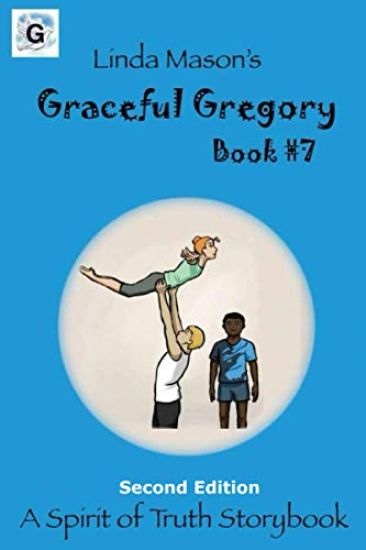
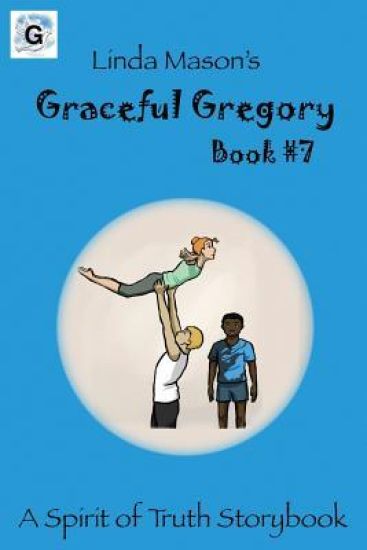
Graceful Gregory Second Edition
Linda C Mason
Createspace Independent Publishing Platform
2018
pokkari
The 2nd Edition S.O.T. Storybooks were designed for venues, such as libraries where writing in books; as in the regular storybooks (which include various activities that require writing or cutting), must not be encouraged. Therefore only the story and the secret coded message have been included in the 2nd edition versions. You can copy the secret coded worksheet to decode the message if the 2nd edition storybook doesn't belong to you. Gregory loves to dance. He encounters teasing by his peers but continues to do what he loves. He eventually meets another young individual who is not so interested in dancing, but his family is insisting that he gives it a try. The two young boys meet and things begin to change, for both of them. This story can be enjoyed by children ages seven and up, but younger if the reader is already dancing.
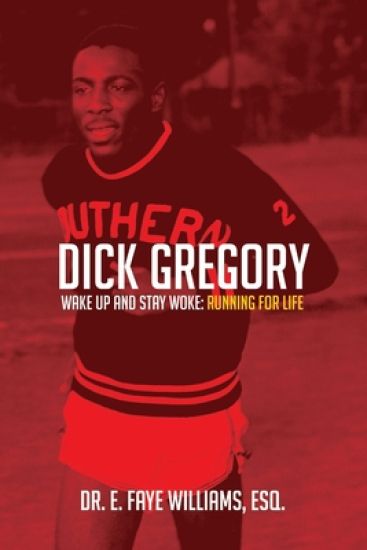
Dick Gregory: Wake Up and Stay Woke - Running for Life, Dr. Williams' written portrait tells many interesting stories of Dick Gregory's life as an unwavering activist, comedian, health enthusiast and purveyor of good music. Williams says, "There is still great interest in everything about Dick Gregory." His life experiences spanning over eight decades remain relevant to today's events and political opposition. His fiery speeches continue to influence and ignite leaders young and old, and many comedians pray to write and deliver jokes with his prowess. This being said, there is more to Dick Gregory than meets the average eye and Dr. Williams qualifies to share his unique and appealing attributes less known to the public.

Peter Gregory, a 35-year-old high school English teacher with an ex-wife and kids, tries to drown himself in the Ohio River. Failing to manage even that, he decides to hitch a ride east, fleeing the state and escaping accusations of rape and murder. As he assumes and discards aliases along the way, he believes that he can begin again, a fresh start - but the past has a habit of catching up with all of us, no matter how fast we run...
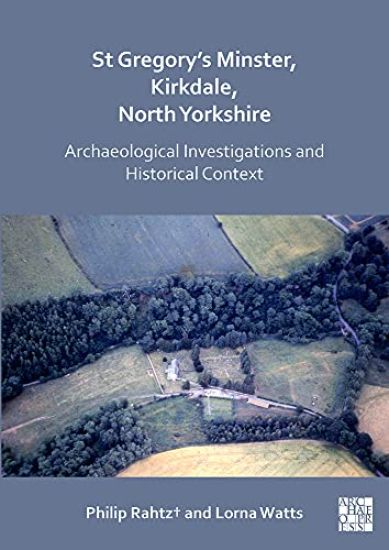
St Gregory's Minster, Kirkdale, North Yorkshire: Archaeological Investigations and Historical Context
Philip Rahtz†; Lorna Watts
Archaeopress
2021
nidottu
St Gregory’s Minster, Kirkdale, North Yorkshire: Archaeological Investigations and Historical Context is the result of c.20 years of work on and around the Anglo-Saxon church of St Gregory’s Minster, Kirkdale, North Yorkshire. It is primarily concerned with material relating to approximately the late 8th century onwards, detailing the fabric as well as excavations around the church and in the fields immediately adjacent. A succession of three church buildings are linked to a putative focus on the north side of the church, to which, it is argued, pre-Conquest elite burials were orientated. A pre-Conquest ‘building site’ to the north of the churchyard overlay an area of earlier burials. While the building is best-known for its mid-11th century inscription, the report extends the time-period of this isolated site, particularly for the post-Roman to middle Saxon period, but also as an earlier probably religious landscape. The volume integrates archaeological, landscape, place-name and historical approaches to consider the church in its wider setting, exploring the changing character of lordship from post-Roman to Anglo-Saxon and proposing an explanation for the long use of this non-settlement locale.
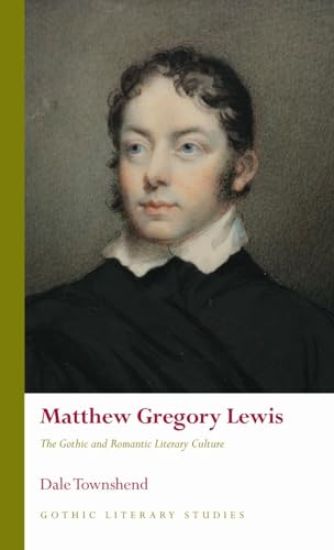
This volume provides a comprehensive account of the oeuvre of Matthew Gregory Lewis (1775–1818), from his juvenilia through to his romances and shorter tales, dramas, translations, adaptations, ballads, poetry and editorial endeavours, and into his posthumously published writings on slavery. Across an extended introduction and six chapters, the argument offers fresh considerations of Lewis’s well-known Gothic works whilst also providing coverage of his more obscure published and unpublished texts. Based on extensive archival research undertaken in Britain, North America and the Caribbean, the book restores to critical focus a number of Lewis’s works that have not previously been given scholarly attention. While drawing, where relevant, upon the biographical studies of earlier critics, the study remains first and foremost a literary history, and the first closely to situate this most prolific, versatile and influential of late eighteenth- and early nineteenth-century British writers in relation to Gothic and Romantic literary culture more broadly.
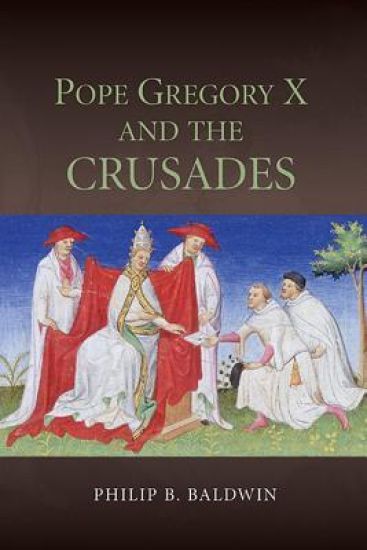
First full-length study of Pope Gregory X in relation to Crusade, demonstrating his significant impact. Pope Gregory X stood at the very centre of the crusading movement in the later thirteenth century. An able diplomat, he showed himself adept at navigating the political waters of Europe and the Mediterranean World. His crusade gained the participation of virtually all of the leaders of Western Europe, and even the Byzantine emperor and the Ilkhan of the Mongols: crucial if his crusade were to have a chance of defeating the very formidable and successful Mamluk Sultan Baybars. However, Gregory's premature death put paid to his crusade plans. Perhaps because of this, Gregory has hitherto been somewhat neglected by historians - a gap which this book aims to fill. It provides a full account of his contribution to the Crusade, demonstrating that he left a lasting mark on how crusading would operate in the years to come. PHILIP BALDWIN eceived his doctorate from Queen Mary, University of London.
Peter Gregory (1887-1959), Director and then Chairman of Lund Humphries, was at the heart of the avant-garde British art world for nearly thirty years of major change in society, politics, and culture. A pioneering art publisher who produced scholarly and richly illustrated monographs on living artists, he was also a discerning patron and collector, the founder of new arts organisations, and a loyal supporter of young artists. Valerie Holman’s new book is the first to situate Gregory’s life and career within the wider context of printing and publishing history, war, and changing perceptions of modern and contemporary art. Gregory's intimate circle included many leading artists, architects and writers: Henry Moore considered him his closest friend, Kenneth Clark sought out his committee expertise, Ben Nicholson and Barbara Hepworth respected his professionalism and invited him into their family circle, and he had a warm friendship with Edward McKnight Kauffer, Herbert Read, Jane Drew and Maxwell Fry. By drawing for the first time on Gregory's unpublished diaries and correspondence, the book offers insights into what motivated him, his political stance and attitude to industry, and his views on art and literature. It also shows how, as an individual, he became one of the twentieth century’s most effective champions of contemporary art and design.
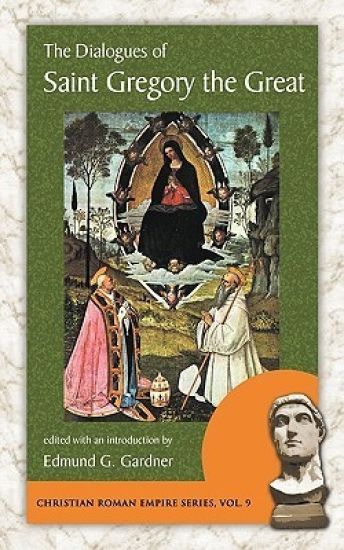
The Dialogues of Saint Gregory the Great
Pope Gregory The Great
Evolution Publishing Manufacturing
2010
pokkari
Having witnessed the endless string of disasters that shattered his beloved Italy in the late 6th century AD, Pope Saint Gregory the Great set down in the Dialogues a sequence of tales to help his contemporaries escape from their worldly troubles and contemplate eternal life. Peter, Gregory's interlocutor, laments that he has never heard of anyone famous in Italy for virtue. To set him straight, Gregory offers an entire litany of stories of Italian saints-from Honoratus of Funda who pinned a great rock to a mountainside to prevent it from crushing an abbey, to the holy virgin Tarsilla who received a vision of Pope Felix immediately before her death. Several of these stories are well known even to this day, while others, like the story of Florentius and his ill-fated bear, are merely strange and picturesque. Perhaps most importantly, Gregory's Dialogues contain an entire book dedicated to the life of Saint Benedict of Nursia. This portion of the Dialogues represents the most detailed and lengthy biography of Benedict from a near contemporary and is the source of many of the stories told about this important saint. Often viewed as mere folk-history, the Dialogues served a higher function than simple history-they were a spiritual exhortation to Gregory's worn and weary countrymen. To modern readers, these tales of visions, miracles and extraordinary Christian virtue paint a vivid portrait of daily life amid the wreckage of once-prosperous Roman Italy. In addition, the Dialogues offer a glimpse into the theology of one of the great minds of the Church during the time when Roman authority ebbed forever in the West and ecclesiastical authority emerged to fill the void.
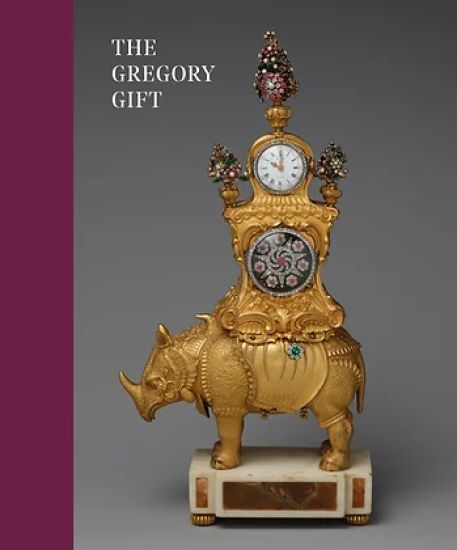
Presenting for the first time the Alexis Gregory Gift to The Frick Collection, this exquisite publication provides illuminating insights into Gregory’s magnificently eclectic collection, cataloging his fine and decorative works of art in detail. Twenty-eight works of art bequeathed to the Frick by Alexis Gregory range from Limoges enamels to Saint-Porchaire ware to pastels by the Venetian painter Rosalba Carriera. This remarkable gift has introduced new types of objects to the Frick: works in ivory and rhinoceros horn are the first of their kind to be held in the collection. Gregory’s gift includes fifteen Limoges enamels, one of them produced in the workshop of Suzanne de Court, the only woman known to have led an enamel workshop in Limoges. Also part of the gift are a gilt-bronze sculpture, an ivory hilt, a pomander, ewers, saltcellars, and two clocks. Many of Gregory’s objects came from such prestigious owners as the French royal collections and the Rothschilds. Included in the publication are commentaries on each gift. This lavishly illustrated publication accompanies an exhibition that will be on view at The Frick Collection February 16 through May 14, 2023.
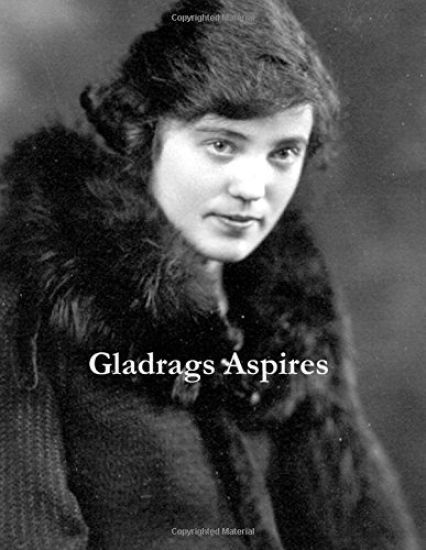
Gladrags Aspires: Gladys Maudie Gregory Hall
John Gregory Hall
Createspace Independent Publishing Platform
2017
nidottu
Gladrags Aspires collects the writings of Gladys Maudie Gregory Hall (1905-91) from her letters and notebooks, unfolding gradually her capacity to be alone. Yet telling a story was always her deliberate purpose that here overrides privacy and conventional decorum. The reader is invited to experience with empathy the major milestones in the long playing-out of her singular life. For more than fifty years Gladys will live in a remote place called Mulberry, Texas, in a looping bend of the Red River, sending out and receiving numerous letters. Among these, the letters to Gladys from a Chinese woman, Vung-Tsing Pao, between the years 1923 and 1950, hold a central place in this volume. They reveal not only an intensely patriotic and culturally committed life "on the other side of the world," but also the inspiration planted early in Gladys' life to discover meaning in the day to day experiences of family and community. Gladys' mother Maudie whispered to her one evening when Halley's Comet was passing high overhead, "When it returns you will be an old woman, and I will be dead." Her mother passed away far too soon, and when the Comet returned at last, dark clouds so obscured the sky that there was nothing then to see, say, or hold in shared memory. Instead, this volume enfolds riches that would otherwise be lost.
The Life of Our Most Holy Father St Benedict: Being the Second Book of the Dialogues of St Gregory the Great with the Rule of the Same Holy Patriarch:
St Gregory the Great
Createspace Independent Publishing Platform
2017
nidottu
THE LIFE of Our Most Holy Father Saint Benedict Being the Second Book of the Dialogues of St. Gregory the Great. INTRODUCTION. THERE was a man of venerable life, Benedict by name and grace, who from the time of his very childhood carried the heart of an old man. His demeanour indeed surpassing his age, he gave himself no disport or pleasure, but living here upon earth he despised the world with all the glory thereof, at such time as he might have most freely enjoyed it. He was born in the province of Nursia of honourable parentage and sent to Rome to study the liberal sciences. But when he saw there many through the uneven paths of vice run headlong to their own ruin, he drew back his foot, but new-set in the world, lest, in the search of human knowledge, he might also fall into the same dangerous precipice. Contemning therefore learning and studies and abandoning his father's house and goods, he desired only to please God in a virtuous life. Therefore he departed skilfully ignorant and wisely unlearned. I have not attained unto all this man did, but the few things which I here setdown, were related to me by four of his disciples; namely, Constantine, a very reverend man, who succeeded him in the government of the Monastery; Valentinian, who for many years bore rule in the Monastery of Lateran; Simplicius, who was the third superior of that congregation after him; and Honoratus who yet governeth the Monastery which he first inhabited.
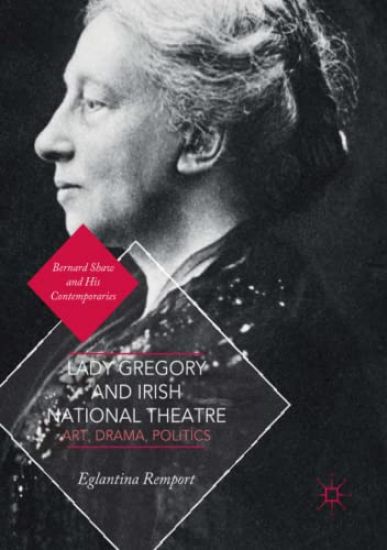
Lady Gregory and Irish National Theatre
Eglantina Remport
Springer Nature Switzerland AG
2018
nidottu
This book is the first comprehensive critical assessment of the aesthetic and social ideals of Lady Augusta Gregory, founder, patron, director, and dramatist of the Abbey Theatre in Dublin. It elaborates on her distinctive vision of the social role of a National Theatre in Ireland, especially in relation to the various reform movements of her age: the Pre-Raphaelite Movement, the Co-operative Movement, and the Home Industries Movement. It illustrates the impact of John Ruskin on the aesthetic and social ideals of Lady Gregory and her circle that included Horace Plunkett, George Russell, John Millington Synge, William Butler Yeats, and George Bernard Shaw. All of these friends visited the celebrated Gregory residence of Coole Park in Country Galway, most famously Yeats. The study thus provides a pioneering evaluation of Ruskin’s immense influence on artistic, social, and political discourse in Ireland in the late nineteenth and early twentieth century.
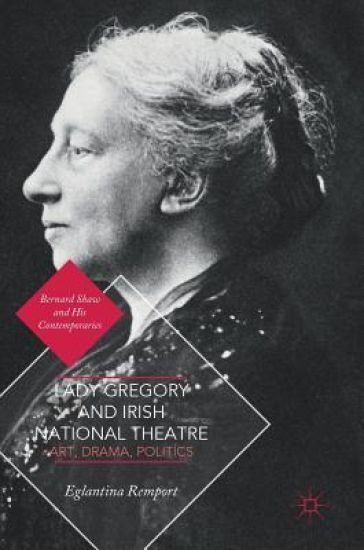
Lady Gregory and Irish National Theatre
Eglantina Remport
Springer International Publishing AG
2018
sidottu
This book is the first comprehensive critical assessment of the aesthetic and social ideals of Lady Augusta Gregory, founder, patron, director, and dramatist of the Abbey Theatre in Dublin. It elaborates on her distinctive vision of the social role of a National Theatre in Ireland, especially in relation to the various reform movements of her age: the Pre-Raphaelite Movement, the Co-operative Movement, and the Home Industries Movement. It illustrates the impact of John Ruskin on the aesthetic and social ideals of Lady Gregory and her circle that included Horace Plunkett, George Russell, John Millington Synge, William Butler Yeats, and George Bernard Shaw. All of these friends visited the celebrated Gregory residence of Coole Park in Country Galway, most famously Yeats. The study thus provides a pioneering evaluation of Ruskin’s immense influence on artistic, social, and political discourse in Ireland in the late nineteenth and early twentieth century.
Sir William Gregory, K.C.M.G., - Formerly Member of Parliament and Sometime Governor of Ceylon is an unchanged, high-quality reprint of the original edition of 1894. Hansebooks is editor of the literature on different topic areas such as research and science, travel and expeditions, cooking and nutrition, medicine, and other genres. As a publisher we focus on the preservation of historical literature. Many works of historical writers and scientists are available today as antiques only. Hansebooks newly publishes these books and contributes to the preservation of literature which has become rare and historical knowledge for the future.

Pope Gregory VII: S. Gregorii VII Romani Pontificis epistolæ
Antigonos Verlag
2025
sidottu
Lady Gregory's Comic "Spreading the News". Reproducing Stereotypes?
Özlem Arslan
GRIN Verlag
2018
nidottu