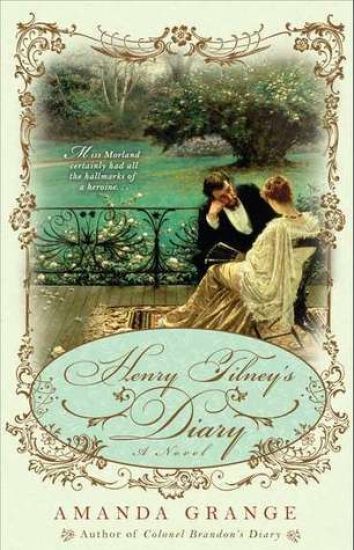
A charming retelling of Jane Austen's Northanger Abbey--a tale of gothic misunderstandings through Henry Tilney's eyes... At the age of four and twenty, Henry is content with his life as a clergyman, leaving his older brother Frederick to inherit Northanger Abbey. But General Tilney is determined to increase the family's means by having all three of his children marry wealthy partners.During a trip to Bath, Henry meets the delightful Miss Catherine Morland and believes he may have found the woman he's been looking for, although she has no great fortune. When the General takes an unusual liking to Catherine and invites her to visit the Abbey, Henry is thrilled. But just as in the Gothic novels Henry loves, not everything is as it seems...
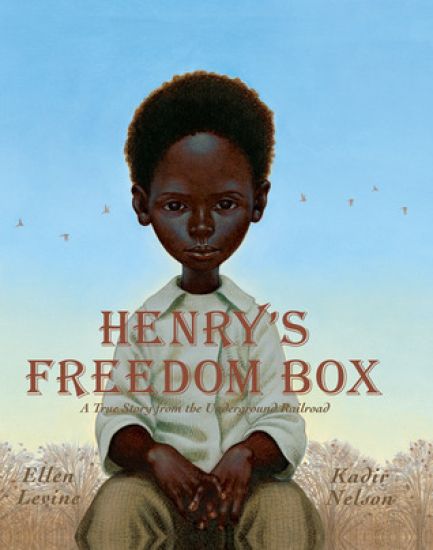
A stirring, dramatic story of a slave who mails himself to freedom by a Jane Addams Peace Award-winning author and a Coretta Scott King Award-winning artist.Henry Brown doesn't know how old he is. Nobody keeps records of slaves' birthdays. All the time he dreams about freedom, but that dream seems farther away than ever when he is torn from his family and put to work in a warehouse. Henry grows up and marries, but he is again devastated when his family is sold at the slave market. Then one day, as he lifts a crate at the warehouse, he knows exactly what he must do: He will mail himself to the North. After an arduous journey in the crate, Henry finally has a birthday -- his first day of freedom.
This edition of Shakespeare's Henry IV, Part 1 uses a variety of approaches to Shakespeare, including historical and cultural studies approaches. Shakespeare's text is accompanied by an intriguing collection of thematically arranged historical and cultural documents and illustrations designed to give a firsthand knowledge of the contexts out of which Henry IV, Part 1 emerged. Hodgdon's intelligent and engaging introductions to the play and to the documents (most of which are presented in modern spelling and with annotations) offer a richly textured understanding of Elizabethan culture and Shakespeare's work within that culture.
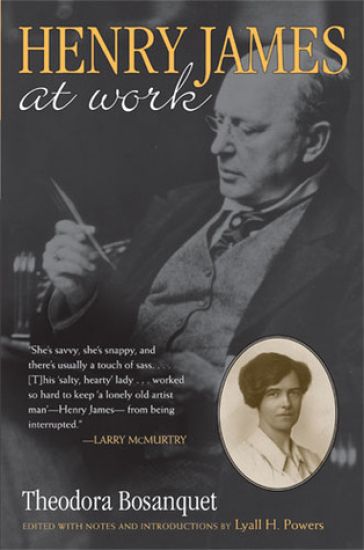
A new edition of the delightful 1924 memoir by James’s longtime secretary, with a biographical essay and excerpts from her diaries Theodora Bosanquet was Henry James's secretary from 1907 until his death in 1916, one of the most significant periods of his long writing career. Her memoir Henry James at Work, originally published by Leonard and Virginia Woolf's Hogarth Press in 1924, recounts Bosanquet's association with James and provides a lively and engaging commentary on James's milieu, preferences, and attitudes, as well as on his process of writing and revision. Bosanquet is an intelligent and observant witness and reporter, and her objective and comparatively unbiased point of view makes the memoir especially valuable.This enlarged and annotated edition rescues Bosanquet from the shadows of literary history and shows her to be a fascinating figure in her own right, a skilled writer and editor, an early feminist, and a contemporary of the Bloomsbury literary community. The book is enhanced by an essay about Bosanquet and her circle, and fascinating snippets from her diaries and letters, now in the Harvard University archives.Soon after Henry James hired Theodora Bosanquet in 1907, the well-educated and dedicated Bosanquet became indispensable to James. In addition to the memoir Henry James at Work she published two other books, critical studies on Harriet Martineau and Paul Valéry. Following James’s death she became Executive Secretary of the International Federation of University Women and traveled extensively in support of the women’s suffrage movement. From 1935 to 1958 she was literary editor, then director, of the publication Time and Tide. Lyall H. Powers is Professor of English Emeritus at the University of Michigan and author of numerous books, including Alien Heart: The Life and Work of Margaret Laurence.Praise for Henry James at Work: “She’s savvy, she’s snappy, and there’s usually a touch of sass . . . . [T]his ‘salty, hearty’ lady . . . worked so hard to keep ‘a lonely old artist man’—Henry James—from being interrupted.”—Larry McMurtry “I’m sure [your book] ought to have a success with anyone who cared for Henry James and his work, and I think we are very lucky to get it.”—Letter from Virginia Woolf to Theodora Bosanquet, 1924“It's fascinating to encounter, in the era just before high modernism, a female intellectual like Bosanquet—one as fully engaged in the life of ideas and cultural production as her male counterparts—making as much of her putatively secondary status as she possibly could. The book is important as a primary document in its own right as well as a gloss on the methods and material of the magisterial James.”—Jonathan Freedman, University of Michigan
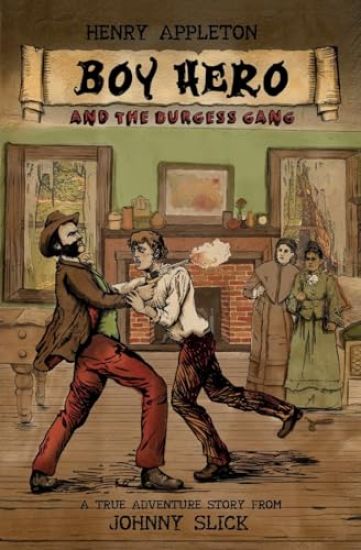
Bank robbers ... classroom bullies ... highwaymen ... a rampaging bull. The challenges young Henry Appleton faces, as he struggles to stand up for what he believes in, make this a classic 'cowboy' yarn. And it takes place not in the American West but in the rough-and-tumble world of Aotearoa New Zealand in the 1860s.Although Henry dreams of having his own rifle and becoming a gunslinger like Wild Bill Hickok, he is in most ways just an ordinary kid who's not looking for trouble. Trouble finds him.When he helps to capture bank robber Dead Eye Dick, the town is quick to call him a 'boy hero'. But his biggest challenge is yet to come - when he finds himself face-to-face with the murderous Richard Burgess gang. Will Henry have the courage to 'do the right thing'?Henry Appleton, Boy Hero is written by John Evan Harris in the voice of the self-acclaimed American dime novelist Johnny Slick - who himself was saved by Henry's quick thinking and bravery.The book is a prequel to Henry's encounters with the Burgess gang, told in The Physician's Gun.
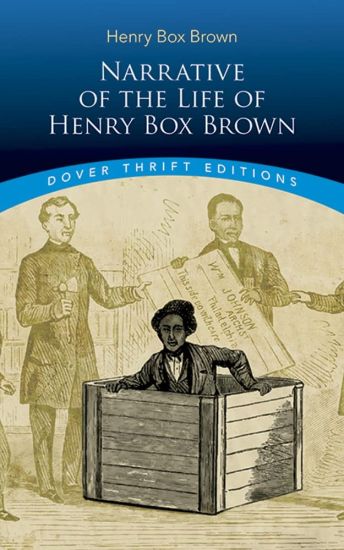
After enduring more than 30 years of slavery, Henry Box Brown achieved freedom by having himself nailed inside a packing crate and shipped from Richmond to Philadelphia. Initially published in 1851, Brown's extraordinary memoir recounts the harsh circumstances of his bondage as well as the details of his 350-mile journey by railroad, steamboat, and horse cart inside a container three feet long and two feet wide.Acclaimed by Dr. Cornel West as one of the great creative acts in the struggle for black freedom, the story of Brown's daring escape continues to resonate as a reflection of the ongoing struggles of oppressed people around the world. Professor Henry Louis Gates, Jr., declared this narrative just as relevant now as it was 150 years ago, and modern readers will find it an unforgettable source of inspiration.
The final installment of Shakespeare's great historical trilogy, "Henry VI, Part III "portrays the devastating effects of civil war, as two families remain locked in a years-long struggle for the crown. Rich in dramatic battle scenes, the play explores how discord thrives under a weak ruler and the struggle for power divides a kingdom.The third of three plays based on the life of the England's fifteenth-century monarch, this historical drama depicts the conflicts between the York and Lancaster factions that led to the War of the Roses. Each part of the trilogy is self-contained and can be appreciated without knowledge of the others. Vivid characterization, dark comedy, and powerful language combine for a memorable portrait of a war-torn country.
Known as the founding tailor of Savile Row, Henry Poole & Co. has been dressing the world’s most important men and women for over two centuries. Their craft of bespoke tailoring has been meticulously documented through the generations in a complete set of ledgers. Telling the story of Poole’s most colourful characters in six chapters, this fascinating account distills Sherwood’s research into sixty iconic customers, men and women. Each client is profiled with details of their signature garment and connections with Poole’s. From artists and writers, such as Henri de Toulouse-Lautrec and Wilkie Collins, to financiers J. P. Morgan and Baron Ferdinand de Rothschild, this book offers a unique window into an establishment at the very heart of 19th- and 20th-century public life. Illustrated with historic portraits and atmospheric photography of the premises as they are today, this intimate glimpse into the private lives of some of history’s most influential figures is essential reading for anyone interested Savile Row, the relationship between power and being well-dressed, and the evolution of style.
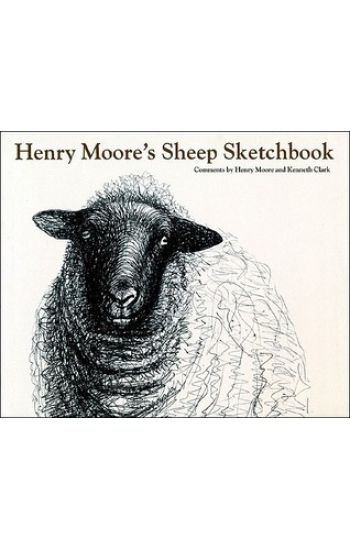
In February 1972 Henry Moore's sculpture studios in the English countryside at Much Hadham were filled with the preparations for his retrospective exhibition in Florence. He retreated to a small studio overlooking the fields where a local farmer grazed his sheep. The sheep came very close to the window, attracting his attention, and he began to draw them. Initially he saw them as four-legged balls of wool, but his vision changed as he explored what they were really like - the way they moved, the shape of their bodies under the fleece. They also developed strong human and biblical associations, and the sight of a ewe with her lamb evoked the mother-and-child theme - a large form sheltering a small one - which was important to Henry Moore in all his work. He drew the sheep again that summer after they were shorn, when he could see the shapes of the bodies which had been covered with wool. Henry Moore originally presented the sketchbook to his daughter Mary. In this facsimile edition, created under Moore's personal supervision, Mary's little lambs will charm anyone who sees these tender, vigorous drawings.
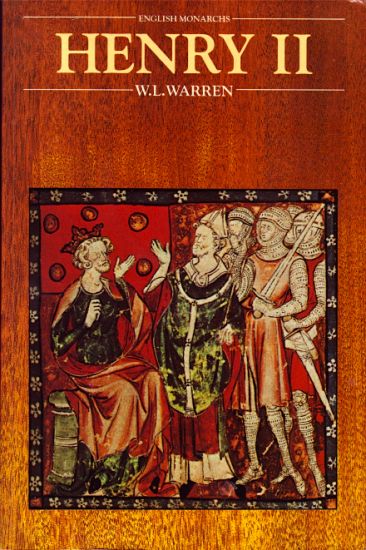
Henry II was an enigma to contemporaries, and has excited widely divergent judgments ever since. Dramatic incidents of his reign, such as his quarrel with Archbishop Becket and his troubled relations with his wife, Eleanor of Aquitaine, and his sons, have attracted the attention of historical novelists, playwrights, and filmmakers, but with no unanimity of interpretation. That he was a great king there can be no doubt. Yet his motives and intentions are not easy to divine, and it is Professor Warren's contention that concentration on the great crises of the reign can lead to distortion. This book is therefore a comprehensive reappraisal of the reign based, with rare understanding, on contemporary sources; it provides a coherent and persuasive revaluation of the man and the king, and is, in itself an eloquent and impressive achievement.
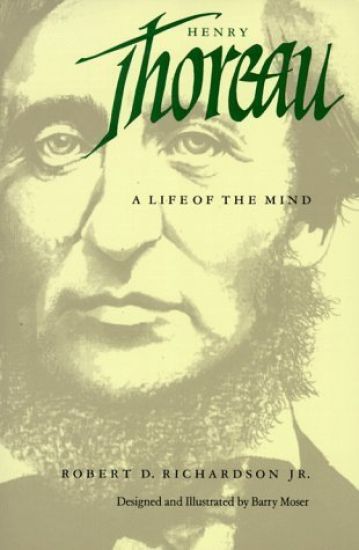
The two years Thoreau spent at Walden Pond and the night he spent in the Concord jail are among the most familiar features of the American intellectual landscape. In this new biography, based on a reexamination of Thoreau's manuscripts and on a retracing of his trips, Robert Richardson offers a view of Thoreau's life and achievement in their full nineteenth century context.
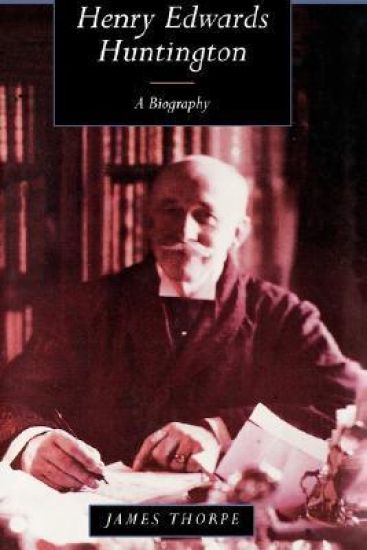
A legendary book collector, a connoisseur of fine art, a horticulturist, and a philanthropist, Henry Edwards Huntington is perhaps best known as the founder of the world-renowned Huntington Library, Art Gallery, and Botanical Gardens in San Marino, California. James Thorpe's comprehensive biography of Huntington tells the richly human story of the man who became America's greatest book collector and was a leading figure in the development of southern California. Henry Edwards Huntington was born in New York State in 1850. He began working at the age of 17, eventually moved to California, and in later years was hailed for his vision in developing the street railway system that created the structure of the Los Angeles area. Always a lover of books, Huntington acquired many spectacular volumes--among them the complete Gutenberg Bible on vellum and the library of the Earl of Bridgewater. He also built a splendid art collection and established a grand botanical garden on the grounds of the buildings that would house his art and books. Then, in an act of philanthropy seldom equaled, he gave these great treasures to the public. The intimate side of Huntington's life appears in these pages, too. Thorpe has culled a vast trove of private letters, diaries, and other documents that reveal Huntington's exceptional personal qualities. The author's well-rounded biography of this unassuming yet gifted American is also richly evocative of the times in which Henry Edwards Huntington lived.
In his graceful philosophical account, Alfred I. Tauber shows why Thoreau still seems so relevant today - more relevant in many respects than he seemed to his contemporaries. Although Thoreau has been skillfully and thoroughly examined as a writer, naturalist, mystic, historian, social thinker, Transcendentalist, and lifelong student, we may find in Tauber's portrait of Thoreau the moralist a characterization that binds all these aspects of his career together. Thoreau was caught at a critical turn in the history of science, between the ebb of Romanticism and the rising tide of positivism. He responded to the challenges posed by the new ideal of objectivity not by rejecting the scientific world view, but by humanizing it for himself. Tauber portrays Thoreau as a man whose moral vision guided his life's work. Each of Thoreau's projects reflected a self-proclaimed 'metaphysical ethics', an articulated program of self-discovery and self-knowing. By writing, by combining precision with poetry in his naturalist pursuits and simplicity with mystical fervor in his daily activity, Thoreau sought to live a life of virtue - one he would characterize as marked by deliberate choice. This unique vision of human agency and responsibility will still seem fresh and contemporary to readers at the start of the twenty-first century.
This beautiful book, companion publication to the exhibition of the same name, presents a complex overview of the life and career of the pioneering African American artist Henry O. Tanner (1859-1937). Recognized as the patriarch of African American artists, Tanner forged a path to international success, powerfully influencing younger black artists who came after him. Following a preface by David Driskell, the essays in this book - written by international scholars including Alan Braddock, Michael Leja, Jean-Claude Lesage, Richard Powell, Marc Simpson, Tyler Stovall, and Helene Valance - explore many facets of Tanner's life, including his upbringing in post-Civil War Philadelphia, his background as the son of a bishop in the African Methodist Episcopal church, and his role as the first major academically trained African American artist. Additional essays discuss Tanner's expatriate life in France, his depictions of the Holy Land and North Africa, and the scientific and technical innovations reflected in his oeuvre. Edited and introduced by Anna O. Marley, this volume expands our understanding of Tanner's place in art history, showing that his status as a painter was deeply influenced by his race but not decided by it. Contributors include: Brian Baade; Alan Braddock; Marcus Bruce; Adrienne L. Childs; Robert Cozzolino; David Driskell; Amber Kerr-Allison; Michael Leja; Jean-Claude Lesage; Anna O. Marley; Olivier Meslay; Richard Powell; Marc Simpson; Tyler Stovall; and, Helene Valance.
This title is part of UC Press's Voices Revived program, which commemorates University of California Press’s mission to seek out and cultivate the brightest minds and give them voice, reach, and impact. Drawing on a backlist dating to 1893, Voices Revived makes high-quality, peer-reviewed scholarship accessible once again using print-on-demand technology. This title was originally published in 1965.
In this creative study of history and popular culture, W. D. King ingeniously illustrates how a long-forgotten instance in theatre history can reveal the very process of historical change itself. Late in the nineteenth century, Henry Irving, the leading actor-manager of the English stage, was scathingly attacked by George Bernard Shaw for his popular performance in Conan Doyle's play, A Story of Waterloo. Shaw's review was one of the first onslaughts in a war against the old guard of the English stage, against Victorianism, against England and Empire itself. King's depiction of this event and its aftermath illuminates the period's crucial values and cultural issues, and is presented in a manner that is both convincing and highly entertaining. This title is part of UC Press's Voices Revived program, which commemorates University of California Press’s mission to seek out and cultivate the brightest minds and give them voice, reach, and impact. Drawing on a backlist dating to 1893, Voices Revived makes high-quality, peer-reviewed scholarship accessible once again using print-on-demand technology. This title was originally published in 1993.
Henry Christophe and Thomas Clarkson: A Correspondence provides a detailed and illuminating exploration of the correspondence between Henry Christophe, the self-declared king of Haiti, and Thomas Clarkson, the renowned English abolitionist. Preserved in the British Museum, these letters shed light on Haitian history, particularly during Christophe’s reign in the early 19th century. The letters, remarkable for their clarity and coherence, reveal Christophe as a visionary monarch dedicated to improving his nation’s welfare, countering the common portrayal of him as a ruthless despot. Clarkson, on the other hand, emerges as a diligent and verbose writer, striving to foster understanding and collaboration despite the cultural and political chasm between them. The collection includes Christophe’s communications, his decrees reflecting administrative foresight, and vivid accounts of his tragic downfall, including his paralysis, suicide, and the subsequent dissolution of his kingdom. These writings highlight Christophe’s grand ambitions to uplift Haiti from poverty and ignorance to self-sufficient dignity. His rule, though marked by authoritarian measures, was aimed at creating a prosperous Black state in a post-slavery world. This correspondence, alongside historical context provided in the volume, not only enriches our understanding of Christophe’s complex legacy but also showcases Clarkson’s pivotal role in supporting Haiti’s development during a turbulent era. This title is part of UC Press's Voices Revived program, which commemorates University of California Press’s mission to seek out and cultivate the brightest minds and give them voice, reach, and impact. Drawing on a backlist dating to 1893, Voices Revived makes high-quality, peer-reviewed scholarship accessible once again using print-on-demand technology. This title was originally published in 1952.