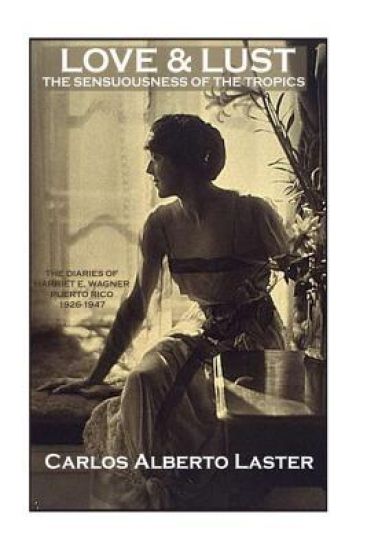
More than 30 years ago I found the Diaries of Harriet E. Wagner inside a false bottom of an old trunk lying forgotten in an enclosed garage in her house at Sea View Street in the Condado area, San Juan, Puerto Rico, just like many others diaries that have been found in dusty attics and between walls. Along with the diaries were also most treasured possessions, letters, photographs, personal notes and other remembrances of her life. It is usually considered reading a diary an invasion of privacy, especially without the permission of the author, but once the diarist is gone, such reading offers a fascinating glimpse into the life of someone we have never met. Harriet diaries reveal - not an old person looking back, in a memoir, but a young one looking at the present, and with an entire life ahead. Most of the diaries setting are in the tropical enchanted island of Puerto Rico, there the places she went, the people she met, the historical events that she witness, the scandals around her life that became published news, the falling in love with a married man, her great human experience of Love and Lust in the tropics, her international publishing career, her poetry, and her nights of bohemianism is all a True Story thru the pages of her diaries and we can join them in the immediacy of each these experiences.Harriet E. Wagner is long gone, and I think there is no more fitting tribute than to publish her diaries written in the flush of youth and on the edge of our history. This book is her diary as she wrote each volume describing her life and times on the island of Puerto Rico during the American government administration. In addition to keeping a diary, Harriet Wagner was also a prolific writer in her day. She published articles and poetry in well-known newspapers and magazines like The Herald Tribune, Vanity Fair, Vogue, Travel and The American Woman Poets magazine to name a few. Writing poetry is all about inspiration and her combining of poetry and narrative will draw the reader into Miss Wagner's world with the notion that they are actually experiencing and feeling what she went through.The diaries provide insights into the life of the Americans in Puerto Rico in the late 20's and 30's as seen through her eyes. Harriet shares her experiences with the local people, from the street vendor to the Chief of Police, a very famous architect, a Naval Commander, from federal agents to famous poets. She projects her philosophical point of view of life and how she took all the advantage possible to live her life and enjoy all kinds of experiences and give love to those who needed it. Puerto Rico is a very magical place close to the Bermuda Triangle while it's shores are constantly bathe and cares by the Caribbean Ocean. Still today can make anyone feel the sensuousness of the tropics. The book expresses all without holding anything, including the fact that she knew one day someone would find her diaries and publishes them for the world to know about, including her great love for Bill and Puerto Rico, like she wanted to do. And with that I, Carlos A. Laster, selected by Harriet Wagner herself as I believe to be the one to discover her works, and commissioned to publish her literary work, present to you "LOVE AND LUST / THE SENSUOUSNESS OF THE TROPICS / The Diaries of Harriet E. Wagner.
Harriet Harper is taking a holiday... From men Having had enough of idiots, emotional cripples and deadbeats, and never being heartbroken, Harriet decides to take a 12 month hiatus from the opposite sex. However, this is before she meets the handsome mysterious Jake. Is he the answer to her prayers or the reason she gave up men in the first place? Only time will tell, but whatever happens as Harriet travels to Turkey and home again her heart is in for a roller coaster ride of emotions. The problem is Harriet doesn't like fairground rides any more than she likes men who can't keep their promises. So when a new face arrives in her village, things get even more complicated and Harriet may just lose everything.... Harriet and her friends return in the second instalment of the Mitchledene Croft series, "Sally's Secret." Available now.
Harriet E. Bishop (January 1, 1817 - August 8, 1883) was an American educator, writer, suffragist, and temperance activist. Born in Panton, Vermont, she moved to Saint Paul, Minnesota in 1847. There she started the first public school in the Minnesota Territory, the first Sunday school in the territory, was a founding member of temperance, suffrage and civic organizations, played a central role in establishing the First Baptist Church of Saint Paul, and was an active promoter of her adopted state Partial list of works - "Floral Home; or, First Years of Minnesota", published in New York, 1857 - "Dakota War Whoop, or Indian Massacres and War in Minnesota of 1862-63", published in 1863 - "Minnesota Then and Now", published in 1869 "Dakota War Whoop, or Indian Massacres and War in Minnesota of 1862-63", published in 1863 The Bread Raid - The First Blow - Outbreak at Red Wood - The Slaughter - US Troops Cut to Pieces - The Panic - The Mission Party - Siege of Fort Abercrombie - Indians at Sioux Falls City and more.
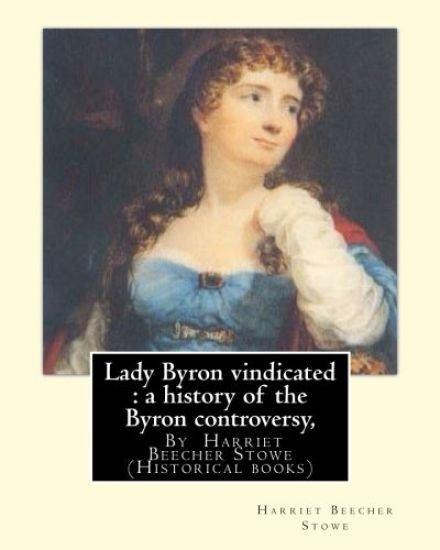
An impassioned defense of Lady Byron for having left her husband, this work helped stir up the posthumous controversy between the supporters of Lord Byron & those of his wife. George Gordon Byron (later Noel), 6th Baron Byron, FRS (22 January 1788 - 19 April 1824), commonly known simply as Lord Byron, was an English poet and a leading figure in the Romantic movement. Among his best-known works are the lengthy narrative poems Don Juan and Childe Harold's Pilgrimage, and the short lyric "She Walks in Beauty". Anne Isabella Noel Byron, 11th Baroness Wentworth and Baroness Byron (17 May 1792 - 16 May 1860), nicknamed Annabella, was the wife of poet George Gordon Byron, more commonly known as Lord Byron. Harriet Elisabeth Beecher Stowe ( June 14, 1811 - July 1, 1896) was an American abolitionist and author. She came from a famous religious family and is best known for her novel Uncle Tom's Cabin (1852). It depicts the harsh life for African Americans under slavery. It reached millions as a novel and play, and became influential in the United States and Great Britain. It energized anti-slavery forces in the American North, while provoking widespread anger in the South. She wrote 30 books, including novels, three travel memoirs, and collections of articles and letters. She was influential for both her writings and her public stands on social issues of the day.Harriet Elisabeth Beecher was born in Litchfield, Connecticut, on June 14, 1811.She was the seventh of 13 children born to outspoken Calvinist preacher Lyman Beecher and Roxana (Foote), a deeply religious woman who died when Stowe was only five years old. Roxana's maternal grandfather was General Andrew Ward of the Revolutionary War. Her notable siblings included a sister, Catharine Beecher, who became an educator and author, as well as brothers who became ministers: including Henry Ward Beecher, who became a famous preacher and abolitionist, Charles Beecher, and Edward Beecher.Harriet enrolled in the Hartford Female Seminary run by her older sister Catharine, where she received a traditional academic education usually reserved for males at the time with a focus in the classics, including study of languages and mathematics. Among her classmates was Sarah P. Willis, who later wrote under the pseudonym Fanny Fern.In 1832, at the age of 21, Harriet Beecher moved to Cincinnati, Ohio to join her father, who had become the president of Lane Theological Seminary. There, she also joined the Semi-Colon Club, a literary salon and social club whose members included the Beecher sisters, Caroline Lee Hentz, Salmon P. Chase (future governor of the state and Secretary of Treasury under President Lincoln), Emily Blackwell, and others.Cincinnati's trade and shipping business on the Ohio River was booming, drawing numerous migrants from different parts of the country, including many free blacks, as well as Irish immigrants who worked on the state's canals and railroads. Areas of the city had been wrecked in the Cincinnati riots of 1829, when ethnic Irish attacked blacks, trying to push competitors out of the city. Beecher met a number of African Americans who had suffered in those attacks, and their experience contributed to her later writing about slavery. Riots took place again in 1836 and 1841, driven also by native-born anti-abolitionists. It was in the literary club that she met Calvin Ellis Stowe, a widower who was a professor at the seminary. The two married on January 6, 1836.He was an ardent critic of slavery, and the Stowes supported the Underground Railroad, temporarily housing several fugitive slaves in their home. Most slaves continued north to secure freedom in Canada. The Stowes had seven children together, including twin daughters.