Kirjojen hintavertailu. Mukana 11 717 486 kirjaa ja 12 kauppaa.

Kirjahaku

Etsi kirjoja tekijän nimen, kirjan nimen tai ISBN:n perusteella.

1000 tulosta hakusanalla Heinz Strunk

Understanding Understanding

Understanding Understanding

Heinz von Foerster

Springer-Verlag New York Inc.
2002
sidottu
Heinz von Foerster is one of the founders of the science of cybernetics: he produced the first parallel computers and contributed to many other path-breaking developments. In these essays he discusses some of the fundamental principles that govern how we know the world and how we process the information from which we derive that knowledge.
Fractals for the Classroom: Strategic Activities Volume One

Fractals for the Classroom: Strategic Activities Volume One

Heinz-Otto Peitgen; Hartmut Jürgens; Dietmar Saupe; Evan Maletsky; Terry Perciante; Lee Yunker

Springer-Verlag New York Inc.
1991
nidottu
There are many reasons for writing this first volume of strategic activities on fractals. The most pervasive is the compelling desire to provide students of mathematics with a set of accessible, hands-on experiences with fractals and their underlying mathematical principles and characteristics. Another is to show how fractals connect to many different aspects of mathematics and how the study of fractals can bring these ideas together. A third is to share the beauty of their structure and shape both through what the eye sees and what the mind visualizes. Fractals have captured the attention, enthusiasm, and interest of many people around the world. To the casual observer, their color, beauty, and geometric structure captivates the visual senses like few other things they have ever experienced in mathematics. To the computer scientist, fractals offer a rich environment in which to explore, create, and build a new visual world as an artist creating a new work. To the student, fractals bring mathematics out of past history and into the twenty-first century. To the mathematics teacher, fractals offer a unique, new opportunity to illustrate both the dynamics of mathematics and its many connecting links.
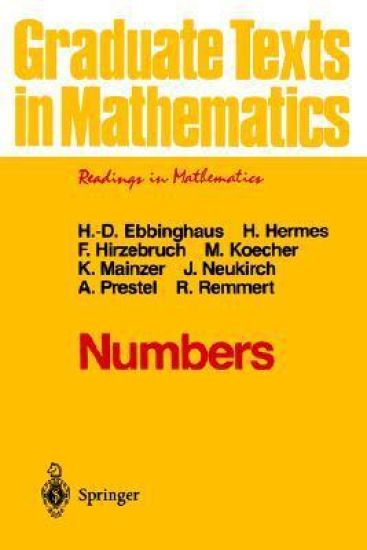
Numbers

Numbers

Heinz-Dieter Ebbinghaus; Hans Hermes; Friedrich Hirzebruch; Max Koecher; Klaus Mainzer; Jürgen Neukirch; Alexander Prestel; Reinhold Remmert

Springer-Verlag New York Inc.
1990
nidottu
A book about numbers sounds rather dull. This one is not. Instead it is a lively story about one thread of mathematics-the concept of "number"­ told by eight authors and organized into a historical narrative that leads the reader from ancient Egypt to the late twentieth century. It is a story that begins with some of the simplest ideas of mathematics and ends with some of the most complex. It is a story that mathematicians, both amateur and professional, ought to know. Why write about numbers? Mathematicians have always found it diffi­ cult to develop broad perspective about their subject. While we each view our specialty as having roots in the past, and sometimes having connec­ tions to other specialties in the present, we seldom see the panorama of mathematical development over thousands of years. Numbers attempts to give that broad perspective, from hieroglyphs to K-theory, from Dedekind cuts to nonstandard analysis.
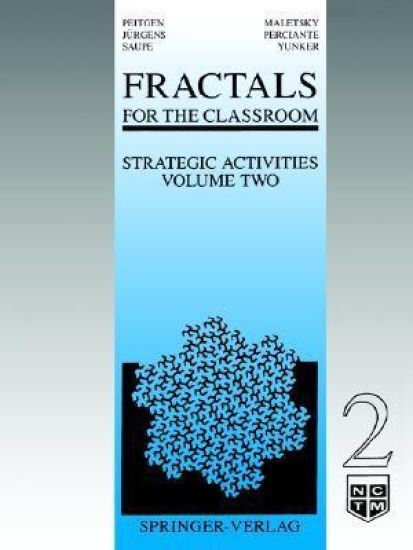
Fractals for the Classroom: Strategic Activities Volume Two

Fractals for the Classroom: Strategic Activities Volume Two

Heinz-Otto Peitgen; Hartmut Jurgens; Dietmar Saupe; Evan M. Maletsky; Terry Perciante; Lee E. Yunker

Springer-Verlag New York Inc.
1992
nidottu
The same factors that motivated the writing of our first volume of strategic activities on fractals continued to encourage the assembly of additional activities for this second volume. Fractals provide a setting wherein students can enjoy hands-on experiences that involve important mathematical content connected to a wide range of physical and social phenomena. The striking graphic images, unexpected geometric properties, and fascinating numerical processes offer unparalleled opportunity for enthusiastic student inquiry. Students sense the vigor present in the growing and highly integrative discipline of fractal geom­ etry as they are introduced to mathematical developments that have occurred during the last half of the twentieth century. Few branches of mathematics and computer science offer such a contem­ porary portrayal of the wonderment available in careful analysis, in the amazing dialogue between numeric and geometric processes, and in the energetic interaction between mathematics and other disciplines. Fractals continue to supply an uncommon setting for animated teaching and learn­ ing activities that focus upon fundamental mathematical concepts, connections, problem-solving techniques, and many other major topics of elementary and advanced mathematics. It remains our hope that, through this second volume of strategic activities, readers will find their enjoyment of mathematics heightened and their appreciation for the dynamics of the world in­ creased. We want experiences with fractals to enliven curiosity and to stretch the imagination.
Fractals for the Classroom

Fractals for the Classroom

Heinz-Otto Peitgen; Hartmut Jurgens; Dietmar Saupe

Springer-Verlag New York Inc.
1992
sidottu
Fractals for the Classroom breaks new ground as it brings an exciting branch of mathematics into the classroom. The book is a collection of independent chapters on the major concepts related to the science and mathematics of fractals. Written at the mathematical level of an advanced secondary student, Fractals for the Classroom includes many fascinating insights for the classroom teacher and integrates illustrations from a wide variety of applications with an enjoyable text to help bring the concepts alive and make them understandable to the average reader. This book will have a tremendous impact upon teachers, students, and the mathematics education of the general public. With the forthcoming companion materials, including four books on strategic classroom activities and lessons with interactive computer software, this package will be unparalleled.
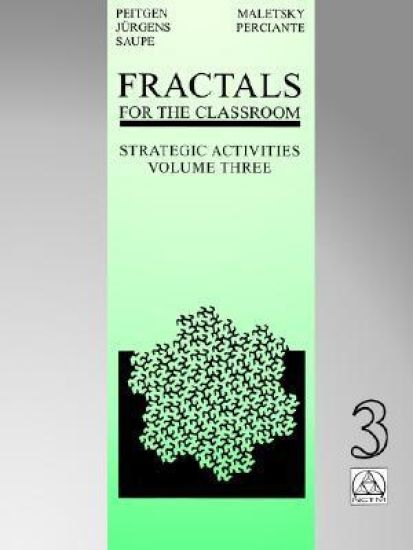
Fractals for the Classroom: Strategic Activities Volume Three

Fractals for the Classroom: Strategic Activities Volume Three

Heinz-Otto Peitgen; Hartmut Jürgens; Dietmar Saupe; Evan Maletsky; Terry Perciante

Springer-Verlag New York Inc.
1999
nidottu
This third and final volume of Strategic Activities on fractal geometry and chaos theory focuses upon the images that for many people have provided a compelling lure into an investigation of the intricate properties embedded within them. By themselves the figures posses fascinating features, but the mechanisms by which they are formed also highlight significant approaches to modeling natural processes and phenomena. The general pattern and specific steps used to construct a fractal image illustrated throughout this volume, comprise an iterated function system. The objective of this volume is to investigate the processes and often surprising results of applying such systems. These strategic activities have been developed from a sound instructional base, stressing the connections to the contemporary curriculum as recommended in the National Council of Teachers of Mathematics' Curriculum and Evaluation Standards for School Mathematics. Where appropriate, the activities take advantage of the technological power of the graphics calculator. The contents of this volume joined with the details contained in the prior two books. Together they provide a comprehensive survey of fractal geometry and chaos theory. The dynamic nature of the research and the experimental characteristics of related applications provides an engaging paradigm for classroom activity.
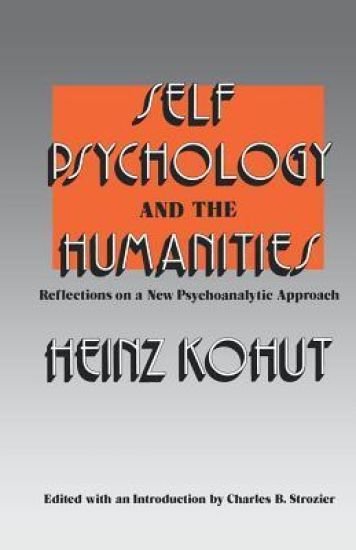
Self Psychology and the Humanities

Self Psychology and the Humanities

Heinz Kohut

WW NORTON CO
1980
nidottu
Included are previously unpublished essays on courage, leadership, and the self in society, earlier published papers presenting the theoretical basis of Kohut's ideas, and transcripts of conversations between Kohut and Strozier about cultures as interpreted by depth psychology. Psychoanalysts, as well as historians and others interested in the history of ideas, will welcome the publication of Kohut's last work.
The Kohut Seminars

The Kohut Seminars

Heinz Kohut

WW Norton Co
2009
nidottu
Heinz Kohut's theories have had a tremendous influence on our thinking about the development of the self. This book highlights the clinical application of those theories. The seminars, focusing on treatment of late adolescents and young adults in a university setting, provide the reader with an unparalleled opportunity to study the spontaneous workings of Kohut's mind as he moved from clinical experience to theory and then back to clinical experiences. After the initial chapters on the theory of self psychology, each chapter opens with a case presentation by one of the seminar participants; these cases provide the basis for Kohut's discussion of clinical issues. Reading Kohut's immediate and yet consistently thoughtful reactions to the case presentations, one can trace the emergence of basic concepts of self psychology. In particular, Kohut uses numerous clinical examples to illustrate the unique function of self-objects for youth in transition to adult life. Elson's notes are especially helpful in pointing out key connections between Kohut's responses here and later theoretical formulations. Those interested in self psychology, as well as all those who work with young people, whether as psychotherapists, teachers or community workers, will be enriched by Kohut's exceptional gift for describing the process by which he arrived at clinical and theoretical formulations.
Understanding 'Classical' Economics

Understanding 'Classical' Economics

Heinz D. Kurz; Neri Salvadori

Routledge
1997
sidottu
The 'classical' approach to economic problems, which can be traced back to Adam Smith and David Ricardo, has seen a remarkable revival in recent years. The essays in this collection argue that this approach holds the key to an explanation of important present day economic phenomena. Focusing on the analytical potentialities of classical economics, the contributors illustrate how an important element of understanding its approach consists of developing and using its explanatory power.
A Short History of Sociology

A Short History of Sociology

Heinz Maus

Routledge
1998
sidottu
Originally published in English in 1962, this book presents in clear language an account of the growth of sociology from its earliest roots in the Enlightenment, through the 19th century philosophers in Germany, positivists in France, social workers in England, the theorists in America, through the pioneering days of the early and middle part of the 20th century.
Classical Economics and Modern Theory

Classical Economics and Modern Theory

Heinz D. Kurz; Neri Salvadori

Routledge
2003
sidottu
In this thought-provoking book, well known economists Kurz and Salvadori cover original findings and new vistas on old problems. They cover:alternative interpretations of classical economistsnew growth theorythe relationship between Sraffian theory and Von Neumannthe treatment of capital in neoclassical long-period theory.Incorporating cutting-edge research and new work, this book will be of great interest to those working in the field of the history of economic thought.
Classical Economics and Modern Theory

Classical Economics and Modern Theory

Heinz D. Kurz; Neri Salvadori

Routledge
2006
nidottu
In this thought-provoking book, well known economists Kurz and Salvadori cover original findings and new vistas on old problems. They cover:alternative interpretations of classical economistsnew growth theorythe relationship between Sraffian theory and Von Neumannthe treatment of capital in neoclassical long-period theory.Incorporating cutting-edge research and new work, this book will be of great interest to those working in the field of the history of economic thought.
Interpreting Classical Economics

Interpreting Classical Economics

Heinz Kurz; Neri Salvadori

Routledge
2007
sidottu
First Published in 2007. This book is the third volume of previously published essays from Heinz D. Kurz and Neri Salvadori, following Understanding Classical Economics (1998) and Classical Economics and Modern Theory (2003), both published by Routledge. This new collection can be read in isolation but perhaps more fruitfully in conjunction with the previous texts, providing modern interpretations of the classical economists and comparing their analyses with that of contemporary mainstream economics. The essays in the new volume are split between three parts, the first section dealing with classical economics and modern theory focusing specifically on the differences in the analytical structure and content of the theory of value and distribution of Ricardo, on the one hand, and Say and Walras, on the other. The second part is devoted to Piero Sraffa’s contribution, drawing from his hitherto unpublished papers. The final part assesses linear theory of production, concentrating on comparative studies of the contributions of von Neumann, Arrow-Debreu, Georgescu-Roegen and Sraffa. This new volume will be of interest to economic theorists and methodologists in Europe, Asia and America and particularly academics and researchers engaged with theories of production, value, distribution, economic growth and the history of economic thought.
A Short History of Sociology

A Short History of Sociology

Heinz Maus

Routledge
2007
nidottu
Originally published in English in 1962, this book presents in clear language an account of the growth of sociology from its earliest roots in the Enlightenment, through the 19th century philosophers in Germany, positivists in France, social workers in England, the theorists in America, through the pioneering days of the early and middle part of the 20th century.
Innovation, Knowledge and Growth

Innovation, Knowledge and Growth

Heinz D. Kurz

Routledge
2011
sidottu
This book deals with the prime movers of socio-economic development, innovations and technical change, their origins, forms and effects. It contains a set of closely related chapters, some of which have been previously published as papers in scholarly journals
Revisiting Classical Economics

Revisiting Classical Economics

Heinz Kurz; Neri Salvadori

Routledge
2014
sidottu
The financial crisis and the economic crisis that followed triggered a crisis in the subject of economics, as it is typically being taught today especially in macroeconomics and related fields. A renewed interest in earlier authors, especially the classical economists from Adam Smith to David Ricardo and John Maynard Keynes, developed. This book may also be seen as a response to this interest. What can we learn from the authors mentioned, what we could not learn from the mainstream?This volume contains a selection of essays which deepens and widens the understanding of the classical approach to important problems, such as value and distribution, growth and technical progress, and exhaustible natural resources. It is the fourth collection in a row and reflects an on-going discussion of the fecundity of the classical approach. A main topic of the essays is a comparison between the classical approaches with modern theory and thus an identification of what can be learned by elaborating on the ideas of Smith and Ricardo and Marx above and beyond and variously in contradiction to certain mainstream view. Since the work of Piero Sraffa spurred the revival of classical economic thought, his contributions are dealt with in some detail. The attention then focuses on economic growth and the treatment of exhaustible resources within a classical framework of the analysis.
Innovation, Knowledge and Growth

Innovation, Knowledge and Growth

Heinz D. Kurz

Routledge
2013
nidottu
This book deals with the prime movers of socio-economic development, innovations and technical change, their origins, forms and effects. It contains a set of closely related chapters, some of which have been previously published as papers in scholarly journals
Understanding 'Classical' Economics

Understanding 'Classical' Economics

Heinz D. Kurz; Neri Salvadori

Routledge
2014
nidottu
The 'classical' approach to economic problems, which can be traced back to Adam Smith and David Ricardo, has seen a remarkable revival in recent years. The essays in this collection argue that this approach holds the key to an explanation of important present day economic phenomena. Focusing on the analytical potentialities of classical economics, the contributors illustrate how an important element of understanding its approach consists of developing and using its explanatory power.
Compressors and Modern Process Applications

Compressors and Modern Process Applications

Heinz P. Bloch; Arvind Godse

John Wiley Sons Inc
2006
sidottu
A modern reference to the principles, operation, and applications of the most important compressor types Thoroughly addressing process-related information and a wider variety of the major compressor types of interest to process plants, Compressors and Modern Process Applications uniquely covers the systematic linkage of fluid processing machinery to the processes they serve. This book is a highly practical resource for professionals responsible for purchasing, servicing, or operating compressors. It describes the main features of over 300 petrochemical and refining schematics and associated process descriptions involving compressors and expanders in modern industry.The organized presentation of this reference covers first the basics of compressors and what they are, and then progresses to important operational and process issues. It then explains the underlying principles, operating modes, selection issues, and major hardware elements for compressors. Topics include double-acting positive displacement compressors, rotary positive displacement compressors, understanding centrifugal process gas compressors, power transmission and advanced bearing technology, centrifugal compressor performance, gas processing and turbo-expander applications, and compressors typically found in petroleum refining and other petrochemical processes. Suitable for plant operation personnel, machinery engineering specialists, process engineers,as well as undergraduate students of this subject, this book's special features include: Flow schematics of modern process units and processes used in gas transport, gas conditioning, petrochemical manufacture, and petroleum refiningListings of licensors for each process on the flow schematicsIdentification of each process flow schematic of compressors, cryogenic, and hot gas expanders at their respective locationsImportant overview of surge control, estimating compressor performance, applications for air separation and gas processing plants, petroleum refinery issues, and important criteria that govern compressor selection and application Placing hundreds of associated process flow schematics at the fingertips of professionals and students, author and industry expert Heinz Bloch facilitates comprehension of the workings of various petrochemical, oil refining, and product upgrading processes that are served by compressors.