Kirjojen hintavertailu. Mukana 12 385 185 kirjaa ja 12 kauppaa.

Kirjahaku

Etsi kirjoja tekijän nimen, kirjan nimen tai ISBN:n perusteella.

1000 tulosta hakusanalla James C. Rodkey

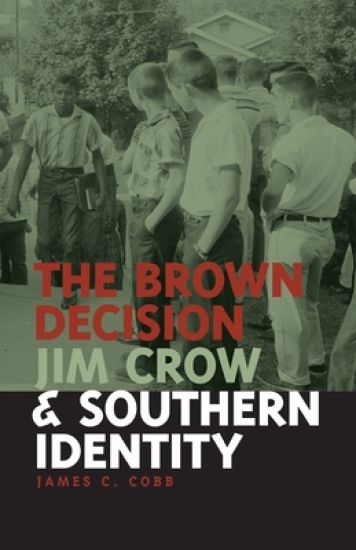
The Brown Decision, Jim Crow, and Southern Identity

The Brown Decision, Jim Crow, and Southern Identity

James C. Cobb

University of Georgia Press
2019
pokkari
The 1954 Brown v. Board of Education ruling was a watershed event in the fight against racial segregation in the United States. The recent fiftieth anniversary of Brown prompted a surge of tributes: books, television and radio specials, conferences, and speeches. At the same time, says James C. Cobb, it revealed a growing trend of dismissiveness and negativity toward Brown and other accomplishments of the civil rights movement. Writing as both a lauded historian and a white southerner from the last generation to grow up under southern apartheid, Cobb responds to what he sees as distortions of Brown’s legacy and their implied disservice to those whom it inspired and empowered.Cobb begins by looking at how our historical understanding of segregation has evolved since the Brown decision. In particular, he targets the tenacious misconception that racial discrimination was at odds with economic modernization—and so would have faded out, on its own, under market pressures. He then looks at the argument that Brown energized white resistance more than it fomented civil rights progress. This position overstates the pace and extent of racial change in the South prior to Brown, Cobb says, while it understates Brown’s role in catalyzing and legitimizing subsequent black protest.Finally, Cobb suggests that the Brown decree and the civil rights movement accomplished not only more than certain critics have acknowledged but also more than the hard statistics of black progress can reveal. The destruction of Jim Crow, with its “denial of belonging,” allowed African Americans to embrace their identity as southerners in ways that freed them to explore links between their southernness and their blackness. This is an important and timely reminder of “what the Brown court and the activists who took the spirit of its ruling into the streets were up against, both historically and contemporaneously.”
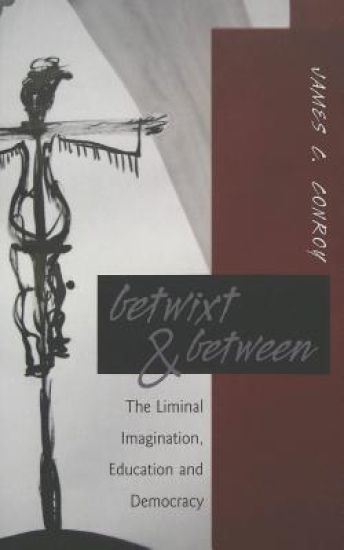
Betwixt & Between

Betwixt & Between

James C. Conroy

Peter Lang Publishing Inc
2004
nidottu
Both neo-liberal and Third Way politicians and pundits have come to accept globalisation as the key determinant of social and political organization. Consequently, they have confused government's role in the liberal democratic state with that of the globalised corporation. The result has been a discursive closure about what counts as human flourishing, and about the nature of the educational provision which best serves such flourishing - which is co-terminous with economic success. This book offers both a challenge to such an equivalence, and an understanding of the dispositions and practices that are necessary for education to sustain a robust and invigorating openness in, and for, democracy. From an oblique and whimsical perspective, Betwixt and Between renovates a range of playful and interesting metaphors rooted in experiences and encounters with and at the limen (or threshold). In doing so it weaves through laughter, trickster, poetry, and religion.
The Historical Ecology of Malaria in Ethiopia

The Historical Ecology of Malaria in Ethiopia

James C. McCann

Ohio University Press
2015
sidottu
Malaria is an infectious disease like no other: it is a dynamic force of nature and Africa's most deadly and debilitating malady. James C. McCann tells the story of malaria in human, narrative terms and explains the history and ecology of the disease through the science of landscape change. All malaria is local. Instead of examining the disease at global or continental scale, McCann investigates malaria's adaptation and persistence in a single region, Ethiopia, over time and at several contrasting sites. Malaria has evolved along with humankind and has adapted to even modern-day technological efforts to eradicate it or to control its movement. Insecticides, such as DDT, drug prophylaxis, development of experimental vaccines, and even molecular-level genetic manipulation have proven to be only temporary fixes. The failure of each stand-alone solution suggests the necessity of a comprehensive ecological understanding of malaria, its transmission, and its persistence, one that accepts its complexity and its local dynamism as fundamental features. The story of this disease in Ethiopia includes heroes, heroines, witches, spirits—and a very clever insect—as well as the efforts of scientists in entomology, agroecology, parasitology, and epidemiology. Ethiopia is an ideal case for studying the historical human culture of illness, the dynamism of nature's disease ecology, and its complexity within malaria.
The Historical Ecology of Malaria in Ethiopia

The Historical Ecology of Malaria in Ethiopia

James C. McCann

Ohio University Press
2015
pokkari
Malaria is an infectious disease like no other: it is a dynamic force of nature and Africa's most deadly and debilitating malady. James C. McCann tells the story of malaria in human, narrative terms and explains the history and ecology of the disease through the science of landscape change. All malaria is local. Instead of examining the disease at global or continental scale, McCann investigates malaria's adaptation and persistence in a single region, Ethiopia, over time and at several contrasting sites. Malaria has evolved along with humankind and has adapted to even modern-day technological efforts to eradicate it or to control its movement. Insecticides, such as DDT, drug prophylaxis, development of experimental vaccines, and even molecular-level genetic manipulation have proven to be only temporary fixes. The failure of each stand-alone solution suggests the necessity of a comprehensive ecological understanding of malaria, its transmission, and its persistence, one that accepts its complexity and its local dynamism as fundamental features. The story of this disease in Ethiopia includes heroes, heroines, witches, spirits—and a very clever insect—as well as the efforts of scientists in entomology, agroecology, parasitology, and epidemiology. Ethiopia is an ideal case for studying the historical human culture of illness, the dynamism of nature's disease ecology, and its complexity within malaria.
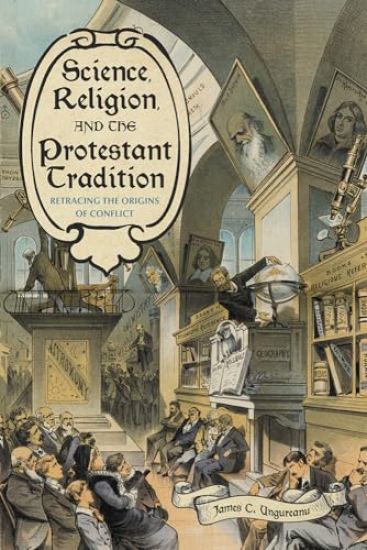
Science, Religion, and the Protestant Tradition

Science, Religion, and the Protestant Tradition

James C Ungureanu

UNIVERSITY OF PITTSBURGH PRESS
2025
nidottu
The story of the “conflict thesis” between science and religion—the notion of perennial conflict or warfare between the two—is part of our modern self-understanding. As the story goes, John William Draper (1811–1882) and Andrew Dickson White (1832–1918) constructed dramatic narratives in the nineteenth century that cast religion as the relentless enemy of scientific progress. And yet, despite its resilience in popular culture, historians today have largely debunked the conflict thesis. Unravelling its origins, James Ungureanu argues that Draper and White actually hoped their narratives would preserve religious belief. For them, science was ultimately a scapegoat for a much larger and more important argument dating back to the Protestant Reformation, where one theological tradition was pitted against another—a more progressive, liberal, and diffusive Christianity against a more traditional, conservative, and orthodox Christianity. By the mid-nineteenth century, narratives of conflict between “science and religion” were largely deployed between contending theological schools of thought. However, these narratives were later appropriated by secularists, freethinkers, and atheists as weapons against all religion. By revisiting its origins, development, and popularization, Ungureanu ultimately reveals that the “conflict thesis” was just one of the many unintended consequences of the Protestant Reformation.
Reflection Revisited

Reflection Revisited

James C. Swindal

Fordham University Press
1999
sidottu
Jurgen Habermas, particularly in his master work Theory of Communicative Action (1981), takes us several of the basic insights of the philosophical tradition of reflection initiated by Kant, and sets it on a new and highly original emancipative path. He claims that reflection not only can determine the limits of reasoning about thought and action, but also can grasp the limits that human agents face in freeing themselves form unjust social and economic structures. Human agents can engage in constructive and emancipative communication with others by determining the limits not of their own consciousness, but of the intersubjective structures shared in everyday communication. Reflection Revisited examines Habermas' own two-stage development of this theory of emancipative reflection and explicates how he applies reflection specifically to the problems of personal identity development and ethics.
Reflection Revisited

Reflection Revisited

James C. Swindal

Fordham University Press
1999
pokkari
Jurgen Habermas, particularly in his master work Theory of Communicative Action (1981), takes us several of the basic insights of the philosophical tradition of reflection initiated by Kant, and sets it on a new and highly original emancipative path. He claims that reflection not only can determine the limits of reasoning about thought and action, but also can grasp the limits that human agents face in freeing themselves form unjust social and economic structures. Human agents can engage in constructive and emancipative communication with others by determining the limits not of their own consciousness, but of the intersubjective structures shared in everyday communication. Reflection Revisited examines Habermas' own two-stage development of this theory of emancipative reflection and explicates how he applies reflection specifically to the problems of personal identity development and ethics.
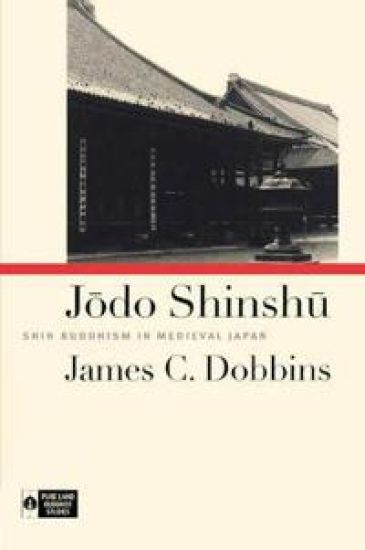
Jodo Shinshu

Jodo Shinshu

James C. Dobbins

University of Hawai'i Press
2002
nidottu
This work combines the biography of the founder of Shin Buddhism with a detailed study of the complex development of the religion, from its simple beginnings as a small, rural primarily lay Buddhist movement in the 12th century to its rapid growth as a powerful urban religion in the 15th century.
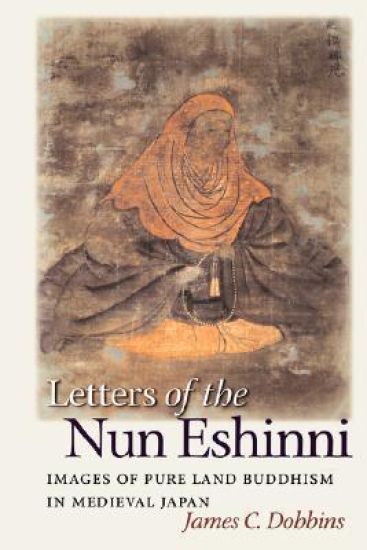
Letters of the Nun Eshinni

Letters of the Nun Eshinni

James C. Dobbins

University of Hawai'i Press
2004
nidottu
Eshinni (1182-1268?), a Buddhist nun and the wife of Shinran (1173-1262), the celebrated founder of the True Pure Land, or Shin, school of Buddhism, was largely unknown until the discovery of a collection of her letters in 1921. In this study, James C. Dobbins, a leading scholar of Pure Land Buddhism, has made creative use of these letters to shed new light on life and religion in medieval Japan. He provides a complete translation of the letters and an explication of them that reveals the character and flavor of early Shin Buddhism. Readers will come away with a new perspective on Pure Land scholarship and a vivid image of Eshinni and the world in which she lived. After situating the ideas and practices of Pure Land Buddhism in the context of the actual living conditions of thirteenth-century Japan, Dobbins examines the portrayal of women in Pure Land Buddhism, the great range of lifestyles found among medieval women and nuns, and how they constructed a meaningful religious life amid negative stereotypes. He goes on to analyze aspects of medieval religion that have been omitted in our modern-day account of Pure Land and tries to reconstruct the religious assumptions of Eshinni and Shinran in their own day. A prevailing theme that runs throughout the book is the need to look beyond idealized images of Buddhism found in doctrine to discover the religion as it was lived and practiced. Scholars and students of Buddhism, Japanese history, women's studies, and religious studies will find much in this engaging work that is thought-provoking and insightful.
Jodo Shinshu

Jodo Shinshu

James C. Dobbins

University of Hawai'i Press
2016
sidottu
The most complete and important book on the early history of Shin Buddhism to appear in English.... No other work in English combines the biography of the founder with such a detailed study of the complex development of Shin Buddhism from its simple beginnings as a small, rural primarily lay Buddhist movement in the 12th century to its rapid growth as a powerful urban religion in the 15th century."" – Choice
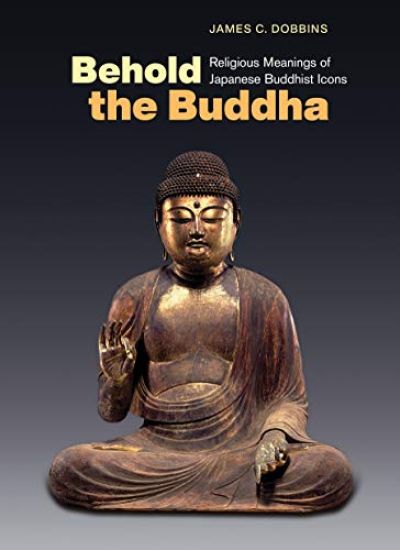
Behold the Buddha

Behold the Buddha

James C. Dobbins

University of Hawai'i Press
2020
nidottu
Images of the Buddha are everywhere-not just in temples but also in museums and homes and online-but what these images mean largely depends on the background and circumstance of those viewing them. In Behold the Buddha, James Dobbins invites readers to imagine how premodern Japanese Buddhists understood and experienced icons in temple settings long before the advent of museums and the internet. Although widely portrayed in the last century as visual emblems of great religious truths or as exquisite works of Asian art, Buddhist images were traditionally treated as the very embodiment of the Buddha, his palpable presence among people. Hence, Buddhists approached them as living entities in their own right-that is, as awakened icons with whom they could interact religiously.Dobbins begins by reflecting on art museums, where many non-Buddhists first encounter images of the Buddha, before outlining the complex Western response to them in previous centuries. He next elucidates images as visual representations of the story of the Buddha's life followed by an overview of the physical attributes and symbolic gestures found in Buddhist iconography. A variety of buddhas, bodhisattvas, and other divinities commonly depicted in Japanese Buddhism is introduced, and their "living" quality discussed in the context of traditional temples and Buddhist rituals. Finally, other religious objects in Japanese Buddhism-relics, scriptures, inscriptions, portraits of masters, and sacred sites-are explained using the Buddhist icon as a model. Dobbins concludes by contemplating art museums further as potential sites for discerning the religious character of Buddhist images.Those interested in Buddhism generally who would like to learn more about its rich iconography-whether encountered in temples or museums-will find much in this concise, well-illustrated volume to help them "behold the Buddha.
Creativity 101

Creativity 101

james C. Kaufman

Springer Publishing Co Inc
2016
nidottu
What makes us creative? How can organizations, schools, or parents inspire people to be more creative? How do we even start to define the topic in thefirst place? Now in its second edition, this bestselling introductory text—written by one of the world’s leading experts on the psychology of creativity—iscompletely updated and expanded to reflect the tremendous growth in this field. In a restructured, reader-friendly format, the text surveys the latesttheories and research to provide key information about what we know (and don’t know) about creativity. It addresses how creativity operates both onindividual and on social/environmental levels, how it is defined and measured, and several hot debates in the field, such as creativity’s uncertainrelationship to mental illness. Grounded in psychological research from clinical, industrial, social, cognitive, evolutionary, and developmentalperspectives, this text also draws on classic and current findings from neuroscience, business, education, engineering, and biology. This much-praised book is an ideal brief and affordable text for courses on creativity in psychology, education, business, and other fields, as well ascross-disciplinary seminars and programs in creativity studies. New to the Second Edition: Completely updated and expanded with new theories and frameworks and including the latest research Restructured to enhance flow of information and ease of use New coverage of how creativity can be improved at the level of the individual and the environment, measuring creativity, and creativity across cultures
El Amor Debe Ser Firme

El Amor Debe Ser Firme

James C. Dobson

Vida Publishers
1991
nidottu
Este libro no solo ofrece consejos practicos para las parejas que estan al borde del divorcio sino tambien para toda persona que busca una mejor comprension de la conducta humana y de las complejas relaciones entre hombres y mujeres.
Discovering Lectio Divina – Bringing Scripture into Ordinary Life

Discovering Lectio Divina – Bringing Scripture into Ordinary Life

James C. Wilhoit; Evan B. Howard

Inter-Varsity Press,US
2012
nidottu
Saints of the past can't seem to say enough about their ecstatic experiences with the words of Scripture. The writer of Psalm 19, for example, can hardly contain himself as he exclaims that God's words and ways have revived his soul, made him wise, brought joy to his heart, given him clarity and correct perspective on his life, and warned him of danger. Why should our experiences of the Bible today fall short of this standard? What are we missing? Spiritual formation experts James Wilhoit and Evan Howard argue that our ancestors in the faith responded to the special nature of Scripture with special habits of reading. In this step-by-step introduction to the practice of lectio divina, you will learn what it means to read your way into a new and life-changing intimacy with God. Their simple, easy-to-follow explanation of this ancient practice provides a perfect foundation for you to begin meeting God in his Word as you: read,meditate,prayand contemplate. Discover a new experience of God's Word--one that leads you to experience more of God himself.
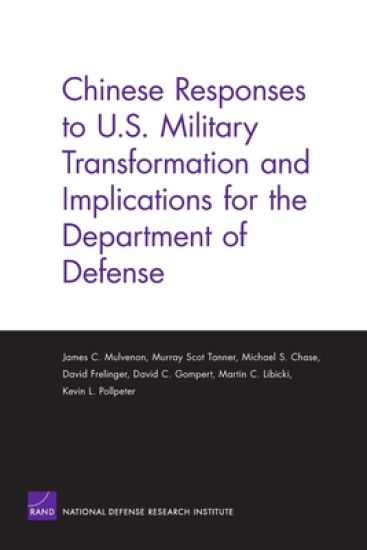
Chinese Responses to U.S. Military Transformation and Implications for the Department of Defense

Chinese Responses to U.S. Military Transformation and Implications for the Department of Defense

James C. Mulvenon; Michael S. Chase; David Frelinger; Martin Libicki; Murray Scott Tanner; Kevin L. Pollpeter; David C. Gompert

RAND
2005
pokkari
Considers potential Chinese responses to U.S. transformation efforts and offers possible U.S. counterresponses. For the past decade, Chinese military strategists have keenly observed the changes in U.S. national strategy and military transformation. This report examines the constraints, facilitators, and potential options for Chinese responses to U.S. transformation efforts and offers possible U.S. counterresponses (particularly in light of whether Taiwan moves toward or away from formal independence).