Kirjojen hintavertailu. Mukana 11 699 587 kirjaa ja 12 kauppaa.

Kirjahaku

Etsi kirjoja tekijän nimen, kirjan nimen tai ISBN:n perusteella.

1000 tulosta hakusanalla James Stratton

James Joyce, Sexuality and Social Purity

James Joyce, Sexuality and Social Purity

Katherine Mullin

Cambridge University Press
2007
nidottu
In James Joyce, Sexuality and Social Purity, Katherine Mullin offers a richly detailed account of Joyce's lifelong battle against censorship. Through prodigious archival research, Mullin shows Joyce responding to Edwardian ideologies of social purity by accentuating the 'contentious' or 'offensive' elements in his work. The censorious ambitions of the social purity movement, Mullin claims, feed directly into Joyce's writing. Paradoxically, his art becomes dependent on the very forces that seek to constrain and neutralize its revolutionary force. Acutely conscious of the dangers censorship presented to publication, Mullin shows Joyce revenging himself by energetically ridiculing purity campaigns throughout his fiction. Ulysses, A Portrait of the Artist as a Young Man and Dubliners all meticulously subvert purity discourse, as Joyce pastiches both the vice crusaders themselves and the imperilled 'Young Persons' they sought to protect. This important book will change the way Joyce is read and offers crucial insights into the sexual politics of Modernism.
James Joyce and the Difference of Language
James Joyce and the Difference of Language offers an alternative look at Joyce's writing by placing his language at the intersection of various critical perspectives: linguistics, philosophy, feminism, psychoanalysis, postcolonialism and intertextuality. Combining close textual analysis and theoretically informed readings, an international team of leading scholars explores how Joyce's experiments with language repeatedly challenge our ways of reading. Topics covered include reading Joyce through translations; the role of Dante's literary linguistics in Finnegans Wake; and the place of gender in Joyce's modernism. Two further essays illustrate aspects of Joyce's cultural politics in Ulysses and the ethics of desire in Finnegans Wake. Informed by debates in Joyce scholarship, literary studies and critical theory, and addressing the full range of his writing, this volume comprehensively examines the critical diversity of Joyce's linguistic practices. It is essential reading for all scholars of Joyce and modernism.
The Scientific Letters and Papers of James Clerk Maxwell: Volume 1, 1846–1862
This is a comprehensive edition of Maxwell's manuscript papers published virtually complete and largely for the first time. Maxwell's work was of central importance in establishing and developing the major themes of the physics of the nineteenth century: his theory of the electromagnetic field and the electromagnetic theory of light and his special place in the history of physics. His fecundity of imagination and the sophistication of his examination of the foundations of physics give particular interest and importance to his writings. Volume I: 1846–1862 documents Maxwell's education and early scientific work and his major period of scientific innovation - his first formulation of field theory, the electromagnetic theory of light and the statistical theory of gases. Important letters and manuscript drafts illuminate this fundamental early work and the volume includes his letters to friends and family, general essays and lectures and juvenilia.
James Joyce and the Problem of Justice

James Joyce and the Problem of Justice

Joseph Valente

Cambridge University Press
2009
pokkari
This is the first full-length study of James Joyce to subject his work to ethical and political analysis. It addresses important issues in contemporary literary and cultural studies surrounding problems of justice, as well as discussions of gender, homosociality and the colonial condition. Valente uses an original theory and psychology of justice through which to explore both the well-known and the more obscure of Joyce's works. He traces the remarkable formal and stylistic evolution that defined Joyce's career, and his progressive attempt to negotiate the context of social difference in racial, colonial, class and sexual terms. By analysing Joyce's verbal strategies within both the psychobiographical and sociohistorical contexts, Valente unlocks the politics of Joyce's unconscious and reveals the legacy of Western political thought.
James Joyce and the Problem of Psychoanalysis

James Joyce and the Problem of Psychoanalysis

Thurston Luke

Cambridge University Press
2010
pokkari
From its very beginning, psychoanalysis sought to incorporate the aesthetic into its domain. Despite Joyce's deliberate attempt in his writing to resist this powerful hermeneutic, his work has been confronted by a long tradition of psychoanalytic readings. Luke Thurston argues that this very antagonism holds the key to how psychoanalytic thinking can still open up new avenues in Joycean criticism and literary theory. In particular, Thurston shows that Jacques Lacan's response to Joyce goes beyond the 'application' of theory: rather than diagnosing Joyce's writing or claiming to have deciphered its riddles, Lacan seeks to understand how it can entail an unreadable signature, a unique act of social transgression that defies translation into discourse. Thurston imaginatively builds on Lacan's work to illuminate Joyce's place in a wide-ranging literary genealogy that includes Shakespeare, Hogg, Stevenson and Wilde. This study should be essential reading for all students of Joyce, literary theory and psychoanalysis.
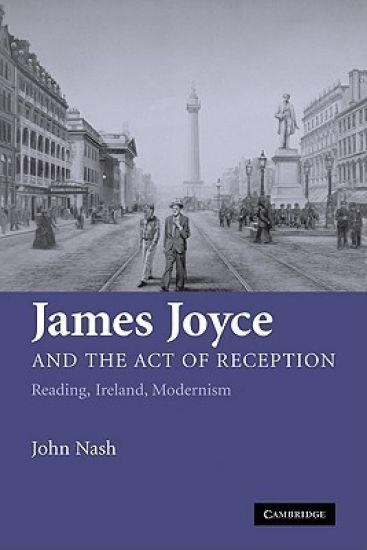
James Joyce and the Act of Reception

James Joyce and the Act of Reception

John Nash

Cambridge University Press
2010
pokkari
James Joyce and the Act of Reception is a detailed account of Joyce's own engagement with the reception of his work. It shows how Joyce's writing, from the earliest fiction to Finnegans Wake, addresses the social conditions of reading (particularly in Ireland). Most notably, it echoes and transforms the responses of some of Joyce's actual readers, from family and friends to key figures such as Eglinton and Yeats. This study argues that the famous 'unreadable' quality of Joyce's writing is a crucial feature of its historical significance. Not only does Joyce engage with the cultural contexts in which he was read but, by inscribing versions of his own contemporary reception within his writing, he determines that his later readers read through the responses of earlier ones. In its focus on the local and contemporary act of reception, Joyce's work is seen to challenge critical accounts of both modernism and deconstruction.
James Mill on Education

James Mill on Education

Mill

Cambridge University Press
2010
pokkari
James Mill's two principal published works on education are the article 'Education', for the Encyclopedia Britannica, written in 1815, and the pamphlet Schools for all, in preference to Schools for Churchmen only, written in 1812. The first was general and theoretical, and raises points about the relationship between the aims of education, psychological theory and social life. It is a classic document of utilitarianism. The second was written as part of the debate about the interlocked themes of primary education, monitorial education, and religious education. It is practical and political, and one of the first statements about secularism in education and the need to provide primary schooling for all in England. Mr Burston's introduction relates the two pieces to Mill's general intellectual and philosophical position, and to the historical context in which he wrote. Notes explain allusions in the text, and there is a bibliography.
The Scientific Letters and Papers of James Clerk Maxwell: Volume 3, 1874–1879
This is a comprehensive edition of Maxwell's manuscript papers published virtually complete and largely for the first time. Maxwell's work was of central importance in establishing and developing the major themes of the physics of the nineteenth century: his theory of the electromagnetic field and the electromagnetic theory of light and his special place in the history of physics. His fecundity of imagination and the sophistication of his examination of the foundations of physics give particular interest and importance to his writings. Volume III: 1874–1879 covers the period of Maxwell's direction of the Cavendish Laboratory and documents the espousal of his theories by a wider circle of physicists. During this last period of his life his work began to achieve the pre-eminence in the classical physics of the nineteenth century, which it has retained ever since.
James Joyce

James Joyce

Patrick Parrinder

Cambridge University Press
1984
pokkari
James Joyce holds a unique position in literature. No writer has a higher reputation, none attracts more ardent devotees, and none poses so many difficulties for the first-time reader. This book is an original and well-informed survey of the whole of Joyce's work. It offers close readings of his early writings such as Dubliners and A Portrait of the Artist as a Young Man, and an extended examination of his masterpiece, Ulysses, as well as a stimulating introduction to that notoriously difficult work Finnegans Wake. Dr Parrinder stresses Joyce's ambivalent relationship to the Ireland of his youth, and his ability to incorporate the most banal and profane levels of experience and language into profound celebration of the human capacity for survival and regeneration. The Joyce who emerges is a writer of innocence and gusto as well as immense artistic cunning.
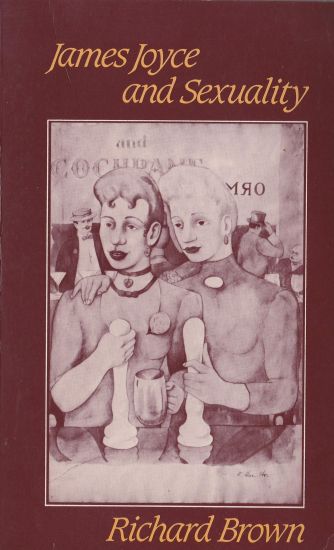
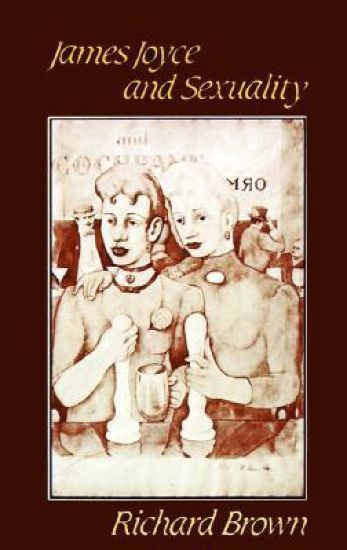
James Joyce and Sexuality

James Joyce and Sexuality

Richard Brown

Cambridge University Press
1988
pokkari
This highly original study seeks to correct the critical misapprehension that James Joyce was a figure who remained aloof and disengaged from the intellectual and social concerns of his time. By exploring Joyce’s interest in sexual questions, Dr Brown shows that, on the contrary, his work represents a more complex and subtle kind of engagement with such concerns. There are four main areas of interest. The first is Joyce’s extensive reading on the question of marriage and its impact on his work, a subject invested with greater interest through Joyce’s elopement with and delayed marriage to Nora Barnacle. The second is Joyce’s responsiveness to the new sexual ideology as expounded in the writings of Freud and Havelock Ellis. Thirdly, Dr Brown considers the feminist dimension of the oeuvre and explores Joyce’s profound concern with twentieth-century discussions of sexual divisions and difference, a topic hitherto neglected in the classic critical treatments. Finally, the book argues for a new type of Joycean aesthetic in which the major works are analysed as responses to readings of other texts. Dr Brown offers a substantial and original account of Joyce’s work as modern in its social ideas as well as in its literary form, and suggests how the stylistic modernity itself may be seen to arise in part as a response to the difficulties of dealing with sex.
James Boswell: The Life of Johnson

James Boswell: The Life of Johnson

Greg Clingham

Cambridge University Press
2008
pokkari
This is a radical introduction to the Life of Johnson. It discusses the main structural, dramatic, historical and imaginative aspects of the work, and establishes its intellectual contexts: Hume's philosophy, earlier biographical writings by Boswell, and the French and German Enlightenment and romantic traditions. Professor Clingham offers an account of the Life based upon reassessment of the nature of biography, of Boswell's style and thought, and of Johnson's own works. As he examines the Life's complex psychological, emotional and artistic facets, a fresh picture of Boswell as biographer emerges. The book also provides a table of the principal scenes and conversations in the Life, as well as a chronological table of Boswell's life and times and a guide to further reading.
James Mill: Political Writings

James Mill: Political Writings

James Mill

Cambridge University Press
1992
pokkari
James Mill (1773–1836) is today best known as Jeremy Bentham’s chief disciple and John Stuart Mill’s father. Yet Mill himself was a formidable and important Utilitarian thinker in his own right, who earned the respect of even those who disagreed with him. His range was enormous (historian, political philosopher, psychologist, educational theorist, and economist), repeatedly crossing the disciplinary boundaries we take for granted today. This volume presents a wide sampling of Mill’s political writings and polemical essays. It begins with his classic work, the Essay on Government, it also includes pieces on the protection of rights, the importance of education, the free press, the secret ballot, and government’s use of punishment against those who violate the rights of fellow citizens. The collection concludes with Macaulay’s famous critique of the Essay, and Mill’s heretofore unnoticed reply in his Fragment on Mackintosh (1835). This is the first time that such a selection of Mill’s political works has appeared as one volume. It will be of interest to students and scholars of politics, philosophy, and the history of ideas.
James Joyce and the Problem of Justice

James Joyce and the Problem of Justice

Joseph Valente

Cambridge University Press
1995
sidottu
This is the first full-length study of James Joyce to subject his work to ethical and political analysis. It addresses important issues in contemporary literary and cultural studies surrounding problems of justice, as well as discussions of gender, homosociality and the colonial condition. Valente uses an original theory and psychology of justice through which to explore both the well-known and the more obscure of Joyce's works. He traces the remarkable formal and stylistic evolution that defined Joyce's career, and his progressive attempt to negotiate the context of social difference in racial, colonial, class and sexual terms. By analysing Joyce's verbal strategies within both the psychobiographical and sociohistorical contexts, Valente unlocks the politics of Joyce's unconscious and reveals the legacy of Western political thought.
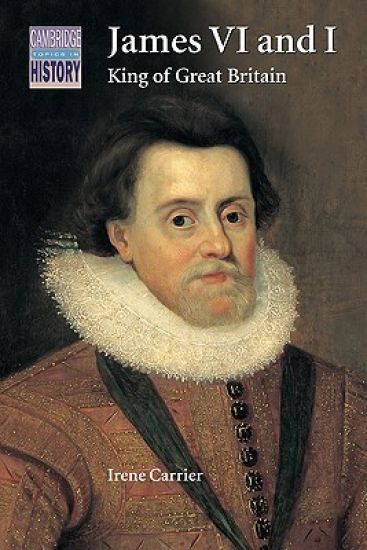
James VI and I

James VI and I

Irene Carrier

Cambridge University Press
1998
pokkari
James VI and I is a new title in the Cambridge Topics in History series. It covers all of the important areas of James VI and I's reign, focusing on the personality of the King, Anglo-Scottish Union, the position of the Church, the relationship between the King and the Parliament, finance, foreign policy and concluding with an overview of historian's perceptions of James VI and I. A wide range of sources accompanied by diverse and challenging questions aid student understanding of the period.
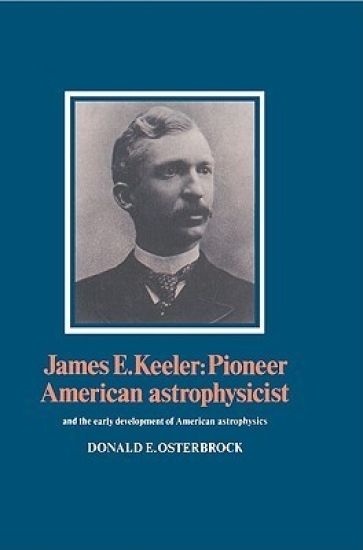
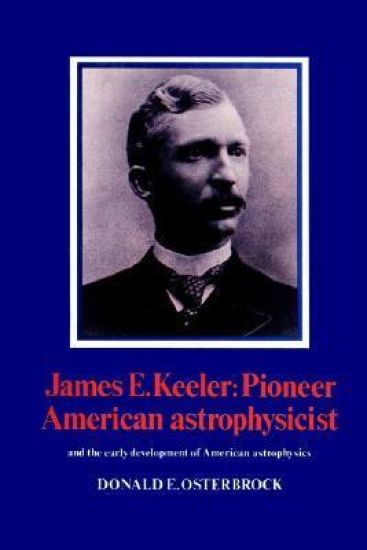
James E. Keeler: Pioneer American Astrophysicist

James E. Keeler: Pioneer American Astrophysicist

Donald E. Osterbrock

Cambridge University Press
2002
pokkari
This is the biography of James E. Keeler (1857–1900), a distinguished pioneer of astrophysics, the application of the methods of physics to understanding the nature of the stars, nebulae, planets, comets, and other objects that populate the universe. Keeler was an outstanding scientist, and his fellow astronomers and physicists at the end of the nineteenth century considered him the leading astronomical spectroscopist of his generation. His career was closely linked with that of George Ellery Hale, founder of Yerkes Observatory. Keeler himself was the first astronomer at Lick Observatory, and the story of his life tells much of the early history of these two early American ‘big-science’ research institutions.