Kirjahaku
Etsi kirjoja tekijän nimen, kirjan nimen tai ISBN:n perusteella.
1000 tulosta hakusanalla Jay Rayner
William Jay and the Constitutional Movement for the Abolition of Slavery
Bayard Tuckerman
Literary Licensing, LLC
2014
nidottu


William Jay and the Constitutional Movement for the Abolition of Slavery
Bayard Tuckerman
Createspace Independent Publishing Platform
2014
nidottu
William Jay and the Constitutional Movement for the Abolition of Slavery
Bayard Tuckerman
Createspace Independent Publishing Platform
2015
nidottu
Dee-Jay's Family Tales: Making Macaroni & Cheese
Akhenaten Hotep Amun
Createspace Independent Publishing Platform
2015
nidottu
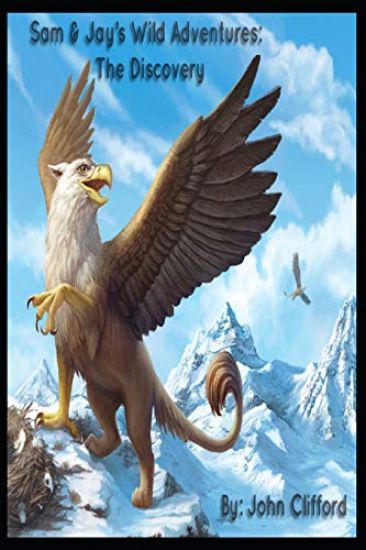
Sam & Jay are always finding ways to have fun no matter what, but when the brothers find a cavern that leads to a strange new world their adventures step up to the next level. Journey with Sam and Jay to Avalon: an amazing world filled with creatures and action

Papa Jay's Starday: Starday
Leela &. Amber Salisbury
Createspace Independent Publishing Platform
2016
nidottu
When someone dies, we look for them everywhere because we miss seeing them. This is my story of finding my Papa Jay by looking up at the stars. Starday is the anniversary of the day Papa Jay went home to the stars." I hope this book helps you to find someone you miss in the precious memories you shared with your loved one. Leela & Amber Salisbury


"A Change from Change" by Jay Jones: Money Tips
John (Jay) Jones
Createspace Independent Publishing Platform
2016
nidottu
William Jay, and the constitutional movement for the abolition of slavery
Bayard Tuckerman
Createspace Independent Publishing Platform
2016
nidottu
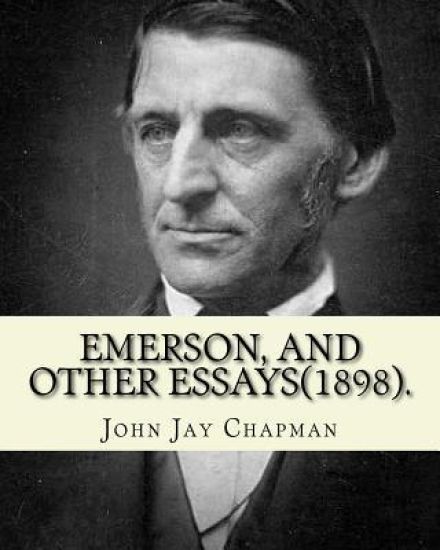
Emerson, and other essays (1898). By: John Jay Chapman: John Jay Chapman (March 2, 1862 - November 4, 1933) was an American author.
John Jay Chapman
Createspace Independent Publishing Platform
2016
nidottu
John Jay Chapman (March 2, 1862 - November 4, 1933) was an American author. He was born in New York City.His father, Henry Grafton Chapman, was a broker who eventually became president of the New York Stock Exchange. His grandmother, Maria Weston Chapman, was one of the leading campaigners against slavery and worked with William Lloyd Garrison on The Liberator.He was educated at St. Paul's School, Concord and Harvard, and after graduating in 1884, Chapman traveled around Europe before returning to study at the Harvard Law School. He was admitted to the bar in 1888, and practiced law until 1898. Meanwhile, he had attracted attention as an essayist of unusual merit. His work is marked by originality and felicity of expression, and the opinion of many critics has placed him in the front rank of the American essayists of his day. In 1912, on the one year anniversary of the lynching of Zachariah Walker in Coatesville, Pennsylvania, Chapman gave a speech in which he called the lynching "one of the most dreadful crimes in history" and said "our whole people are...involved in the guilt." It was published as A Nation's Responsibility. He married Minna Timmins in 1889 and they had three children, including future pilot Victor Chapman. Timmins died giving birth to their third child, Conrad. Chapman later married Elizabeth Astor Winthrop Chanler, second daughter of John Winthrop Chanler and Margaret Astor Ward of the Astor family, and sister of soldier and explorer William A. Chanler. Elizabeth and John Jay had one child, a son named Chanler Armstrong Chanler, in 1901.Chapman became involved in politics, and joined the City Reform Club and the Citizens' Union. He lectured on the need for reform and edited the journal The Political Nursery (1897-1901)......... Ralph Waldo Emerson (May 25, 1803 - April 27, 1882), known professionally as Waldo Emerson, was an American essayist, lecturer, and poet who led the transcendentalist movement of the mid-19th century. He was seen as a champion of individualism and a prescient critic of the countervailing pressures of society, and he disseminated his thoughts through dozens of published essays and more than 1,500 public lectures across the United States. Emerson gradually moved away from the religious and social beliefs of his contemporaries, formulating and expressing the philosophy of transcendentalism in his 1836 essay "Nature". Following this groundbreaking work, he gave a speech entitled "The American Scholar" in 1837, which Oliver Wendell Holmes Sr. considered to be America's "intellectual Declaration of Independence". Emerson wrote most of his important essays as lectures first and then revised them for print. His first two collections of essays, Essays: First Series (1841) and Essays: Second Series (1844), represent the core of his thinking. They include the well-known essays "Self-Reliance", "The Over-Soul", "Circles", "The Poet" and "Experience". Together with "Nature", these essays made the decade from the mid-1830s to the mid-1840s Emerson's most fertile period. Emerson wrote on a number of subjects, never espousing fixed philosophical tenets, but developing certain ideas such as individuality, freedom, the ability for humankind to realize almost anything, and the relationship between the soul and the surrounding world. Emerson's "nature" was more philosophical than naturalistic: "Philosophically considered, the universe is composed of Nature and the Soul". Emerson is one of several figures who "took a more pantheist or pandeist approach by rejecting views of God as separate from the world."

The Federalist Papers Alexander Hamilton, John Jay, and James Madison
John Jay; James Madison
Createspace Independent Publishing Platform
2017
nidottu
The Federalist (later known as The Federalist Papers) is a collection of 85 articles and essays written (under the pseudonym Publius) by Alexander Hamilton, James Madison, and John Jay promoting the ratification of the United States Constitution. Seventy-seven were published serially in The Independent Journal and The New York Packet between October 1787 and August 1788. A compilation of these and eight others, called The Federalist: A Collection of Essays, Written in Favour of the New Constitution, as Agreed upon by the Federal Convention, September 17, 1787, was published in two volumes in 1788 by J. and A. McLean.
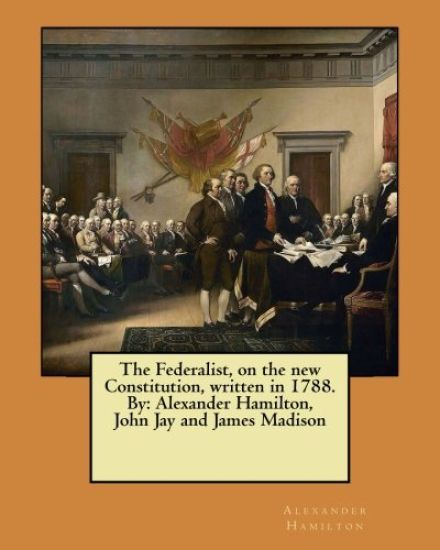
The Federalist, on the new Constitution, written in 1788. By: Alexander Hamilton, John Jay and James Madison
John Jay; James Madison; Alexander Hamilton
Createspace Independent Publishing Platform
2017
nidottu
The present edition of the Federalist contains all the numbers of that work as revised by their authors; and it is the only one to which the remark will apply. Former editions, indeed, it is understood, had the advantage of a revisal from Mr. Hamilton and Mr. Jay, but the numbers written by Mr. Madison still remained in the state in which they originally issued from the press and contained many inaccuracies. The publisher of this volume has been so fortunate as to procure from Mr. Madison the copy of the work which that gentleman had preserved for himself, with corrections of the papers, of which he is the author, in his own hand. The publication of the Federalist, therefore, may be considered, in this instance, as perfect; and it is confidently presented to the public as a standard edition. Some altercation has occasionally taken place concerning the authorship of certain numbers of the Federalist, a few of those now ascertained to have been written by Mr. Madison having been claimed for Mr. Hamilton. It is difficult to perceive the propriety or utility of such an altercation; for whether we assign the disputed papers to the one or to the other, they are all admitted to be genuine, and there will still remain to either of these gentlemen an unquestioned number sufficient to establish for him a solid reputation for sagacity, wisdom and pdtriotism. It is not the extent of a man's writings, but the excellence of them, that constitutes his claim upon his conlemporaries and upon posterity for the character of intellectual superiority: and to the reader, the difference in this case is nothing, since he will receive instruction from the perusal, let them have been written by whom they may.
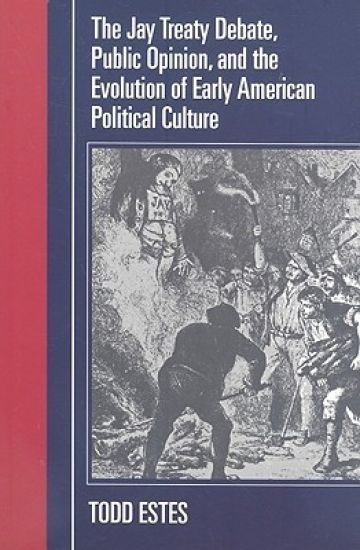
The Jay Treaty Debate, Public Opinion, and the Evolution of Early American Political Culture
Todd Estes
University of Massachusetts Press
2008
nidottu
This book examines the changing role of popular politics in the early republic. During the mid-1790s, citizens of the newly formed United States became embroiled in a divisive debate over a proposed commercial treaty with Great Britain. Long regarded as a pivotal event in the history of the early republic, the controversy pitted pro-treaty Federalists against anti-treaty Jeffersonian Republicans. Yet, as Todd Estes argues in this perceptive study, the year-long debate over the ratification of the Jay Treaty represented more than a clash over foreign policy between two nascent political parties. It also marked a significant milestone in the role played by public opinion in the young nation's political culture.