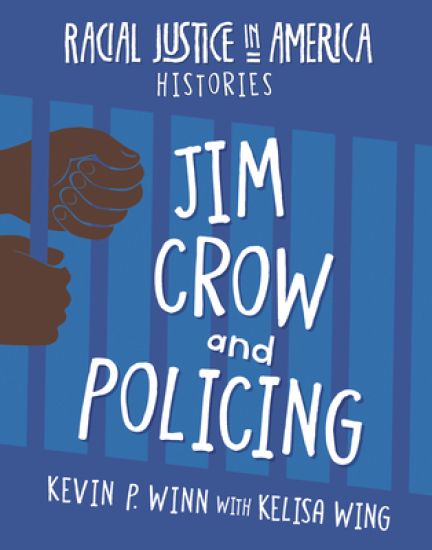
The Racial Justice in America: Histories series explores moments and eras in America's history that have been ignored or misrepresented in education due to racial bias. Jim Crow and Policing explores the unjust laws and law enforcement policies Black people have faced in a comprehensive, honest, and age-appropriate way. Developed in conjunction with educator, advocate, and author Kelisa Wing to reach children of all races and encourage them to approach our history with open eyes and minds. Books include 21st Century Skills and content, as well as activities created by Wing. Also includes a table of contents, glossary, index, author biography, sidebars, educational matter, and activities.
Amid the intense colors of a foreign land, JIM LIVES is the story of a man searching for his son–a correspondent for a popular american newspaper–who vanished into thin air after sending one last, enigmatic message: “Jim Morrison isn’t dead. He’s hiding out in Italy. I saw him with my own eyes. I’ll call you tomorrow and tell you everything...”Come along with the Creators of PAUL IS DEAD as they reveal the second chapter in their “conspiracy trilogy:” a new, fascinating vision of the most mysterious legend in the history of rock that envisions what happened “When the Music’s Over.”
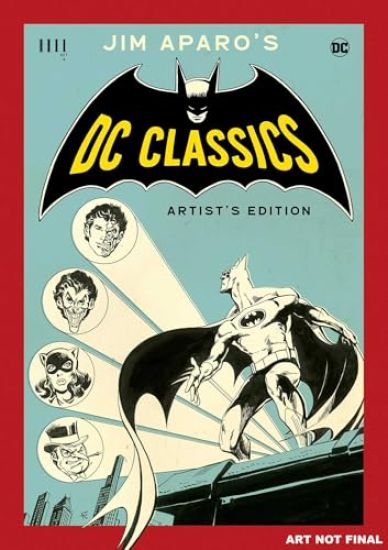
Experience the peak period of Jim Aparo’s artistry from his runs featuring Batman and The Spectre, with over 175 pages of original art in this gorgeous Artist’s Edition! Jim Aparo was one of DC’s most prolific artists through the 1970s and 1980s, especially celebrated for his work on Batman (Brave and the Bold, Detective Comics) and The Spectre (Adventure Comics). This Artist’s Edition presents more than 175 pages of classic Aparo art from what is regarded as his peak period and features eight complete Brave and the Bold and Spectre stories, as well as a selection of classic covers and pages. Although appearing to be in black and white, all the art is scanned in color, enabling the reader to see the work as close to the original as possible – ink gradients, blue pencil, and all the unique nuances that make original art so special – are all clearly visible and printed at the same size as drawn. The Artist’s Edition of Jim Aparo’s work is an art book disguised as a comic collection. The only better way to see these pages is by looking over Aparo’s shoulder at his drawing board!
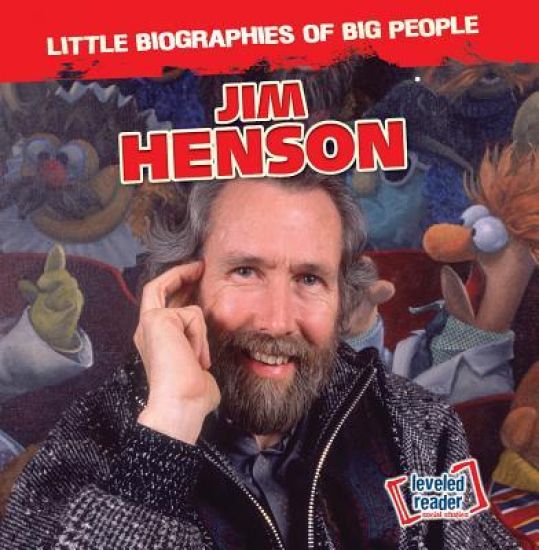
Young readers finally have an opportunity to hear the story of the man behind Kermit the Frog, Yoda, Big Bird, and many other timeless, world famous puppet sensations. The life of Jim Henson is the story of a singular, remarkable artist with a vision, drive, and passion to educate. Through captivating photography, quotes from the man himself, and focused, age-appropriate language, readers have the chance to learn this modern television success story and be motivated and inspired to explore their own artistic voice and vision.
(Ukulele). This collection features 15 classic songs arranged by ukulele master, James Hill. In these remarkable arrangements, two distinct ukulele parts chord accompaniment and melody can be played in counterpoint at the same time by one player. The arrangements cater to both advanced beginner and experienced players and there is a warm-up section that introduces the player to the "Duets for One" concept. The book includes access to audio tracks online of all the arrangements performed by James Hill, for download or streaming, using the unique code inside the book. Songs are arranged for GCEA-tuned ukes and include: Georgia On My Mind * Summertime * Don't Get Around Much Anymore * The Glory of Love * Here Comes the Rain Again * L-O-V-E * Cheek to Cheek * Viva La Vida * and 7 more.
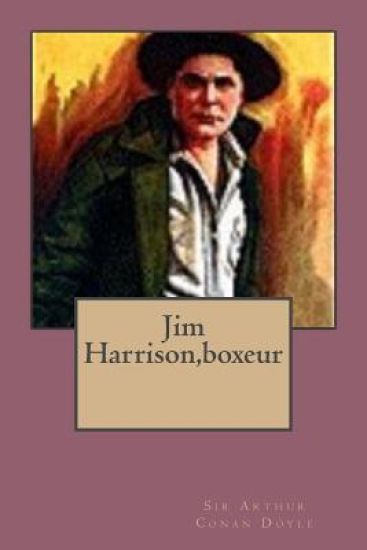
Une belle description de l'Angleterre du XIXe (ville et campagne), du milieu de la boxe aux d buts de ce sport, dans le cadre d'une intrigue polici re. Pr face _Dans un roman ant rieur qui a t fort bien accueilli par le public fran ais, La grande Ombre, Conan Doyle avait abord l' poque de la lutte acharn e entre l'Angleterre et Napol on. Il avait accompagn jusque sur le champ de bataille de Waterloo un jeune villageois arrach au calme des falaises natales par le d sir de prot ger le sol national contre le cauchemar de l'invasion fran aise, qui hantait alors les imaginations britanniques._ Cette fois, dans une oeuvre nouvelle, la peinture est plus large. _C'est toute l'Angleterre du temps du roi Georges qui revit d'une vie intense dans les pages de Jim Harrison boxeur, avec son prince de Galles aux in puisables dettes, ses dandys l gants et bizarres, ses marins audacieux et tenaces group s avec art autour de Nelson et de la trop c l bre Lady Hamilton, ses champions de boxe dont les exploits entretiennent au del de la Manche le go t des exercices violents, entra nement indispensable un peuple qui voulait tenir t te aux grognards de Napol on, aux marins de nos escadres et aux corsaires de Surcouf et de ses mules._ _Le tableau est complet et trac par une plume comp tente, Conan Doyle s'appliquant d crire ce qu'il conna t bien et vitant d s lors les grosses erreurs qui tachent certains de ses romans historiques, Les R fugi s par exemple._ _Les ditions anglaises portent le titre de Rodney Stone. C'est, en effet, le fils du marin Stone, compagnon de Nelson, qui est cens tenir la plume et voquer le souvenir des jours de sa jeunesse pour l'instruction de ses enfants. Mais Rodney Stone, s'il est le fil qui relie les feuillets du r cit, n'en est jamais le h ros. me simple et moyenne, il n'a pas l'envergure qui conquiert l'int r t._ Le vrai h ros du roman, c'est Jim Harrison, lev par le champion Harrison qui s'est retir du Ring apr s un terrible combat o il faillit tuer son adversaire, et tabli forgeron Friar's Oak.
Jim Morrison's Clearwater Then and Now, is a pictorial history and collection of tales from the life of Clearwater's Rock Legend. Who was Jim Morrison before he became frontman of The Doors? The stories within these pages will tell stories of a young Jim Morrison from the people that knew him best."Writer and researcher, Bird Stevens, has located the places that probably always remained in Jim Morrison's heart. From conversation with Jim's early acquaintances, Stevens identified and visited many, and has written in detail about, the places that Jim enjoyed and the places where Jim experienced his early losses and disappointments. Journey with the writer from Jim's California banishment to a little frame house on the bank of Clearwater harbor, through his peccadillo adventures in and around Clearwater, Florida, and off to Tallahassee, Florida, where his homes included a typical neighborhood house, a small and dirty house trailer parked behind a rooming house, and an old hotel thought to have once been a house of ill repute.Bird Stevens has described these places in Jim's heart with a vividness that will take you there. So, off you go "
Jim Cowan's Industrial Timeline Most of humanity is alive today because of industrial progress, as the carrying capacity of the planet was substantially lower before the technological mastery of nature achieved largely in the last 300 years. Based on the implications of physics alone, it is likely that we have exited the steep part of this growth, at least by the conventional measures of energy consumption per capita. Man's future technological progress will depend on doing more with the same or declining gross resources, and the information age we are currently experiencing is the perfect setting for these optimization efforts. The much-heralded "dematerialization" of the information age is enabled by the reality that few in advanced economies need worry much about their basic material needs. Jim Cowan has lived through much of this progress, born in a small town in West Texas without running water or indoor bathrooms for much of his childhood. During his career, he worked his way up from rig mechanic to maintenance manager for one of the world's largest oil drilling companies. His timeline recognizes those who mastered nature for the benefit of their fellow human beings, often in obscurity. It is a valuable resource for anyone interested in science, industrial history, technology or engineering and tells the story of man's material struggle and triumph on God's good Earth. "In the sweat of thy face shalt thou eat bread" was the judgment given to man in the Genesis narrative. That we all sweat much less than we used to for our daily bread is evidence of our debt to the Promethean individuals who brought forth the world of abundance we enjoy today. Jim's work is helpful in reminding us of the many blessings we enjoy in this tumultuous, but, in comparison our ancestors' struggles, truly golden age. May we not take our material abundance for granted, nor waste the luxury of leisure, but rather be worthy descendants of those giants on whose shoulders we stand.
*Includes pictures *Includes accounts of the cult and the massacre *Includes Jim Jones' quotes about his life and the massacre *Includes online resources and a bibliography for further reading *Includes a table of contents "We didn't commit suicide; we committed an act of revolutionary suicide protesting the conditions of an inhumane world." - Jim Jones The United States has never had a shortage of cults based on religious teachings and charismatic leaders, but perhaps none are as infamous as Jim Jones and the Peoples Temple, which remain notorious for the mass murder-suicide event in Jonestown, Guyana on November 18, 1978, during which nearly 900 people drank cyanide-laced Flavor Aid, including nearly 300 children. To this day, "drinking the Kool-Aid" is a popular phrase in America to refer to people who blindly follow a person or idea without thought, and the event at Jonestown was the deadliest deliberate act involving Americans in history until the 9/11 attacks. In addition to those deaths, Peoples Temple members also murdered a handful of others on the same day, including journalists, a member trying to leave Jonestown, and Congressman Leo Ryan. Almost from birth, Jones believed he had a higher calling, and after being immersed in various Christian churches and both political and religious doctrine, Jones founded the Peoples Temple in Indianapolis in 1955, when he was still in his mid-20s. While that might have been an unusual course in life for most Americans, Jones was hardly the first to take such a path, and indeed, his group expanded at a remarkable pace in the 1960s, which included a move to California after Jones claimed to foresee a nuclear attack on Chicago and the destruction of Indianapolis. By the 1970s, services at the group's Temple attracted thousands of visitors, even as Jones increasingly criticized Christianity and the Bible. Of course, none of the previous locations earned the notoriety of Jonestown, which the Peoples Temple established in Guyana along the northern coast of South America in the mid-'70s. Meant to be a "socialist paradise" and "sanctuary" from America's "creeping fascism," over 900 members headed to the new settlement by 1978. That November, Congressman Leo Ryan arrived in Jonestown to investigate various claims about the Peoples Temple and met with some members who wished to defect from the group. In response, Jones issued a tape decrying outsiders' efforts and directing members to commit suicide, and when some pushed back, he chided them: "Stop these hysterics. This is not the way for people who are socialists or communists to die. No way for us to die. We must die with some dignity." Survivors described the ensuing event, during which children drank the poison first and were followed by parents who lay down to die as a family. Others indicated that Jones had simulated mass suicides on a couple of other occasions before to test members' loyalty as well, so people remained unsure whether the event was real, even as Jones told them, "I tell you, I don't care how many screams you hear, I don't care how many anguished cries...death is a million times preferable to ten more days of this life. If you knew what was ahead of you - if you knew what was ahead of you, you'd be glad to be stepping over tonight." Although many began to worry once they saw the poison take effect in others, most of those who drank the poison were dead within 5 minutes, while Jones apparently shot himself in the head. Jim Jones and the Peoples Temple: The History of the Most Notorious Cult and Mass Murder-Suicide in American History chronicles the notorious cult and the mass murder-suicide. Along with pictures of important people, places, and events, you will learn about the Peoples Temple like never before.
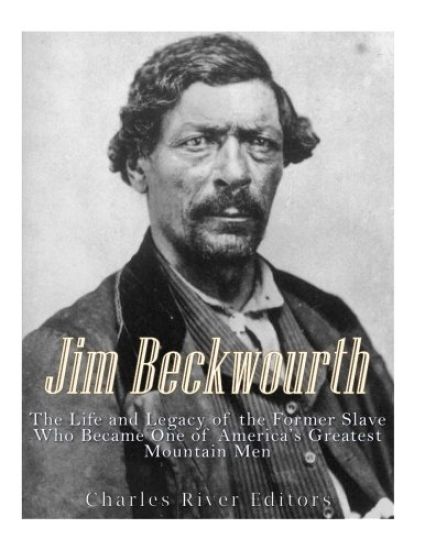
*Includes pictures *Includes Beckwourth's quotes about his life *Includes online resources and a bibliography for further reading "Jim Beckwourth, who knew, said that though the Indian could never become a white man, the white man lapsed easily into an Indian." - Bernard DeVoto, The Year of Decision: 1846 Explorers, soldiers, and settlers of African-American heritage comprise an unfamiliar story to most students of American history. However, in the push westward, they were present in sufficient numbers to exert great influence on the nation's development. Among the earliest accounts is that of Isabel de Olvera, who settled in New Mexico around the year of 1600, and it is estimated that by 1750, 25% of Albuquerque's population shared discernible African ancestry. York, the well-known servant of Lewis and Clark, accompanied the legendary expedition under the auspices of the Jefferson administration, and Edward Rose traveled up the Missouri River in the same era. Within just a few years, Pio Pico became the governor of California, and George Bush became one of the first African-Americans to travel the Oregon Trail, opening that route to a flood of settlers over a 10-year period. In parallel with these individuals came a number of African-American frontiersmen who participated in the exploration of the Western terrain, said to have numbered in the dozens. Needless to say, such a career was an unusual destiny for those who "emerged from the system of slavery." Emancipation for an American slave generally involved a dangerous and illegal trek on foot toward the north, or through the Underground Railroad network operating between states east of the Mississippi. Given the illiteracy rates of the day, few tangible accounts of such journeys have survived, but one glaring exception is that of James Pierson Beckwourth, the only known African American mountain man to leave behind a detailed, if somewhat sensationalistic, account of his travels. In a journey spanning over half a century, Beckwourth tried his hand at virtually every line of work related to Western life. He served as a soldier, explored a vast range of territory as a mountain man, and worked as a scout and guide. In later years, he lived as an entrepreneurial merchant, professional card player, and as a skilled horse thief for both Indian tribes and the U.S. Army. Perhaps most unique of all was Beckwourth's relations with Native American tribes. Adapting himself to the culture of several tribes of the Plains and the Southwest, and employing a particular charm and prowess in battle, he was adopted by the Crow nation. In their society, Beckwourth rose to the level of War Chief, and he lived with the tribe for several years. Hailing from a largely anonymous slave culture, Beckwourth was in a perpetual search for personal fame throughout his life, and to some degree, he found it, thanks to the "autobiography" personally dictated to author T.D. Bonner, who recast the frontiersman's lasting legacy as that of a "black Daniel Boone." His resulting reputation thrived alongside famed Western characters such as Kit Carson, Jedediah Smith, Pierre Vasquez, and Jim Bridger. Jim Beckwourth: The Life and Legacy of the Former Slave Who Became One of America's Most Famous Mountain Men examines the legendary career of one of the most unique figures in the history of the American West. Along with pictures of important people, places, and events, you will learn about Jim Beckwourth like never before.