
Kirjahaku
Etsi kirjoja tekijän nimen, kirjan nimen tai ISBN:n perusteella.
1000 tulosta hakusanalla John Class
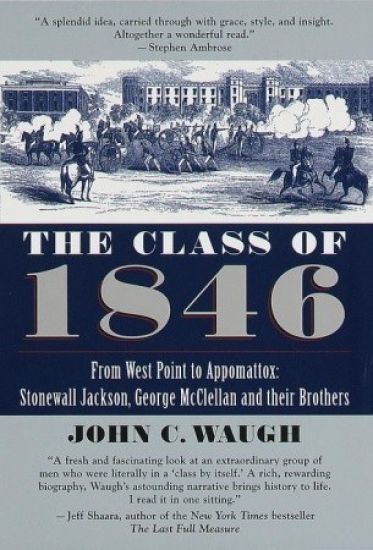
No single group of men at West Point--or possibly any academy--has been so indelibly written into history as the class of 1846. The names are legendary: Thomas "Stonewall" Jackson, George B. McClellan, Ambrose Powell Hill, Darius Nash Couch, George Edward Pickett, Cadmus Marcellus Wilcox, and George Stoneman. The class fought in three wars, produced twenty generals, and left the nation a lasting legacy of bravery, brilliance, and bloodshed.This fascinating, remarkably intimate chronicle traces the lives of these unforgettable men--their training, their personalities, and the events in which they made their names and met their fates. Drawing on letters, diaries, and personal accounts, John C. Waugh has written a collective biography of masterful proportions, as vivid and engrossing as fiction in its re-creation of these brilliant figures and their pivotal roles in American history. "A splendid idea, carried through with grace, style, and insight. Altogether a wonderful read."--STEPHEN E. AMBROSE"A fresh and fascinating look at an extraordinary group of men who were literally in a 'class by itself.' A rich, rewarding biography, Waugh's astounding narrative brings history to life. I read it in one sitting."--Jeff Shaara Author of the New York Times bestseller The Last Full Measure"Finally and tragically, brothers became enemies in America's bloodiest conflict, a progression vividly traced in The Class of 1846. . . . [Waugh] has done his homework well, and has deftly translated his findings into a . . . compelling narrative that follows the fate of that class from plebe days to Appomattox and beyond. . . . The Class of 1846 belongs on the shelf of not only Civil War buffs but also students of all military history."--The New York Times Book Review
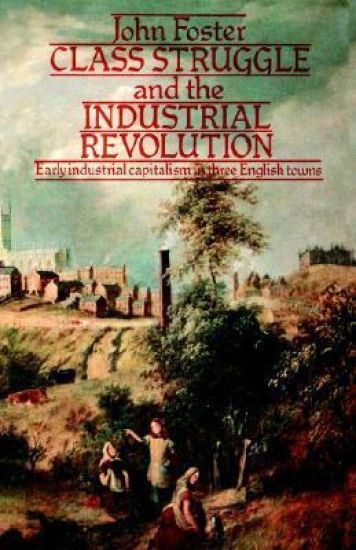
Class Struggle and the Industrial Revolution represents both a continuation of, and a stark contrast to, the impressive tradition of social history which has grown up in Britain in the last two decades. Its use of sophisticated quantitative techniques for the dissection of urban social structures will serve as a model for subsequent research workers. This work examines the impact of industrialization on the social development of the cotton manufacturing town of Oldham from 1790-1860; in particular how the experience of industrial capitalism aided the formation of a coherent organized mass class consciousness capable by 1830 of controlling all the vital organs of local government in the town. This will be a useful study to any student of the industrial revolution.
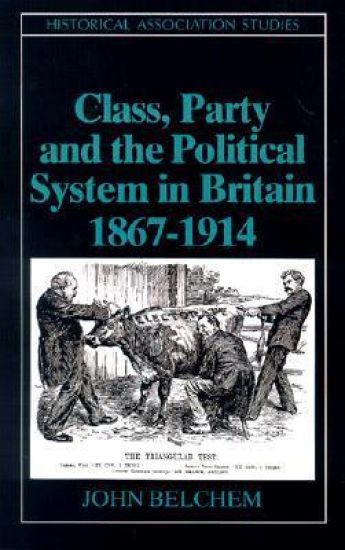
Class, Party and the Political System in Britain 1867 - 1914
John Belchem
Blackwell Publishers
1990
nidottu
Insight into the politics of Victorian and Edwardian BritainHistoric changes in British politics are examined in Class, Party and the Political System in Britain 1867-1914. The book takes readers through the time period beginning with the second Reform Act and into World War I. It looks at the political behavior in Britain during this time and how it changed decisively. Readers can gain insight into the complex and controversial issues found in the politics of late-Victorian and Edwardian Britain. The author clarifies how class and political party affected local and national politics.

Class and Stratification: Context, Audience and Agenda
John Holmwood
SAGE PUBLICATIONS LTD
2026
sidottu
The classic historical interpretation of the late nineteenth and early twentieth centuries in America sees this period as a political search for order by the middle class, culminating in Progressive Era reforms. In The Middle-Class City, John Hepp examines transformations in everyday middle-class life in Philadelphia between 1876 and 1926 to discover the cultural roots of this search for order. By looking at complex relationships among members of that city's middle class and three largely bourgeois commercial institutions-newspapers, department stores, and railroads-Hepp finds that the men and women of the middle class consistently reordered their world along rational lines. According to Hepp, this period was rife with evidence of creative reorganization that served to mold middle-class life. The department store was more than just an expanded dry goods emporium; it was a middle-class haven of order in the heart of a frenetic city-an entirely new way of organizing merchandise for sale. Redesigned newspapers brought well-ordered news and entertainment to middle-class homes and also carried retail advertisements to entice consumers downtown via train and streetcar. The complex interiors of urban railroad stations reflected a rationalization of space, and rail schedules embodied the modernized specialization of standard time. In his fascinating investigation of similar patterns of behavior among commercial institutions, Hepp exposes an important intersection between the histories of the city and the middle class. In his careful reconstruction of this now vanished culture, Hepp examines a wide variety of sources, including diaries and memoirs left by middle-class women and men of the region. Following Philadelphians as they rode trains and trolleys, read newspapers, and shopped at department stores, he uses their accounts as individualized guidebooks to middle-class life in the metropolis. And through a creative use of photographs, floor plans, maps, and material culture, The Middle-Class City helps to reconstruct the physical settings of these enterprises and recreate everyday middle-class life, shedding new light on an underanalyzed historical group and the cultural history of twentieth-century America.

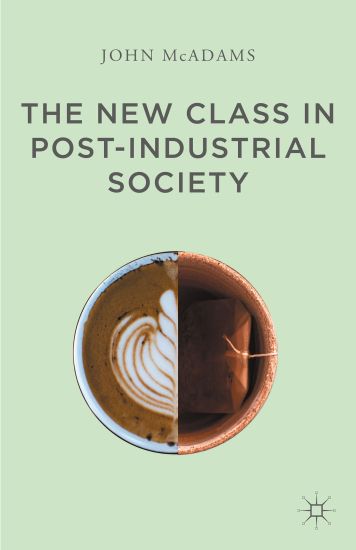
The traditional class analysis of politics in industrial societies described a conflict that pitted the well-off business class against the working class in a "democratic class struggle." This book holds that economic development has produced a New Class which rivals the business class in the politics of post-industrial societies.
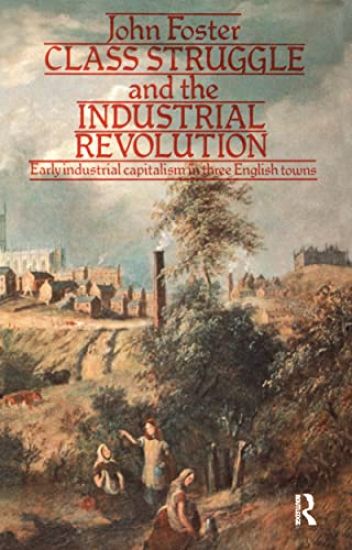
Class Struggle and the Industrial Revolution represents both a continuation of, and a stark contrast to, the impressive tradition of social history which has grown up in Britain in the last two decades. Its use of sophisticated quantitative techniques for the dissection of urban social structures will serve as a model for subsequent research workers. This work examines the impact of industrialization on the social development of the cotton manufacturing town of Oldham from 1790-1860; in particular how the experience of industrial capitalism aided the formation of a coherent organized mass class consciousness capable by 1830 of controlling all the vital organs of local government in the town. This will be a useful study to any student of the industrial revolution.

Like many of my friends I didn’t really realise that I was working class until I went to university. Suddenly, what I thought as normal became subtly and not so subtly differentiated as I came into close contact with the middle classes. I had not known a time, though, when I hadn’t been white, but I didn’t really realise that I was white until I read David Roediger’s (1991) book ‘The Wages of Whiteness’. Through reading this work and others on the topic of whiteness the sense of my own whiteness became palpable to me. Namely, that what I naively thought to be a timeless property of my skin was a social construction that had acquired so much symbolic weight over time that it had become seemingly real: a racial formation and project. This was with consequences, in that a good part of my actual and psychological labour market and other employment benefits were not part of a meritocratic system, but due to the oppression of people of colour. This might be part of a system that I at the time associated only with the far-right, a system of white supremacy. Fundamentally, my skin was property and the gains that I had made through it were at the expense of others. I was a ‘so called white’ (Ignatiev and Garvey, 1996) who everyday made a political decision to not commit ‘treason’ to whiteness.
The Commercial Class Book: Or Young Merchant's Compendium (1849)
John Henry Freese
KESSINGER PUBLISHING, LLC
2008
nidottu
The Historical Class Book Or Readings In Modern History: From The Reformation In 1517, To The Peace Of Pekin In 1860 (1861)
John Davenport
KESSINGER PUBLISHING, LLC
2008
nidottu
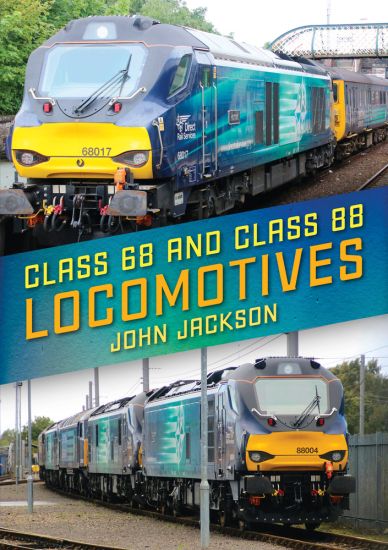
In 2012, Direct Rail Services (DRS) placed an order with Vossloh (now Stadler Rail) for its first Class 68 diesel locomotives. The fleet size has now grown to thirty-four. Their later order was for ten Class 88 locomotives, an electro-diesel variant of the Class 68. Since delivery, the 68s have worked alongside the operator’s fleet of ageing, so-called ‘heritage’, locos. With these locos now at their disposal, they are surely destined to be the mainstay of the company’s fleet for some time to come. In addition to their use as a mixed traffic locomotive for DRS themselves, the company lease these locos to passenger train operators such as Scotrail and Chiltern Railways. Their wide range of duties is covered in this book. Here, John Jackson tracks the first few years of their use on an increasing variety of workings.

Although the bulk of the Southern Region was either electrified by the late 1950s or was planned for future electrification, there remained a need for some diesel traction for the region. The result was the 98-strong Class 33, with the first of the class entering service in 1958. With three sub-classes, including the narrower 33/2 for use over the line to Hastings via Tunbridge Wells, the class was associated with the SR for the bulk of its career, although a small number were also used for a brief period on Cardiff-Crewe services. While the entire class was withdrawn by 1999, the rise of private operators has seen a significant number of the class remain operational with others also entering preservation. This carefully constructed pictorial tribute to the Class 33s includes over 250 colour and black and white illustrations recording the great variety of operations in which the class has been involved. Preservationists will find this an absorbing read; modellers too will find it an essential reference as virtually every layout featuring the Southern Region from 1958 onwards should feature at least one of this type. All this at a time when the class is entering the twilight of its career and of increasing interest.
Coaching World Class Basics: A practical book for anybody who wants to be a great coach based upon success in sports, business and the military plu
John R. Neal
Createspace Independent Publishing Platform
2013
nidottu