Kirjojen hintavertailu. Mukana 11 342 296 kirjaa ja 12 kauppaa.

Kirjahaku

Etsi kirjoja tekijän nimen, kirjan nimen tai ISBN:n perusteella.

1000 tulosta hakusanalla Joseph Butler

The Diary of Joseph Farington

The Diary of Joseph Farington

Joseph Farington

Yale University Press
1982
sidottu
The ninth and tenth volumes of the diary cover the years from January 1808 up to December 1810. Among the public events that preoccupy Joseph Farington are the wars in Europe and South America and the spectacular scandal that erupted in 1809 over Duke of York’s association with Mary Anne Clark.This period finds Farington embarking on extended tours—one to the north of England and two to the West Country—making sketches to illustrate the survey of Britain, Britannica Depicta, compiled by his friends Samuel and Daniel Lysons. Farington’s association with this and other projects for the publishers Cadell and Davies involves him in negotiations with many engravers, among them Joseph Landseer, James Heath, and Samuel Middiman.Within the Royal Academy (to which Landseer is pressing that a number of engravers be admitted) feelings run high over the lecture by John Soane criticizing the architecture of Covent Garden Theatre, which was the work of Robert Smirke, the son of Farington’s oldest friends. At the end of 1810 Farington is occupied with assessing Robert Smirke’s prospects at the coming election of academicians. In common with many others in the diarist’s wide circle of acquaintances, Thomas Lawrence and John Constable continue to seek Farington’s advice on professional and practical affairs. Published for the Paul Mellon Centre for Studies in British Art.
The Diary of Joseph Farington

The Diary of Joseph Farington

Joseph Farington

Yale University Press
1983
sidottu
These eleventh and twelfth volumes of Farington's famous diaries gives his accounts of Academy exhibitions from 1811 to 1813 and discuss the political events of the time. Published for the Paul Mellon Centre for studies in British art.
The Diary of Joseph Farington

The Diary of Joseph Farington

Joseph Farington

Yale University Press
1984
sidottu
Joseph Farington (1747-1821), a respectable though not outstanding painter, was active in the social, cultural, and professional art world of his time. His voluminous diaries enrich our perception of this lively and productive age.Volumes XIII and XIV of the diaries take Farington past his seventieth birthday but show that his keen interest in public and artistic affairs remained undiminished. He rejoices at the end of the long war with France, deplores the conduct of Lord Byron, approves the suspension of the Habeas Corpus Act, and speculates about the probable authorship of the attack on prominent connoisseurs in the catalogue raisonné of the British Institution exhibition. In private life, Farington survives a financial disaster, and campaigns tirelessly to secure the promotion of a nephew to the rank of Post Captain in the Royal Navy.
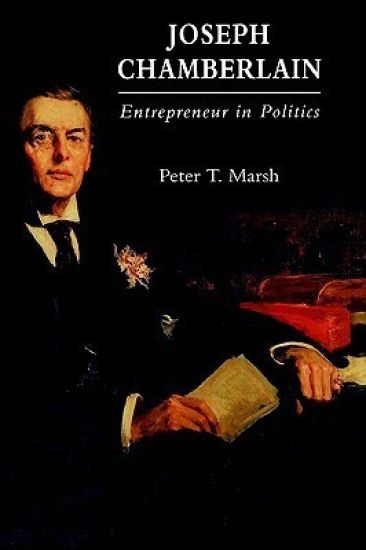
Joseph Chamberlain

Joseph Chamberlain

Peter Marsh

Yale University Press
1994
sidottu
Joseph Chamberlain (1836-1914) was the first industrialist to reach the highest sphere of British politics. Notably successful as a young man in Birmingham's metal-manufacturing industry, he tackled politics as business—venture by venture, innovative in organization as well as product, alert to the importance of accounting and marketing. Aggressive and direct in both personality and principle, he was loyal to enterprise rather than to party. He never became prime minister, yet by the beginning of the twentieth century he was by general consent "the first minister of the British Empire."This book by Peter T. Marsh is the first complete, archivally based, single-volume biography of Chamberlain. Skillfully dissecting his political career, Marsh reveals Chamberlain's radically fresh approach to most of Britain's problems between the Second Reform Act and the First World War. He also highlights the distortions and discontinuities: the breach with Gladstone over Irish Home Rule, which drove Chamberlain from the left of the Liberal party into enduring alliance with the Conservative right; how Chamberlain came to be the champion of the House of Lords instead of its scourge; the cause and effects of Chamberlain's shift from free trader to protectionist. In addition, Marsh explains Chamberlain's internationalism, his involvement in South Africa, Canada, and the United States, and his sustained campaign to develop the Empire's "undeveloped estates."Searching and judicious, the book evokes the contradictions in Chamberlain's personality and private life, his vigor, intensity, and imperious self-confidence along with his inner desolation and lifelong nervous strain. Finely written and argued, the book makes compelling reading, presenting the story of a life that is one of the most absorbing in modern British politics.
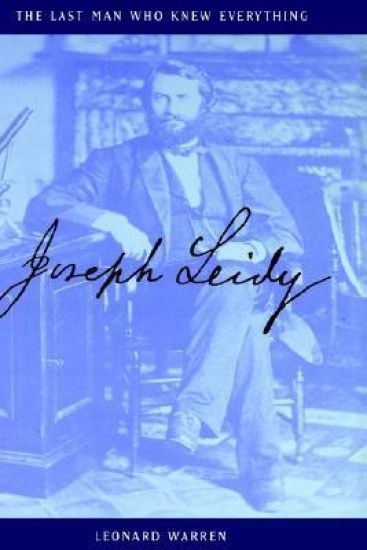
Joseph Leidy

Joseph Leidy

Leonard Warren

Yale University Press
1998
sidottu
Contemporaries of the modest and unassuming scientist Joseph Leidy (1823–91) revered him as the supreme consultant in questions relating to human anatomy, paleontology, protozoology, parasitology, anthropology, mineralogy, botany, and numerous other scientific fields. Leidy’s achievements and the breadth of his scientific interests and knowledge were astonishing. He seemed, in short, to be the man who knew everything.This is the first published biography of the remarkable Joseph Leidy—a leading American scientist of the mid-nineteenth century, the foremost human anatomist of his time, the first truly productive microscopist, the author of numerous groundbreaking scientific papers and books, and a devoted professor at the University of Pennsylvania and Swarthmore College. An unflagging pioneer and an exceptional illustrator, Leidy was the first in America to use the microscope as a tool in forensic medicine. He established the concept of parasitism in America. He was also the father of American protozoology and parasitology, describing for the first time Trichina in the pig, the source of the human disease trichinosis. As the founder of American vertebrate paleontology, he was the first to describe a dinosaur and many other extinct animals in America. Leonard Warren provides a full account of Leidy’s life and accomplishments and sets them in the social and historical context of Philadelphia and the United States in Leidy’s day. Warren also explores the reasons for the puzzling disparity between Leidy’s fame and recognition during his life and virtual anonymity a century after his death.
The Diary of Joseph Farington

The Diary of Joseph Farington

Joseph Farington

Yale University Press
1998
sidottu
Joseph Farington (1747-1821) was a professional landscape and topographical artist. Through his extensive involvement in the affairs of the Royal Academy and his wide circle of friends he was extraordinarily well-informed about the affairs of his day. His diary, which he kept meticulously from 1793 until his death, was published by Yale University Press in sixteen volumes between 1978 and 1984. It comprises not only a detailed record of his actions and observations as an influential figure in the London art world but is also an absorbing record of the social, political, and literary developments of the period. The long-awaited index volume provides access to Farington’s fascination with criminal trials, elections, and frequent Royal scandals of the day as well as the recurrent subject of the French Revolution and Napoleonic Wars in Europe.
Joseph Brodsky

Joseph Brodsky

Lev Loseff

Yale University Press
2012
pokkari
An intimate, penetrating study of Joseph Brodsky’s life and work, written by his lifelong friend, the eminent Russian literary scholar Lev Loseff The work of Joseph Brodsky (1940–1996), one of Russia’s great modern poets, has been the subject of much study and debate. His life, too, is the stuff of legend, from his survival of the siege of Leningrad in early childhood to his expulsion from the Soviet Union and his achievements as a Nobel Prize winner and America’s poet laureate. In this penetrating biography, Brodsky’s life and work are illuminated by his great friend, the late poet and literary scholar Lev Loseff. Drawing on a wide range of source materials, some previously unpublished, and extensive interviews with writers and critics, Loseff carefully reconstructs Brodsky’s personal history while offering deft and sensitive commentary on the philosophical, religious, and mythological sources that influenced the poet’s work. Published to great acclaim in Russia and now available in English for the first time, this is literary biography of the first order, and sets the groundwork for any books on Brodsky that might follow.
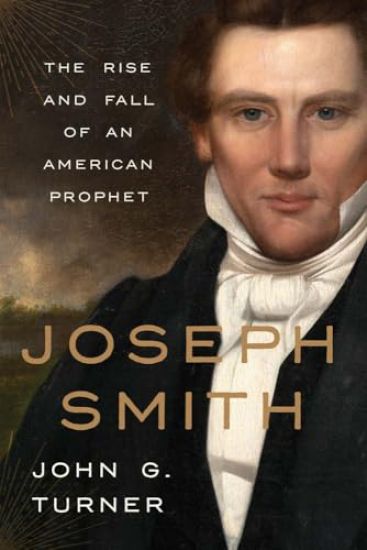
Joseph Smith

Joseph Smith

John G. Turner

YALE UNIVERSITY PRESS
2025
sidottu
From an award-winning biographer, a riveting and deeply researched portrait of Mormonism’s charismatic founder Joseph Smith Jr. (1805–1844) was one of the most successful and controversial religious leaders of nineteenth-century America, publishing the Book of Mormon and starting what would become the Church of Jesus Christ of Latter-day Saints. He built temples, founded a city-state in Illinois, ran for president, and married more than thirty women. This self-made prophet thrilled his followers with his grand vision of peace and unity, but his increasingly grandiose plans tested and sometimes shattered their faith. In this vivid biography, John G. Turner presents Smith as a consummate religious entrepreneur and innovator, a man both flawed and compelling. He sold books, land, and merchandise. And he relentlessly advanced doctrines that tapped into anxieties about the nature and meaning of salvation, the validity of miracles, the timing of Christ’s second coming, and the persistence of human relationships for eternity. His teachings prompted people to gather into communities, evoking fierce opposition from those who saw those communities as theocratic threats to republicanism. With insights from newly accessible diaries, church records, and transcripts of sermons, Turner illuminates Smith’s stunning trajectory, from his beginnings as an uneducated, impoverished farmhand to his ultimate fall at the hands of a murderous mob, revealing how he forged a religious tradition that has resonated with millions of people in the United States and beyond.
Joseph E. Yoakum

Joseph E. Yoakum

Yale University Press
2021
sidottu
The extraordinary life of a captivating American artist, beautifully illustrated with his dreamlike drawings Much of Joseph Elmer Yoakum’s story comes from the artist himself—and is almost too fantastic to believe. At a young age, Yoakum (1891–1972) traveled the globe with numerous circuses; he later served in a segregated noncombat regiment during World War I before settling in Chicago. There, inspired by a dream, he began his artistic career at age seventy-one, producing some two thousand drawings over a decade. How did Yoakum gain representation in major museum collections in Chicago and New York? What fueled his process, which he described as a “spiritual unfoldment”? This volume delves into the friendships Yoakum forged with the Chicago Imagists that secured his place in art history, explores the religious outlook that may have helped him cope with a racially fractured city, and examines his complicated relationship to African American and Native American identities. With hundreds of beautiful color reproductions of his dreamlike drawings, it offers the most comprehensive study of the artist’s work, illuminating his vivid and imaginative creativity and giving definition and dimension to his remarkable biography.Distributed for the Art Institute of ChicagoExhibition Schedule:The Art Institute of Chicago (June 12–October 18, 2021)Museum of Modern Art, New York (November 28, 2021–March 18, 2022)Menil Collection, Houston (April 22–August 7, 2022)
Joseph Smith: The Rise and Fall of an American Prophet
From an award-winning biographer, a riveting and deeply researched portrait of Mormonism's charismatic founder Joseph Smith Jr. (1805-1844) was one of the most successful and controversial religious leaders of nineteenth-century America, publishing the Book of Mormon and starting what would become the Church of Jesus Christ of Latter-day Saints. He built temples, founded a city-state in Illinois, ran for president, and married more than thirty women. This self-made prophet thrilled his followers with his grand vision of peace and unity, but his increasingly grandiose plans tested and sometimes shattered their faith. In this vivid biography, John G. Turner presents Smith as a consummate religious entrepreneur and innovator, a man both flawed and compelling. He sold books, land, and merchandise. And he relentlessly advanced doctrines that tapped into anxieties about the nature and meaning of salvation, the validity of miracles, the timing of Christ's second coming, and the persistence of human relationships for eternity. His teachings prompted people to gather into communities, evoking fierce opposition from those who saw those communities as theocratic threats to republicanism. With insights from newly accessible diaries, church records, and transcripts of sermons, Turner illuminates Smith's stunning trajectory, from his beginnings as an uneducated, impoverished farmhand to his ultimate fall at the hands of a murderous mob, revealing how he forged a religious tradition that has resonated with millions of people in the United States and beyond.
Joseph P. Kennedy Presents: His Hollywood Years
Joseph P. Kennedy's reputation as a savvy businessman, diplomat, and sly political patriarch is well-documented. But his years as a Hollywood mogul have never been fully explored until now. In Joseph P. Kennedy Presents, Cari Beauchamp brilliantly explores this unknown chapter in Kennedy's biography. Between 1926 and 1930, Kennedy positioned himself as a major Hollywood player. In two short years, he was running three studios simultaneously and then, in a bold move, he merged his studios with David Sarnoff to form the legendary RKO Studio. Beauchamp also tells the story of Kennedy's affair with Gloria Swanson; how he masterminded the mergers that created the blueprint for contemporary Hollywood; and made the fortune that became the foundation of his empire.
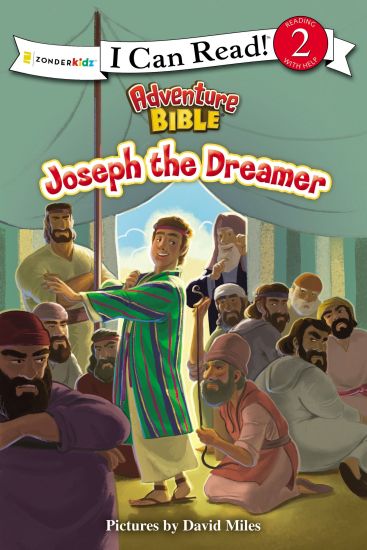
Joseph the Dreamer
Joseph may be his father’s favorite son, but his brothers feel differently about him. So they sell him into slavery in Egypt. Will Joseph forgive his brothers? Can God turn a bad situation into a big blessing?This is a Level Two I Can Read! book, which means it’s perfect for children learning to sound out words and sentences. It aligns with guided reading level J and will be of interest to children Pre-K to 3rd grade.
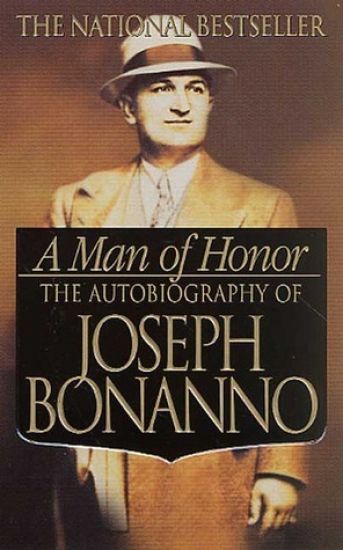
A Man of Honor: The Autobiography of Joseph Bonanno
Friendships, connections, family ties, trust, loyalty, obedience-this was the 'glue' that held us together. These were the principles that the greatest Mafia Boss if Bosses, Joseph Bonnano, lived by. Born in Castellammare del Golfo, Sicily, Bonnano found his future amid the whiskey-running, riotous streets of Prohibition America in 1924, when he illegally entered the United States to pursue his dreams. By the age of only twenty-six, Bonnano became a Don. He would eventually take over the New York underworld, igniting the Castellammarese War, one of the bloodiest Family battles ever to hit New York City... Now, in this candid and stunning memoir, Joe Bonanno-likely a model for Don Corleone in the blockbuster movie The Godfather-takes readers inside the world of the real Mafia. He reveals the inner workings of New York's Five Families-Bonanno, Gambino, Profaci, Lucchese, and Genovese-and uncovers how the Mafia not only dominated local businesses, but also influenced national politics. A fascinating glimpse into the world of crime, A Man of Honor is an unforgettable account of one of the most powerful crime figures in America's history.
Joseph Conrad and American Writers

Joseph Conrad and American Writers

Debra A Moddelmog; Robert Secor

Greenwood Press
1985
sidottu
This bibliographical study records a wealth of significant references connecting Joseph Conrad to American writers (and vice versa) and illuminating his influence on their work. It lists and fully annotates any book or essay that discusses the relationship between Conrad and American writers. Chapters deal with Conrad's relation to writers ranging from James Fenimore Cooper to Ernest Hemingway. The final section examines Conrad's influence on a number of modern American writers, in addition to his works portrayed by American filmmakers and his visit to America. The indexes list the authors in the bibliography, American writers and their works in relation to Conrad, and Conrad's own works. A concise chronology of Conrad's life and an introductory essay surveying the findings of the bibliography and assessing their significance appear at the beginning of the volume.
Joseph Chaikin

Joseph Chaikin

Alex Gildzen; Dimitris Karageorgiou

Greenwood Press
1992
sidottu
Few theater artists are as revered by their peers as Joseph Chaikin, whose Open Theater is regarded as one of the most influential ensembles to perform on international stages. A glance at the index to this volume reveals the many eminent colleagues and admirers associated with Chaikin in his long and brilliant career. This first bibliographical study of Chaikin explores and documents his activities as actor, director, writer, and teacher, with major sections devoted to productions, live and recorded, and primary and secondary bibliography. The biographical sketch utilizes the assembled bibliographical materials, published and unpublished, including Chaikin's papers at Kent State University Libraries, which are cataloged here for the first time. Printed as an appendix is a previously unpublished letter Chaikin wrote to his company, which effectively expresses aspects of his philosophy and personality.
Joseph Papp

Joseph Papp

Barbara L. Horn

Greenwood Press
1992
sidottu
Theater critic Jerry Tallmer, remarking on Joseph Papp's death on October 31, 1991, said, He was a guy from Brooklyn who had a passion for Shakespeare and a passion for people. He was able to combine the two like no one else ever did. Barbara Horn, documenting Papp's career, declares it to have been inextricably tied to that of the New York Shakespeare Festival, which Papp founded in 1954, serving as its artistic leader for 37 years, and which survives him. His dream of producing free Shakespeare in the Park was expanded into the largest arts institution in the United States, combining Shakespeare with innovative contemporary theater performed at his nonprofit Public Theater as well as in New York City parks and schools. Papp produced some 450 plays, directing over 40. He nurtured some of the greatest playwriting talents, including Vaclav Havel, David Mamet, David Rabe, David Henry Hwang, John Guare, and Tina Howe, and provided opportunities for fledgling actors, among them George C. Scott, Colleen Dewhurst, James Earl Jones, Al Pacino, Kevin Kline, Raul Julia, Meryl Streep, and William Hurt. Public Theater plays such as Hair, A Chorus Line, and That Championship Season became huge hits on Broadway.Papp's productions, most with the New York Shakespeare Festival, are thoroughly documented, with credits, runs, synopses, and review commentary in this reference guide, which also includes a chronology of Papp's life and career, a biographical sketch, an annotated bibliography of works by and about Papp, and appendixes on film and television credits, related activities, and awards. Indexes of authors of bibliographic works, of playwrights and playtitles, and of production crew and cast complete the work.
Joseph Chamberlain, 1836-1914

Joseph Chamberlain, 1836-1914

Scott Newton; Dilwyn Porter

Greenwood Press
1994
sidottu
Joseph Chamberlain's political career was immense, embracing the campaign for state education, municipal reform, opposition to Irish home rule, social reform, foreign and colonial affairs, and imperial preference. He was a formative influence on the development of party politics in late Victorian and Edwardian England. This bibliography provides the most comprehensive survey to date of primary and secondary material relating to this seminal figure.The bibliographical references listed in the volume cover every stage and aspect of Chamberlain's controversial career. Editorial comments are designed to assist the student and the researcher. The work also cites key articles detailing Chamberlain's relationship with the press and surveys the abundant political ephemera provoked by his career. In addition, the volume includes a chronology, biographical essay, and indexes. The volume seeks to provide a starting point for historians and other researchers interested in Chamberlain, his politics, and the conflicts his career engendered.