Kirjojen hintavertailu. Mukana 11 699 587 kirjaa ja 12 kauppaa.

Kirjahaku

Etsi kirjoja tekijän nimen, kirjan nimen tai ISBN:n perusteella.

1000 tulosta hakusanalla Joseph Traugott

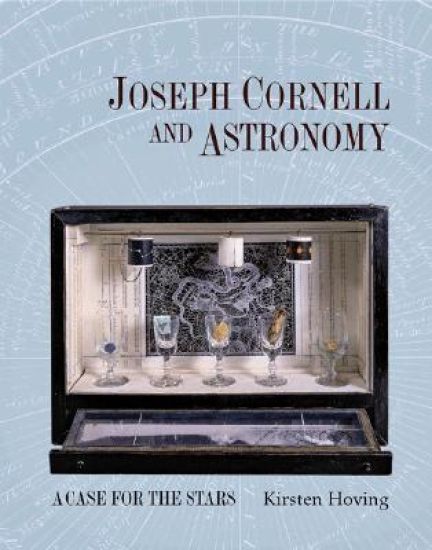
Joseph Cornell and Astronomy

Joseph Cornell and Astronomy

Kirsten Hoving

Princeton University Press
2008
sidottu
Joseph Cornell and Astronomy provides an in-depth look at one artist's intense fascination with the science of astronomy. Joseph Cornell (1903-72) has often been viewed as a recluse, isolated in his home on Utopia Parkway, lost in the fairy tales and charming objects of his collages and assemblage boxes. Less commonly known has been Cornell's vested and serious interest in the history of astronomy and the cutting-edge discoveries made during his own lifetime. An avid reader, he amassed a library of books and articles about science and astronomy, and his reflections about these subjects had a direct impact on his art. This book explores why astronomy captivated Cornell, and considers hundreds of his works--found-footage films, three-dimensional space-object boxes, enigmatic collages, and cosmic ephemera--that contain references to astronomical phenomena. Kirsten Hoving considers Cornell's enormous collection of astronomy materials, ranging from eighteenth-century books to recent works; newspaper and magazine articles that Cornell clipped and sorted; and diary entries of his observations while stargazing in his backyard. She examines how Cornell explored many dimensions of astronomy through his identities as a Christian Scientist and surrealist artist. Unfolding Cornell's work with depth and breadth, Joseph Cornell and Astronomy offers a convincing and original appreciation of this intriguing American artist.
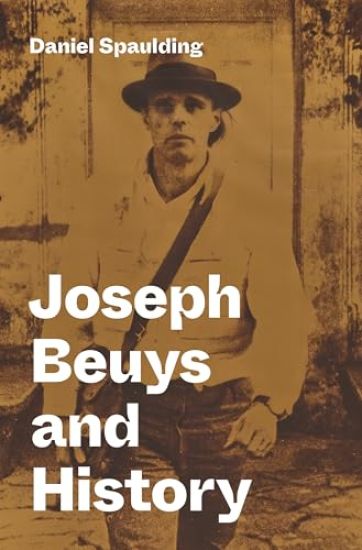
Joseph Beuys and History

Joseph Beuys and History

Daniel Spaulding

PRINCETON UNIVERSITY PRESS
2026
sidottu
A groundbreaking study of one of the most important and influential artists of the postwar periodJoseph Beuys (1921–1986) was one of the most significant artists of the twentieth century—and one of the most controversial. Working in Germany in the aftermath of World War II, he explored a radically expanded concept of art through a practice that ranged from performative actions to large-scale sculptural ensembles. While some contemporaries found his claim that “everyone is an artist” liberating, even revolutionary, others accused him of fostering a dangerous cult of personality. In Joseph Beuys and History, the first rigorous art historical study of the artist in English, Daniel Spaulding presents a striking new interpretation of Beuys’s work and career. By putting Beuys in the context of Germany’s postwar recovery, Spaulding shows that the artist’s superimposed biological, political, and economic metaphors offered a powerful way to think about the trajectory of human freedom, the place of art in capitalist modernity, and the possibility of an ecological aesthetics. At the same time, his oeuvre’s disquieting echoes of the Nazi past suggest that not everything could be reconciled in what Beuys called “social sculpture.”A definitive account of an often-misunderstood figure, Joseph Beuys and History proposes an ambitious rewriting of the dominant narrative of modern and contemporary art, drawing from Marxian value-form theory, Hans Blumenberg’s “metaphorology,” and ecological thought. Precisely because Beuys went to the extremes of art, the book demonstrates, he belongs at the center of its history.
Joseph Brodsky and the Creation of Exile

Joseph Brodsky and the Creation of Exile

David M. Bethea

Princeton University Press
2014
pokkari
Joseph Brodsky, one of the most prominent contemporary American poets, is also among the finest living poets in the Russian language. Nevertheless, his poetry and the crucial bilingual dimension of his poetic world are still insufficiently understood by Western audiences. How did the Russian-born Brodsky arrive at his present status as an international man of letters and American poet laureate? Has he been created by his bilingual experience, or has he fashioned the bilingual self as a necessary precondition for writing poetry in the first place? Here David Bethea suggests that the key to Brodsky, perhaps the last of the great Russian poets in the "bardic" mode, is in his relation to others, or the Other. Brodsky's master trope turns out to be "triangular vision," the tendency to mediate a prior model (Dante) with a closer model (Mandelstam) in the creation of a palimpsest-like text in which the poet is implicated as a triangulated hybrid of these earlier incarnations. In pursuing this theme, Bethea compares and contrasts Brodsky to the poet's favorite models--Donne, Auden, Mandelstam, and Tsvetaeva--and analyzes his fundamental differences with Nabokov, the only Russian exile of Brodsky's stature to rival him as a bilingual phenomenon. Various critical paradigms are used throughout the study as foils to Brodsky's thinking. Originally published in 1994. The Princeton Legacy Library uses the latest print-on-demand technology to again make available previously out-of-print books from the distinguished backlist of Princeton University Press. These editions preserve the original texts of these important books while presenting them in durable paperback and hardcover editions. The goal of the Princeton Legacy Library is to vastly increase access to the rich scholarly heritage found in the thousands of books published by Princeton University Press since its founding in 1905.
Joseph Alois Schumpeter

Joseph Alois Schumpeter

Wolfgang F. Stolper

Princeton University Press
2019
pokkari
In this major scholarly study of the life of Joseph A. Schumpeter, one of the great intellectual figures of the twentieth century, the distinguished economist Wolfgang Stolper delves into the mind of his former teacher, exploring the development of his ideas and, especially, their influence on politics and public policy. After reflecting briefly on Schumpeter the man, Stolper explains the evolution of Schumpeter's work, particularly his insights during the 1920s on public finance, his contributions to monetary theory and the study of business cycles, and his writings on socialism. Stolper goes on to desribe and evaluate Schumpeter's public activities following World War I and his role as a finance minister, placing the development of his thought in the turbulence political context of his times.Drawing on a vast array of new and exciting sources, Stolper paints a portrait of his mentor as a decent, ambitious, and complex man whose many insights into economy and society found their way outside of the academy and into the practical world of economic policy. All readers interested in the history of economic thought and twentieth-century political and intellectual history will find this book invaluable.Wolfgang Stolper is Professor Emeritus of Economics at the University of Michigan. He is author of The Structure of the East German Economy and Planning Without Facts and has made seminal contributions to international economics.Originally published in 1994.The Princeton Legacy Library uses the latest print-on-demand technology to again make available previously out-of-print books from the distinguished backlist of Princeton University Press. These editions preserve the original texts of these important books while presenting them in durable paperback and hardcover editions. The goal of the Princeton Legacy Library is to vastly increase access to the rich scholarly heritage found in the thousands of books published by Princeton University Press since its founding in 1905.
Joseph Conrad

Joseph Conrad

Bernard Constant Meyer

Princeton University Press
2015
pokkari
Joseph Conrad once voiced the hope that from the reading of his pages might "emerge at last the vision of a personality: the man behind the books ...a coherent justifiable personality both in its origin and its actions." Dr. Meyer arrives at a unified picture of Conrad's personality by applying psychoanalytic principles and insights to two main sets of data on Conrad: his unusual history and his creative work. Basic psychological and emotional patterns appear repetitively, and Dr. Meyer concludes that Conrad's art served an important psychological function in his life--the achievement through his creative fiction of a corrective revision of painful reality. Originally published in 1967. The Princeton Legacy Library uses the latest print-on-demand technology to again make available previously out-of-print books from the distinguished backlist of Princeton University Press. These editions preserve the original texts of these important books while presenting them in durable paperback and hardcover editions. The goal of the Princeton Legacy Library is to vastly increase access to the rich scholarly heritage found in the thousands of books published by Princeton University Press since its founding in 1905.
Joseph Pulitzer and the New York World

Joseph Pulitzer and the New York World

George Juergens

Princeton University Press
2015
pokkari
To determine how and why Pulitzer turned the unsuccessful New York World into the most widely read and probably the most prosperous newspaper in the country, Professor Juergens isolates and analyzes the special qualities of Pulitzer's new style of journalism. Originally published in 1966. The Princeton Legacy Library uses the latest print-on-demand technology to again make available previously out-of-print books from the distinguished backlist of Princeton University Press. These editions preserve the original texts of these important books while presenting them in durable paperback and hardcover editions. The goal of the Princeton Legacy Library is to vastly increase access to the rich scholarly heritage found in the thousands of books published by Princeton University Press since its founding in 1905.
Joseph Brodsky and the Creation of Exile

Joseph Brodsky and the Creation of Exile

David M. Bethea

Princeton University Press
2016
sidottu
Joseph Brodsky, one of the most prominent contemporary American poets, is also among the finest living poets in the Russian language. Nevertheless, his poetry and the crucial bilingual dimension of his poetic world are still insufficiently understood by Western audiences. How did the Russian-born Brodsky arrive at his present status as an international man of letters and American poet laureate? Has he been created by his bilingual experience, or has he fashioned the bilingual self as a necessary precondition for writing poetry in the first place? Here David Bethea suggests that the key to Brodsky, perhaps the last of the great Russian poets in the "bardic" mode, is in his relation to others, or the Other. Brodsky's master trope turns out to be "triangular vision," the tendency to mediate a prior model (Dante) with a closer model (Mandelstam) in the creation of a palimpsest-like text in which the poet is implicated as a triangulated hybrid of these earlier incarnations. In pursuing this theme, Bethea compares and contrasts Brodsky to the poet's favorite models--Donne, Auden, Mandelstam, and Tsvetaeva--and analyzes his fundamental differences with Nabokov, the only Russian exile of Brodsky's stature to rival him as a bilingual phenomenon. Various critical paradigms are used throughout the study as foils to Brodsky's thinking. Originally published in 1994. The Princeton Legacy Library uses the latest print-on-demand technology to again make available previously out-of-print books from the distinguished backlist of Princeton University Press. These editions preserve the original texts of these important books while presenting them in durable paperback and hardcover editions. The goal of the Princeton Legacy Library is to vastly increase access to the rich scholarly heritage found in the thousands of books published by Princeton University Press since its founding in 1905.
Joseph Conrad

Joseph Conrad

Bernard Constant Meyer

Princeton University Press
2016
sidottu
Joseph Conrad once voiced the hope that from the reading of his pages might "emerge at last the vision of a personality: the man behind the books ...a coherent justifiable personality both in its origin and its actions." Dr. Meyer arrives at a unified picture of Conrad's personality by applying psychoanalytic principles and insights to two main sets of data on Conrad: his unusual history and his creative work. Basic psychological and emotional patterns appear repetitively, and Dr. Meyer concludes that Conrad's art served an important psychological function in his life--the achievement through his creative fiction of a corrective revision of painful reality. Originally published in 1967. The Princeton Legacy Library uses the latest print-on-demand technology to again make available previously out-of-print books from the distinguished backlist of Princeton University Press. These editions preserve the original texts of these important books while presenting them in durable paperback and hardcover editions. The goal of the Princeton Legacy Library is to vastly increase access to the rich scholarly heritage found in the thousands of books published by Princeton University Press since its founding in 1905.
Joseph Pulitzer and the New York World

Joseph Pulitzer and the New York World

George Juergens

Princeton University Press
2016
sidottu
To determine how and why Pulitzer turned the unsuccessful New York World into the most widely read and probably the most prosperous newspaper in the country, Professor Juergens isolates and analyzes the special qualities of Pulitzer's new style of journalism. Originally published in 1966. The Princeton Legacy Library uses the latest print-on-demand technology to again make available previously out-of-print books from the distinguished backlist of Princeton University Press. These editions preserve the original texts of these important books while presenting them in durable paperback and hardcover editions. The goal of the Princeton Legacy Library is to vastly increase access to the rich scholarly heritage found in the thousands of books published by Princeton University Press since its founding in 1905.
Joseph Alois Schumpeter

Joseph Alois Schumpeter

Wolfgang F. Stolper

PRINCETON UNIVERSITY PRESS
2019
sidottu
In this major scholarly study of the life of Joseph A. Schumpeter, one of the great intellectual figures of the twentieth century, the distinguished economist Wolfgang Stolper delves into the mind of his former teacher, exploring the development of his ideas and, especially, their influence on politics and public policy. After reflecting briefly on Schumpeter the man, Stolper explains the evolution of Schumpeter's work, particularly his insights during the 1920s on public finance, his contributions to monetary theory and the study of business cycles, and his writings on socialism. Stolper goes on to desribe and evaluate Schumpeter's public activities following World War I and his role as a finance minister, placing the development of his thought in the turbulence political context of his times.Drawing on a vast array of new and exciting sources, Stolper paints a portrait of his mentor as a decent, ambitious, and complex man whose many insights into economy and society found their way outside of the academy and into the practical world of economic policy. All readers interested in the history of economic thought and twentieth-century political and intellectual history will find this book invaluable.Wolfgang Stolper is Professor Emeritus of Economics at the University of Michigan. He is author of The Structure of the East German Economy and Planning Without Facts and has made seminal contributions to international economics.Originally published in 1994.The Princeton Legacy Library uses the latest print-on-demand technology to again make available previously out-of-print books from the distinguished backlist of Princeton University Press. These editions preserve the original texts of these important books while presenting them in durable paperback and hardcover editions. The goal of the Princeton Legacy Library is to vastly increase access to the rich scholarly heritage found in the thousands of books published by Princeton University Press since its founding in 1905.
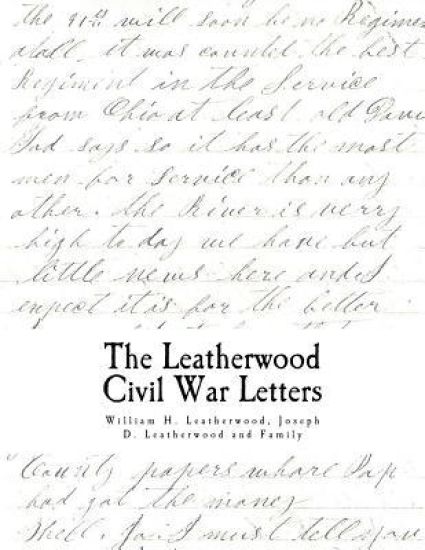
The Civil War Letters: of William H. Leatherwood, Joseph D. Leatherwood and Family
These letters were authored primarily by two brothers: William H. Leatherwood and Joseph D. Leatherwood. They demonstrate the importance of letters (communications) to the soldier and to posterity. These letters offer the perspective of men at war and all it encompasses from its fury to its boredom; from its glory to its horrors. As witnesses to war these letters speak to the times and are a testament to the perseverance of men at war - demonstrating the necessary price paid (war) to build this great nation. The editor hopes the reader will learn from the letters. Of course, none of this insight and understanding of the war and men at war would be possible without the authors of these letters sitting down around a camp fire or in a trench or under a tent and recording their thoughts and descriptions of the times they were living. Years later, it took the forethought of Lois Ellen Fenn to invest the time and effort to resurrect their thoughts and descriptions. She breathed new life into them with her transcription for posterity's sake. And we owe Mary Hadley Francis for preserving these letters and sharing them with the family and the world. This book should be included in every genealogy library across the fruited plain, owned by genealogical societies and used by Civil War reenactment organizations to bring authenticity to their plans of action. -Joseph Dalton Leatherwood, Junior, Editor
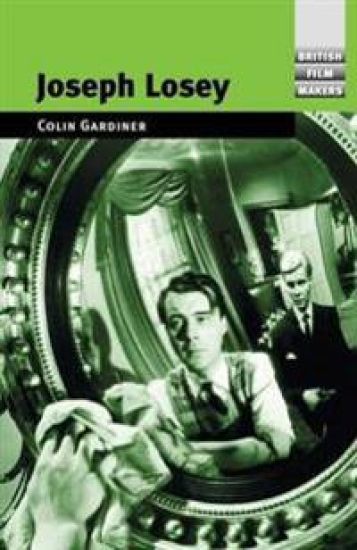
Joseph Losey

Joseph Losey

Colin Gardner

Manchester University Press
2004
nidottu
The career of Wisconsin-born Joseph Losey spanned over four decades and several countries. A self-proclaimed Marxist and veteran of the 1930s Soviet agit-prop theater, he collaborated with Bertholt Brecht before directing noir B-pictures in Hollywood. A victim of McCarthyism, he later crossed the Atlantic to direct a series of seminal British films such as "Time Without Pity," "Eve," "The Servant," and "The Go-Between," which mark him as one of the cinema's greatest baroque stylists. His British films reflect on exile and the outsider's view of a class-bound society in crisis through a style rooted in the European art house tradition of Resnais and Godard. Gardner employs recent methodologies from cultural studies and poststructural theory, exploring and clarifying the films' uneasy tension between class and gender, and their explorations of fractured temporality.
Joseph de Maistre and the legacy of Enlightenment
Although Joseph de Maistre has long been regarded as characterising the Counter-Enlightenment, his intellectual relationship to eighteenth-century philosophy remains unexplored. In this first comprehensive assessment of Joseph de Maistre’s response to the Enlightenment, a team of renowned scholars uncover a writer who was both the foe and heir of the philosophes. While Maistre was deeply indebted to thinkers who helped to fashion the Enlightenment – Rousseau, the Cambridge Platonists – he also agreed with philosophers such as Schopenhauer who adopted an overtly critical stance. His idea of genius, his critique of America and his historical theory all used ‘enlightened’ language to contradict Enlightenment principles. Most intriguingly, and completely unsuspected until now, Maistre used the writings of the early Christian theologian Origen to develop a new, late, religious form of Enlightenment that shattered the logic of philosophie.The Joseph de Maistre revealed in this book calls into question any simple opposition of Enlightenment and Counter-Enlightenment, and offers particular lessons for our own time, when religion is at the forefront of public debate and a powerful political tool.
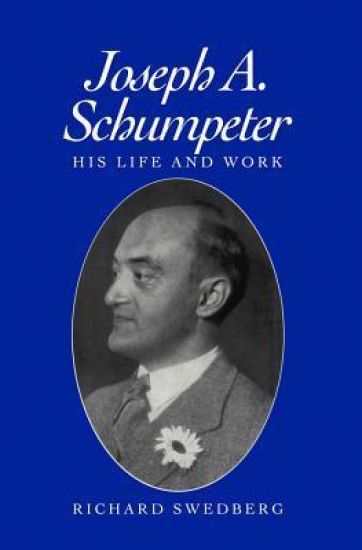
Joseph A. Schumpeter

Joseph A. Schumpeter

Richard Swedberg

Polity Press
1993
nidottu
Joseph A. Schumpeter (1883-1950) is one of the most celebrated authors on the economics and sociology of the twentieth century. Richard Swedberg's new biography provides an engaging and vivid account of Schumpeter's varied life, including his ventures into politics and private banking as well as his academic career. As a backdrop to these, Swedberg also discusses Schumpeter's tragic personal life. This book provides a thorough overview of Schumpeter's writings, and also introduces previously unpublished material based on his letters and interviews. Swedberg emphasizes that Schumpeter saw economics as a form of social investigation, consisting of four fields: economic theory, economic sociology, economic history and statistics. The author describes and analyses Schumpeter's theory of social classes and modern states as well as his more famous theory of the entrepreneur.