Kirjojen hintavertailu. Mukana 11 699 587 kirjaa ja 12 kauppaa.

Kirjahaku

Etsi kirjoja tekijän nimen, kirjan nimen tai ISBN:n perusteella.

1000 tulosta hakusanalla Joyce Rodgers

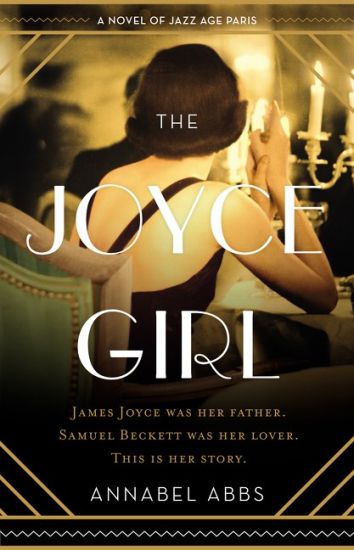
The Joyce Girl: A Novel of Jazz Age Paris

The Joyce Girl: A Novel of Jazz Age Paris

Annabel Abbs

William Morrow Company
2020
nidottu
"Abbs has found a gripping and little-known story at the heart of one of the 20th century's most astonishing creative moments, researched it deeply, and brought the extraordinary Joyce family and their circle in 1920s Paris to richly-imagined life."--Emma Darwin, bestselling author of A Secret Alchemy and The Mathematics of LoveFor readers who adored novels like The Paris Wife, Z, and Loving Frank, comes Annabel Abbs highly praised debut novel, where she spins the story of James Joyce's fascinating, and tragic, daughter, Lucia. "When she reaches her full capacity for rhythmic dancing, James Joyce may yet be known as his daughter's father . . ." The review in the Paris Times in November 1928 is rapturous in its praise of Lucia Joyce's skill and artistry as a dancer. The family has made their home in Paris--where the latest ideas in art, music, and literature converge. Acolytes regularly visit the Joyce apartment to pay homage to Ireland's exiled literary genius. Among them is a tall, thin young man named Samuel Beckett--a fellow Irish expat who idolizes Joyce and with whom Lucia becomes romantically involved. Lucia is both gifted and motivated, training tirelessly with some of the finest teachers in the world. Though her father delights in his daughter's talent, she clashes with her mother, Nora. And as her relationship with Beckett sours, Lucia's dreams unravel, as does her hope of a life beyond her father's shadow. With Lucia's behavior growing increasingly erratic, James Joyce sends her to pioneering psychoanalyst Carl Jung. Here, at last, she will tell her own story--a fascinating, heartbreaking account of thwarted ambition, passionate creativity, and the power of love to both inspire and destroy. The Joyce Girl creates a compelling and moving account of the real-life Joyce Girl, of unrealized dreams and rejection, and of the destructive love of a father.
The Portable James Joyce

The Portable James Joyce

James Joyce

PENGUIN CLASSICS
1976
nidottu
The Portable James Joyce, edited and with an introduction by Harry Levin, includes four of the six books on which Joyce's astonishing reputatuion is founded: A Portrait of the Artist As a Young Man; his Collected Poems (including Chamber Music); Exiles, Joyce's only drama; and his volume of short stories, Dubliners. In addition, there is a generous sampling from Ulysses and Finnegans Wake, including the famous "Anna Livia Plurabelle" episode.
Gilda Joyce, Psychic Investigator

Gilda Joyce, Psychic Investigator

Jennifer Allison

Puffin Books
2006
nidottu
While on a visit to her strange uncle's home in San Francisco, aspiring detective Gilda Joyce puts her psychic skills to the test after she learns about dark family secrets and encounters a frightening ghost who has taken up permanent residence within the home. Reprint.
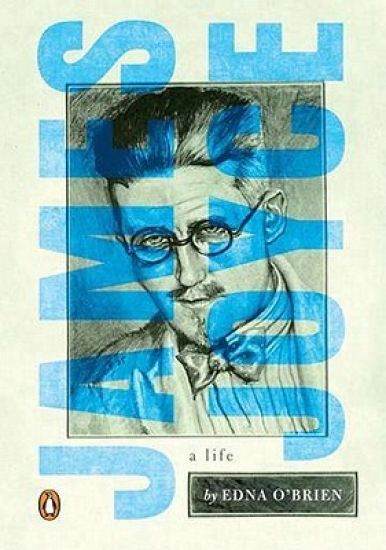
James Joyce

James Joyce

Edna O'Brien

Penguin USA
2011
pokkari
"Joyce fans should thank their lucky stars." -The New York Times Arguably the most influential writer of the twentieth century, James Joyce continues to inspire writers, readers, and thinkers today. Now Edna O'Brien, herself one of Ireland's great writers, approaches the master as only a fellow countryman can. From Joyce's adolescence through his travels abroad to the publication of Ulysses-the scandalous masterpiece that was initially banned in the U nited States but later hailed as one of the most brilliant novels of the twentieth century-O'Brien traces the arc of Joyce's remarkable life. Her biography is a tribute, at once affectionate and stern, from a contemporary writer to one of our most significant literary ancestors.
James Joyce

James Joyce

Colin MacCabe

Oxford University Press
2021
nidottu
James Joyce is one of the greatest writers in English. His first book, A Portrait of the Artist as A Young Man laid down the template for the Coming of Age novel, while his collection of short stories, Dubliners, is of perennial interest. His great modern epic, Ulysses, took the city of Dublin for its setting and all human life for its subject, and its publication in 1922 marked the beginning of the modern novel. Joyce's final work, Finnegans Wake is an endless experiment in narrative and language. But if Joyce is a great writer he is also the most difficult writer in English. Finnegans Wake is written in a freshly invented language, and Ulysses exhausts all the forms and styles of English. Even the apparently simple Dubliners has plots of endless complexity, while the structure of A Portrait of the Artist as A Young Man is exceptionally intricate. This Very Short Introduction explores the work of this most influential yet complex writer, and analyses how Joyce's difficulty grew out of his situation as an Irish writer unwilling to accept the traditions of his imperialist oppressor, and contemptuous of the cultural banality of the Gaelic revival. Joyce wanted to investigate and celebrate his own life, but this meant investigating and celebrating the drunks of Dublin's pubs and the prostitutes of Dublin's brothels. No subject was alien to him and he developed the naturalist project of recording all aspects of life with the symbolist project of finding significant correspondences in the most unlikely material. Throughout, Colin MacCabe interweaves Joyce's life and history with his books, and draws out their themes and connections. Very Short Introductions: Brilliant, Sharp, Inspiring ABOUT THE SERIES: The Very Short Introductions series from Oxford University Press contains hundreds of titles in almost every subject area. These pocket-sized books are the perfect way to get ahead in a new subject quickly. Our expert authors combine facts, analysis, perspective, new ideas, and enthusiasm to make interesting and challenging topics highly readable.
James Joyce

James Joyce

Richard Ellmann

Oxford University Press Inc
1982
sidottu
'A truly masterful biography, wise in its completeness. If Joyce be a great writer, then this is a great book.' Sunday Times 'The greatest literary biography of the century.' Anthony Burgess, The Observer
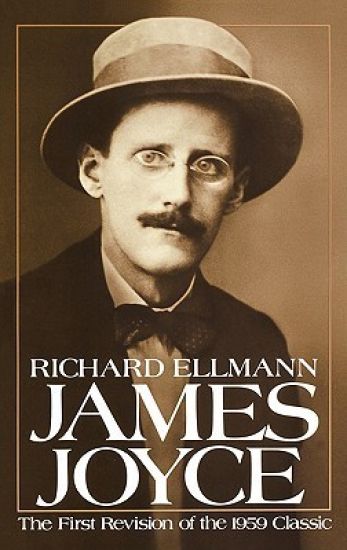
James Joyce

James Joyce

Richard Ellmann

Oxford University Press Inc
1984
nidottu
Richard Ellmann has revised and expanded his definitive work on Joyce's life to include newly discovered primary material, including details of a failed love affair, a limerick about Samuel Beckett, a dream notebook, previously unknown letters, and much more.
James Joyce and the Language of History

James Joyce and the Language of History

Robert Spoo

Oxford University Press Inc
1995
sidottu
"History is a nightmare from which I am trying to awake." Stephen Dedalus's famous complaint articulates a characteristic modern attitude toward the perceived burden of the past. As Robert Spoo shows in this study, Joyce's creative achievement, from the time of his sojourn in Rome in 1906-07 to the completion of Ulysses in 1922, cannot be understood apart from the ferment of historical thought that dominated the nineteenth and early twentieth centuries. Tracing James Joyce's historiographic art to its formative contexts, Spoo reveals a modernist author passionately engaged with the problem of history, forging a new language that both dramatizes and redefines that problem.
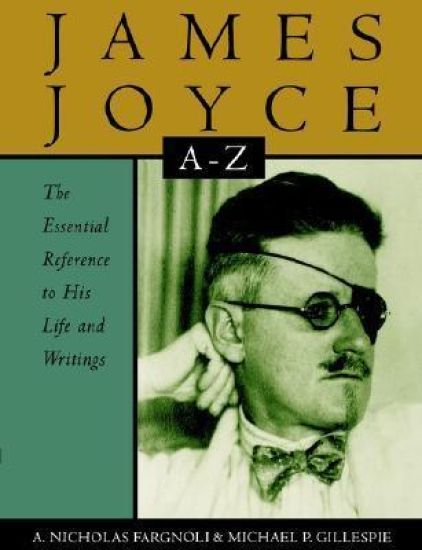
James Joyce A to Z

James Joyce A to Z

Nicholas Fargnoli; Michael Gillespie

Oxford University Press
1996
nidottu
(series copy) These encyclopedic companions are browsable, invaluable individual guides to authors and their works. Useful for students, but written with the general reader in mind, they are clear, concise, accessible, and supply the basic cultural, historical, biographical and critical information so crucial to an appreciation and enjoyment of the primary works. Each is arranged in an A-Z fashion and presents and explains the terms, people, places, and concepts encountered in the literary worlds of James Joyce, Mark Twain, and Virginia Woolf. As a keen explorer of the mundane material of everyday life, James Joyce ranks high in the canon of modernist writers. He is arguably the most influential writer of the twentieth-century, and may be the most read, studied, and taught of all modern writers. The James Joyce A-Z is the ideal companion to Joyce's life and work. Over 800 concise entries relating to all aspects of Joyce are gathered here in one easy-to-use volume of impressive scope.
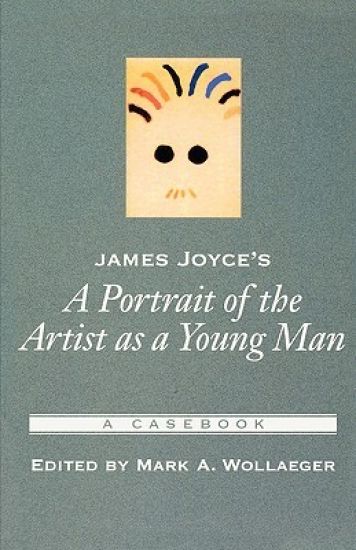
James Joyce's A Portrait of the Artist as a Young Man
James Joyce's A Portrait of the Artist as a Young Man: A Casebook offers a comprehensive introduction to a landmark in modern fiction. The essays collected here will help first-time readers, teachers, and advanced scholars gain new insight into Joyce's semi-autobiographical story of an Irish boy's slow and difficult discovery of his artistic vocation. The epitome of the modernist Bildungsroman, or novel of education, Joyce's novel was controversial from the moment of its publication in 1916, and Mark Wollaeger's introduction provides an overview of the composition and early reception of A Portrait of the Artist as a Young Man as well as a survey of some of the recurrent issues debated by literary critics. The selection of the essays is designed to address major critical issues, provide detailed readings of important passages, and trace the evolution of critical responses to the novel. Essays by Hugh Kenner and Patrick Parrinder offer both indispensable overviews of the entire novel-its themes, structure, and idiom-and close attention to specific interpretive cruxes. In addition to classic responses to Portrait, such as Wayne Booth's critique of authorial "distance," Fritz Senn's unpacking of the epigraph, and Michael Levenson's reading of the diary, the collection includes a newly revised and expanded version of Maud Ellmann's groundbreaking 1982 poststructuralist essay, "Polytropic Man," and essays by Hélène Cixous, Joseph Valente, Vicki Mahaffey, Emer Nolan, Marian Eide, Marjorie Howes, and Mark Wollaeger. Some essays are oriented toward literary history, genre, biography or formalism; others draw on recent developments in queer theory and postcolonial studies; others on the turn towards history exemplified in Irish studies. All are very readable and pay close attention to intricacies of Joyce's text. Together the essays bring into focus the wide range of questions that have kept A Portrait of the Artist as a Young Man fresh for the new millennium.
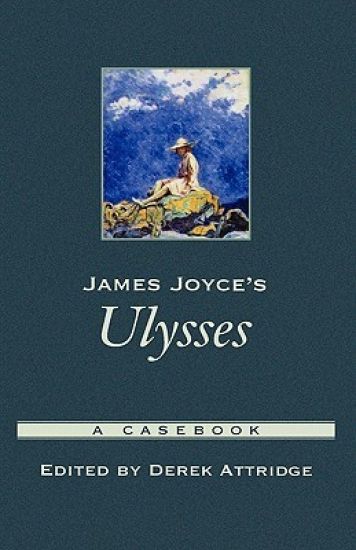
James Joyce's Ulysses

James Joyce's Ulysses

Oxford University Press Inc
2004
sidottu
James Joyce's Ulysses is probably the most famous-or notorious-novel published in the twentieth century. Its length and difficulty mean that readers often turn to critical studies to help them in getting the most out of it. But the vast quantity of secondary literature on the book poses problems for readers, who often don't know where to begin. This casebook includes some of the most influential critics to have written on Joyce, such as Hugh Kenner and Fritz Senn, as well as newer voices who have made a considerable impact in recent years. A wide range of critical schools is represented, from textual analysis to historical and psychoanalytic approaches, from feminism to post-colonialism. One essay considers the relation between art and life, nature and culture, in Ulysses, while another explores the implications of the impassioned debates about the proper editing of Joyce's great work. In an iconoclastic discussion of the book, Leo Bersani finds reasons for giving up reading Joyce. All the contributions are characterized by scrupulous attention to Joyce's words and a sense of the powerful challenge his work offers to our ways of thinking about ourselves, our world, and our language. Also included are records of some of the conversations Joyce had with his friend Frank Budgen during the composition of Ulysses in Zurich, and in an appendix readers will find a version of the schema which Joyce drew up as a guide to his book. Derek Attridge provides an introduction that offers advice on reading Ulysses for the first time, an account of the remarkable story of its composition, and an outline of the history of the critical reception that has played such an important part in our understanding and enjoyment of this extraordinary work.
James Joyce's Ulysses

James Joyce's Ulysses

Oxford University Press Inc
2004
nidottu
James Joyce's Ulysses is probably the most famous-or notorious-novel published in the twentieth century. Its length and difficulty mean that readers often turn to critical studies to help them in getting the most out of it. But the vast quantity of secondary literature on the book poses problems for readers, who often don't know where to begin. This casebook includes some of the most influential critics to have written on Joyce, such as Hugh Kenner and Fritz Senn, as well as newer voices who have made a considerable impact in recent years. A wide range of critical schools is represented, from textual analysis to historical and psychoanalytic approaches, from feminism to post-colonialism. One essay considers the relation between art and life, nature and culture, in Ulysses, while another explores the implications of the impassioned debates about the proper editing of Joyce's great work. In an iconoclastic discussion of the book, Leo Bersani finds reasons for giving up reading Joyce. All the contributions are characterized by scrupulous attention to Joyce's words and a sense of the powerful challenge his work offers to our ways of thinking about ourselves, our world, and our language. Also included are records of some of the conversations Joyce had with his friend Frank Budgen during the composition of Ulysses in Zurich, and in an appendix readers will find a version of the schema which Joyce drew up as a guide to his book. Derek Attridge provides an introduction that offers advice on reading Ulysses for the first time, an account of the remarkable story of its composition, and an outline of the history of the critical reception that has played such an important part in our understanding and enjoyment of this extraordinary work.
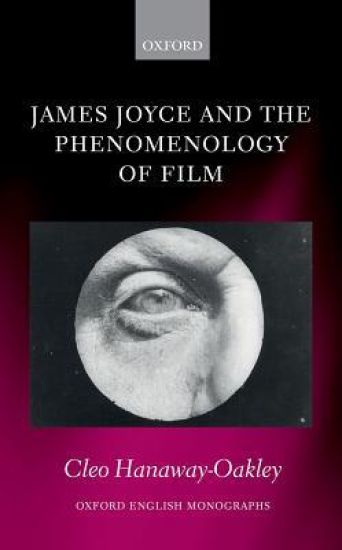
James Joyce and the Phenomenology of Film

James Joyce and the Phenomenology of Film

Cleo Hanaway-Oakley

Oxford University Press
2017
sidottu
James Joyce and the Phenomenology of Film reappraises the lines of influence said to exist between Joyce's writing and early cinema and provides an alternative to previous psychoanalytic readings of Joyce and film. Through a compelling combination of historical research and critical analysis, Cleo Hanaway-Oakley demonstrates that Joyce, early film-makers, and phenomenologists (Maurice Merleau-Ponty, in particular) share a common enterprise: all are concerned with showing, rather than explaining, the 'inherence of the self in the world'. Instead of portraying an objective, neutral world, bereft of human input, Joyce, the film-makers, and the phenomenologists present embodied, conscious engagement with the environment and others: they are interested in the world-as-it-is-lived and transcend the seemingly-rigid binaries of seer/seen, subject/object, absorptive/theatrical, and personal/impersonal. This book re-evaluates the history of body- and spectator-focused film theories, placing Merleau-Ponty at the centre of the discussion, and considers the ways in which Joyce may have encountered such theories. In a wealth of close analyses, Joyce's fiction is read alongside the work of early film-makers such as Charlie Chaplin, Georges Méliès, and Mitchell and Kenyon, and in relation to the philosophical dimensions of early-cinematic devices such as the Mutoscope, the stereoscope, and the panorama. By putting Joyce's literary work--Ulysses above all--into dialogue with both early cinema and phenomenology, this book elucidates and enlivens literature, film, and philosophy.
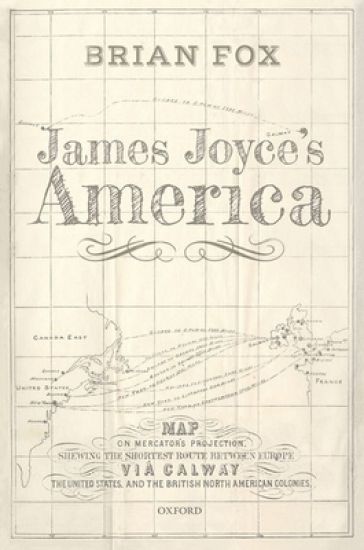
James Joyce's America

James Joyce's America

Brian Fox

Oxford University Press
2019
sidottu
James Joyce's America is the first study to address the nature of Joyce's relation to the United States. It challenges the prevalent views of Joyce as merely indifferent or hostile towards America, and argues that his works show an increasing level of engagement with American history, culture, and politics that culminates in the abundance of allusions to the US in Finnegans Wake, the very title of which comes from an Irish-American song and signals the importance of America to that work. The volume focuses on Joyce's concept of America within the framework of an Irish history that his works obsessively return to. It concentrates on Joyce's thematic preoccupation with Ireland and its history and America's relation to Irish post-Famine history. Within that context, it explores first Joyce's relation to Irish America and how post-Famine Irish history, as Joyce saw it, transformed the country from a nation of invasions and settlements to one spreading out across the globe, ultimately connecting Joyce's response to this historical phenomenon to the diffusive styles of Finnegans Wake. It then discusses American popular and literary cultures in terms of how they appear in relation to, or as a function of, the British-Irish colonial context in the post-Famine era, and concludes with a consideration of how Joyce represented his American reception in the Wake.
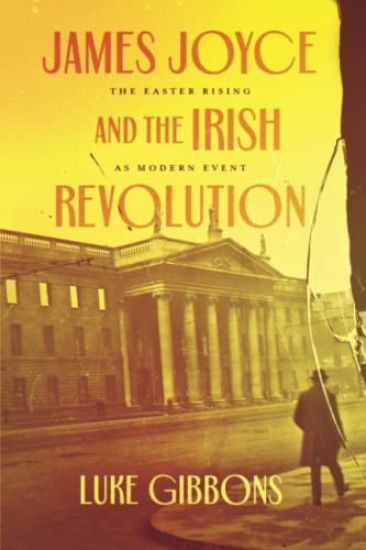
James Joyce and the Irish Revolution

James Joyce and the Irish Revolution

Luke Gibbons

THE UNIVERSITY OF CHICAGO PRESS
2023
sidottu
A provocative history of Ulysses and the Easter Rising as harbingers of decolonization. When revolutionaries seized Dublin during the 1916 Easter Rising, they looked back to unrequited pasts to point the way toward radical futures—transforming the Celtic Twilight into the electric light of modern Dublin in James Joyce’s Ulysses. For Luke Gibbons, the short-lived rebellion converted the Irish renaissance into the beginning of a global decolonial movement. James Joyce and the Irish Revolution maps connections between modernists and radicals, tracing not only Joyce’s projection of Ireland onto the world stage, but also how revolutionary leaders like Ernie O’Malley turned to Ulysses to make sense of their shattered worlds. Coinciding with the centenary of both Ulysses and Irish independence, this book challenges received narratives about the rebellion and the novel that left Ireland changed, changed utterly.
James Joyce and the Irish Revolution

James Joyce and the Irish Revolution

Luke Gibbons

THE UNIVERSITY OF CHICAGO PRESS
2023
nidottu
A provocative history of Ulysses and the Easter Rising as harbingers of decolonization. When revolutionaries seized Dublin during the 1916 Easter Rising, they looked back to unrequited pasts to point the way toward radical futures—transforming the Celtic Twilight into the electric light of modern Dublin in James Joyce’s Ulysses. For Luke Gibbons, the short-lived rebellion converted the Irish renaissance into the beginning of a global decolonial movement. James Joyce and the Irish Revolution maps connections between modernists and radicals, tracing not only Joyce’s projection of Ireland onto the world stage, but also how revolutionary leaders like Ernie O’Malley turned to Ulysses to make sense of their shattered worlds. Coinciding with the centenary of both Ulysses and Irish independence, this book challenges received narratives about the rebellion and the novel that left Ireland changed, changed utterly.
James Joyce and the Revolt of Love

James Joyce and the Revolt of Love

J. Utell

Palgrave Macmillan
2012
sidottu
This study examines the representation of marital and extramarital relations in James Joyce's texts, with reference to context and to Joyce's biography. Utell claims that Joyce uses these relations to imagine a different kind of love, one based in a radical acceptance and a rejection of a utilitarian and sexually repressive stance towards marriage.