Kirjojen hintavertailu. Mukana 12 016 292 kirjaa ja 12 kauppaa.

Kirjahaku

Etsi kirjoja tekijän nimen, kirjan nimen tai ISBN:n perusteella.

1000 tulosta hakusanalla Kimberly L Stringer

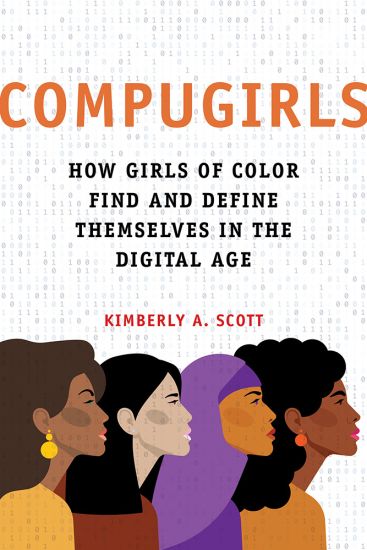
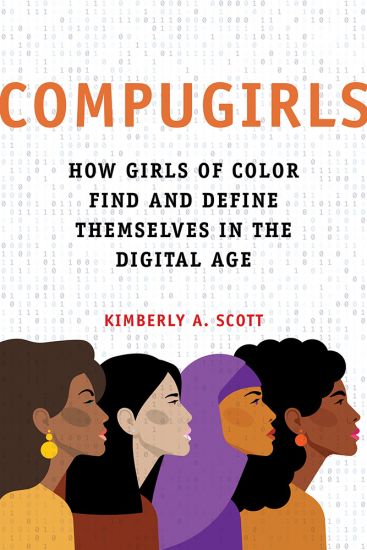
COMPUGIRLS

COMPUGIRLS

Kimberly A. Scott

University of Illinois Press
2021
sidottu
What does is it mean for girls of color to become techno-social change agents--individuals who fuse technological savvy with a deep understanding of society in order to analyze and confront inequality? Kimberly A. Scott explores this question and others as she details the National Science Foundation-funded enrichment project COMPUGIRLS. This groundbreaking initiative teaches tech skills to adolescent girls of color but, as importantly, offers a setting that emphasizes empowerment, community advancement, and self-discovery. Scott draws on her experience as an architect of COMPUGIRLS to detail the difficulties of translating participants' lives into a digital context while tracing how the program evolved. The dramatic stories of the participants show them blending newly developed technical and communication skills in ways designed to spark effective action and bring about important change. A compelling merger of theory and storytelling, COMPUGIRLS provides a much-needed roadmap for understanding how girls of color can find and define their selves in today's digital age.
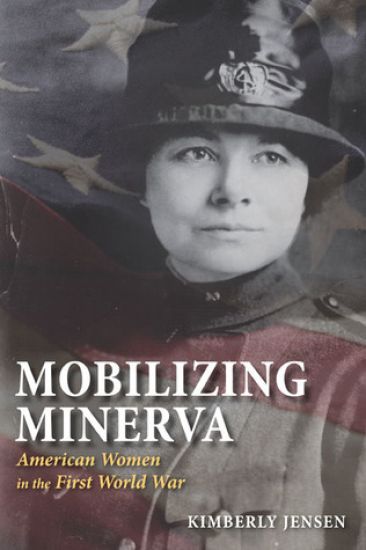
Mobilizing Minerva

Mobilizing Minerva

Kimberly Jensen

University of Illinois Press
2008
nidottu
Mobilizing Minerva: American Women in the First World War analyzes the strategies of female physicians, nurses, and women-at-arms who linked military service with the opportunity to achieve professional and civic goals. Since women armed to defend the state during war could also protect themselves, Kimberly Jensen argues, Americans began to focus on women's relationship to violence--both its wielding against women and women's uses of it. Intense discussions of rape, methods of protecting women, and proper gender roles abound as Jensen draws from rich case studies to show how female thinkers and activists wove wartime choices into long-standing debates about woman suffrage, violence against women, gender-based discrimination, and economic parity. The war created new urgency in these debates, and Jensen forcefully presents the case of women participants and activists: women's involvement in the obligation of citizens to defend the state validated their right of full female citizenship.
Beyond the White Negro

Beyond the White Negro

Kimberly Chabot Davis

University of Illinois Press
2014
nidottu
Critics often characterize white consumption of African American culture as a form of theft that echoes the fantasies of 1950s-era bohemians, or "White Negroes," who romanticized black culture as anarchic and sexually potent. In Beyond the White Negro, Kimberly Chabot Davis claims such a view fails to describe the varied politics of racial crossover in the past fifteen years. Davis analyzes how white engagement with African American novels, film narratives, and hip-hop can help form anti-racist attitudes that may catalyze social change and racial justice. Though acknowledging past failures to establish cross-racial empathy, she focuses on examples that show avenues for future progress and change. Her study of ethnographic data from book clubs and college classrooms shows how engagement with African American culture and pedagogical support can lead to the kinds of white self-examination that make empathy possible. The result is a groundbreaking text that challenges the trend of focusing on society's failures in achieving cross-racial empathy and instead explores possible avenues for change.
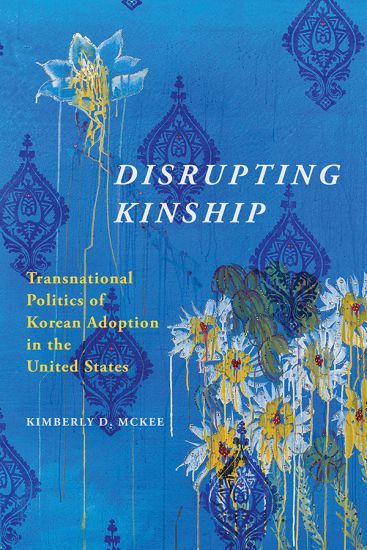
Disrupting Kinship

Disrupting Kinship

Kimberly D. McKee

University of Illinois Press
2019
nidottu
Since the Korean War began, Western families have adopted more than 200,000 Korean children. Two-thirds of these adoptees found homes in the United States. The majority joined white families and in the process forged a new kind of transnational and transracial kinship. Kimberly D. McKee examines the growth of the neocolonial, multi-million-dollar global industry that shaped these families-a system she identifies as the transnational adoption industrial complex. As she shows, an alliance of the South Korean welfare state, orphanages, adoption agencies, and American immigration laws powered transnational adoption between the two countries. Adoption became a tool to supplement an inadequate social safety net for South Korea's unwed mothers and low-income families. At the same time, it commodified children, building a market that allowed Americans to create families at the expense of loving, biological ties between Koreans. McKee also looks at how Christian Americanism, South Korean welfare policy, and other facets of adoption interact with and disrupt American perceptions of nation, citizenship, belonging, family, and ethnic identity.
COMPUGIRLS

COMPUGIRLS

Kimberly A. Scott

University of Illinois Press
2021
nidottu
What does is it mean for girls of color to become techno-social change agents--individuals who fuse technological savvy with a deep understanding of society in order to analyze and confront inequality? Kimberly A. Scott explores this question and others as she details the National Science Foundation-funded enrichment project COMPUGIRLS. This groundbreaking initiative teaches tech skills to adolescent girls of color but, as importantly, offers a setting that emphasizes empowerment, community advancement, and self-discovery. Scott draws on her experience as an architect of COMPUGIRLS to detail the difficulties of translating participants' lives into a digital context while tracing how the program evolved. The dramatic stories of the participants show them blending newly developed technical and communication skills in ways designed to spark effective action and bring about important change. A compelling merger of theory and storytelling, COMPUGIRLS provides a much-needed roadmap for understanding how girls of color can find and define their selves in today's digital age.

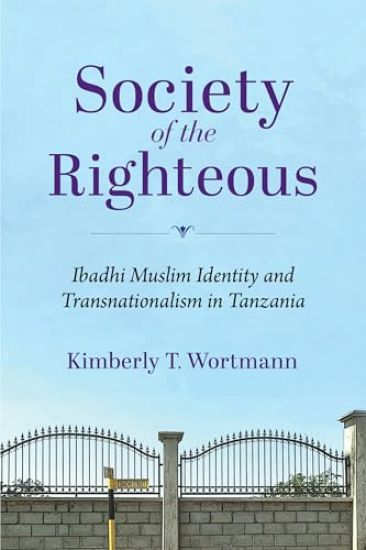
Society of the Righteous

Society of the Righteous

Kimberly T. Wortmann

INDIANA UNIVERSITY PRESS
2024
sidottu
Although the rule of the Omani sultanate in Tanzania came to an end following the Zanzibar Revolution in 1964, the legacy of its empire still exists today, along with its distinctive religious identity. The Ibadhi Muslims of Omani descent, who are neither Sunni nor Shi'a, have used a message of tolerance and harmonious coexistence to spread their beliefs across North and East Africa in a post-revolution and post-independence era. In Society of the Righteous, Kimberly T. Wortmann explores how the Ibadhi-Omani community in Tanzania has engaged in charitable activities, cooperation within the Muslim community, and economic development, despite facing suspicions of foreign influence and elitism. The focus is on the Istiqaama Muslim Community, an international charity network established in Oman and Tanzania in 1995. This ethnographic and transregional study documents the strategies employed by the "People of Truth and Righteousness" to preserve their unique religious practices and beliefs. Society of the Righteous moves beyond the typical discussions on global Muslim religion and politics, such as tradition versus modernity, conflicts between different branches of Islam, and the global war on terror. Instead, it explores the intricacies of a religious community whose significance has been obscured by the limitations of area studies paradigms. It illuminates the complexities of religious identity, transnational networks, gender relations, and the power of collective memory in shaping narratives of belonging, cultural preservation, and change in an increasingly interconnected world.
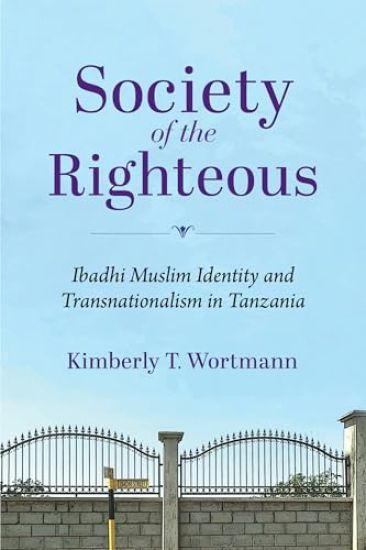
Society of the Righteous

Society of the Righteous

Kimberly T. Wortmann

INDIANA UNIVERSITY PRESS
2024
pokkari
Although the rule of the Omani sultanate in Tanzania came to an end following the Zanzibar Revolution in 1964, the legacy of its empire still exists today, along with its distinctive religious identity. The Ibadhi Muslims of Omani descent, who are neither Sunni nor Shi'a, have used a message of tolerance and harmonious coexistence to spread their beliefs across North and East Africa in a post-revolution and post-independence era. In Society of the Righteous, Kimberly T. Wortmann explores how the Ibadhi-Omani community in Tanzania has engaged in charitable activities, cooperation within the Muslim community, and economic development, despite facing suspicions of foreign influence and elitism. The focus is on the Istiqaama Muslim Community, an international charity network established in Oman and Tanzania in 1995. This ethnographic and transregional study documents the strategies employed by the "People of Truth and Righteousness" to preserve their unique religious practices and beliefs. Society of the Righteous moves beyond the typical discussions on global Muslim religion and politics, such as tradition versus modernity, conflicts between different branches of Islam, and the global war on terror. Instead, it explores the intricacies of a religious community whose significance has been obscured by the limitations of area studies paradigms. It illuminates the complexities of religious identity, transnational networks, gender relations, and the power of collective memory in shaping narratives of belonging, cultural preservation, and change in an increasingly interconnected world.
Perfectionism and Contemporary Feminist Values

Perfectionism and Contemporary Feminist Values

Kimberly A. Yuracko

Indiana University Press
2003
pokkari
Although formal barriers to women's social and political participation have crumbled, society remains, to a significant degree, gendered in the roles that women and men play. Women's and men's choices regarding work and family are largely responsible for maintaining and reinforcing the differences. While feminists recognize the need to criticize women's choices, too often they focus on restrictive conditions rather than the choices themselves. Kimberly A. Yuracko argues instead that encouraging women to make choices in accordance with a grounded and well-defined conception of perfectionism—a philosopy concerned with human flourishing—is the most effective way to redress persistent gender inequality. To this end, Yuracko seeks not only to expose the perfectionism underlying current choice critiques, but to articulate a concrete set of feminist perfectionist principles that would improve the quality of individual women's lives and improve the social standing of women as a whole.
Performing Folklore

Performing Folklore

Kimberly DaCosta Holton

Indiana University Press
2005
pokkari
Through the lens of expressive culture, Performing Folklore tracks Portugal's transition from fascism to democracy, and from imperial metropole to EEC member state. Kimberly DaCosta Holton examines the evolution and significance of ranchos folclóricos, groups of amateur musicians and dancers who perform turn-of-the-century popular tradition and have acted as cultural barometers of change throughout 20th-century Portugal. She investigates the role that these folklore groups played in the mid-twentieth-century dictatorship, how they fell out of official favor with the advent of democracy, and why they remain so popular in Portugal's post-authoritarian state, especially in emigrant and diasporic communities. Holton looks at music, dance, costume, repertoire, venue, and social interplay in both local and global contexts. She considers the importance of revivalist folklore in the construction and preservation of national identity in the face of globalization. This book embraces "invented tradition" as process rather than event, presenting an ethnography not only of folkloric revivalism but also of sweeping cultural transformation, promoted alternately by authoritarianism, democracy, emigration, and European unification.
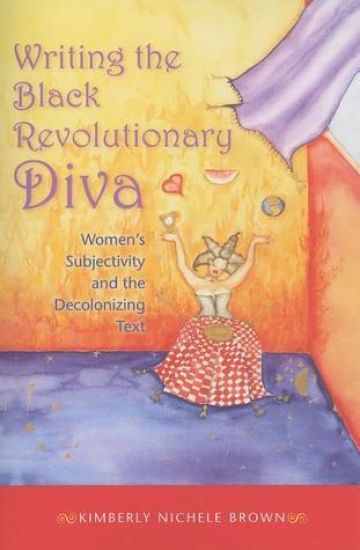
Writing the Black Revolutionary Diva

Writing the Black Revolutionary Diva

Kimberly Nichele Brown

Indiana University Press
2010
pokkari
Kimberly Nichele Brown examines how African American women since the 1970s have found ways to move beyond the "double consciousness" of the colonized text to develop a healthy subjectivity that attempts to disassociate black subjectivity from its connection to white culture. Brown traces the emergence of this new consciousness from its roots in the Black Aesthetic Movement through important milestones such as the anthology The Black Woman and Essence magazine to the writings of Angela Davis, Toni Cade Bambara, and Jayne Cortez.
Stars in Your Hand

Stars in Your Hand

Kimberly Arcand; Megan Watzke

MIT PRESS LTD
2022
nidottu
An illustrated guide to exploring the Universe in three dimensions. Astronomers have made remarkable discoveries about our Universe, despite their reliance on the flat projection, or 2D view, the sky has offered them. But now, drawing on the vast stores of data available from telescopes and observatories on the ground and in space, astronomers are using 3D technology to go beyond a flattened view of the cosmos. In Stars in Your Hand, Kimberly Arcand and Megan Watzke offer an illustrated guide to exploring the Universe in three dimensions, with easy-to-follow instructions for creating models of stars and constellations using a 3D printer and 3D computer imaging. Stars in Your Hand and 3D technology make learning about space an adventure. Intrigued by the stunning images from high-powered telescopes? Using this book, you can fly virtually through a 3D spacescape and hold models of cosmic objects in your hand. Arcand and Watzke outline advances in 3D technology, describe some amazing recent discoveries in astronomy, reacquaint us with the night sky, and provide brief biographies of the telescopes, probes, and rovers that are bringing us so much data. They then offer images and instructions for printing and visualizing stars, nebulae, supernovae, galaxies, and even black holes in 3D. The 3D Universe is a marvel, and Stars in Your Hand serves as a unique and thrilling portal to discovery.
Mortevivum

Mortevivum

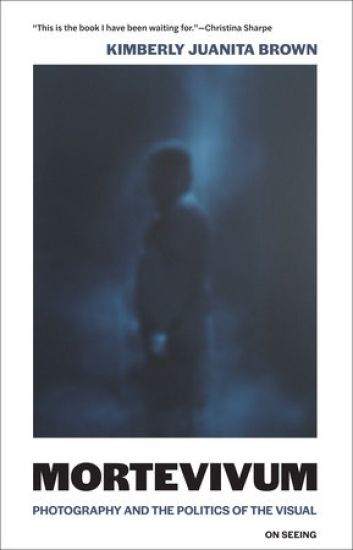
Kimberly Juanita Brown

MIT PRESS LTD
2024
nidottu
A powerful examination of the unsettling history of photography and its fraught relationship to global antiblackness.Since photography’s invention, black life has been presented as fraught, short, agonizingly filled with violence, and indifferent to intervention: living death—mortevivum—in a series of still frames that refuse a complex humanity. In Mortevivum, Kimberly Juanita Brown shows us how the visual logic of documentary photography and the cultural legacy of empire have come together to produce the understanding that blackness and suffering—and death—are inextricable. Brown traces this idea from the earliest images of the enslaved to the latest newspaper photographs of black bodies, from the United States and South Africa to Haiti and Rwanda, documenting the enduring, pernicious connection between photography and a global history of antiblackness.Photography's history, inextricably linked to colonialism and white supremacy, is a catalog of othering, surveillance, and the violence of objectification. In the genocide in Rwanda, for instance, photographs after the fact tell viewers that blackness comes with a corresponding violence that no human intervention can abate. In Haiti, the first black republic in the Western Hemisphere, photographic “evidence” of its sovereign failure suggests that the formerly enslaved cannot overthrow their masters and survive to tell the tale. And in South Africa and the United States, a loop of racial violence reminds black subjects of their lower-class status mandated via the state. Illustrating the global nature of antiblackness that pervades photographic archives of the present and the past, Mortevivum reveals how we live in a repetition of imagery signaling who lives and who dies on a gelatin silver print—on a page in a book, on the cover of newspaper, and in the memory of millions.The URL for this publication is https://on-seeing-mortevivum.org/.
Black Elegies

Black Elegies

Kimberly Juanita Brown

MIT PRESS LTD
2025
nidottu
A poignant, unflinching study of black grief as a form of elegy found in visual art, music, literature—everywhere, if you know how to see it.In Black Elegies, Kimberly Juanita Brown examines the form of the elegy and its unique capacity to convey the elongated grief borne of sustained racial violence. Structured around the sensorial, the book moves through sight, sound, and touch to reveal what Okwui Enwezor calls the “national emergency of black grief.” With her characteristic literary skill, Brown analyzes the work of major figures including Toni Morrison, Carrie Mae Weems, Audre Lorde, and Marvin Gaye, among others. Brown contemplates recognizable sites of mourning: forced migration and enslavement, bodily violations, imprisonment and death. And she examines sites that do not register immediately as archives of grief: the landscape of southern U.S. slave plantations, a spontaneous street party, a quilt constructed out of the clothing worn by a loved one, a dance performance to hold the memory of history, an aeolian harp installed at an institute of European art, among others. In this, the book offers a framework of mourning while black, within the parameters of contemporary artistic production. Brown asks: How do you mourn those you are not supposed to see? And where does the grief go? She shows us that grief is everywhere: “It spills out of photographs and modulates music. It hovers in the tenor and tone of cinematic performances. It resides in the body like an inspired concept, waiting for its articulation.” Black Elegies is the second volume in the On Seeing series, following Kimberly Juanita Brown’s Mortevivum: Photography and the Politics of the Visual, the inaugural title of the series.
Power and Posterity

Power and Posterity

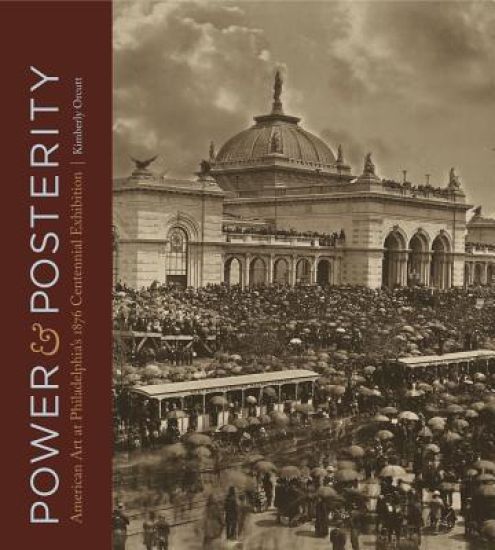
Kimberly Orcutt

Pennsylvania State University Press
2017
sidottu
A milestone in American cultural history, the 1876 Centennial Exhibition in Philadelphia was one of the most broadly shared, heavily attended, and thoroughly documented public experiences of the nineteenth century. Power and Posterity illuminates how the art featured in the celebration informed and reflected national debates over the country’s identity and its role in the world.The Centennial’s fine arts display, which included both a government-sanctioned selection of American works and significant contributions from sixteen other countries, spurred a transformation in the American art world. Drawing from official records, published criticism, guidebooks, poems, and satire, Kimberly Orcutt provides a nuanced, in-depth study of the exhibition. She considers the circumstances of the artworks’ creation, the ideological positions expressed through their installation, and the responses of critics, collectors, and the general public as they evolved from antebellum nationalism to a postwar cosmopolitanism in which artists and collectors took the international stage. Orcutt reveals how the fair democratized the fine arts, gave art criticism newfound reach and authority, and led art museums to proliferate across the country.Deeply researched, thoughtfully written, and featuring a mix of more than eighty full-color and black-and-white illustrations, this thorough and insightful book will appeal to those interested in American culture and history, the art world, and world’s fairs and exhibitions in Philadelphia and beyond.
Power and Posterity

Power and Posterity

Kimberly Orcutt

Pennsylvania State University Press
2020
pokkari
A milestone in American cultural history, the 1876 Centennial Exhibition in Philadelphia was one of the most broadly shared, heavily attended, and thoroughly documented public experiences of the nineteenth century. Power and Posterity illuminates how the art featured in the celebration informed and reflected national debates over the country’s identity and its role in the world.The Centennial’s fine arts display, which included both a government-sanctioned selection of American works and significant contributions from sixteen other countries, spurred a transformation in the American art world. Drawing from official records, published criticism, guidebooks, poems, and satire, Kimberly Orcutt provides a nuanced, in-depth study of the exhibition. She considers the circumstances of the artworks’ creation, the ideological positions expressed through their installation, and the responses of critics, collectors, and the general public as they evolved from antebellum nationalism to a postwar cosmopolitanism in which artists and collectors took the international stage. Orcutt reveals how the fair democratized the fine arts, gave art criticism newfound reach and authority, and led art museums to proliferate across the country.Deeply researched, thoughtfully written, and featuring a mix of more than eighty full-color and black-and-white illustrations, this thorough and insightful book will appeal to those interested in American culture and history, the art world, and world’s fairs and exhibitions in Philadelphia and beyond.
Religion and Politics in the Nineteenth-Century

Religion and Politics in the Nineteenth-Century

Kimberly Cowell-Meyers

Praeger Publishers Inc
2002
sidottu
Cowell-Meyers examines the continued sectarian conflict on the island of Ireland from a comparative and historical framework. Analyzing the process through which sectarian conflict was managed on the continent, she identifies the unique evolution of the Irish situation. Whereas European Catholics, such as those in the new Germany, developed an institutional pillar to defend themselves and protect their interests in the modern plural state, Irish Catholics developed a radical nationalist movement in the same period at the end of the 19th century. As elements of the British political system pushed the Irish Catholic mobilization toward more separatist goals and means, they thwarted the process of accommodation seen in other European settings. The shape and dynamics of Catholic mobilization in the last three decades of the 19th century set Catholics and Protestants on a path toward the management of sectarian conflict in Germany and continental Europe and toward the perpetuation of conflict in Ireland.Much like conflict resolution literature, as well as liberal and pluralist theory mischaracterizes the role of exclusive voluntary associations in the amelioration of conflict, Cowell-Meyers asserts that voluntary organizations, if they are encouraged to do so as they were in continental Europe in the late 19th century, can provide the channels through which intense conflicts are managed. Although exclusive mobilizations reinforce social cleavages, careful handling may make them constructive political formations that allow for the channeling of differences. Of particular interest to scholars, students, and other researchers involved with peace and conflict resolution, religion and politics, and the history of modern Ireland and Germany.
Growing Up in Hitler's Shadow

Growing Up in Hitler's Shadow

Kimberly A. Redding

Praeger Publishers Inc
2004
sidottu
Drawing on oral narratives and archival sources gathered in Berlin, this study explores how some 35 Berliners have woven personal memories, their city's divided past, and their nation's complex historical legacy into cohesive life narratives and collective identities. Redding argues that daily experience during the final years of World War II inadvertently prepared German youth for defeat and occupation. While postwar officials lamented youth's apparent apathy, young Berliners were in fact applying lessons in pragmatism and self-reliance learned as National Socialist society crumbled in 1944 and 1945. Although competing political forces strove to rapidly remobilize German youth, young Berliners took advantage of destabilized sociopolitical structures in their war-torn city to assert autonomy and pursue personal initiatives.Their retrospective narratives reveal creative efforts to claim for themselves the normal pleasures of modern youth in the midst of rubble. These accounts also demonstrate how Cold War ideologies and loyalties have informed memories of daily life in Allied occupied Berlin. In a broader sense, the study sheds new light on the collective experiences, memories, and self-perceptions of a generation of Germans who grew up in a world defined by World War II and Allied occupation, rebuilt their devastated society under Cold War parameters, and eventually negotiated the unification of the two successor states.
Women's Lives in Colonial Quito

Women's Lives in Colonial Quito

Kimberly Gauderman

University of Texas Press
2003
pokkari
What did it mean to be a woman in colonial Spanish America? Given the many advances in women's rights since the nineteenth century, we might assume that colonial women had few rights and were fully subordinated to male authority in the family and in society-but we'd be wrong. In this provocative study, Kimberly Gauderman undermines the long-accepted patriarchal model of colonial society by uncovering the active participation of indigenous, mestiza, and Spanish women of all social classes in many aspects of civil life in seventeenth-century Quito. Gauderman draws on records of criminal and civil proceedings, notarial records, and city council records to reveal women's use of legal and extra-legal means to achieve personal and economic goals; their often successful attempts to confront men's physical violence, adultery, lack of financial support, and broken promises of marriage; women's control over property; and their participation in the local, interregional, and international economies. This research clearly demonstrates that authority in colonial society was less hierarchical and more decentralized than the patriarchal model suggests, which gave women substantial control over economic and social resources.
A Young Palestinian's Diary, 1941–1945

A Young Palestinian's Diary, 1941–1945

Kimberly Katz

University of Texas Press
2009
pokkari
Writing in his late teens and early twenties, Sami ‘Amr gave his diary an apt subtitle: The Battle of Life, encapsulating both the political climate of Palestine in the waning years of the British Mandate as well as the contrasting joys and troubles of family life. Now translated from the Arabic, Sami's diary represents a rare artifact of turbulent change in the Middle East.Written over four years, these ruminations of a young man from Hebron brim with revelations about daily life against a backdrop of tremendous transition. Describing the public and the private, the modern and the traditional, Sami muses on relationships, his station in life, and other universal experiences while sharing numerous details about a pivotal moment in Palestine's modern history. Making these never-before-published reflections available in translation, Kimberly Katz also provides illuminating context for Sami's words, laying out biographical details of Sami, who kept his diary private for close to sixty years. One of a limited number of Palestinian diaries available to English-language readers, the diary of Sami ‘Amr bridges significant chasms in our understanding of Middle Eastern, and particularly Palestinian, history.