Kirjojen hintavertailu. Mukana 12 354 374 kirjaa ja 12 kauppaa.

Kirjahaku

Etsi kirjoja tekijän nimen, kirjan nimen tai ISBN:n perusteella.

1000 tulosta hakusanalla Knut Kristofersen

Hunger

Hunger

Knut Hamsun; Paul Auster

Canongate Canons
2016
pokkari
INTRODUCTION BY JO NESBØAFTERWORD BY PAUL AUSTERNineteenth-century Kristiania is an unforgiving place, and work is thin on the ground. Roaming the streets of Norway's capital, a penniless young writer searches for inspiration whilst trying desperately to make ends meet. Driven to extraordinary lengths, sleeping under the stars with his stomach growling, the writer's behaviour becomes increasingly irrational and his world spirals into chaos. Hunger was Knut Hamsun's first novel and earned him the Nobel Prize for Literature in 1920. A disturbing and darkly humorous masterpiece of existential fiction, Hunger anticipated and influenced some of the twentieth century's most acclaimed writers including Camus, Kafka and Fante.
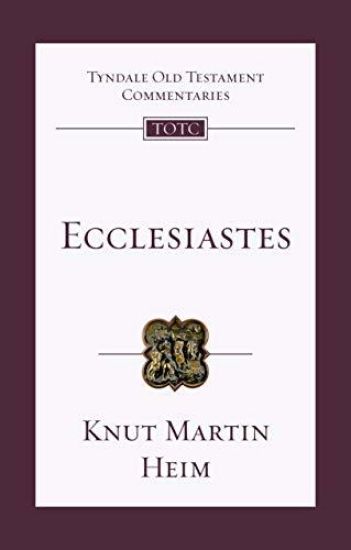
Ecclesiastes

Ecclesiastes

Knut Martin Heim

Inter-Varsity Press
2019
nidottu
The book of Ecclesiastes is probably best known for its repeated refrain that "everything is meaningless," or "vanity." However, a thorough reading demonstrates that this is not its final conclusion. Knut Heim's Tyndale commentary shows that the book is intellectually sophisticated, theologically rich, emotionally deep - and full of humor. While it is realistic about life, it is life-affirming and immensely practical. The Tyndale Commentaries are designed to help the reader of the Bible understand what the text says and what it means. The Introduction to each book gives a concise but thorough treatment of its authorship, date, original setting, and purpose. Following a structural Analysis, the Commentary takes the book section by section, drawing out its main themes, and also comments on individual verses and problems of interpretation. Additional Notes provide fuller discussion of particular difficulties. In the new Old Testament volumes, the commentary on each section of the text is structured under three headings: Context, Comment, and Meaning. The goal is to explain the true meaning of the Bible and make its message plain.
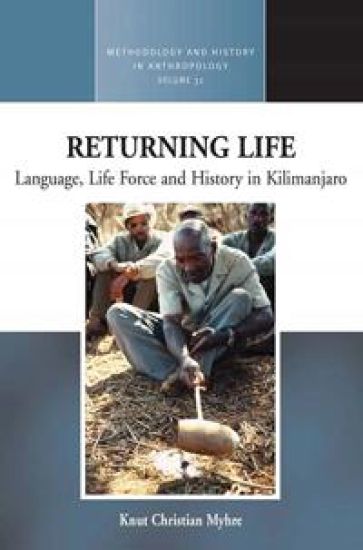
Returning Life

Returning Life

Knut Christian Myhre

Berghahn Books
2017
sidottu
A group of Chagga-speaking men descend the slopes of Mount Kilimanjaro to butcher animals and pour milk, beer, and blood on the ground, requesting rain for their continued existence. Returning Life explores how this event engages activities where life force is transferred and transformed to afford and affect beings of different kinds. Historical sources demonstrate how the phenomenon of life force encompasses coffee cash-cropping, Catholic Christianity, and colonial and post-colonial rule, and features in cognate languages from throughout the area. As this vivid ethnography explores how life projects through beings of different kinds, it brings to life concepts and practices that extend through time and space, transcending established analytics.
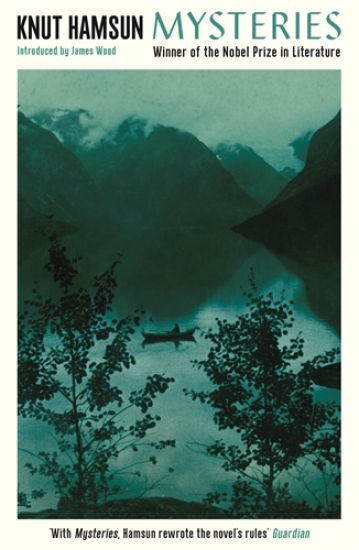
Mysteries

Mysteries

Knut Hamsun

Profile Books Ltd
2021
pokkari
'Knut Hamsun founded the modernist and postmodernist novel at once' writes James Wood in his introduction to this seminal work by a Nobel Prize-winning writer who has been recognised as one of the greatest literary figures of the twentieth century. A young man called John Nagel arrives to spend a summer in a small Norwegian coastal town, a stranger in a loud yellow suit who begins to behave very curiously. He shocks, bewilders and beguiles with his open defiance and erratic self-revelations. Nagel's presence acts as a catalyst for the hidden impulses, concealed thoughts and darker instincts of the townsfolk. Cursed with the ability to understand the human soul, especially his own, Nagel can foresee, but cannot prevent, his own destruction.
Caves and Ritual in Medieval Europe, AD 500–1500

Caves and Ritual in Medieval Europe, AD 500–1500

Knut Andreas Bergsvik; Marion Dowd

OXBOW BOOKS
2022
nidottu
Caves and rockshelters in Europe have traditionally been associated with prehistory, and in some regions cave archaeology has become synonymous with the Palaeolithic. However, there is abundant evidence that caves and rockshelters were important foci for activities in historic times. During the medieval period (here taken as AD 500–1500), caves were used for short-term shelter, habitation, specialised craft activities, storage, as hideaways and for tending animals, and also for religious purposes. Caves and Ritual in Medieval Europe, AD 500–1500 focuses on this neglected field of research – the ritual and religious use of caves. It draws together interdisciplinary studies by leading specialists from across Europe: from Iberia to Crimea, and from Malta to northern Norway. The different religions and rituals in this vast area are unified by the use of caves and rockshelters, indicating that the beliefs in these natural places – and in the power of the underworld – were deeply embedded in many different religious practices. Christianity was widespread and firmly established in most of Europe at this time, and many of the contributions deal with different types of Christian practices, such as the use of rock-cut churches, unmodified caves for spiritual retreat, caves reputedly visited by saints, and caves as places for burials. But parallel to this, some caves were associated with localised popular religious practices, which sometimes had pre-Christian origins. Muslims in Iberia used caves for spiritual retreat, and outside the Christian domain in northern Europe, caves and rockshelters were places for carving symbols among Pictish groups, places for human burial, for bear burials amongst the Sámi, and places for crafting and votive deposition for Norse populations.
Returning Life

Returning Life

Knut Christian Myhre

BERGHAHN BOOKS
2023
pokkari
A group of Chagga-speaking men descend the slopes of Mount Kilimanjaro to butcher animals and pour milk, beer, and blood on the ground, requesting rain for their continued existence. Returning Life explores how this event engages activities where life force is transferred and transformed to afford and affect beings of different kinds. Historical sources demonstrate how the phenomenon of life force encompasses coffee cash-cropping, Catholic Christianity, and colonial and post-colonial rule, and features in cognate languages from throughout the area. As this vivid ethnography explores how life projects through beings of different kinds, it brings to life concepts and practices that extend through time and space, transcending established analytics.
Deep Ecology, Business Ethics and Personal Responsibility

Deep Ecology, Business Ethics and Personal Responsibility

Knut Johannessen Ims

Peter Lang International Academic Publishers
2022
sidottu
How can businesses and business leaders help solve the big ethical, social and ecological challenges of today? Within this context this book offers theoretical and practical approaches to making the world a better place for existing and future generations. It uses diverse, often multidimensional frames of reference and illustrates them with real-life cases to show positive solutions. The author’s broad professional background and humanistic worldview are reflected in his application of psychological and virtue-oriented theories as well as philosophical approaches. Some of the articles have an essay format, others share his experiences and experiments in his ethics classes using roleplays to cultivate empathic and prudent ethical behaviour. A primary motivation of the book is to inspire leaders as well as teachers and students of leadership and business by enriching their worldviews to see ethics as a fundamental aspect at all levels of economic activity.
The Official Guide to Mermaid.js

The Official Guide to Mermaid.js

Knut Sveidqvist; Ashish Jain

PACKT PUBLISHING LIMITED
2021
nidottu
Get up to speed with using Mermaid diagrams to facilitate a seamless development workflow with the help of real-world examples and expert tips from the creators of the toolKey FeaturesLearn how to use and customize the different diagram types in MermaidDiscover examples of how to add Mermaid to a documentation systemUse Mermaid with various tools available such as editors, wiki, and moreBook DescriptionMermaid is a JavaScript-based charting and diagramming tool that lets you represent diagrams using text and code, which simplifies the maintenance of complex diagrams. This is a great option for developers as they're more familiar with code, rather than using special tools for generating diagrams. Besides, diagrams in code simplify maintenance and ensure that the code is supported by version control systems. In some cases, Mermaid makes refactoring support for name changes possible while also enabling team collaboration for review distribution and updates.Developers working with any system will be able to put their knowledge to work with this practical guide to using Mermaid for documentation. The book is also a great reference for looking up the syntax for specific diagrams when authoring diagrams. You'll start by learning the importance of accurate and visual documentation. Next, the book introduces Mermaid and establishes how to use it to create effective documentation. By using different tools, editors, or a custom documentation platform, you'll also understand how to use Mermaid syntax for various diagrams. Later chapters cover advanced configuration settings and theme options to manipulate your diagram as per your needs.By the end of this book, you'll be well-versed with Mermaid diagrams and how they can be used in your workflows.What you will learnUnderstand good and bad documentation, and the art of effective documentationBecome well-versed with maintaining complex diagrams with easeDiscover how to draw different types of Mermaid diagrams such as flowcharts, class diagrams, Gantt charts, and moreImplement Mermaid diagrams in your workflowsUnderstand how to set up themes for a Mermaid diagram or an entire siteGet to grips with setting up a custom documentation systemWho this book is forThis book is for content generators such as technical writers, developers, architects, business analysts, and managers who want to learn effective documentation or how to effectively represent diagrams using simple text code snippets and extract them. Familiarity with documentation using Markdown will be helpful, but not necessary.
The Maghreb Since 1800

The Maghreb Since 1800

Knut S. Vikor

C HURST CO PUBLISHERS LTD
2024
nidottu
The Maghreb - the region that today encompasses Morocco, Algeria, Tunisia and Libya - is a region apart within the larger Muslim and Arab world. Today the focus of popular uprisings for democracy and participation, it underwent long periods of colonisation and anti-colonial nationalist resistance, both peaceful and militant. To understand the nature of today's developments in North Africa we need fully to appreciate the tumultuous history of the region and how its four discrete countries followed different trajectories, some marked by a continuity of social and political structures in both the colonial era and as independent states, while others were marked by sharp ruptures and violent struggles. These historical differences are still visible in the current era and tell us much about the societies in question. This short history of the Maghreb surveys its development from the coming of Islam to the present day, but with greatest emphasis on the modern period from the early nineteenth century onwards. It follows the French protectorates, Morocco and Tunisia, and how their nationalist movements forged the independent states that followed; and it chronicles the wars of resistance and liberation in Algeria and Libya, and how these conflicts also marked their independence, with a long-running civil war in the former and the recent uprising against the Gaddafi regime in the latter.
Ethnic Boundaries in Neolithic Norway

Ethnic Boundaries in Neolithic Norway

Knut Andreas Bergsvik

BAR Publishing
2006
nidottu
During the transition to the early Neolithic, a number of changes took place among the hunter-fishers of southern Norway. One of the most important social changes may have been the development of more marked ethnic boundaries, which were related to increasing social inequality among the local groups. In this study, the main theme is the investigation of whether such ethnic boundaries can be delineated. The author identifies them archaeologically, and discusses how and why they were established and maintained.
The Economics of Standards

The Economics of Standards

Knut Blind

Edward Elgar Publishing Ltd
2004
sidottu
This book provides a comprehensive overview of the important topic of standards, which remains a vastly under-researched field of empirical inquiry. It presents a variety of interesting empirical analyses which reveal the driving forces and the economic impacts of standardization both in the manufacturing and the service sector. The author begins by providing a detailed outline of the various types of standards and their possible economic impacts. Before providing empirical validation of the theoretical arguments, he discusses the influence of standards within the regulatory system. Among the other actors in the standardization process, the author focuses in particular on the role of the firm, which acts as the main impetus for the development and implementation of new standards. He also examines the fundamental link between technical change and standardization, to assess whether this relationship is a virtuous or vicious cycle. In this context, the impact of intellectual property rights within standardization is also highlighted. Another significant aspect is the consequences of standards for trade and their role in fostering or inhibiting international trade flows. Finally, the author investigates the effect on macroeconomic growth where, especially in the new economy, formal standards are a crucial source of codified and publicly available knowledge. The analysis is based on extensive microeconomic, sectoral and macroeconomic data, which allows the author to compare the various economic impacts of standards and derive important policy conclusions. This book is a comprehensive and scholarly treatment of the economics of standards which will undoubtedly inspire further research in the field. It will be required reading for industrial economists, R&D managers and policymakers involved with innovation and trade policy.
Software Patents

Software Patents

Knut Blind; Jakob Edler; Michael Friedewald

Edward Elgar Publishing Ltd
2005
sidottu
There has been continued debate in Europe over whether to change the patentability of software - or so-called computer-implemented inventions - and to follow the US model of allowing software patents.The European debate has shown a severe lack of empirical analysis on the possible impact of software patenting that goes beyond interest-driven rhetoric. This book seeks to address this shortcoming by taking a two-fold approach. Firstly, a survey of German software companies provides a representative overview of both general strategies to protect inventions and opinions regarding the future IPR regime in the context of innovation strategies - including the importance and use of Open Source software. Secondly, a series of case studies illustrate the varying impacts that patents and other protection strategies can have in specific contexts. This book provides both a theoretical overview of the economic impacts and policy implications of software patents, and an empirical foundation upon which to base a discussion on how to shape the intellectual property regime for software. Thus, this volume will be of interest to industrial economists and students, as well as legal scientists and analysts and students of governance in innovation systems. It will also appeal to all policy stakeholders dealing with IPR issues and/or software developing industries.
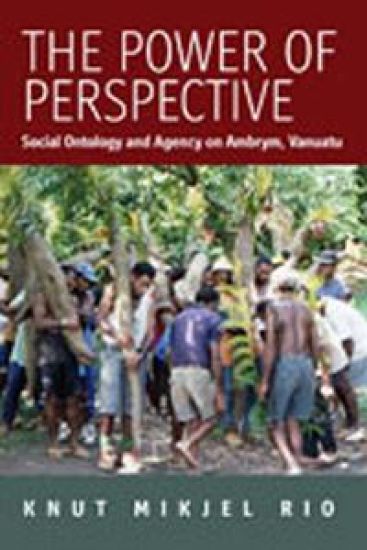
The Power of Perspective

The Power of Perspective

Knut Mikjel Rio

Berghahn Books
2007
sidottu
Focusing on different forms of agency in North Ambrym social life, the author demonstrates the potency of outsiders at different times and in different situations in Ambrym society. This model challenges the premises of much Western thinking about reciprocity, and suggests new directions in the analysis of Melanesian societies
The Maghreb Since 1800

The Maghreb Since 1800

Knut S. Vikor

C Hurst Co Publishers Ltd
2012
nidottu
The Maghreb - the region that today encompasses Morocco, Algeria, Tunisia and Libya - is a region apart within the larger Muslim and Arab world. Today the focus of popular uprisings for democracy and participation, it underwent long periods of colonisation and anti-colonial nationalist resistance, both peaceful and militant. To understand the nature of today's developments in North Africa we need fully to appreciate the tumultuous history of the region and how its four discrete countries followed different trajectories, some marked by a continuity of social and political structures in both the colonial era and as independent states, while others were marked by sharp ruptures and violent struggles. These historical differences are still visible in the current era and tell us much about the societies in question. This short history of the Maghreb surveys its development from the coming of Islam to the present day, but with greatest emphasis on the modern period from the early nineteenth century onwards. It follows the French protectorates, Morocco and Tunisia, and how their nationalist movements forged the independent states that followed; and it chronicles the wars of resistance and liberation in Algeria and Libya, and how these conflicts also marked their independence, with a long-running civil war in the former and the recent uprising against the Gaddafi regime in the latter.
Creating Africas

Creating Africas

Knut G. Nustad

C Hurst Co Publishers Ltd
2015
nidottu
In Africa, conflicts between protected areas for fauna and flora and their surrounding human populations continue despite years spent trying to find an accommodation between the needs of both parties. Creating Africas investigates the roots of the current conservation boom, demonstrates that it is part of a struggle over definitions of realities, and examines the global effects of this struggle. The book discusses the first UNESCO World Heritage Site in South Africa, the Isimangaliso (St Lucia) Wetland Park. Here, conservation interests are pitted against those of industrial forestry, commercial farming, and the local communities struggling to have their land returned to them. They all seek to define and create their own realities but do so with very different resources at their disposal. These realities are treated not as different representations but rather as multiple, often competing, realities that involve a wide range of actors, both human and non- human. The book argues that to avoid being accused of neo-colonial land grabbing, the conservation lobby will need to find a way of imagining nature and protection that includes people.
Sufi and Scholar of the Desert Edge

Sufi and Scholar of the Desert Edge

Knut S. Vikor

C Hurst Co Publishers Ltd
1995
sidottu
The Sanusiya was one of the most influential Islamic movements in North Africa and the Sahara in the nineteenth century. It organised the Beduin of the desert and desert fringes into a Sufi movement that combined religious piety with trade. Later, it played a key role in the resistance to French and Italian colonialism. The basis of the movement was laid by the Maghrebi scholar Muhammad b. Ali al-Sanusi (1787-1859), who saw his task as being to advance the growth and spread of Islamic learning, in particular the study of Law and the prophetic tradition. This study of al-Sanusi focuses on the scholarly tradition of which he was part, and the heritage of his numerous books and the organisation of the Sufi order in North Africa. The book discusses his role in the Sufi network of Ahmad Ibn ldris and of the scholarly milieu of the Qarawiyin in Fez, giving an overview of the Sanusiya order in the mid-nineteenth century. It also presents al-Sanusi's writings.
Oasis of Salt

Oasis of Salt

Knut S. Vikor

C Hurst Co Publishers Ltd
1999
nidottu
Kawar, an oasis in the centre of the Sahara, rose to prominence on revenues from the vast quantities of salt it produced and traded with the south. This study traces Kawar's history from classical times to the colonial conquest and occupation of 1906, focusing on its role in salt production.