Kirjojen hintavertailu. Mukana 11 717 486 kirjaa ja 12 kauppaa.

Kirjahaku

Etsi kirjoja tekijän nimen, kirjan nimen tai ISBN:n perusteella.

1000 tulosta hakusanalla Max Linde

Max Disaster #3: Alien Eraser Reveals the Secrets of Evolution
Max grapples with the outrageousness of divorced parents beginning to date -- and other mysteries of evolution -- in his third quirky notebook. Welcome to Max's book of inventions, experiments, comic strips, and random thoughts about school, the universe, evolution, and parents who definitely don't act the way parents are supposed to act. Luckily for Max, he has a place to jot down his biggest questions and most amazing discoveries. This zany mix of comics, concoctions, and contraptions helps Max tells the story of his topsy-turvy life and how he comes to terms with a changing family.

Max's Box

Max's Box

Brian Wray

Schiffer Publishing Ltd
2019
sidottu
Award-winning author Brian Wray uses a magical growing box to illustrate children's emotional development and health. Max's parents give him a very special gift: a tiny, magical box that will hold everything, from his toys to his feelings. Max learns, however, that feelings can't be put away as easily as toys. Each negative emotion he feels—anger, embarrassment, sadness, loneliness—gets added to the box, which grows and grows. Eventually, the box is so large that it keeps him from doing what he loves, like riding his bike and climbing trees. With some help from his friends and family, Max is able to turn the box into something beautiful and let it go. A parents' guide explains how well-intentioned adults often encourage children, especially young boys, to ignore and “put away” their feelings instead of learning to fully live with them. This simple but powerful story not only teaches children how to “control” their emotions but discourages suppressing them, the illustrations becoming more colorful and vibrant as Max moves out from his box’s shadow.
Max's Box

Max's Box

Brian Wray

Schiffer Publishing Ltd
2019
pokkari
Max's parents give him a very special gift: a tiny, magical box that will hold everything, from his toys to his feelings. Max learns, however, that feelings can't be put away as easily as toys. Each negative emotion he feels—anger, embarrassment, sadness, loneliness—gets added to the box, which grows and grows. Eventually it is so large that it keeps him from doing what he loves, like riding his bike and climbing trees. With some help from his friends and family, Max is able to turn the box into something beautiful and let it go. A parents' guide explains how well-intentioned adults often encourage children, especially young boys, to ignore and “put away” their feelings instead of learning to fully live with them. This simple but powerful story not only teaches children how to “control” their emotions but discourages suppressing them, the illustrations becoming more colorful and vibrant as Max moves out from his box’s shadow.
Max's Story: A Puppy Tale

Max's Story: A Puppy Tale

W. Bruce Cameron

Odd Dot
2018
sidottu
Meet Max--a very special dog with a very important purpose-- featured in A Dog's Journey, soon to be a major motion picture Young readers will love this story in the popular A Dog's Purpose Puppy Tales series by bestselling author W. Bruce Cameron. As soon as he sets eyes on CJ, Max knows that she's his girl and quickly figures out his purpose: to show her how to navigate the big city. Being a native New Yorker, Max knows how to take charge, even though he's the smallest dog at the park. At the same time, with CJ's help, Max learns that he doesn't always have to be ferocious--sometimes, he can be "gentle Max" and make friends. Young fans of Ellie's Story, Bailey's Story, and Molly's Story will love Max's Story, the story of a little dog in the big city. Includes adorable illustrations by Richard Cowdrey and a reading and discussion guide at the end of the book. More Tales from Bruce Cameron FROM STARSCAPE: THE PUPPY TALES SERIES: Ellie's Story / Bailey's Story / Molly's Story / Max's Story / Lily's Story / Shelby's Story / Toby's Story / Bella's Story / Cooper's Story / Lacey's Story THE LILY TO THE RESCUE SERIES: Lily to the Rescue / Lily to the Rescue: Two Little Piggies / Lily to the Rescue: The Not-So-Stinky Skunk / Lily to the Rescue: Dog Dog Goose / Lily to the Rescue: Lost Little Leopard / Lily to the Rescue: The Misfit Donkey / Lily to the Rescue: Foxes in a Fix / Lily to the Rescue: The Three Bears FROM FORGE: THE DOG'S PURPOSE SERIES: A Dog's Purpose / A Dog's Journey / A Dog's Promise THE DOG'S WAY HOME SERIES: A Dog's Way Home / A Dog's Courage OTHER TITLES FROM FORGE: Love, Clancy: Diary of a Good DogA Dog's Perfect ChristmasThe Dogs of ChristmasThe Dog MasterEmory's Gift THE RUDDY MCCAN SERIES: The Midnight Plan of the Repo Man / Repo Madness / The Midnight Dog of the Repo Man
Max's Story: A Puppy Tale

Max's Story: A Puppy Tale

W. Bruce Cameron

Odd Dot
2021
nidottu
Now in paperback Meet Max--a very special dog with a very important purpose -- featured in A Dog's Journey, now a major motion picture Young readers will love this story in the popular A Dog's Purpose Puppy Tales series by bestselling author W. Bruce Cameron. As soon as he sets eyes on CJ, Max knows that she's his girl and quickly figures out his purpose: to show her how to navigate the big city. Being a native New Yorker, Max knows how to take charge, even though he's the smallest dog at the park. At the same time, with CJ's help, Max learns that he doesn't always have to be ferocious--sometimes, he can be "gentle Max" and make friends. Young fans of Ellie's Story, Bailey's Story, and Molly's Story will love Max's Story, the story of a little dog in the big city. Includes adorable illustrations by Richard Cowdrey and a reading and discussion guide at the end of the book.
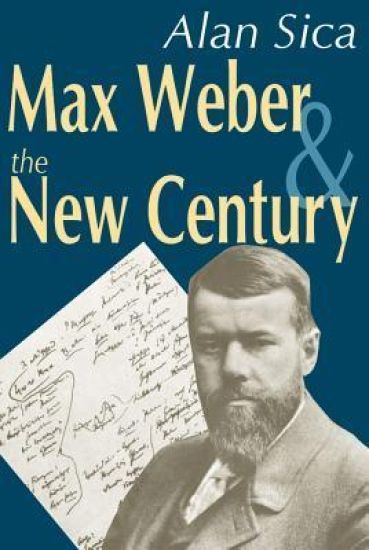
Max Weber and the New Century

Max Weber and the New Century

Alan Sica

Transaction Publishers
2003
sidottu
The most profound and enduring social theorist of sociology's classical period, Max Weber speaks as cogently to concerns of the new century as he did to those of the past. Over the past seventy years, those special ideas that have become identified as "Weberian" have become especially pertinent to those who would analyze today's socioeconomic and cultural life. They offer the possibility of a more acute understanding of our immediate future than reliance on the ideas of any other social theorist in the pantheon. Alan Sica demonstrates Weber's preeminent position and lasting vitality within social theory by applying them to topics of contemporary concern. The result will appeal to experts and novices alike.Max Weber and the New Century documents the continuing usefulness of Weber's unrivalled social thought. Sica offers a series of linked studies that treat Weber's concept of rationalization as expressed in different cultural forms, the role of Weberian ideas in contemporary historiography, the uses of Weber's image in the popular imagination, the rhetorical structure of Economy and Society, and Weber's relationship to modern philosophical thought. Conceptually and practically, this volume is a companion piece to the author's forthcoming Max Weber: A Comprehensive Bibliography--a 3,600-item bibliography of works by and about Weber in English--which, for the first time, will allow scholars to explore the universe of Weberian analysis.Max Weber and the New Century is a valuable addition to the library of social scientists, historians, philosophers, economists, and students of intellectual history. It shows that Weber--the scholar as much as his ideas--continues to inspire fruitful social and cultural analyses.
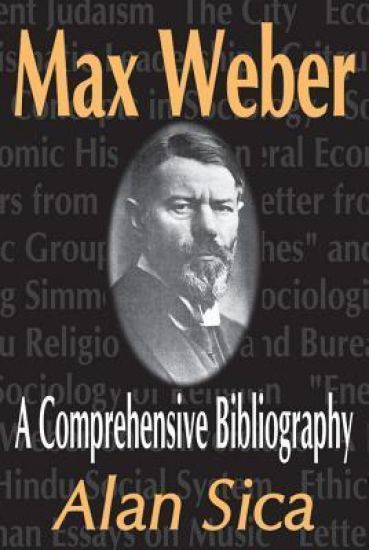
Max Weber

Max Weber

Alan Sica

Transaction Publishers
2003
sidottu
The most profound and enduring social theorist of sociology's classical period, Max Weber speaks as cogently to concerns of the new century as he did to those of the past. In Max Weber and the New Century, Alan Sica demonstrated Weber's preeminent position and lasting vitality within social theory by applying his ideas to a broad range of topics of contemporary concern. Max Weber: A Comprehensive Bibliography is a companion volume that offers some 4,600 bibliographic listings of work on Weber, making it the most complete guide to the literature in English and a testament to the continued vitality of Weber's thought.Sica's work supersedes all previous bibliographical efforts covering the Weber literature, both in the quantity and accuracy of its references, and the clarity and convenience of its format. In order to demonstrate the enormous variety of Weberiana in English, Sica has adopted a liberal criterion for inclusion, rather than a critical one, choosing to mix the best with what may be more routine work. Following a preface in which previous bibliographies and bibliographic problems are discussed, the volume opens with a series of five specialized bibliographies. The first lists Weber's works in English translation. The second lists reviews of Weber's major works including those translated into English, while the third covers reviews of recent books and other work on Weber. The fourth section contains a selection of dissertations and theses relating to Weber or his ideas. The fifth includes primary and secondary sources treating Weber on rationality and rationalization processes. The last and largest section offers a comprehensive Weber bibliography of works in English.This large-scale endeavor attempts to identify with accuracy and completeness the entire universe of Weber scholarship in English. It will be an essential scholarly tool for sociologists, historians, economists, and students of cultural and intellectual history.
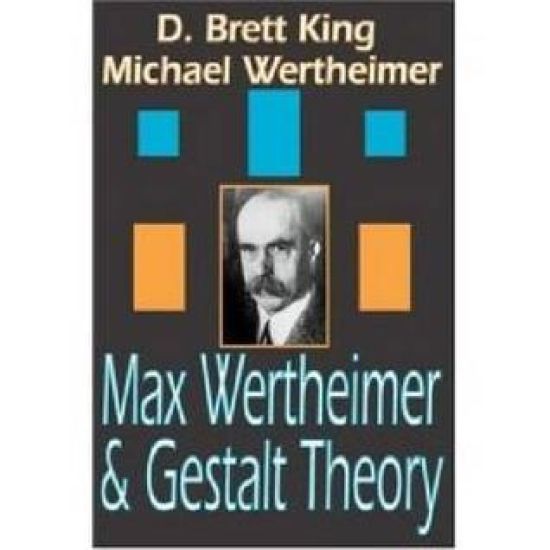
Max Wertheimer and Gestalt Theory

Max Wertheimer and Gestalt Theory

Michael Wertheimer

TAYLOR FRANCIS INC
2004
sidottu
The ideas of Max Wertheimer (1880-1943), a founder of Gestalt theory, are discussed in almost all general books on the history of psychology and in most introductory textbooks on psychology. This intellectual biography of Wertheimer is the first book-length treatment of a scholar whose ideas are recognized as of central importance to fields as varied as social psychology, cognitive neuroscience, problem solving, art, and visual neuroscience.King and Wertheimer trace the origins of Gestalt thought, demonstrating its continuing importance in fifteen chapters and several supplements to these chapters. They begin by reviewing Wertheimer's ancestry, family, childhood in central Europe, and his formal education. They elaborate on his activities during the period in which he developed the ideas that were later to become central to Gestalt psychology, documenting the formal emergence of this school of thought and tracing its development during World War I. The maturation of the Gestalt school at the University of Berlin during 1922-1929 is discussed in detail.Wertheimer's everyday life in America during his last decade is well documented, based in part on his son's recollections. The early reception of Gestalt theory in the United States is examined, with extensive references to articles in professional journals and periodicals. Wertheimer's relationships and interaction with three prominent psychologists of the time, Edwin Boring, Clark Hull, and Alexander Luria, are discussed based on previously unpublished correspondence. The final chapters discuss Wertheimer's essays on democracy, freedom, ethics, and truth, and detail personal challenges Wertheimer faced during his last years. His major work, published after his death, is Productive Thinking. Its reception is examined, and a concluding chapter considers recent responses to Max Wertheimer and Gestalt theory.This intellectual biography will be of interest to psychologists and readers interested in science, modern European history, and the Holocaust.
Max McCalman's Wine and Cheese Pairing Swatchbook
From the foremost master of cheese in the country, Max McCalman, comes a practical twist on wine and cheese pairings that includes detailed information about the history, production and unique flavor of fifty of the world's finest cheeses, as well as the accompanying information about the best wine varietals and vintages to pair them with. The easy-to-navigate swatchbook format fans out to reveal the ideal wine and cheese match for any occasion.
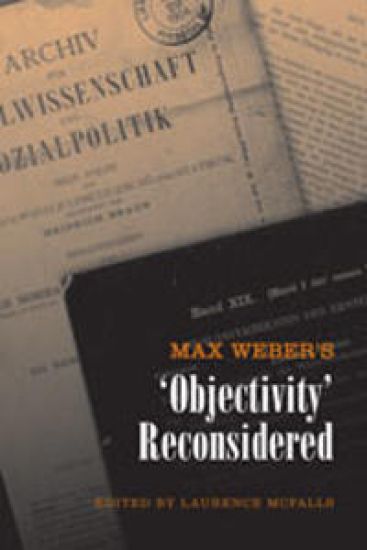
Max Weber's 'Objectivity' Reconsidered

Max Weber's 'Objectivity' Reconsidered

Laurence McFalls

University of Toronto Press
2007
sidottu
The German sociologist Max Weber (1864-1920) is without question one of the founders of modern social science. In his methodological writings, notably his essay "The 'Objectivity' of Knowledge in Science and Policy" (1904), Weber sought reflexively to establish a trans-culturally valid basis for the historical and cultural sciences. Over the past century, however, his work has given rise to divergent interpretations and practical applications within different disciplinary and cultural contexts. In Max Weber's 'Objectivity' Reconsidered, Laurence H. McFalls and a distinguished group of contributors explore the fragmented reception of Weber's work and the legacies of his methodological writings for contemporary social science, offering their appraisals of Weber's successes and failures in laying the groundwork for an 'objective' social science. They develop a 'Weberian' theory of his reception and evaluate the possibility of an 'objectively' valid Weberian social science today. This essential volume not only contributes to the resurgence of interest in Weber's oeuvre but goes beyond the exegetic and polemical debates of the burgeoning 'Weberological' literature in offering a coherent theoretical explanation for the proliferation of interpretations that Weber's writings continue to elicit.
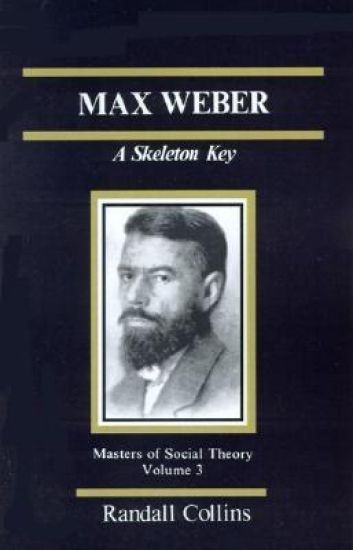
Max Weber

Max Weber

Randall Collins

SAGE Publications Inc
1986
sidottu
A concise overview of sociology's greatest classic thinker. Weber emerges as a multisided intellectual personality, whose intellectual ambivalence is related to a neurotic breakdown in mid career and to the compromises he was forced to make among the conflicting politievanscal and intellectual currents of his time. Here we see what kinds of philosophical idealism Weber favored and what kinds he rejected, as well as his position on the "battle of methods" among the economists of his day. Weber's famous "Protestant Ethic" thesis is put in proper perspective as an intellectual gambit in one particular period of his life, rather than as his central achievement. Weber's overall view of social change is examined, drawing on several of his crucial but little-known works, on the sociology of ancient agrarian societies and on the long chain of organizational conditions that finally led to modern capitalism. Also treated are Weber's major works on the sociology of religion and his contributions to systematic theory, especially social stratification. The many strands of Weber's theorizing, and his tremendous scope of comparisons across world history, are here brought into a clear and manageable focus. "Randall Collins is the leading sociological theorist of his generation. He has also done more than anyone else to use and develop Weberian sociology. Accordingly we expect much from Collins on Weber and Max Weber does not disappoint." --Whitney Pope, Indiana University "A lively, efficient, reliable interpretation, captivating for the novice, provocative for the expert. . . . Typical Collins." --Alan Sica, University of Kansas "A good introductory survey of Weber's major writings. It is interesting reading and highly informative." --Contemporary Sociology "A good capsule biography . . . very readable . . . honors clarity, style, and the value of popular understanding." --The Madison Independent Books in Review "Ideal for an introductory course on Weber." --Ethics
Max Weber

Max Weber

Randall Collins

SAGE Publications Inc
1986
nidottu
A concise overview of sociology's greatest classic thinker. Weber emerges as a multisided intellectual personality, whose intellectual ambivalence is related to a neurotic breakdown in mid career and to the compromises he was forced to make among the conflicting politievanscal and intellectual currents of his time. Here we see what kinds of philosophical idealism Weber favored and what kinds he rejected, as well as his position on the "battle of methods" among the economists of his day. Weber's famous "Protestant Ethic" thesis is put in proper perspective as an intellectual gambit in one particular period of his life, rather than as his central achievement. Weber's overall view of social change is examined, drawing on several of his crucial but little-known works, on the sociology of ancient agrarian societies and on the long chain of organizational conditions that finally led to modern capitalism. Also treated are Weber's major works on the sociology of religion and his contributions to systematic theory, especially social stratification. The many strands of Weber's theorizing, and his tremendous scope of comparisons across world history, are here brought into a clear and manageable focus. "Randall Collins is the leading sociological theorist of his generation. He has also done more than anyone else to use and develop Weberian sociology. Accordingly we expect much from Collins on Weber and Max Weber does not disappoint." --Whitney Pope, Indiana University "A lively, efficient, reliable interpretation, captivating for the novice, provocative for the expert. . . . Typical Collins." --Alan Sica, University of Kansas "A good introductory survey of Weber's major writings. It is interesting reading and highly informative." --Contemporary Sociology "A good capsule biography . . . very readable . . . honors clarity, style, and the value of popular understanding." --The Madison Independent Books in Review "Ideal for an introductory course on Weber." --Ethics
Max Weber's Economy and Society

Max Weber's Economy and Society

Stanford University Press
2005
sidottu
Max Weber's Economy and Society is widely considered the most important single work in sociology and among the most important in the history of the social sciences. This volume provides a critical and up-to-date introduction to Weber's magnum opus. While much has been published about the various parts of Economy and Society, this is the first book to cover all of its major sections and themes, as well as to discuss the methodological vision that unites them. In Max Weber's Economy and Society, a distinguished group of scholars illuminates the central arguments of Economy and Society and appraises their contemporary relevance for the analysis of the economy, the polity, law, religion, and social action. With essays that are both theoretical and empirical, this book will be of interest to those already familiar with Weber's work and to those encountering it for the first time.
Max Weber's Economy and Society

Max Weber's Economy and Society

Stanford University Press
2005
pokkari
Max Weber's Economy and Society is widely considered the most important single work in sociology and among the most important in the history of the social sciences. This volume provides a critical and up-to-date introduction to Weber's magnum opus. While much has been published about the various parts of Economy and Society, this is the first book to cover all of its major sections and themes, as well as to discuss the methodological vision that unites them. In Max Weber's Economy and Society, a distinguished group of scholars illuminates the central arguments of Economy and Society and appraises their contemporary relevance for the analysis of the economy, the polity, law, religion, and social action. With essays that are both theoretical and empirical, this book will be of interest to those already familiar with Weber's work and to those encountering it for the first time.
Max Malone Makes a Million

Max Malone Makes a Million

Charlotte Herman

Square Fish
1992
nidottu
Max and his sidekick, Gordy, try various get-rich-quick schemes only to be outdone each time by smart-aleck Austin Healy. Peppy dialogue and a fast-moving plot make this easy chapter book a reassuring choice for newly independent readers. "The characters are likable, the plot moves along smoothly, and there's enough dialogue to draw readers into the story. Smith's humorous line drawings, with washes of gray watercolor, punctuate the text nicely." - School Library Journal
Max Reinhardt

Max Reinhardt

Peter W. Marx

NORTHWESTERN UNIVERSITY PRESS
2024
nidottu
Max Reinhardt was one of the formative directors of modern theater. Starting as an actor, it soon became clear that he wanted more. His vision of a theater "that returns joy to the people" was vast and expansive: It included intimate theatrical arrangement as well as mass production in the circus arena. Reinhardt's aesthetics were not restricted to a single program but indulged in a playful eclecticism. Thus, his career as a director that lasted for almost 40 years comprises a broad variety of artists of various genres as well as many different styles. At the same time, Reinhardt soon longed for an international range: guest performances throughout Europe and to the US soon made him into a global star – and even a brand. He represents a metropolitan culture that roots in the late nineteenth century but comes to an end when Fasicsm in Europe ended any hopes for an international culture. As a Jew, Reinhardt himself had to flee the Nazis but when he eventually arrived in the US, he could not follow up with his earlier successes. Marx provides a broad panorama of Reinhardt's work, portraying not only his work method and some of his best known productions, but also the cultural conditions of his visionary enterprise.
Max Reinhardt

Max Reinhardt

Peter W. Marx

NORTHWESTERN UNIVERSITY PRESS
2024
sidottu
Max Reinhardt was one of the formative directors of modern theater. Starting as an actor, it soon became clear that he wanted more. His vision of a theater "that returns joy to the people" was vast and expansive: It included intimate theatrical arrangement as well as mass production in the circus arena. Reinhardt's aesthetics were not restricted to a single program but indulged in a playful eclecticism. Thus, his career as a director that lasted for almost 40 years comprises a broad variety of artists of various genres as well as many different styles. At the same time, Reinhardt soon longed for an international range: guest performances throughout Europe and to the US soon made him into a global star – and even a brand. He represents a metropolitan culture that roots in the late nineteenth century but comes to an end when Fasicsm in Europe ended any hopes for an international culture. As a Jew, Reinhardt himself had to flee the Nazis but when he eventually arrived in the US, he could not follow up with his earlier successes. Marx provides a broad panorama of Reinhardt's work, portraying not only his work method and some of his best known productions, but also the cultural conditions of his visionary enterprise.
Max Ophuls in the Hollywood Studios

Max Ophuls in the Hollywood Studios

Lutz Bacher

Rutgers University Press
1996
sidottu
Max Ophuls, who is considered one of the greatest film directors of all time, has long been seen as an “auteur”––the artist in complete control of his work. Lutz Bacher’s examination of his American career gives us a unique perspective on the workings of the Hollywood system and the struggle of a visionary to function within it. He thus establishes clear connections between the production contexts of Ophuls' American films and their idiosyncratic style.Drawing on documents in many archives and on interviews with more than sixty of Ophuls' contemporaries, Bacher traces the European director's struggle to find a niche in the U.S. film industry. He describes how Ophuls ran the gamut from ghost writing to substitute directing, to a debilitating association with Preston Sturges and Howard Hughes, to making four films––Letter from an Unknown Woman and Caught among them––in thirty months, and then returning to Europe with a runaway production that was to have starred Greta Garbo. Throughout, Bacher demonstrates that Ophuls' bending of conventional Hollywood methods to his own will through compromise and subversion allowed him to achieve a style that was both uniquely American and a point of departure for his later work. A rare synthesis of production history, stylistic analysis, and biography, this book is essential reading for serious film scholars and fans of the director’s work.
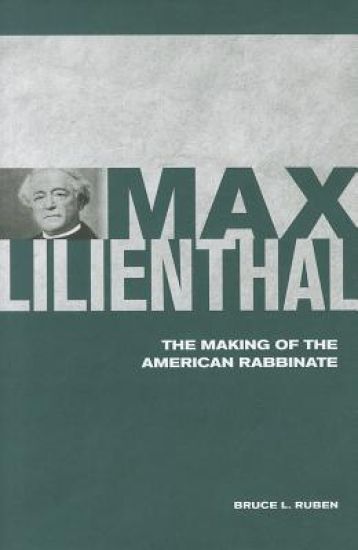
Max Lilienthal

Max Lilienthal

Bruce L. Ruben

Wayne State University Press
2011
sidottu
When Congregation Bene Israel hired him to come to Cincinnati in 1854, Rabbi Max Lilienthal (1814-82) seized the opportunity to work with his friend Isaac M. Wise. Together, Lilienthal and Wise forged the institutional foundations for the American Reform movement: the Union of American Hebrew Congregations and Hebrew Union College. In Max Lilienthal: The Making of the American Rabbinate, author Bruce L. Ruben investigates the central role Lilienthal played in creating new institutions and leadership models to bring his immigrant community into the mainstream of American society. Ruben's biography shines a light on this prominent rabbi and educator who is treated by most American Jewish historians as, at best, Wise's collaborator. Ruben examines Lilienthal's early career, including how his fervent Haskalah ideology was shaped by tensions within early nineteenth-century German Jewish society and how he tried to implement that ideology in his attempt to modernize Russian Jewish education. After he immigrated to America to serve three traditional New York German synagogues, he clashed with lay leadership. Ruben examines this lay-clergy power struggle and how Lilienthal resolved it over his long career. Max Lilienthal: The Making of the American Rabbinate also details the rabbi's many accomplishments, including his creation of a nationally recognized private Jewish school and the founding of the precursor to the Central Conference of American Rabbis. He also was the first rabbi to preach in a Christian church. Even more significantly, Ruben argues that Lilienthal created an unprecedented new American model for the rabbinate, in which the rabbi played a prominent role in civic life. More than a biography, this volume is a case study of the impact of American culture on Judaism and its leadership, as Ruben shows how Lilienthal embraced an increasingly radical Reform ideology influenced by a mixture of American and European ideas. Students of German Haskalah and historians of American Judaism and the Reform movement will appreciate this biography that fills an important gap in the history of American Jewry.