Kirjojen hintavertailu. Mukana 12 016 292 kirjaa ja 12 kauppaa.

Kirjahaku

Etsi kirjoja tekijän nimen, kirjan nimen tai ISBN:n perusteella.

1000 tulosta hakusanalla Maximo Serrano Hercules

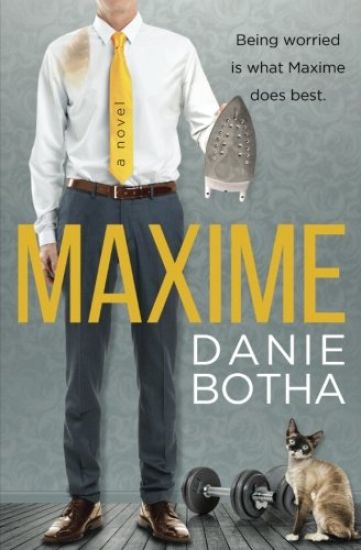
Maxime

Maxime

Danie Botha

Charbellini Press
2017
nidottu
Being worried is what Maxime does best.At sixty-four-and-a-half, Maxime Bastien Baumann wants to retire more than anything else, but he can't. He's too worried. He's not a hypochondriac; he's just anally retentive. And obsessive-compulsive. And constantly afraid of being late. His life is structured and lived by a set of rules: two full pages if he writes them down, double-spaced.For Maxime, being late is never a bloody option.As his life with his wife of thirty-seven years and their two sons implodes, Maxime realizes his "life rules" desperately need an overhaul. Staggering through setback after setback, Maxime must learn to replace worry with confidence and flexibility, stop seeing others as schmucks, reconcile with his family, and learn that it will all come at a great personal cost.About the AuthorDanie Botha was born in Zambia. He completed his school education and medical training in South Africa. He lives in Canada.Interview with the AuthorQ - What makes Maxime a unique book?A - Several things. Maxime takes a tongue in the cheek look at growing older. It is an offbeat romance. Maxime appears on the surface to be only about a hapless, anally retentive eccentric. It is more. In spite of the story's satirical look at family life, health, and illness, it soon confronts the issue of how far we are willing to go to reconcile, grow as individuals, and survive the storms of life. Q - Why should readers bother reading this book?A - Readers who enjoy humor and satire and contemporary fiction who enjoyed reading A Man Called Ove by Fredrik Backman, The 100-year-old man who climbed out the window and disappeared by Jonas Jonasson, The Little Old Lady Who Broke All The Rules by Catharina Ingelman-Sundberg and The Rosie Project by Graeme Simsion, should also enjoy reading Maxime. Thank you for reading Maxime CategoriesBooks - Literature & Fiction - Humor & Satire - HumorousBooks - Literature & Fiction - Genre fiction - Family LifeBooks - Literature & fiction - ContemporaryBooks - Literature & Fiction - Women's fiction - Friendship Books - Literature & Fiction - World Literature - Canadian
Maximos the Confessor

Maximos the Confessor

Luis Josué Salés

Cambridge University Press
2025
sidottu
Maximos affirms in various texts (such as Difficulty 41) that sexual differentiation into male and female is inconsistent with the divine intention and will therefore be eschatologically eradicated. His affirmations have elicited a half-dozen conflicting interpretations, such as the metaphorization of these statements, where 'male' refers to drive (thymos) and 'female' to desire (epithymia), which become subordinate to reason (logos). Others maintain that he refers to the resolution of male–female agonistics. Yet others have criticized accounts that mollify the starkness of Maximos' affirmations. This Element goes further in arguing that Maximos tacitly envisions the elimination of sexual difference as sublimation of all sexual difference into male singularity. This Element overviews the exegetical and medical-anthropological precedents that framed Maximos thinking on this subject and examines some of his key texts, including his famed Difficulty 41 and several passages centered on explicating Eve and Adam, and Mary and Christ.
Maximos the Confessor

Maximos the Confessor

Luis Josué Salés

Cambridge University Press
2025
pokkari
Maximos affirms in various texts (such as Difficulty 41) that sexual differentiation into male and female is inconsistent with the divine intention and will therefore be eschatologically eradicated. His affirmations have elicited a half-dozen conflicting interpretations, such as the metaphorization of these statements, where 'male' refers to drive (thymos) and 'female' to desire (epithymia), which become subordinate to reason (logos). Others maintain that he refers to the resolution of male–female agonistics. Yet others have criticized accounts that mollify the starkness of Maximos' affirmations. This Element goes further in arguing that Maximos tacitly envisions the elimination of sexual difference as sublimation of all sexual difference into male singularity. This Element overviews the exegetical and medical-anthropological precedents that framed Maximos thinking on this subject and examines some of his key texts, including his famed Difficulty 41 and several passages centered on explicating Eve and Adam, and Mary and Christ.
Maxim Kopf

Maxim Kopf

Maxim 1892-1958 Kopf

Hassell Street Press
2021
sidottu
This work has been selected by scholars as being culturally important and is part of the knowledge base of civilization as we know it.This work is in the public domain in the United States of America, and possibly other nations. Within the United States, you may freely copy and distribute this work, as no entity (individual or corporate) has a copyright on the body of the work.Scholars believe, and we concur, that this work is important enough to be preserved, reproduced, and made generally available to the public. To ensure a quality reading experience, this work has been proofread and republished using a format that seamlessly blends the original graphical elements with text in an easy-to-read typeface.We appreciate your support of the preservation process, and thank you for being an important part of keeping this knowledge alive and relevant.
Maxima Moralia

Maxima Moralia

Ramin Jahanbegloo

TAYLOR FRANCIS LTD
2022
sidottu
This book highlights the problem of one-dimensional, reductionistic life of the modern individual. An expression of crisis in our world, it discusses the imperative need to have a more comprehensive, non-reductionist life where the Other is incorporated, especially the relationship between the Other and the Self, based on virtues like love, empathy, equality, and compassion.The volume sheds light on how the world has forgone the art of living for a mutilated sense of well-being, the rise of conformity and complacency in human thought, and the lack of democratic dissent and citizenry responsibility in our contemporary societies, which is now characterized by mass immaturity, propelled by a process of thoughtlessness. It discusses how humans need to be aware of the life they lead, to think about Otherness of the Other not just as another virtue but also as a crucial element in the survival of humanity, for people to coexist with the world around them as equals. Furthermore, it advocates meaningful and thoughtful existence, in touch with the Nature we coexist with, to ensure that humanity is not robbed of its noble spirit as we live to survive in our techno-capitalist societies.An introspective read, this book will be of great interest to scholars and researchers of moral and ethical philosophy, political philosophy, and political science.