
Kirjahaku
Etsi kirjoja tekijän nimen, kirjan nimen tai ISBN:n perusteella.
1000 tulosta hakusanalla Meta Lander
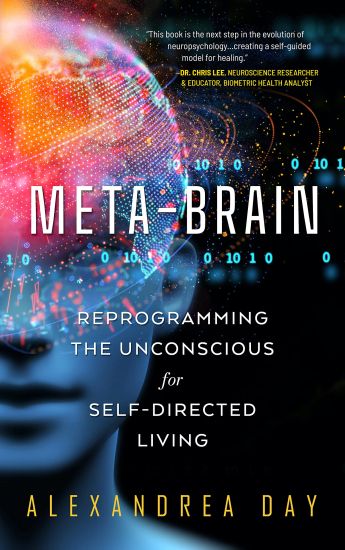
Meta-Brain: Reprogramming the Unconscious for Self-Directed Living
Alexandrea Day
Made for Success
2022
nidottu
For centuries, the landscape of our world has changed slowly and gradually. It has moved at a speed that allowed our human body, mind, and soul ample time to dance, play, and adapt to it. However, our changing world has accelerated far beyond what it was before, often leaving us feeling as though we must race after it in order to adapt. The concept of Adaptive Therapy presents a novel solution to this modern, high-velocity problem. Instead of racing against the stimuli, Adaptive Therapy posits viable means to help people slow down, become more aware, amplify intuition, and change any perceptions that are misaligned with their environment. In Meta-Brain: Reprogramming the Unconscious for Self-Directed Living, author Alexandrea Day reveals the critical path to adapting effectively to our world. With the understanding that our unconscious mind is the lens through which all events in our lives are witnessed, she presents tools that show the listener exactly how to take back control of their most sacred power as human beings. Techniques will empower listeners to: Adapt to their surroundings instead of trying to manipulate them externally Depict positive future outcomes for successfully harmonizing with the world Provide new and groundbreaking mindfulness techniques to slow down time Offer techniques for amplifying intuition and treating chronic stress Successfully rewire the unconscious mind of yesterday to suit the needs of today and tomorrow Adaptive Therapy offers a road forward to everyone who has felt like their environment has been changing faster than they can keep up with. By increasing our awareness, aligning with our own purpose, and understanding that we truly are all one, we can fuse the best of each and truly come together as one with our world.

META-INTELLIGENZ
BoD - Books on Demand
2026
pokkari
The book shows the relevance of meta-ethical and metaphysical considerations to determine the nature of law and the connection between objective moral and legal judgements. The investigation analyses the legal theories of Ronald Dworkin, J rgen Habermas and Michael Moore. The conclusion of the scrutiny is that the discussed views fail to explain the plausible links between objective moral and legal judgements. The lesson to learn from the failure of these philosophical perspectives is that we need to revise fundamental meta-ethical conceptions within law. In addition to the view that meta-ethical and metaphysical considerations play a central role in our understanding of objective moral and legal judgements, we enforce the idea that it is necessary to revise our meta-ethical and metaphysical premises in jurisprudence. Epistemic and meta-ethical abstinence in legal theory, in this way, is challenged by a number of criticisms. The outcome of our reflection is that in legal theory, as in many other disciplines, we need to take truth and objectivity seriously.

Meta Content Framework
OmniScriptum
2026
pokkari

Meta Ramsay, Baroness Ramsay of Cartvale
VDM Publishing House
2010
nidottu
Observera att förlaget som ger ut denna produkt baserar innehållet i sina produkter på fria källor som Wikipedia. Boken är med stor sannolikhet endast ett utdrag ur dessa informationskällor, alltså inte en vanlig bok i den bemärkelsen.

Meta-Model (NLP)
OmniScriptum
2026
pokkari

Patricia Urquiola(Oviedo, 1961) is a globally acclaimed architect, art director, and industrial designer, celebrated for her innovative work with leading brands such as Flos, Cassina, Kettal, Kvadrat, BMW, Boeing, Louis Vuitton, and Missoni. Her designs are imaginative, eclectic, playful, and often experimental, with a strong commitment to sustainability. The exhibition Meta-Morphosa at CID Grand-Hornu, part of Europalia Espana, highlights Studio Patricia Urquiola’s research from the past five years. In a world increasingly shaped by climate change and artificial intelligence, the exhibition explores transformation—how materials, aesthetics, and perceptions of beauty evolve. Featuring functional objects, visionary projects, and experiments with innovative materials and unexpected combinations, Meta-Morphosa presents a new aesthetic characterised by formal and cultural mutation. The exhibition invites visitors to embrace change, celebrating creativity, adaptability, and the beauty of transformation, reflecting Urquiola’s boundless imagination and her commitment to shaping design for a rapidly changing world. Text in English and French.
Meta-omics in Crop Improvement
SPRINGER VERLAG, SINGAPORE
2026
sidottu
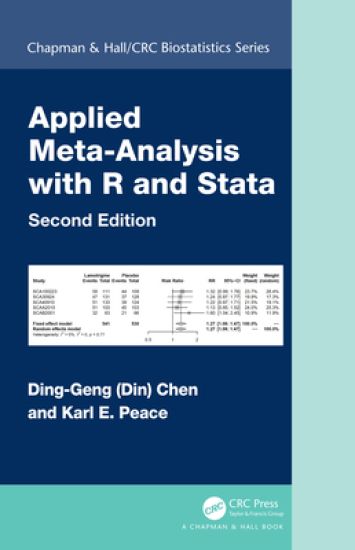
Review of the First Edition:The authors strive to reduce theory to a minimum, which makes it a self-learning text that is comprehensible for biologists, physicians, etc. who lack an advanced mathematics background. Unlike in many other textbooks, R is not introduced with meaningless toy examples; instead the reader is taken by the hand and shown around some analyses, graphics, and simulations directly relating to meta-analysis… A useful hands-on guide for practitioners who want to familiarize themselves with the fundamentals of meta-analysis and get started without having to plough through theorems and proofs.—Journal of Applied StatisticsStatistical Meta-Analysis with R and Stata, Second Edition provides a thorough presentation of statistical meta-analyses (MA) with step-by-step implementations using R/Stata. The authors develop analysis step by step using appropriate R/Stata functions, which enables readers to gain an understanding of meta-analysis methods and R/Stata implementation so that they can use these two popular software packages to analyze their own meta-data. Each chapter gives examples of real studies compiled from the literature. After presenting the data and necessary background for understanding the applications, various methods for analyzing meta-data are introduced. The authors then develop analysis code using the appropriate R/Stata packages and functions.What’s New in the Second Edition: Adds Stata programs along with the R programs for meta-analysis Updates all the statistical meta-analyses with R/Stata programs Covers fixed-effects and random-effects MA, meta-regression, MA with rare-event, and MA-IPD vs MA-SS Adds five new chapters on multivariate MA, publication bias, missing data in MA, MA in evaluating diagnostic accuracy, and network MASuitable as a graduate-level text for a meta-data analysis course, the book is also a valuable reference for practitioners and biostatisticians (even those with little or no experience in using R or Stata) in public health, medical research, governmental agencies, and the pharmaceutical industry.

Doing Meta-Analysis with R
Mathias Harrer; Pim Cuijpers; Toshi Furukawa; David Ebert
CRC Press
2021
sidottu
Doing Meta-Analysis with R: A Hands-On Guide serves as an accessible introduction on how meta-analyses can be conducted in R. Essential steps for meta-analysis are covered, including calculation and pooling of outcome measures, forest plots, heterogeneity diagnostics, subgroup analyses, meta-regression, methods to control for publication bias, risk of bias assessments and plotting tools. Advanced but highly relevant topics such as network meta-analysis, multi-three-level meta-analyses, Bayesian meta-analysis approaches and SEM meta-analysis are also covered. A companion R package, dmetar, is introduced at the beginning of the guide. It contains data sets and several helper functions for the meta and metafor package used in the guide. The programming and statistical background covered in the book are kept at a non-expert level, making the book widely accessible.FeaturesContains two introductory chapters on how to set up an R environment and do basic imports/manipulations of meta-analysis data, including exercisesDescribes statistical concepts clearly and concisely before applying them in RIncludes step-by-step guidance through the coding required to perform meta-analyses, and a companion R package for the book
This book doesn't offer overrated success stories which in most cases cannot be imitated. It contains no check lists or recipes for success and it presents no theoretically-based models. The meta-competencies discussed in this refreshing book are timeless virtues of which effective leaders seem to possess, but which are rarely if ever included in lists of competencies in the vast business leadership literature. They include: Existential intelligence - distinct from the much discussed emotional intelligence, is about the ability to pose questions and reflect on fundamental issues in ways that develop a mature ability to interpret the world and better understand other people. Phronesis - is the ability to exercise sound judgement based on skilful application of moral and political rationality. Solitude - is a voluntary state achieved when an individual has the ability to momentarily withdraw and be free of external pressures and demands in order to concentrate on desired mental-cognitive activities. Trust building - is more often discussed in leadership literature. As a leadership competence it is about the ability to be credible, show trust in and respect for other people and inspire trust. For the curious business practitioner, business student, or business educator wishing to consider aspects of leadership competence that have to some extent been hidden or forgotten, this book introduces the notion of meta-competences and deals in detail with them.
Applied Meta-Analysis with R and Stata
Ding-Geng (Din) Chen; Karl E. Peace
TAYLOR FRANCIS LTD
2022
nidottu
Review of the First Edition:The authors strive to reduce theory to a minimum, which makes it a self-learning text that is comprehensible for biologists, physicians, etc. who lack an advanced mathematics background. Unlike in many other textbooks, R is not introduced with meaningless toy examples; instead the reader is taken by the hand and shown around some analyses, graphics, and simulations directly relating to meta-analysis… A useful hands-on guide for practitioners who want to familiarize themselves with the fundamentals of meta-analysis and get started without having to plough through theorems and proofs.—Journal of Applied StatisticsStatistical Meta-Analysis with R and Stata, Second Edition provides a thorough presentation of statistical meta-analyses (MA) with step-by-step implementations using R/Stata. The authors develop analysis step by step using appropriate R/Stata functions, which enables readers to gain an understanding of meta-analysis methods and R/Stata implementation so that they can use these two popular software packages to analyze their own meta-data. Each chapter gives examples of real studies compiled from the literature. After presenting the data and necessary background for understanding the applications, various methods for analyzing meta-data are introduced. The authors then develop analysis code using the appropriate R/Stata packages and functions.What’s New in the Second Edition: Adds Stata programs along with the R programs for meta-analysis Updates all the statistical meta-analyses with R/Stata programs Covers fixed-effects and random-effects MA, meta-regression, MA with rare-event, and MA-IPD vs MA-SS Adds five new chapters on multivariate MA, publication bias, missing data in MA, MA in evaluating diagnostic accuracy, and network MASuitable as a graduate-level text for a meta-data analysis course, the book is also a valuable reference for practitioners and biostatisticians (even those with little or no experience in using R or Stata) in public health, medical research, governmental agencies, and the pharmaceutical industry.
Statistical Meta-Analysis with Applications
Joachim Hartung; Guido Knapp; Bimal K. Sinha
John Wiley Sons Inc
2008
sidottu
An accessible introduction to performing meta-analysis across various areas of research The practice of meta-analysis allows researchers to obtain findings from various studies and compile them to verify and form one overall conclusion. Statistical Meta-Analysis with Applications presents the necessary statistical methodologies that allow readers to tackle the four main stages of meta-analysis: problem formulation, data collection, data evaluation, and data analysis and interpretation. Combining the authors' expertise on the topic with a wealth of up-to-date information, this book successfully introduces the essential statistical practices for making thorough and accurate discoveries across a wide array of diverse fields, such as business, public health, biostatistics, and environmental studies. Two main types of statistical analysis serve as the foundation of the methods and techniques: combining tests of effect size and combining estimates of effect size. Additional topics covered include: Meta-analysis regression procedures Multiple-endpoint and multiple-treatment studies The Bayesian approach to meta-analysis Publication bias Vote counting procedures Methods for combining individual tests and combining individual estimates Using meta-analysis to analyze binary and ordinal categorical data Numerous worked-out examples in each chapter provide the reader with a step-by-step understanding of the presented methods. All exercises can be computed using the R and SAS software packages, which are both available via the book's related Web site. Extensive references are also included, outlining additional sources for further study. Requiring only a working knowledge of statistics, Statistical Meta-Analysis with Applications is a valuable supplement for courses in biostatistics, business, public health, and social research at the upper-undergraduate and graduate levels. It is also an excellent reference for applied statisticians working in industry, academia, and government.

Meta-Nanotubes are a new generation of carbon nanotubes (CNTs) which result from the chemical transformation of regular CNTs and their subsequent combination with foreign materials (atoms, molecules, chemical groups, nanocrystals) by various ways such as functionalisation, doping, filling, and substitution. These new nanomaterials exhibit enhanced or new properties, such as reactivity, solubility, and magnetism, which pristine CNTs do not possess. Their many applications include electronic and optoelectronic devices, chemical and biosensors, solar cells, drug delivery, and reinforced glasses and ceramics. Carbon Meta-Nanotubes: Synthesis, Properties and Applications discusses these third generation carbon nanotubes and the unique characteristics they possess. Beginning with a general overview of the subject, this book covers the five main categories of meta-nanotubes, namely: Doped Carbon NanotubesFunctionalised Carbon NanotubesDecorated or Coated Carbon NanotubesFilled Carbon NanotubesHeterogeneous Nanotubes Providing unparalleled coverage of these third generation or meta-nanotubes, and possibilities for future development, this book is essential for anyone working on carbon nanotubes.
Rippling: Meta-Level Guidance for Mathematical Reasoning
Alan Bundy; David Basin; Dieter Hutter; Andrew Ireland
Cambridge University Press
2005
sidottu
Rippling is a radically new technique for the automation of mathematical reasoning. It is widely applicable whenever a goal is to be proved from one or more syntactically similar givens. It was originally developed for inductive proofs, where the goal was the induction conclusion and the givens were the induction hypotheses. It has proved to be applicable to a much wider class of tasks, from summing series via analysis to general equational reasoning. The application to induction has especially important practical implications in the building of dependable IT systems, and provides solutions to issues such as the problem of combinatorial explosion. Rippling is the first of many new search control techniques based on formula annotation; some additional annotated reasoning techniques are also described here. This systematic and comprehensive introduction to rippling, and to the wider subject of automated inductive theorem proving, will be welcomed by researchers and graduate students alike.

This book is the root text for a new modality of Healing known as Maitre Healing. (Maitre means loving kindness in Sanskrit). Utilizing ancient tantric techniques combined with new age healing modalities, Tenzin Gyurme PhD, Sound Healing and Crystal Specialist has created a revolution in responsible healing! This book creates a foundational level of understanding to support the client in generating extraordinary breakthroughs in their own practice! ...(Book No. 1 in the Consciousness Series)
By integrating and translating the current methodological and statistical work into a practical guide, the authors of this text provide readers with a state-of-the-art introduction to the various approaches to doing meta-analysis.
By integrating and translating the current methodological and statistical work into a practical guide, the authors of this text provide readers with a state-of-the-art introduction to the various approaches to doing meta-analysis.
The Meta-Analytic Organization: Introducing Statistico-Organizational Theory develops new organizational theory based upon ideas from statistics and methodology.There have been previous organizational theories based on academic disciplines such as biology, economics, and sociology. Statistico-organizational theory uniquely constructs a new organizational theory derived from ideas in statistics and psychometrics. The core idea is that errors known to occur in social science research must also occur when managers look at their data and seek to make inferences about cause and effect. Statistico-organizational theory uses methodological principles to predict when errors will occur and how great they will be.The book offers new theoretical propositions about organizational strategy and structure, human resource management, international business and franchising.