

Kirjahaku
Etsi kirjoja tekijän nimen, kirjan nimen tai ISBN:n perusteella.
1000 tulosta hakusanalla Michael D Butler


Internal Relationship Management
Michael D Hartline; David Bejou
Routledge Member of the Taylor and Francis Group
2004
sidottu
Use these techniques to improve staff performance! Internal Relationship Management: Linking Human Resources to Marketing Performance shows how businesses can develop and maintain positive interactions between managers and employees. This book provides cutting-edge research on the management of internal customers (i.e., employees) that offers practical suggestions to improve internal service, employee performance, andultimatelyexternal marketing performance. This useful resource contains many special features to augment the text, including tables, figures, and models. Internal Relationship Management explores key issues, such as: internal relationship managementmanaging relationships with internal customers human resources activitiesactions taken to influence employee attitudes and work-related behaviors career entrythe initial stages of the internal relationship management process organizational supportservices provided to employees in an effort to support them With this book, you’ll gain a better understanding of: boundary spanners’ appraisals of career entry transitionfrom telecommunications, insurance, manufacturing, accounting, and retail firms the recruitment, selection, and retention of customer-contact service employees how internal communication processes affect boundary spanners’ satisfaction with organizational support services employee brandingemployees internalize the firm’s desired brand image to project it to customers and external stakeholders the internal customer mindsetthe importance employees place on serving internal customers The authors of Internal Relationship Management are established scholars in both marketing and management, providing an integrated, state-of-the-art perspective on how internal relations affect marketing performance. This book presents extensive research and case studies to emphasize how employee satisfaction results in customer satisfaction.

Internal Relationship Management
Michael D Hartline; David Bejou
Routledge Member of the Taylor and Francis Group
2004
nidottu
Use these techniques to improve staff performance! Internal Relationship Management: Linking Human Resources to Marketing Performance shows how businesses can develop and maintain positive interactions between managers and employees. This book provides cutting-edge research on the management of internal customers (i.e., employees) that offers practical suggestions to improve internal service, employee performance, andultimatelyexternal marketing performance. This useful resource contains many special features to augment the text, including tables, figures, and models. Internal Relationship Management explores key issues, such as: internal relationship managementmanaging relationships with internal customers human resources activitiesactions taken to influence employee attitudes and work-related behaviors career entrythe initial stages of the internal relationship management process organizational supportservices provided to employees in an effort to support them With this book, you’ll gain a better understanding of: boundary spanners’ appraisals of career entry transitionfrom telecommunications, insurance, manufacturing, accounting, and retail firms the recruitment, selection, and retention of customer-contact service employees how internal communication processes affect boundary spanners’ satisfaction with organizational support services employee brandingemployees internalize the firm’s desired brand image to project it to customers and external stakeholders the internal customer mindsetthe importance employees place on serving internal customers The authors of Internal Relationship Management are established scholars in both marketing and management, providing an integrated, state-of-the-art perspective on how internal relations affect marketing performance. This book presents extensive research and case studies to emphasize how employee satisfaction results in customer satisfaction.
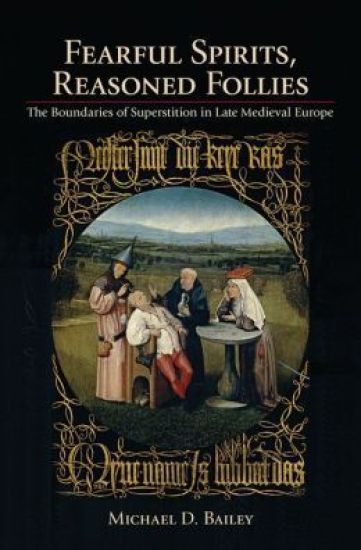
Superstitions are commonplace in the modern world. Mostly, however, they evoke innocuous images of people reading their horoscopes or avoiding black cats. Certain religious practices might also come to mind—praying to St. Christopher or lighting candles for the dead. Benign as they might seem today, such practices were not always perceived that way. In medieval Europe superstitions were considered serious offenses, violations of essential precepts of Christian doctrine or immutable natural laws. But how and why did this come to be? In Fearful Spirits, Reasoned Follies, Michael D. Bailey explores the thorny concept of superstition as it was understood and debated in the Middle Ages. Bailey begins by tracing Christian thinking about superstition from the patristic period through the early and high Middle Ages. He then turns to the later Middle Ages, a period that witnessed an outpouring of writings devoted to superstition—tracts and treatises with titles such as De superstitionibus and Contra vitia superstitionum. Most were written by theologians and other academics based in Europe's universities and courts, men who were increasingly anxious about the proliferation of suspect beliefs and practices, from elite ritual magic to common healing charms, from astrological divination to the observance of signs and omens. As Bailey shows, however, authorities were far more sophisticated in their reasoning than one might suspect, using accusations of superstition in a calculated way to control the boundaries of legitimate religion and acceptable science. This in turn would lay the conceptual groundwork for future discussions of religion, science, and magic in the early modern world. Indeed, by revealing the extent to which early modern thinkers took up old questions about the operation of natural properties and forces using the vocabulary of science rather than of belief, Bailey exposes the powerful but in many ways false dichotomy between the "superstitious" Middle Ages and "rational" European modernity.

In Producing Predators Michael D. Wise argues that contestations between Native and non-Native people over hunting, labor, and the livestock industry drove the development of predator eradication programs in Montana and Alberta from the 1880s onward. The history of these antipredator programs was significant not only for their ecological effects but also for their enduring cultural legacies of colonialism in the Northern Rockies. By targeting wolves and other wild carnivores for extermination, cattle ranchers disavowed the predatory labor of raising domestic animals for slaughter, representing it instead as productive work. Meanwhile, federal agencies sought to purge the Blackfoot, Salish-Kootenai, and other indigenous peoples of their so-called predatory behaviors through campaigns of assimilation and citizenship that forcefully privatized tribal land and criminalized hunting and its related ritual practices. Despite these colonial pressures, Native communities resisted and negotiated the terms of their dispossession by representing their own patterns of work, food, and livelihood as productive. By exploring predation and production as fluid cultural logics for valuing labor rather than just a set of biological processes, Producing Predators offers a new perspective on the history of the American West and the modern history of colonialism more broadly.
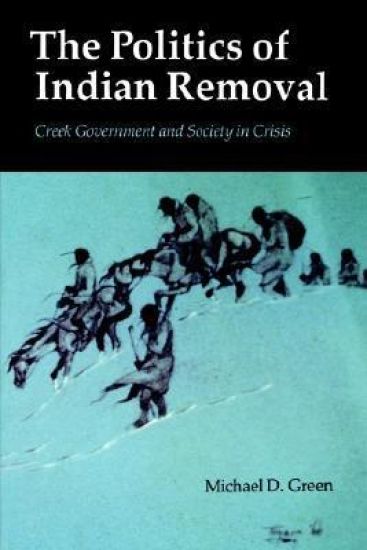
In the two decades after their defeat by the United States in the Creek War in 1814, the Creek Indians of Georgia and Alabama came under increasing—ultimately irresistible—pressure from state and federal governments to abandon their homeland and retreat westward. That historic move came in 1836. This study, based heavily on a wide variety of primary sources, is distinguished for its Creek perspective on tribal affairs during a period of upheaval.

This book contains a wealth of strategies for new and experienced teachers. Specific examples and advice are provided for negotiating the school culture, planning lessons, teaching strategies, multicultural classrooms, and classroom management and discipline.

When future historians chronicle the twentieth century, they will see phenomenology as one of the preeminent social and ethical philosophies of its age. The phenomenological movement not only produced systematic reflection on common moral concerns such as distinguishing right from wrong and explaining the status of values; it also called on philosophy to renew European societies facing crisis, an aim that inspired thinkers in interwar Europe as well as later communist bloc dissidents. Despite this legacy, phenomenology continues to be largely discounted as esoteric and solipsistic, the last gasp of a Cartesian dream to base knowledge on the isolated rational mind. Intellectual histories tend to cite Husserl's epistemological influence on philosophies like existentialism and deconstruction without considering his social or ethical imprint. And while a few recent scholars have begun to note phenomenology's wider ethical resonance, especially in French social thought, its image as stubbornly academic continues to hold sway. The Far Reaches challenges that image by tracing the first history of phenomenological ethics and social thought in Central Europe, from its founders Franz Brentano and Edmund Husserl through its reception in East Central Europe by dissident thinkers such as Jan Patocka, Karol Wojtyla (Pope John Paul II), and Václav Havel.
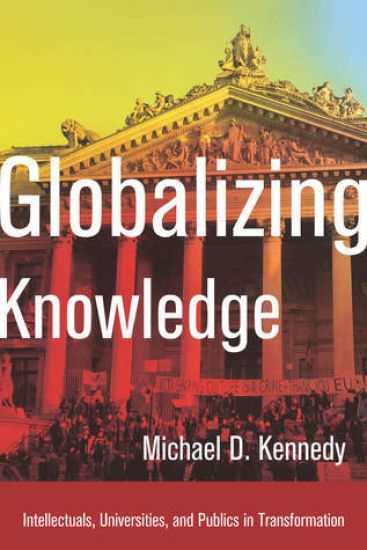
Heralding a push for higher education to adopt a more global perspective, the term "globalizing knowledge" is today a popular catchphrase among academics and their circles. The complications and consequences of this desire for greater worldliness, however, are rarely considered critically. In this groundbreaking cultural-political sociology of knowledge and change, Michael D. Kennedy rearticulates questions, approaches, and case studies to clarify intellectuals' and institutions' responsibilities in a world defined by transformation and crisis. Globalizing Knowledge introduces the stakes of globalizing knowledge before examining how intellectuals and their institutions and networks shape and are shaped by globalization and world-historical events from 2001 through the uprisings of 2011–13. But Kennedy is not only concerned with elaborating how wisdom is maintained and transmitted, he also asks how we can recognize both interconnectedness and inequalities, and possibilities for more knowledgeable change within and beyond academic circles. Subsequent chapters are devoted to issues of public engagement, the importance of recognizing difference and the local's implication in the global, and the specific ways in which knowledge, images, and symbols are shared globally. Kennedy considers numerous case studies, from historical happenings in Poland, Kosova, Ukraine, and Afghanistan, to today's energy crisis, Pussy Riot, the Occupy Movement, and beyond, to illuminate how knowledge functions and might be used to affect good in the world.

When future historians chronicle the twentieth century, they will see phenomenology as one of the preeminent social and ethical philosophies of its age. The phenomenological movement not only produced systematic reflection on common moral concerns such as distinguishing right from wrong and explaining the status of values; it also called on philosophy to renew European societies facing crisis, an aim that inspired thinkers in interwar Europe as well as later communist bloc dissidents. Despite this legacy, phenomenology continues to be largely discounted as esoteric and solipsistic, the last gasp of a Cartesian dream to base knowledge on the isolated rational mind. Intellectual histories tend to cite Husserl's epistemological influence on philosophies like existentialism and deconstruction without considering his social or ethical imprint. And while a few recent scholars have begun to note phenomenology's wider ethical resonance, especially in French social thought, its image as stubbornly academic continues to hold sway. The Far Reaches challenges that image by tracing the first history of phenomenological ethics and social thought in Central Europe, from its founders Franz Brentano and Edmund Husserl through its reception in East Central Europe by dissident thinkers such as Jan Patocka, Karol Wojtyla (Pope John Paul II), and Václav Havel.

Heralding a push for higher education to adopt a more global perspective, the term "globalizing knowledge" is today a popular catchphrase among academics and their circles. The complications and consequences of this desire for greater worldliness, however, are rarely considered critically. In this groundbreaking cultural-political sociology of knowledge and change, Michael D. Kennedy rearticulates questions, approaches, and case studies to clarify intellectuals' and institutions' responsibilities in a world defined by transformation and crisis. Globalizing Knowledge introduces the stakes of globalizing knowledge before examining how intellectuals and their institutions and networks shape and are shaped by globalization and world-historical events from 2001 through the uprisings of 2011–13. But Kennedy is not only concerned with elaborating how wisdom is maintained and transmitted, he also asks how we can recognize both interconnectedness and inequalities, and possibilities for more knowledgeable change within and beyond academic circles. Subsequent chapters are devoted to issues of public engagement, the importance of recognizing difference and the local's implication in the global, and the specific ways in which knowledge, images, and symbols are shared globally. Kennedy considers numerous case studies, from historical happenings in Poland, Kosova, Ukraine, and Afghanistan, to today's energy crisis, Pussy Riot, the Occupy Movement, and beyond, to illuminate how knowledge functions and might be used to affect good in the world.

Patterns of Life History
Michael D. Mumford; Garnett S. Stokes; William A. Owens; Garnett Stokes
Routledge Member of the Taylor and Francis Group
1990
sidottu
This work summarizes an ongoing longitudinal study concerned with the nature of human differences as manifest in peoples' life histories. The traditional models for the description of human differences are reviewed, then contrasted with the presentation of alternative models. This volume is also one of the few to investigate different approaches to measurement procedures. Practical applications of these models and the results obtained in a 23 research effort are discussed.

The intent of this book is to provide a comprehensive comparison of charismatic, ideological, and pragmatic leadership. One hundred twenty leaders from government, military, business, religion, and politics are examined with respect to key leadership behaviors, including problem solving, leader–follower interactions, communications, politics, and integrity. Additionally, the implications of these paths for development and performance are examined. Most prior books on outstanding leadership have focused exclusively on vision-based leadership and have not focused on historically notable leaders and incidents of truly outstanding leadership. Case material from relevant biographies illustrate in concrete form the conclusions flowing from the various quantitative analyses. This is an important book for university and organizational courses on leadership.

The intent of this book is to provide a comprehensive comparison of charismatic, ideological, and pragmatic leadership. One hundred twenty leaders from government, military, business, religion, and politics are examined with respect to key leadership behaviors, including problem solving, leader–follower interactions, communications, politics, and integrity. Additionally, the implications of these paths for development and performance are examined. Most prior books on outstanding leadership have focused exclusively on vision-based leadership and have not focused on historically notable leaders and incidents of truly outstanding leadership. Case material from relevant biographies illustrate in concrete form the conclusions flowing from the various quantitative analyses. This is an important book for university and organizational courses on leadership.

Unlike the flashy and self-promoting George Armstrong Custer, Civil War veteran and Indian fighter Ranald Slidell Mackenzie is not well known today. In the late nineteenth century, however, Mackenzie ranked among the best known and most effective of a group of young army colonels who led in the defeat of the Plains Indians and the opening of the West to white settlement, as Michael D. Pierce shows in this compelling and poignant biography. A rather shy and sometimes distant personality, Mackenzie, following his graduation from West Point in 1862, showed early promise in Civil War service. After peace was won, he moved west to command the Fourth Cavalry. Mackenzie lost no time in bringing the Fourth Cavalry to first rank among the frontier horse regiments, and the Fourth became troubleshooters for President Grant and Generals Sherman and Sheridan throughout Texas. Mackenzie was most notable for leading forays into Mexico to subdue border raiders and bandits and for his part in the defeat of the Comanches and Kiowas, particularly at the Battle of Palo Duro Canton. But he was also involved in the campaign against the Northern Plains Indians following Custer's defeat, and in 1876 he achieved the only major victory against them. Like many military leaders in the West, Mackenzie had a genuine respect for the Indians and learned to deal fairly with them on the reservations. While commander at Fort Sill, on the Comanche-Kiowa reservation, he worked to ensure the well-being of the Indians he had fought just a few years before. In Colorado in early 1880 his reputation and forcefulness convinced the Utes to move peacefully to their reservations in Utah. In 1883, shortly after being promoted to brigadier general and being assigned to command the Department of Texas, Mackenzie suffered a mental breakdown, possibly triggered by syphilis. Retired immediately from military service, he required constant care and declined rapidly until his death in 1889. Unfortunately, his untimely illness and death prevented him from having direct influence on the last years of the Indian wars and the development of the twentieth-century army; nevertheless, in military capability and effectiveness, Ranald Slidell Mackenzie stands with the best of officers in the post-Civil War army.
The American Discovery of Tradition, 1865-1942
Michael D. Clark
Louisiana State University Press
2005
sidottu
Between the American Revolution and the Civil War many Americans professed to reject altogether the notion of adhering to tradition, perceiving it as a malign European influence. But by the beginning of the twentieth century, Americans had possibly become more tradition-minded than their European contemporaries. So argues Michael D. Clark in this incisive work of social and intellectual history. Challenging reigning assumptions, Clark maintains that in the period 1865 to 1942 Americans became more conscious of tradition as a social force, viewed it more positively, and used it more eclectically and selectively for personal and social enrichment.Clark expands upon the existing body of scholarly work by clearly distinguishing tradition from other ways of relating to the past and by studying particular traditions that shaped American thought and culture. He gives primary attention to five individuals who represent the growing influence of tradition in this period: the popular philosopher and historian John Fiske, representing Anglo-American tradition; the Virginia historians Philip Bruce and Lyon G. Tyler, representing a southern variation on a national tradition; the country's leading neo-Gothic architect, Ralph Adams Cram, representing a surprisingly pervasive medieval tradition; and the sociologist Charles H. Cooley, representing views on immigrant traditions. Clark examines how the idea of tradition, initially associated with family home and local town, was carried outward to the larger sphere and applied to promote American expansionism -- territorially, economically, and demographically. Tradition was also used as a weapon by well-entrenched social groups in struggles over power and values. It offered a sense of stability in a time of unsettling technological and sociological change. Ironically, Clark shows, `traditionalists of this era helped to create a modern sensibility by opposing the Victorian linear sense of history and employing instead historical cycles and typology as ways to bridge past and present. The American Discovery of Tradition, 1865--1942 describes a period of time when the social and intellectual forces of tradition and modernity converged in the United States. America was both a nation looking back, now having a memory of its own past, and a nation looking forward to future progress. Clark's book reveals the shaping of the modern American self and its distinctive attitude -- both positive and negative -- toward tradition.

Lt. Spalding in Civil War Louisiana
Michael D. Pierson
Louisiana State University Press
2016
sidottu
In July 1862, Union Lieutenant Stephen Spalding wrote a long letter from his post in Algiers, Louisiana, to his former college roommate. Equally fascinating and unsettling for modern readers, the comic cynicism of the young soldier's correspondence offers an unusually candid and intimate account of military life and social change on the southern front. A captivating primary source, Spalding's letter is reproduced here for the first time, along with contextual analysis and biographical detail, by Michael D. Pierson. Lt. Spalding in Civil War Louisiana lifts the curtain on the twenty-two-year-old's elitist social attitudes and his consuming ambition, examining the mind of a man of privilege as he turns to humor to cope with unwelcome realities.Spalding and his correspondent, James Peck, both graduates of the University of Vermont, lived in a society dominated by elite young men, with advantages granted by wealth, gender, race, and birth. Caught in the middle of the Civil War, Spalding adopts a light-hearted tone in his letter, both to mask his most intimate thoughts and fears and distance himself from those he perceives as social inferiors. His jokes show us an unpleasantly stratified America, with blacks, women, and the men in the ranks subjected to ridicule and even physical abuse by an officer with more assertiveness than experience.His longest story, a wild escapade in New Orleans that included abundant drinking and visits to two brothels, gives us a glimpse of a world in which men bonded through excess and indulgence. More poignantly, tactless jests about death, told as his unit suffers its first casualties, reveal a man struggling to come to terms with mortality. Evidence of Spalding's unfulfilled aspirations, like his sometimes disturbing wit, allows readers to see past his entitlement to his human weaknesses. An engrossing picture of a charismatic but flawed young officer, Lt. Spalding in Civil War Louisiana offers new ways to look at the society that shaped him.
Popular entertainment in antebellum Cincinnati ran the gamut from high culture to shows barely above the level of the tawdry. Among the options for those seeking entertainment in the summer of 1856 was the display of a "Wild Woman," purportedly a young woman captured while living a feral life beyond the frontier. The popular exhibit, which featured a silent, underdressed woman chained to a bed, was almost assuredly a hoax. Local activist women, however, used their influence to prompt a judge to investigate the display. The court employed eleven doctors, who forcibly subdued and examined the woman before advising that she be admitted to an insane asylum.In his riveting analysis of this remarkable episode in antebellum American history, Michael D. Pierson describes how people in different political parties and sections of the country reacted to the exhibit. Specifically, he uses the lens of the Wild Woman display to explore the growing cultural divisions between the North and the South in 1856, especially the differing gender ideologies of the northern Republican Party and the more southern focused Democrats. In addition, Pierson shows how the treatment of the Wild Woman of Cincinnati prompted an increasing demand for women's political and social empowerment at a time when the country allowed for the display of a captive female without evidence that she had granted consent.